Wildlife Guide · Coasts, estuaries, lakes and rivers worldwide & British breeders include common, Arctic, little, sandwich and roseate tern
Tern
Sterninae — subfamily of Laridae including Sterna, Thalasseus and related genera
Slender gulls that dive — and one species flies pole to pole.
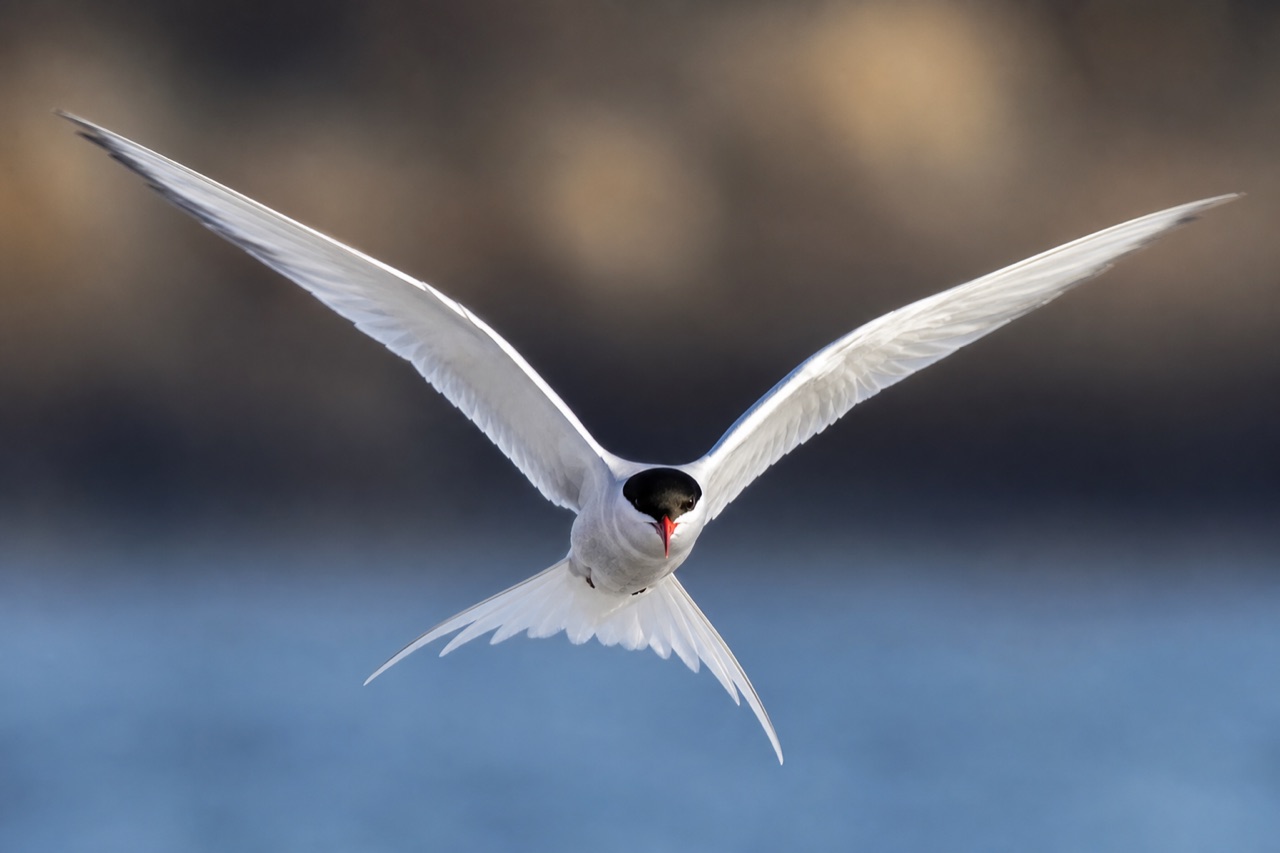
AI-generated educational wildlife portrait — World Animal Rescue Network · AI visualisation, not a photograph
In brief
Terns are fork-tailed seabirds that plunge-dive for fish; British species include common, Arctic, little, sandwich and rare roseate tern — with Arctic tern undertaking the longest migration of any bird from breeding grounds to Antarctic winter.
Also in Animals A to Z · Animals that start with T
By WARN Research & Conservation Team Last updated
Terns are the sleek, fork-tailed relatives of gulls — built for aerial fishing rather than scavenging. They hover over water, bill pointing down, then plunge-dive after small fish. In Britain the common tern (Sterna hirundo) nests on gravel islands and rafts on lakes and coasts; the Arctic tern (Sterna paradisaea) holds the longest migration of any bird, breeding in Britain and wintering in Antarctic waters. Other British terns include the little tern (Sternula albifrons) — small, coastal, Amber-listed — the sandwich tern (Thalasseus sandvicensis) with a shaggy black crest, and the roseate tern (Sterna dougallii), one of Britain's rarest seabirds, nesting at a handful of colonies. All share the diving habit and pointed wings; identification uses size, bill colour and call. Tern colonies are vulnerable to disturbance, predation and sea-level rise on low islands. Common tern has benefited from artificial rafts on gravel pits and reservoirs; little tern has lost shingle beaches to development and recreation pressure. Searching 'tern' without naming the species misses that split — a family of specialist fish-hunters, not one bird, with migration and rarity varying sharply between members. Terns are among the most agile fish-hunters on British coasts and inland lakes — their specialist ecology makes them useful indicators of surface fish availability that gulls, with broader diets, mask.
Plunge dive
Hover then dive for small fish — tern hunting signature
Arctic tern
Longest migration of any bird — breeding to Antarctic
Forked tail
Deeply forked in common and Arctic terns
Colony birds
Nest on shingle, islands and artificial rafts
Figures sourced from IUCN Red List — Sterna hirundo (Common Tern), BTO — BirdFacts: Common Tern .
Tern: Quick Facts
| Hunting | Plunge-dive for small fish |
|---|---|
| Arctic tern migration | Longest of any bird — breeding to Antarctic |
| Common tern nest | Gravel islands and artificial rafts |
| Little tern | Amber-listed; shingle beach specialist |
| Roseate tern | Among Britain's rarest seabirds |
| Tail shape | Deeply forked in common and Arctic terns |
| Main threat | Colony disturbance, predation, prey shortage |
Scientific Classification
| Kingdom | Animalia |
|---|---|
| Phylum | Chordata |
| Class | Aves |
| Order | Charadriiformes |
| Family | Laridae |
| Subfamily | Sterninae (terns) |
| British species | Common, Arctic, little, sandwich, roseate tern |
Conservation Status
- IUCN Status
- Least Concern
- Population
- Varies — common tern widespread; roseate tern very rare in Britain
- Trend
- Little tern decreasing; common tern stable with raft management
- Assessed
- Varies by species
- CITES
- Not listed (subfamily overview)
Little tern Amber-listed in Britain. Roseate tern among rarest UK breeders. Arctic tern Least Concern globally.
Did you know?
Arctic terns can travel from Arctic breeding grounds to Antarctic waters and back each year — the longest migration of any bird.
Key Facts: Tern
- Terns are slender, fork-tailed fish-hunters that plunge-dive — not scavengers like many gulls.
- Common tern nests on gravel islands and artificial rafts at lakes and coasts across Britain.
- Arctic tern migrates from British breeding grounds to Antarctic waters — the longest migration known.
- Little tern is Amber-listed — small, coastal, vulnerable to beach disturbance and predation.
- Roseate tern is among Britain's rarest seabirds, nesting at few colonies.
- Colony disturbance, predation and loss of shingle nest sites are main pressures.
- Artificial nesting rafts have helped common tern on reservoirs and gravel pits.
How terns hunt — hover, dive, swallow
A tern over water beats wings rapidly, hovers with head down, locks onto a fish shadow and drops — bill first, wings swept back — into the surface. It emerges with a small sandeel, sprat or stickleback, adjusts the catch head-first and swallows on the wing. The entire sequence takes seconds and requires clear, shallow water with visible prey.
Terns are less generalist than gulls. They do not scavenge chips or landfill; they need live fish near the surface. That specialisation makes them indicators of nearshore fish availability and water quality — when terns fail to breed, prey shortage or disturbance is often the cause.
Common terns are the generalist British tern — lakes, gravel pits, estuaries and coasts. Arctic terns overlap on breeding coasts but migrate farther. Little terns stay coastal on shingle beaches. Sandwich terns favour larger estuaries and colonies on islands. Watching a tern colony hunt is watching a barometer of surface fish abundance — when dives fail repeatedly, chicks go hungry.
Tern flight is buoyant and direct — long pointed wings and forked tail create a distinctive silhouette against sky and water. Common terns calling at colonies produce a sharp 'kirrick' that carries over water; Arctic terns are more screaming in defence. Call and size together separate species when plumage differences are subtle at distance.
Winter terns depart British colonies for African or southern coastal wintering areas depending on species — common terns from inland lakes migrate; Arctic terns undertake the extreme pole-to-pole route. Empty gravel rafts in autumn mark departure; returning birds in spring are among the first signs that surface fish are available again.
Common tern colony noise — sharp calls and aerial commutes with fish — indicates active provisioning. Silent colonies during chick rearing may mean failure; noisy colonies are not guarantee of success but indicate ongoing effort.
Arctic tern — pole to pole
The Arctic tern breeds on coasts from Scotland through Iceland to Arctic regions, then migrates south to Antarctic waters for the austral summer — a round trip that ranks among the longest migrations of any animal. Tracking studies confirmed routes down the Atlantic and return along alternate flyways, with birds experiencing more daylight in a year than any other creature.
Breeding Arctic terns are fiercely defensive — dive-bombing intruders at colonies with a sharp scream. They nest on bare ground, shingle or short vegetation on islands and coasts. Sandeel and small fish provision chicks; colony failure in bad prey years is total.
Climate change affects Arctic tern through prey shifts, storm frequency on migration and Arctic breeding-ground warming. The migration itself is the defining biology — a tern that crosses the planet twice a year is not interchangeable with a common tern on a gravel pit. Conservation for Arctic tern spans hemispheres; conservation for common tern spans a well-managed lake.
Sandwich terns are the largest regular British tern — shaggy crest, black bill with yellow tip, nesting in dense colonies on islands and spits. They feed farther offshore than little terns and common terns on many coasts, which separates their foraging from inshore disturbance but ties them to pelagic fish availability.
Arctic tern chick diet is almost entirely sandeel and small fish in British colonies — same prey dependency as kittiwake and puffin, linking tern breeding success to North Sea fish stocks shared across seabird groups.
Colonies, rafts and the little tern problem
Terns nest colonially on open ground — shingle beaches, gravel islands, saltmarsh scrapes — where eggs are cryptic and adults mob predators collectively. Ground nesting exposes terns to foxes, rats, gulls, crows and human trampling on beaches. A single dog off-lead through a little tern colony can destroy a season's breeding.
Common terns have adapted to artificial platforms — floating rafts on reservoirs and gravel pits with shingle surface and predator exclusion. These have stabilised breeding at inland sites where natural islands were lost to vegetation succession or water-level management.
Little terns need undisturbed shingle beaches — a habitat squeezed by coastal development, sea defence works and summer recreation. Amber-listed in Britain, little tern colonies are fenced and wardened where they persist. Roseate tern nests at very few sites, often alongside common terns, with intensive monitoring. Colony wardens and signed beaches are the front line — disturbance is immediate and measurable.
Roseate tern conservation in Britain concentrates on a handful of colonies where intensive wardening, predator control and nest box provision on shingle and rocky islands have stabilised breeding. The species nests alongside common terns — identification requires attention to pale plumage tones and longer tail streamers in breeding adults.
Little tern electric fencing on shingle beaches excludes foxes and badgers — low-cost predator exclusion that works where warden presence alone cannot cover entire beach length through the breeding season.
Terns versus gulls — and what helps
Terns and gulls share family Laridae but diverge in ecology. Gulls scavenge, kleptoparasitise and predated tern colonies — herring and great black-backed gulls take tern eggs and chicks. Tern colony management often includes gull deterrence as well as predator fencing and warden presence during breeding.
Helping terns: keep dogs off signed shingle beaches in summer, support colony warden schemes, maintain gravel rafts on managed lakes, and address nearshore fish stocks that provision breeding colonies. Feeding terns does not work — they take live fish from water, not offerings from hand.
A family tern guide matches how people search — 'tern' at the coast before identifying the black-capped common tern from the tiny little tern. The fork tail diving for fish is the shared frame; migration, rarity and colony pressure differ by species. Correct identification turns a casual beach walk into useful conservation awareness.
Climate-driven sea-level rise threatens low-lying tern colonies on shingle spits and saltmarsh scrapes — colonies that persist on managed reserves with raised islands or floating rafts demonstrate that engineering intervention can buy time while coastal habitat shifts inland.
Tern ringing recoveries show migration connectivity between British colonies and wintering coasts in Africa and South America depending on species — international conservation agreements cover flyways terns use across jurisdictions.
What WARN Does
WARN publishes free, sourced species education for seabirds beyond the generic 'seagull'. Terns are fish specialists — Arctic tern crosses the planet; little tern loses beaches to disturbance — same fork tail, different conservation stories.
If this guide helps you understand wildlife and the pressures it faces, a gift to WARN supports habitat protection and free public education in our partner countries.
Tern: Frequently Asked Questions
What is the difference between a tern and a gull?
Which tern has the longest migration?
Where do common terns nest?
Why are little terns Amber-listed?
What do terns eat?
Where do terns live?
Are terns dangerous?
How long do terns live?
How big are terns?
Sources & References
Population figures, conservation status and biological facts on this page are drawn from authoritative scientific and intergovernmental sources.
Terms used on this page
Plain-English definitions, from our wildlife and conservation glossary.
Explore more animals
Discover more animals, their habitats and their conservation status in the WARN wildlife-guide library.
Enjoyed this Tern guide?
Receive appeal updates, animal-welfare news and published funding reports. Unsubscribe any time.
We only use your address for WARN updates. See our privacy policy.