Wildlife Guide · Tropical and subtropical regions worldwide & Most diverse in Australasia and Southeast Asia; some temperate species
Stick Insect
Order Phasmatodea — over 3,000 described species; masters of plant mimicry
A twig that walks — and sometimes a leaf that bleeds.
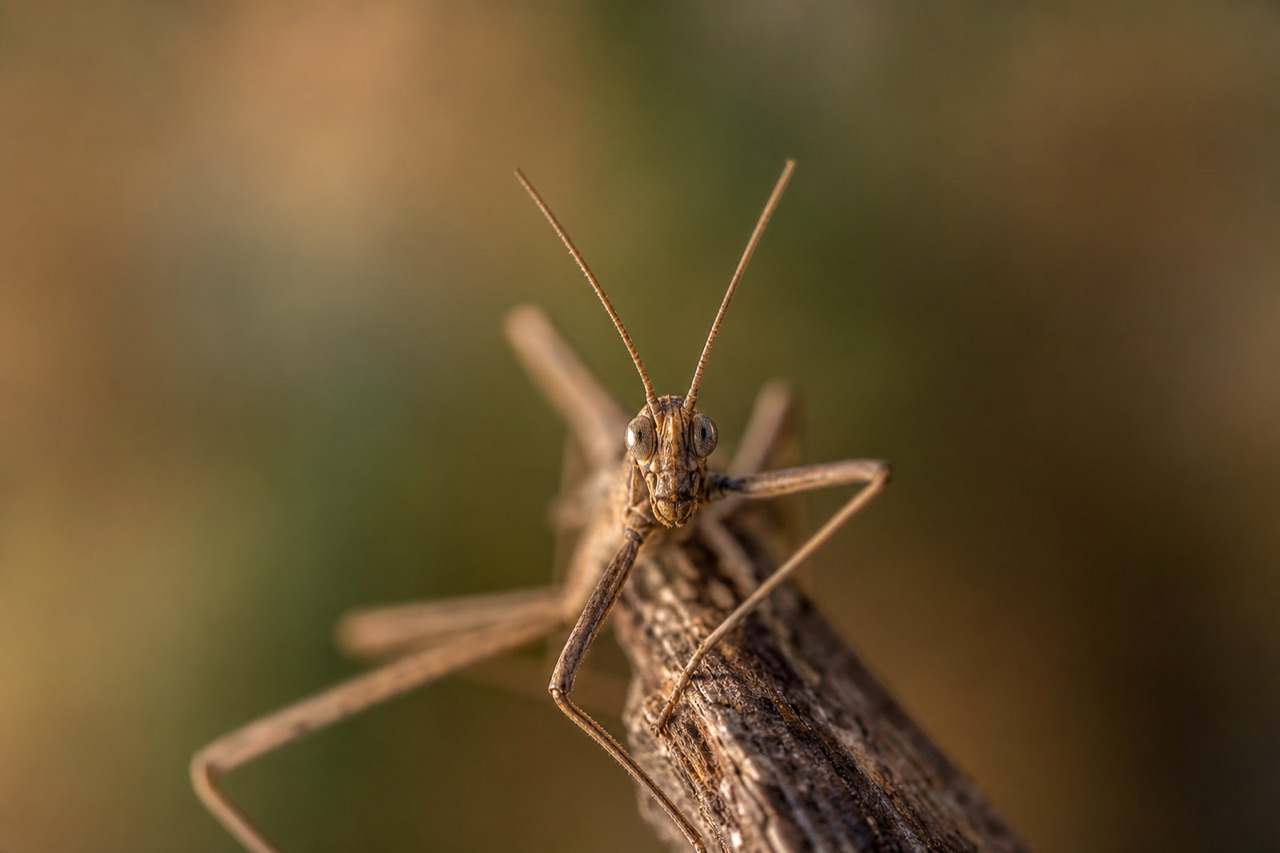
AI-generated educational wildlife portrait — World Animal Rescue Network · AI visualisation, not a photograph
In brief
Stick insects (order Phasmatodea) are phytophagous insects with more than 3,000 species, most mimicking twigs or leaves; many reproduce parthenogenetically, and island endemics are among the most threatened insects.
Also in Animals A to Z · Animals that start with S
By WARN Research & Conservation Team Last updated
Stick insects — phasmids — are among the most convincing mimics in the animal kingdom. Order Phasmatodea contains more than 3,000 described species, many of which resemble twigs, bark, lichen or leaves closely enough to defeat casual searching. Movement is slow and rhythmic, swaying like a branch in wind. Bodies are elongated; legs are long and slender; wings may be present, reduced or absent depending on species and sex. Some tropical giants exceed 30 cm in body length — among the largest insects on Earth. Phasmids are herbivores, feeding almost exclusively on leaves. Many are nocturnal, feeding under cover of darkness and freezing by day. When discovered, defences escalate: startle displays with bright wing colours, regurgitation of distasteful fluid, loud stridulation, spiny leg kicks, and in some species autotomy — deliberate leg loss at a weak joint, followed by regeneration over successive moults. Parthenogenesis — females producing viable eggs without mating — is widespread in phasmids and allows single individuals to found populations. That trait, combined with popularity in the pet trade, has led to accidental introductions outside native ranges. Stick insects are not charismatic in the mammal sense, but they are evolutionary demonstrations of crypsis, and island endemics among them rank among the most threatened insects alive. Temperate phasmids in Britain and Europe include native and naturalised species surviving in hedgerows and gardens, proving the body plan works even where tropical diversity is absent. Museums and schools use phasmids to teach exoskeleton growth because every moult is visible — a shed skin left on a branch is a complete cast of the animal one size smaller. That pedagogical role keeps demand in ethical captive breeding programmes that need not touch wild populations.
3,000+
Described phasmid species
30+ cm
Body length in largest tropical species
Parthenogenesis
Common — females can reproduce without males
Regeneration
Lost legs regrown over successive moults
Figures sourced from IUCN Red List — Dryococelus australis, Phasmida Species File .
Stick Insect: Quick Facts
| Diet | Herbivorous — host-plant leaves |
|---|---|
| Camouflage | Twig, bark or leaf mimicry |
| Reproduction | Sexual and parthenogenetic species |
| Defence | Crypsis, autotomy, startle displays |
| Largest species | Over 30 cm body length in tropics |
| Main threats | Invasive predators on islands; habitat loss |
Scientific Classification
| Kingdom | Animalia |
|---|---|
| Phylum | Arthropoda |
| Class | Insecta |
| Order | Phasmatodea |
| Major families | Phasmatidae, Phylliidae, Heteropterygidae |
| Described species | Over 3,000 |
Conservation Status
- IUCN Status
- Varies by species — order page
- Population
- Not applicable at order level
- Trend
- Declining for many island endemics; stable for widespread mainland species
- Assessed
- Assessed species-by-species; most are unassessed
- CITES
- Some species listed
Lord Howe Island stick insect and several New Zealand phasmids are Critically Endangered. Island rat eradication is prerequisite for many recoveries.
Did you know?
The Lord Howe Island stick insect — thought extinct for decades — survived only on a tiny sea stack until a remnant population was found and bred back from the brink.
Key Facts: Stick Insect
- Stick insects are plant-feeding insects specialised for camouflage as twigs, bark or leaves.
- Many species can reproduce parthenogenetically — a single female can start a population.
- Autotomy (leg shedding) and regeneration are common defences; regrown legs are shorter.
- The pet trade has spread some species outside native ranges via eggs on plants.
- Lord Howe Island stick insect — once thought extinct — is a flagship recovery species.
- Island phasmids face rats, habitat loss and invasive plants; many are Critically Endangered.
Crypsis: becoming vegetation
Phasmid camouflage operates on multiple levels. Shape matches host plants — thin rectangular bodies and aligned legs extend the twig illusion. Colour includes greens, browns and bark greys, often with lichen-like tubercles. Movement is deliberately slow; a swaying motion mimics vegetation moving in breeze. Some species extend the performance by holding legs at angles that continue the line of a branch.
Leaf insects (Phylliidae) push mimicry further: flattened bodies, leaf-like expansion of the legs and abdomen, and in some species deliberate damage marks — false holes and fungal spots — painted in pigment. The effect is so complete that even experienced collectors miss them in foliage. Cryptic colouration fails when phasmids fall onto contrasting substrate — a brown twig-insect on pale pavement is suddenly obvious, which is why nocturnal feeding reduces exposure.
Startle defences exist for when crypsis fails. Hidden hind wings may flash red, pink or black-and-white patterns. Some species expose eyespots on wings or abdomen. The goal is the same as in moths and frogs: buy a moment of predator hesitation for escape.
Life history: moulting, regeneration and reproduction
Phasmids grow by moulting — shedding the exoskeleton at intervals. Freshly moulted insects are soft and vulnerable until the new cuticle hardens; many species eat the shed skin to recover nutrients. Incomplete metamorphosis means nymphs resemble small adults without wings.
Autotomy is controlled leg loss at a pre-formed weak point. A grabbed leg detaches while muscles seal the wound. Subsequent moults regenerate the leg, though replacements are often shorter and cannot autotomise again at the same segment. The trade-off favours survival over immediate mobility.
Sexual reproduction is usual in many species, but parthenogenesis — development from unfertilised eggs — is common, especially in captivity and in isolated populations. Clutches vary from dozens to hundreds of eggs, often dropped to leaf litter or inserted into soil. Egg capsules may mimic seeds, gaining further protection through camouflage. Incubation can take months; nymphs emerge as miniature versions of adults.
Island phasmids and the extinction curve
Phasmids illustrate the island vulnerability pattern sharply. Lord Howe Island stick insect (Dryococelus australis) — the 'tree lobster' — was driven to apparent extinction by black rats introduced from shipwrecks in the early twentieth century. A tiny population survived on a volcanic sea stack, Ball's Pyramid, discovered decades later. Captive breeding programmes recovered the species from that remnant, though reintroduction to Lord Howe awaits rat eradication.
New Zealand and Hawaii hold multiple endangered phasmids lost to rats, mice and habitat conversion. Because phasmids are flightless or weak-flying on many islands, invasion by climbing predators is catastrophic. Recovery follows the familiar island playbook: predator eradication, fenced sanctuaries, captive breeding and careful reintroduction.
Mainland phasmids are generally more secure, though local extirpations occur where hedgerow and woodland habitat is simplified. Saproxylic and shrub-layer specialists lose host plants when management removes structural diversity.
Phasmids in captivity and accidental spread
Stick insects are common classroom and pet-trade animals because husbandry is straightforward: ventilated enclosure, fresh host-plant leaves replaced regularly, vertical space for moulting, and humidity suited to species origin. Parthenogenetic species simplify breeding — one female can populate a tank.
That same biology creates biosecurity risk. Eggs laid in soil or glued to leaves travel with imported plants. Several phasmid species have established outside native ranges in temperate greenhouses and mild coastal climates. Release of unwanted pets contributes. Responsible keeping means freezing waste plant material and eggs before disposal, and never releasing captives outdoors.
Education value is high. Phasmids demonstrate camouflage, moult-based growth, regeneration and parthenogenesis in a single animal that most children can observe calmly. Conservation value concentrates on the island species at the far end of the vulnerability spectrum — the tree lobster story is proof that even insects presumed extinct can recover if the last individuals are found in time.
Giant phasmids and public imagination
Tropical giants — Phobaeticus and related genera — hold records for insect body length when legs are extended. They are not dangerous; they are slow herbivores whose main defence is disappearing against a branch. Zoo and museum displays of giant stick insects routinely convert phasmid sceptics because the scale is unexpected.
Research uses phasmids as models for understanding camouflage effectiveness against avian predators — experiments with trained birds and artificial prey show how even slight mismatch to background increases predation. That work feeds broader questions about how habitat simplification — uniform crops, trimmed hedges — removes the visual complexity phasmids need.
Mainland giants are data-poor compared with island endemics. Logging in Southeast Asian rainforest removes host trees and collection pressure for the pet trade adds local drain. Least Concern labels on widespread species should not obscure site-level loss in forests converted to plantation monoculture.
What WARN Does
WARN publishes free, sourced species education for overlooked invertebrates, including the island endemics whose extinction would pass unnoticed without deliberate attention. Stick insects are proof that charisma is not required for a conservation story worth telling.
If this guide helps you understand wildlife and the pressures it faces, a gift to WARN supports habitat protection and free public education in our partner countries.
Stick Insect: Frequently Asked Questions
What is a stick insect?
Can stick insects regrow legs?
Do stick insects need males to reproduce?
Are stick insects endangered?
What do stick insects eat?
Where do stick insect / phasmids live?
Are stick insect / phasmids dangerous?
How long do stick insect / phasmids live?
How big is a stick insect / phasmid?
Sources & References
Population figures, conservation status and biological facts on this page are drawn from authoritative scientific and intergovernmental sources.
Terms used on this page
Plain-English definitions, from our wildlife and conservation glossary.
Explore more animals
Discover more animals, their habitats and their conservation status in the WARN wildlife-guide library.
Enjoyed this Stick Insect guide?
Receive appeal updates, animal-welfare news and published funding reports. Unsubscribe any time.
We only use your address for WARN updates. See our privacy policy.