Wildlife Guide · Madagascar & Dry deciduous and spiny forest in the west and south
Sifaka
Genus Propithecus — nine recognised species
The lemur that dances sideways on two legs — and several species are now Critically Endangered.
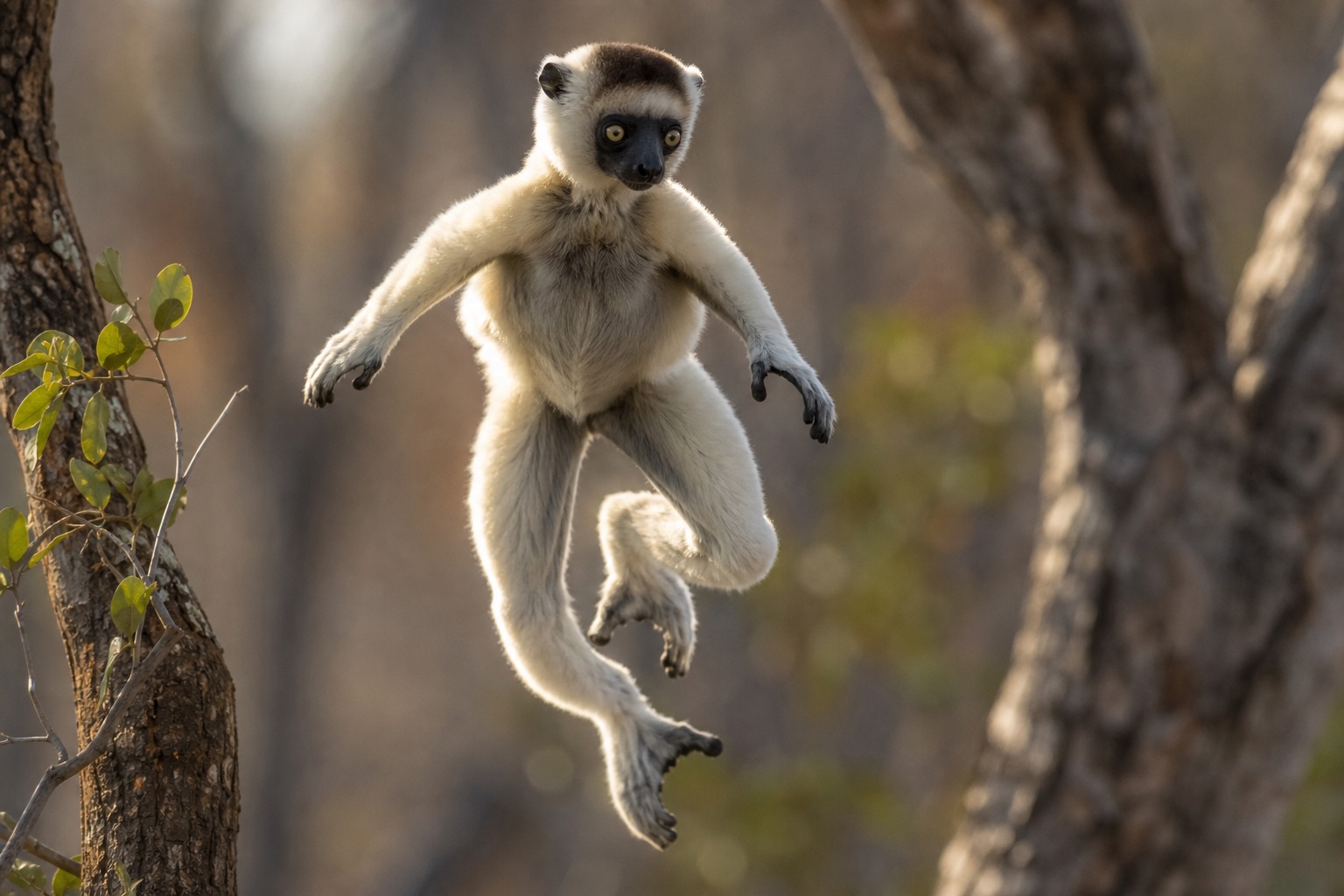
AI-generated educational wildlife portrait — World Animal Rescue Network · AI visualisation, not a photograph
In brief
Sifakas are nine species of lemur in the genus Propithecus, found only in Madagascar, famous for sideways bipedal hopping on the ground; several species are Critically Endangered as an estimated 80–90% of the island's original forest has been lost to tavy, charcoal production and the pet trade.
Also in Animals A to Z · Animals that start with S
How you can help
You can support the related appeal — read its purpose, recipient status and fund terms first — or give once to where it is needed most. Sharing accurate information helps too.
By WARN Research & Conservation Team Last updated
Sifakas are medium-sized lemurs in the genus Propithecus, found only in Madagascar, and they are among the most recognisable primates on the island because of how they move on the ground. In the canopy they vertical-cling-leap between trunks like other indriids. When the gap between trees is too wide, they descend and bound bipedally across open ground with arms raised for balance — a gait so distinctive that people call it dancing. Madagascar holds roughly 90% vertebrate endemism: the vast majority of its mammals, reptiles and amphibians occur nowhere else on Earth. Sifakas are part of that radiation, and they are also among its most threatened primates. An estimated 80–90% of Madagascar's original forest has been lost. Several sifaka species are now Critically Endangered, and the pattern is the same across the island: tavy slash-and-burn agriculture, charcoal production and the pet trade remove forest faster than any lemur can adapt — pressures driven by rural poverty and the lack of affordable alternatives, not by subsistence farmers acting without context.
9
Recognised sifaka species, all endemic to Madagascar
~90%
Share of Madagascar's vertebrates found nowhere else
Bipedal
Sideways hopping gait when crossing open ground between trees
Several CR
Sifaka species listed Critically Endangered on the IUCN Red List
Figures sourced from IUCN Red List — Propithecus coquereli, CITES Appendices, Re:wild — Madagascar lemur conservation .
Sifaka: Quick Facts
| Species | Nine in the genus Propithecus |
|---|---|
| Locomotion | Vertical-cling-leap in trees; bipedal sideways hop on ground |
| Endemism | Madagascar only — part of ~90% vertebrate endemism |
| Diet | Leaves, fruit, flowers and bark |
| Social groups | Typically 3–10 individuals |
| Main threats | Forest loss from tavy and charcoal; pet trade; dogs |
Scientific Classification
| Kingdom | Animalia |
|---|---|
| Phylum | Chordata |
| Class | Mammalia |
| Order | Primates |
| Family | Indriidae |
| Genus | Propithecus |
| Species | Nine recognised species |
Conservation Status
- IUCN Status
- Varies — several Critically Endangered
- Population
- Declining across most species; no reliable total
- Trend
- Decreasing
- Assessed
- Varies by species
- CITES
- Appendix I
An estimated 80–90% of Madagascar's original forest has been lost. Tavy and charcoal production are driven by rural poverty; conservation must pair forest protection with alternatives.
Did you know?
A sifaka crossing open ground looks like it is dancing — but the sideways bipedal hop is what happens when an animal built for leaping between vertical trunks has to cross a gap that deforestation created.
Key Facts: Sifaka
- Sifakas are lemurs in the genus Propithecus — nine species, all endemic to Madagascar.
- They vertical-cling-leap in trees but bound bipedally sideways across open ground, with arms raised — the gait that earns them the name 'dancing lemurs'.
- Madagascar holds roughly 90% vertebrate endemism; sifakas are part of an isolated primate radiation found nowhere else.
- An estimated 80–90% of Madagascar's original forest has been lost; several sifaka species are Critically Endangered.
- Tavy slash-and-burn, charcoal production and the pet trade are the main drivers — rooted in rural poverty and weak alternatives, not in subsistence farming alone.
- Sifakas cannot cross open farmland safely; ground crossing exposes them to dogs, humans and starvation between forest fragments.
Why sifakas dance
A sifaka in the canopy moves by vertical clinging and leaping — launching from a vertical trunk, rotating in the air, and landing on the next tree feet-first. That works until the gap is too wide. Then the animal descends.
On the ground a sifaka cannot walk on all fours efficiently because its legs are built for leaping, not quadrupedal walking. Instead it rises on its hind legs and hops sideways, arms out for balance, covering open ground between forest patches. The gait looks choreographed; it is biomechanics. The same adaptation that makes sifakas superb canopy leapers makes them awkward and exposed on the ground — which is precisely where deforestation forces them.
Madagascar's endemism and what sifakas represent
Madagascar split from mainland Africa around 88 million years ago and has been isolated long enough for life to evolve in near-total separation. Roughly 90% of the island's vertebrates — mammals, reptiles, amphibians and freshwater fish — occur nowhere else. Lemurs are the most visible part of that story; sifakas are one of the indriid lineages within it.
That endemism is also a vulnerability. A species found only on Madagascar has nowhere else to go when forest disappears. Sifakas that once moved between connected stands now face open maize fields, cassava plots and charcoal-scarred hillsides. Each crossing is a gamble against feral dogs, hunting and the simple fact that a leaf-eating lemur cannot feed in a crop field.
Which species are in trouble?
Coquerel's sifaka of north-western dry forest is Critically Endangered, confined to fragments around Ankarafantsika and the Antrema biocultural reserve. Perrier's sifaka of the far north is Critically Endangered, with a tiny range. Diademed and silky sifakas of eastern rainforest are Critically Endangered or Endangered, depending on the assessment. Verreaux's sifaka remains more widespread in the south and west but is declining as spiny forest is cleared.
The common thread is forest loss. Tavy — traditional slash-and-burn — clears land for subsistence crops when families have no other income and no alternative fuel. Charcoal production removes living trees from the same fragments sifakas depend on. The pet trade removes individuals. These pressures are linked to rural poverty and the absence of affordable cooking fuel and agricultural alternatives on much of the island — not to farmers acting without cause.
What conservation requires
Protecting sifakas means protecting connected forest and reducing the need to clear it. That includes community-managed reserves such as Antrema, where local people benefit from ecotourism and sustainable harvest rather than from converting the last dry forest to charcoal. It includes reforestation corridors that let sifakas move between fragments without crossing open ground. And it includes enforcing CITES Appendix I protections against the pet trade — every sifaka belongs in Madagascar's forest, not in a cage abroad.
Blaming subsistence farmers without addressing poverty, fuel costs and land tenure solves nothing. The farmers clearing tavy are often doing so because charcoal sales or maize plots are the only cash available. Conservation that works pairs forest protection with alternatives — efficient cookstoves, community forestry income and legal recognition of community land rights.
What WARN Does
WARN publishes free, sourced species education, including for Madagascar's lemurs — among the most endangered primates on Earth. Sifakas are CITES Appendix I listed and cannot be kept as pets; support habitat protection appeals that address the poverty context behind forest loss rather than blaming subsistence farmers in isolation.
If this guide helps you understand wildlife and the pressures it faces, a gift to WARN supports habitat protection and free public education in our partner countries.
How can I help save the sifaka?
Explore practical ways to support the sifaka, from everyday choices and sharing reliable information to reviewing a related appeal before giving.
Explore ways to support
Read the related appeal’s purpose, recipient status and fund terms. Choose an affordable gift after checking what is proposed and what has been reported.
Ease the pressures
Avoid the wildlife trade and souvenirs, never buy wild animals as pets, and choose sustainable, habitat-friendly products — the threats behind the sifaka's decline fall when demand does.
Spread the word
Share accurate, sourced information about the sifaka. Wider awareness is what turns concern into lasting protection.
Sifaka: Frequently Asked Questions
How can I help save the sifaka?
Why do sifakas dance?
How many sifaka species are there?
Are sifakas endangered?
Why is Madagascar forest being cleared?
What do sifakas eat?
Where do sifakas live?
Are sifakas dangerous?
How long do sifakas live?
How big is a sifaka?
Sources & References
Population figures, conservation status and biological facts on this page are drawn from authoritative scientific and intergovernmental sources.
Terms used on this page
Plain-English definitions, from our wildlife and conservation glossary.
Latest Sifaka Stories
Quick, fact-checked reads on the sifaka — amazing facts, key questions and the threats it faces.
Explore more animals
Discover more animals, their habitats and their conservation status in the WARN wildlife-guide library.
Enjoyed this Sifaka guide?
Receive appeal updates, animal-welfare news and published funding reports. Unsubscribe any time.
We only use your address for WARN updates. See our privacy policy.