Wildlife Guide · New Guinea — Indonesian provinces and Papua New Guinea highlands
Long-beaked Echidna
Genus Zaglossus — three species; Attenborough's long-beaked echidna Z. attenboroughi
One of five egg-laying mammals on Earth — and one species went unseen for roughly sixty years.
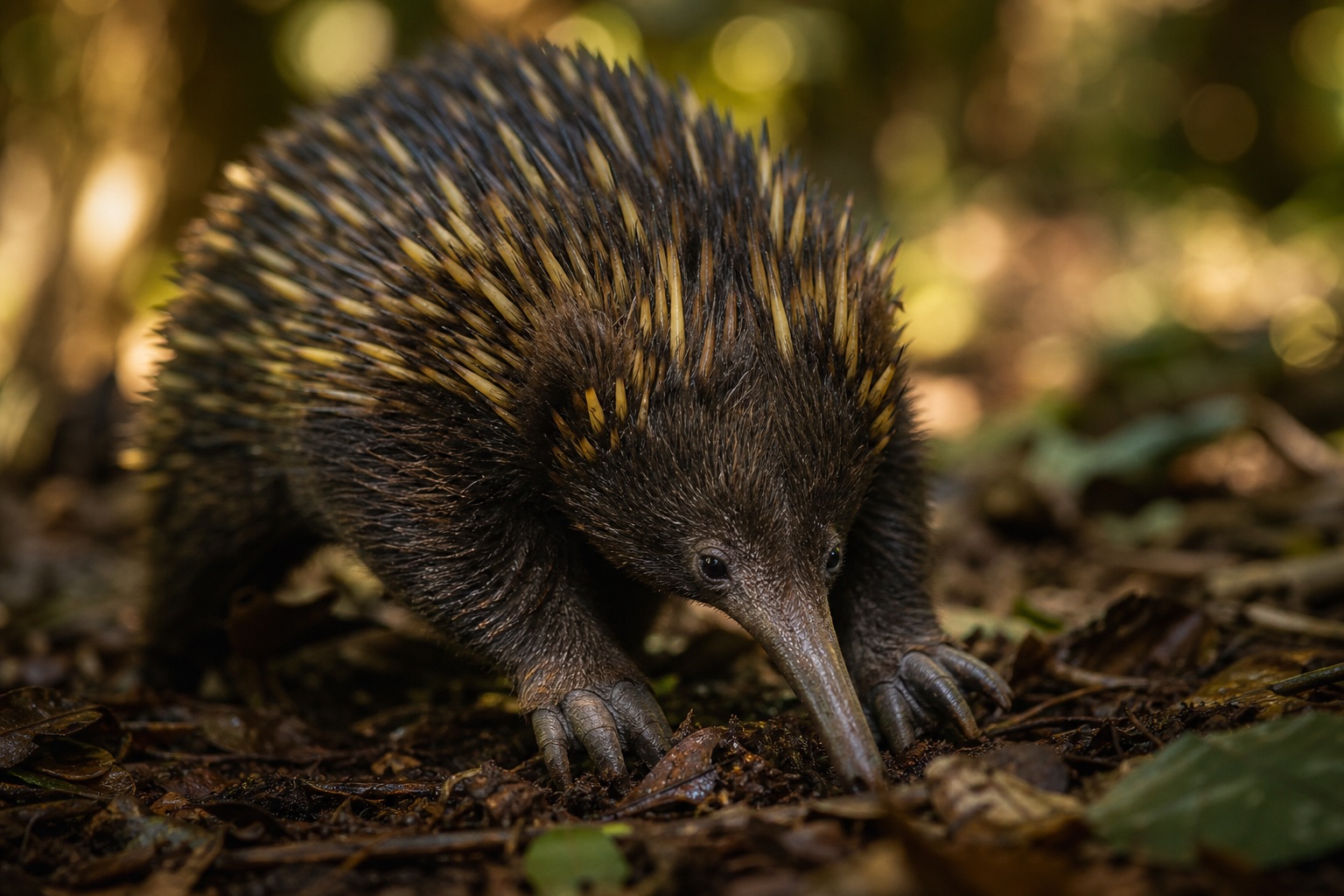
AI-generated educational wildlife portrait — World Animal Rescue Network · AI visualisation, not a photograph
In brief
Long-beaked echidnas (genus Zaglossus) are egg-laying monotreme mammals of New Guinea highland forest; Attenborough's long-beaked echidna was not recorded for roughly sixty years until camera-trap images in 2023, and the genus is Critically Endangered.
Also in Animals A to Z · Animals that start with L
How you can help
You can support the related appeal — read its purpose, recipient status and fund terms first — or give once to where it is needed most. Sharing accurate information helps too.
By WARN Research & Conservation Team Last updated
Long-beaked echidnas are egg-laying mammals of New Guinea's highland forest — monotremes, in the same ancient lineage as the platypus covered at platypus and the short-beaked echidna of Australia. Only five monotreme species survive worldwide: one platypus and four echidnas. Long-beaked echidnas belong to the genus Zaglossus and are larger than short-beaked echidnas, with a straight elongated snout bearing electroreceptors for detecting prey in soil and leaf litter. Attenborough's long-beaked echidna — named for the broadcaster and naturalist — was not recorded between 1961 and 2023, when camera traps in the Cyclops Mountains of Indonesian New Guinea photographed it again. That gap of roughly six decades illustrates how little is known about New Guinea's highland interior and how a Critically Endangered mammal can vanish from scientific view while forest is still being cleared around it.
5
Living monotreme species — platypus plus four echidnas
~60 yr
Attenborough's echidna absent from records until 2023
Electro-
Receptors in the snout detect prey in soil
Eggs
Lay leathery eggs; young lap milk from skin patches
Figures sourced from IUCN Red List — Zaglossus attenboroughi, Expedition Cyclops — Attenborough's echidna rediscovery (2023) .
Long-beaked Echidna: Quick Facts
| Reproduction | Egg-laying monotreme |
|---|---|
| Living monotremes | Five species worldwide |
| Snout | Elongated, with electroreceptors |
| Diet | Earthworms and soil invertebrates |
| IUCN status | Critically Endangered (genus) |
| Main threats | Hunting; highland forest loss |
Scientific Classification
| Kingdom | Animalia |
|---|---|
| Phylum | Chordata |
| Class | Mammalia |
| Order | Monotremata |
| Family | Tachyglossidae |
| Genus | Zaglossus |
| Species | Three species — including Z. attenboroughi |
Conservation Status
- IUCN Status
- Critically Endangered
- Population
- Unknown — no reliable estimates for any species
- Trend
- Decreasing
- Assessed
- Varies by species
- CITES
- Appendix II
Attenborough's long-beaked echidna was photographed on camera traps in 2023 after roughly sixty years without records. Rediscovery is not recovery.
Did you know?
Attenborough's long-beaked echidna went unrecorded by science for roughly sixty years — from 1961 until camera traps in the Cyclops Mountains captured it again in 2023.
Key Facts: Long-beaked Echidna
- Long-beaked echidnas are monotremes — egg-laying mammals — one of only five surviving monotreme species alongside the platypus and short-beaked echidnas.
- The genus Zaglossus includes three species confined to New Guinea highland forest, distinguished by size, snout shape and range.
- Attenborough's long-beaked echidna was not recorded between 1961 and 2023, when camera traps in the Cyclops Mountains photographed it again.
- The snout carries electroreceptors that detect the electrical signals of worms and other invertebrates in soil — a sense shared with the platypus.
- All long-beaked echidna species are listed Critically Endangered, threatened by hunting and highland forest loss.
- Over 90% of land in Papua New Guinea is held under customary tenure, so highland forest protection depends on landowning clans as much as on formal reserves.
Egg-laying mammals
Monotremes split from other mammals roughly 180 million years ago and retain the ancestral trait of laying leathery eggs while still producing milk. A female long-beaked echidna lays a single egg into a pouch-like fold, incubates it for about ten days, and the hatchling laps milk secreted from skin patches — no nipples.
That combination defines mammals as strongly as live birth does: warm-blooded, milk-fed young, but eggs instead of uterine development. WARN's platypus guide at platypus covers the other major monotreme lineage — semi-aquatic, electroreceptive bill, venomous spurs in males. Long-beaked echidnas are terrestrial highland specialists with a simpler snout shape but the same electroreceptive hunting toolkit.
Attenborough's echidna and the sixty-year gap
Attenborough's long-beaked echidna — Zaglossus attenboroughi — is known from very few specimens and sightings. Recorded in 1961 in the Cyclops Mountains of Indonesian New Guinea, it then disappeared from scientific records for roughly six decades. In 2023, camera traps set during an expedition to the same mountain range captured the first photographs in that interval.
The gap is not proof the species was absent — local people in the Cyclops Mountains reported continued presence — but it shows how poorly surveyed New Guinea highlands remain and how a Critically Endangered animal can exist on the edge of scientific oblivion. The Cyclops range is under pressure from hunting and encroachment; rediscovery does not mean recovery.
Electroreception and the long snout
Long-beaked echidnas probe soil and rotting wood for earthworms and other invertebrates. The snout carries electroreceptors — up to thousands in some Zaglossus species — that detect the faint bioelectric fields generated by muscle movement in buried prey. The animal can hunt with minimal reliance on sight or smell in dark leaf litter.
Short-beaked echidnas of Australia share electroreception but have a shorter, more curved snout adapted to ants and termites. Long-beaked species are worm specialists of wet highland forest, which makes them sensitive to soil disturbance, logging and the drying that follows forest removal.
Customary land and highland pressure
New Guinea highland forest is held under a mix of customary and state tenure depending on province and country, but in Papua New Guinea over 90% of land remains under customary ownership. Hunting with dogs is widespread; echidnas are slow and defensively roll into a spiny ball rather than flee, which makes them vulnerable once found.
Highland forest clearance for gardens, roads and mining removes habitat directly. Because long-beaked echidnas are poorly studied, population estimates are largely absent — the Critically Endangered listing reflects small range, inferred decline and intense local pressure rather than precise counts. Protection that ignores customary landowners cannot work where they control access to the forest.
What WARN Does
WARN publishes free, sourced species education, including where rediscovery is not recovery. Attenborough's long-beaked echidna reappeared on camera traps in 2023 after roughly sixty years without records, but the genus remains Critically Endangered and highland forest across New Guinea is still being lost.
If this guide helps you understand wildlife and the pressures it faces, a gift to WARN supports habitat protection and free public education in our partner countries.
How can I help save the long-beaked echidna?
Explore practical ways to support the long-beaked echidna, from everyday choices and sharing reliable information to reviewing a related appeal before giving.
Explore ways to support
Read the related appeal’s purpose, recipient status and fund terms. Choose an affordable gift after checking what is proposed and what has been reported.
Ease the pressures
Avoid the wildlife trade and souvenirs, never buy wild animals as pets, and choose sustainable, habitat-friendly products — the threats behind the long-beaked echidna's decline fall when demand does.
Spread the word
Share accurate, sourced information about the long-beaked echidna. Wider awareness is what turns concern into lasting protection.
Long-beaked Echidna: Frequently Asked Questions
How can I help save the long-beaked echidna?
Do long-beaked echidnas lay eggs?
What is Attenborough's long-beaked echidna?
How are long-beaked echidnas related to the platypus?
Why are long-beaked echidnas Critically Endangered?
How do long-beaked echidnas find food?
What do long-beaked echidnas eat?
Where do long-beaked echidnas live?
How long do long-beaked echidnas live?
How big is a long-beaked echidna?
Sources & References
Population figures, conservation status and biological facts on this page are drawn from authoritative scientific and intergovernmental sources.
Terms used on this page
Plain-English definitions, from our wildlife and conservation glossary.
Explore more animals
Discover more animals, their habitats and their conservation status in the WARN wildlife-guide library.
Enjoyed this Long-beaked Echidna guide?
Receive appeal updates, animal-welfare news and published funding reports. Unsubscribe any time.
We only use your address for WARN updates. See our privacy policy.