Wildlife Guide · Farmland, wet meadows and moorland across Eurasia & Steeply declining British breeder; winter visitor flocks on lowland fields
Lapwing
Vanellus vanellus (Linnaeus, 1758) — family Charadriidae
Peewit over the wet meadow — and a farmland collapse still unfolding.
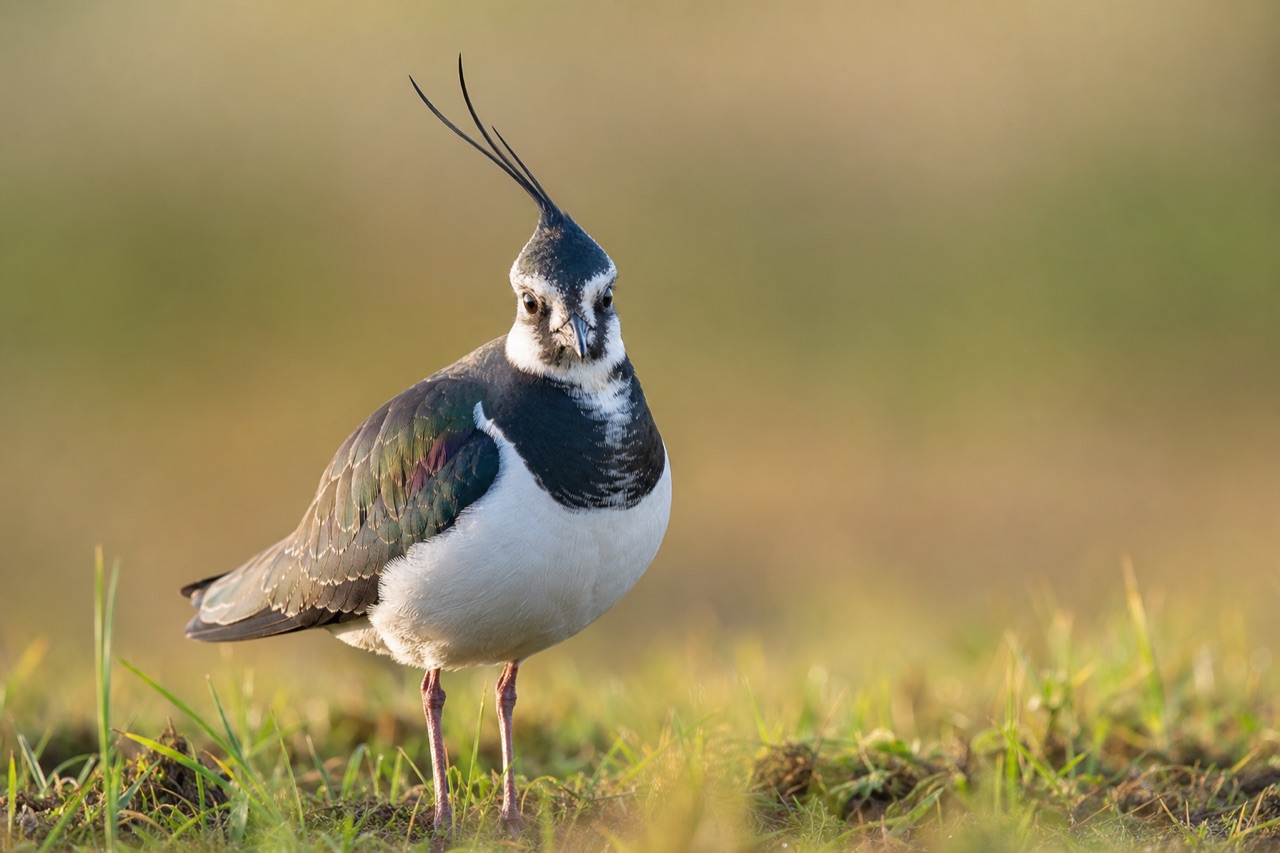
AI-generated educational wildlife portrait — World Animal Rescue Network · AI visualisation, not a photograph
In brief
The northern lapwing (Vanellus vanellus) is a crested farmland wader with peewit call and tumbling display; British breeding numbers have fallen steeply — Red-listed — as wet meadows drained and spring nesting habitat vanished, and the species is Near Threatened globally.
Also in Animals A to Z · Animals that start with L
How you can help
You can support the related appeal — read its purpose, recipient status and fund terms first — or give once to where it is needed most. Sharing accurate information helps too.
By WARN Research & Conservation Team Last updated
The northern lapwing — peewit, tewit, green plover — is a crested wader of open farmland and wet grassland. Iridescent green-black above, white below, with a wispy crest and broad rounded wings, it displays in tumbling flight over breeding fields, calling the peewit that names it in dialect. Lapwings nest in a scrape on open ground — spring cereals, rough pasture, wet meadows, moorland edge — laying well-camouflaged eggs that fail when fields are drilled, rolled, mown or sprayed too early. British breeding lapwings have declined steeply — Red-listed — as mixed farmland disappeared, wet grassland drained and autumn sowing replaced spring crops that once left bare fallow for nesting. Near Threatened globally, lapwings are the wader people remember from childhood fields — flocks over winter plough, tumbling display over summer pasture. That memory outlasts the birds in much of lowland England and Wales. Recovery needs wet grassland, spring cropping, fallow and sympathetic grazing — the farmland architecture lapwings evolved with, and which intensive arable removed field by field. Lapwing was once so common that farmers timed spring work around nesting fields — that cultural integration broke when autumn sowing and drainage removed the bare ground and wet pasture lapwings require.
Near Threatened
Global status — European farmland declines
Red-listed UK
Steep breeding decline since 1980s
Peewit call
Names the bird in dialect across Britain
Ground nest
Scrape in arable, pasture and wet meadow
Figures sourced from IUCN Red List — Vanellus vanellus, BTO — BirdFacts: Lapwing .
Lapwing: Quick Facts
| Call | Peewit — names the bird in dialect |
|---|---|
| Display | Tumbling flight over breeding territory |
| UK status | Red-listed; steep breeding decline |
| Global status | Near Threatened |
| Nest | Ground scrape in arable and wet meadow |
| Key threat | Early field ops, drainage, autumn sowing |
| Recovery need | Wet grassland, spring cereal, late hay cut |
Scientific Classification
| Kingdom | Animalia |
|---|---|
| Phylum | Chordata |
| Class | Aves |
| Order | Charadriiformes |
| Family | Charadriidae |
| Genus | Vanellus |
| Species | Vanellus vanellus |
Conservation Status
- IUCN Status
- Near Threatened
- Population
- European breeding population declined substantially
- Trend
- Decreasing across western Europe including Britain
- Assessed
- 2016
- CITES
- Not listed
Red-listed in Britain. Farmland nesting calendar clash is primary breeding failure mechanism. Winter flock size masks breeding collapse.
Did you know?
Lapwings perform broken-wing distraction displays — feigning injury to lure foxes and crows away from their ground nest scrape.
Key Facts: Lapwing
- Lapwings are crested farmland waders — green-black above, tumbling display flight, peewit call.
- Nest in ground scrape on arable, pasture and wet meadow — destroyed by early field operations.
- British breeding lapwings Red-listed after steep decline — lost from much of lowland farmland.
- Near Threatened globally — farmland intensification across Europe.
- Winter flocks on plough and pasture are a mix of breeders and continental visitors.
- Recovery needs wet grassland, spring cereals, fallow and delayed field operations in nesting season.
- Lapwings mob predators in communal defence — distraction display draws attention from nest.
Peewit display over the breeding field
Male lapwings establish territory from February, calling peewit from the ground and performing tumbling display flight — broad wings flapping slowly, crest erect, calling continuously. The display advertises territory to females and warns rivals.
Nests are scrapes in bare or short vegetation — spring barley, rough grazing, wet meadow, moorland edge. Eggs are cryptic against earth and crop stubble; chicks leave the nest within hours and feed themselves, brooded by parents. The mobile chick strategy fails when the field is rolled, sprayed or harvested before fledging.
Lapwings mob avian predators — diving at crows, gulls and raptors — and perform broken-wing distraction to draw mammalian predators from the nest. Communal defence helps where lapwings still nest in small colonies. A single peewit displaying over a field in March is advertising intent — whether the field still allows success depends on what happens to that crop in May and June.
Lapwing chicks feed themselves on invertebrates in short vegetation — parents lead them to food but do not provision them as songbirds do. Chick food depends on wet soil invertebrates near the nest scrape; dry springs and pesticide reduction of soil fauna fail broods even when nests survive initial field operations.
Lapwing double-brooding is rare in Britain — most pairs raise one brood per season, so single nest failure in a mown field ends the year's reproductive attempt entirely. That makes calendar clash with farming operations especially damaging compared with species that renest after failure.
Lapwing roosts on inland lakes and estuaries in winter can hold mixed flocks of British and continental birds — roost disturbance at dusk affects winter survival though breeding habitat remains the primary crisis.
Farmland change and the nesting calendar clash
Lapwings evolved with spring-sown cereals, bare fallow, wet pasture and mixed farming that left nesting windows open from March through June. Agricultural intensification removed those windows: autumn sowing covers fields in winter wheat before lapwings nest; drainage removed wet meadows; silage cuts hay before chicks fledge; pesticide reduced invertebrate food for chicks.
The result is predictable: nest destruction by field operations is the primary cause of breeding failure on arable land. A lapwing nest in spring barley may succeed if the crop is sown late and rolled before nesting but not after; an autumn-sown wheat field offers no bare ground at the right time.
Where lapwings persist — coastal grazing marshes, upland fringes, nature reserves with late-cut meadows, spring cereal schemes — management is explicit about timing. Lapwing recovery is a calendar problem as much as a habitat problem. The peewit call is easy to hear; the field operation that destroys the nest is often invisible to anyone not farming the land.
Head-starting and electric fencing projects at nature reserves demonstrate that lapwing breeding success can be raised when habitat and predation are managed together — fenced exclosures on wet meadows produce fledglings that help stabilise local populations while wider farmland change continues.
Silage cutting in May and June destroys lapwing broods on grassland as hay cutting does — the switch from hay to silage removed the late-July window that once allowed lapwing chicks to fledge on meadow fields.
Red list, Near Threatened and the winter flock illusion
British lapwing breeding numbers fell by more than half from the 1980s — Red-listed, with range contraction across lowland England and Wales. Ireland and the Netherlands show parallel losses. IUCN Near Threatened status reflects European-wide farmland wader decline.
Winter flocks on lowland plough can still number hundreds — birds from Britain, continental Europe and beyond — creating an illusion of abundance. Breeding surveys separated the trends: winter visitors masked local breeding extinction.
The lapwing is a conservation icon for farmland bird decline alongside grey partridge, yellow wagtail and corn bunting — species that shared the mixed farm and lost it together. Seeing lapwings in winter does not mean lapwings breed nearby — it often means the opposite.
Lapwing was once a common farmland bird across lowland Britain — folk names and dialect poetry record abundance that surveys no longer find. Cultural memory of peewits exceeds current breeding distribution, which makes public engagement easier but also masks how recent and steep the collapse has been.
Predator management for lapwing on reserves is controversial but used where breeding density is critically low — fox control alone fails without habitat; habitat alone fails where fox predation on ground nests is the limiting factor on small isolated fields.
What lapwing recovery looks like on the ground
Lapwing recovery schemes use wet grassland creation, fallow plots within arable rotations, spring cereal options, delayed mowing of meadows until midsummer, and predator management in key areas. Agri-environment payments that fund these measures exist where policy prioritises farmland waders.
Reporting breeding lapwings — display, nest scrape, chicks — contributes to monitoring that tracks recovery. Every field with tumbling peewits in spring is a site worth protecting through harvest and grazing timing.
The lapwing connects cultural memory — grandparents' stories of field-edge nests — to measurable collapse. Near Threatened globally, Red-listed in Britain, recoverable where wet meadow and spring arable return to landscapes that currently grow winter wheat to the fence line. The peewit call is the sound of a calendar that modern farming forgot.
Farmland wader recovery clusters lapwing with golden plover, snipe and curlew — shared need for wet grassland, late cuts and spring cropping. Agri-environment options that fund fallow and wet pasture help multiple species from one field management package rather than species-by-species intervention.
Lapwing eggs were once collected for food in rural Britain — historical abundance is documented in old recipes and farm accounts. That cultural memory contrasts sharply with Red List status today.
What WARN Does
WARN publishes free, sourced species education for farmland birds in steep decline. The lapwing is Near Threatened globally and Red-listed in Britain — peewit call a memory in fields that now hold no nest scrape.
If this guide helps you understand wildlife and the pressures it faces, a gift to WARN supports habitat protection and free public education in our partner countries.
How can I help save the lapwing?
Explore practical ways to support the lapwing, from everyday choices and sharing reliable information to reviewing a related appeal before giving.
Explore ways to support
Read the related appeal’s purpose, recipient status and fund terms. Choose an affordable gift after checking what is proposed and what has been reported.
Ease the pressures
Avoid the wildlife trade and souvenirs, never buy wild animals as pets, and choose sustainable, habitat-friendly products — the threats behind the lapwing's decline fall when demand does.
Spread the word
Share accurate, sourced information about the lapwing. Wider awareness is what turns concern into lasting protection.
Lapwing: Frequently Asked Questions
How can I help save the lapwing?
Why are lapwings called peewits?
Why are lapwings declining?
Are lapwings endangered?
Where do lapwings nest?
Where do northern lapwings live?
Are northern lapwings dangerous?
How long do northern lapwings live?
Sources & References
Population figures, conservation status and biological facts on this page are drawn from authoritative scientific and intergovernmental sources.
Terms used on this page
Plain-English definitions, from our wildlife and conservation glossary.
Explore more animals
Discover more animals, their habitats and their conservation status in the WARN wildlife-guide library.
Enjoyed this Lapwing guide?
Receive appeal updates, animal-welfare news and published funding reports. Unsubscribe any time.
We only use your address for WARN updates. See our privacy policy.