Wildlife Guide · Asia
Javan Rhino
Rhinoceros sondaicus
The rarest rhino on Earth
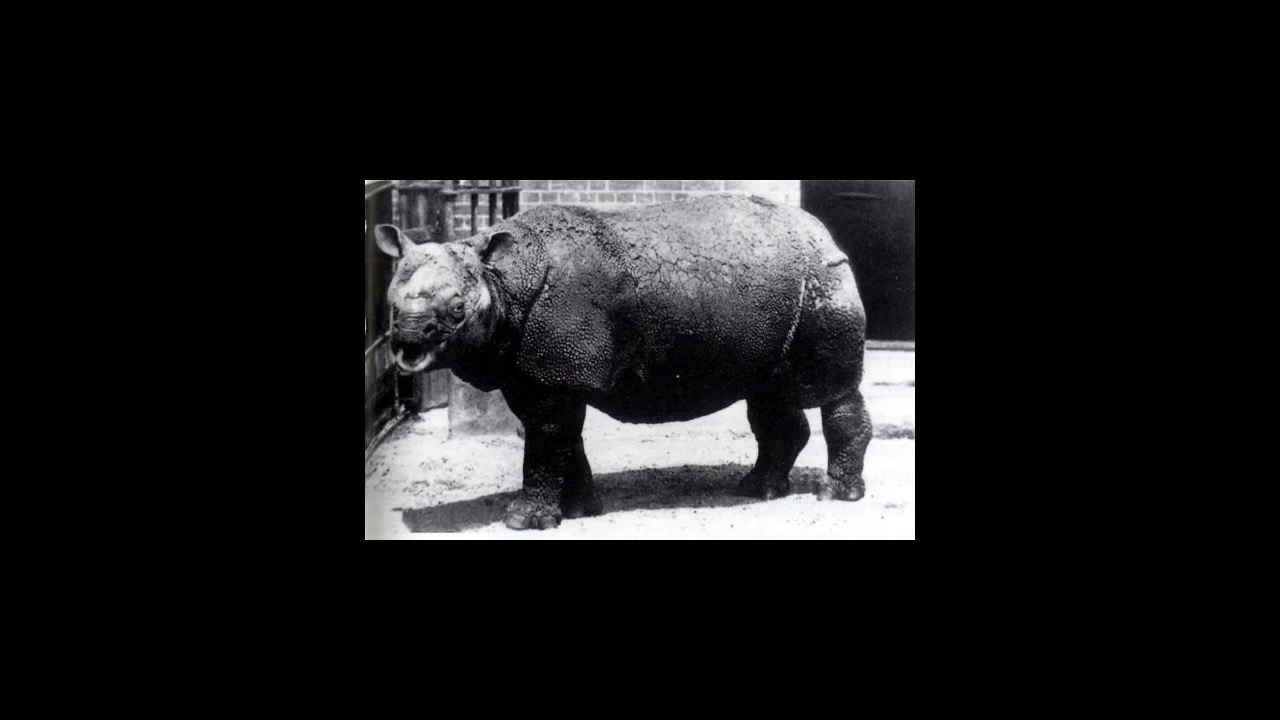
Photo: T.Dixon. The Zoological Society of London / Wikimedia Commons (Public domain)
In brief
The Javan rhinoceros is the rarest of all rhino species, with roughly 70 individuals surviving in a single national park on Java, Indonesia. Smaller than the Indian rhino at 900–2,300 kg (2,000–5,000 lb), it has a single horn and nearly hairless grey skin, and is Critically Endangered from historic hunting and tiny range.
Also in Animals A to Z · Animals that start with J
How you can help
You can support the related appeal — read its purpose, recipient status and fund terms first — or give once to where it is needed most. Sharing accurate information helps too.
By WARN Research & Conservation Team Last updated
The Javan rhinoceros is the rarest of all rhino species, with roughly 70 individuals surviving in a single national park on Java, Indonesia. Smaller than the Indian rhino at 900–2,300 kg (2,000–5,000 lb), it has a single horn and nearly hairless grey skin, and is Critically Endangered from historic hunting and tiny range.
3.2 m
Typical length
1500 kg
Typical weight
30 km/h
Top speed
40 yrs
Lifespan
Figures sourced from IUCN Red List — Javan Rhino, Wikipedia — Javan Rhino, Wikidata — Javan Rhino .
Javan Rhino: Quick Facts
| Scientific name | Rhinoceros sondaicus |
|---|---|
| Diet | Herbivore — shoots, twigs, fallen fruit, and leaves |
| Habitat | Dense tropical rainforest and tall grass in lowland Java |
| Lifespan | 30–45 years in the wild |
| Weight | 900–2,300 kg (2,000–5,000 lb); males larger |
| Top speed | Up to 30 km/h (19 mph) in short charge |
| Conservation status | Critically Endangered (IUCN) |
Scientific Classification
| Kingdom | Animalia |
|---|---|
| Phylum | Chordata |
| Class | Mammalia |
| Order | Perissodactyla |
| Family | Rhinocerotidae |
| Genus | Rhinoceros |
Conservation Status
- IUCN Status
- Critically Endangered (IUCN Red List)
- Population
- See the IUCN Red List assessment
- Trend
- Stable
- Assessed
- 2020
- CITES
- See CITES appendices
Key documented threats: Poaching for horn; A single, tiny isolated population; Vulnerability to disease and natural disasters; Invasive Arenga palm reducing habitat.
Key Facts: Javan Rhino
- All surviving Javan rhinos live in Ujung Kulon National Park at the western tip of Java — a peninsula isolated by the 1883 Krakatau eruption and tsunami.
- Unlike grass-grazing white rhinos, Javan rhinos browse woody vegetation in dense rainforest, using a pointed upper lip to strip shoots and fallen fruit.
- With fewer than 80 individuals, the Javan rhino is the rarest large mammal on Earth.
Where do the last Javan rhinos live?
All surviving Javan rhinos live in Ujung Kulon National Park at the western tip of Java — a peninsula isolated by the 1883 Krakatau eruption and tsunami. No Javan rhinos remain in their former range across Southeast Asia, Vietnam, or India. One park is the entire species. That is the conservation fact that matters more than any adjective.
What do Javan rhinos eat?
Unlike grass-grazing white rhinos, Javan rhinos browse woody vegetation in dense rainforest, using a pointed upper lip to strip shoots and fallen fruit. They follow regular trails through undergrowth and wallow in mud to cool and deter insects. Invasive Arenga palm crowding out food plants is therefore a direct threat, not landscaping trivia.
How rare is the Javan rhino?
With fewer than 80 individuals, the Javan rhino is the rarest large mammal on Earth. The last Javan rhino in Vietnam was poached in 2010. Every birth in Ujung Kulon is monitored by camera traps — the population is too small to survive a disease outbreak or natural disaster. Roughly 70–75 is the range this guide already published; it is not a new census.
Why is a second population so hard?
Plans to establish a second population on Java or elsewhere have progressed slowly due to habitat requirements, tsunami risk at Ujung Kulon, and the invasive Arenga palm crowding out rhino food plants. Anti-poaching success means natural threats now dominate. A second site is insurance; it is also slow, expensive, and easy to announce before the habitat is actually ready.
Does WARN run a Javan rhino programme?
WARN does not operate in Ujung Kulon or manage the last Javan rhinos. This guide provides educational context. The rhino appeal separately describes proposed eligible support and its funding status; a species range country is not evidence of a grant relationship.
What WARN Does
WARN publishes this guide for education and is developing support through assessed animal-welfare grants. A species range, source citation or photograph does not establish a recipient or funding agreement. Check /about/where-your-money-goes/#grant-register for published grant and payment records; records not yet published must not be read as zero activity. Browse /appeals/ for the purposes currently available to support.
If clear, science-based wildlife guides like this help you understand and value animals, please consider supporting the World Animal Rescue Network's educational and rescue work so we can keep producing them.
How can I help save the javan rhino?
Explore practical ways to support the javan rhino, from everyday choices and sharing reliable information to reviewing a related appeal before giving.
Explore ways to support
Read the related appeal’s purpose, recipient status and fund terms. Choose an affordable gift after checking what is proposed and what has been reported.
Ease the pressures
Avoid the wildlife trade and souvenirs, never buy wild animals as pets, and choose sustainable, habitat-friendly products — the threats behind the javan rhino's decline fall when demand does.
Spread the word
Share accurate, sourced information about the javan rhino. Wider awareness is what turns concern into lasting protection.
Javan Rhino: Frequently Asked Questions
How can I help save the javan rhino?
How many Javan rhinos are left?
Javan rhino vs Indian rhino?
Why are Javan rhinos Critically Endangered?
Do Javan rhinos have two horns?
What do javan rhinos eat?
Where do javan rhinos live?
Are javan rhinos dangerous?
How long do javan rhinos live?
How big is a javan rhino?
Sources & References
Population figures, conservation status and biological facts on this page are drawn from authoritative scientific and intergovernmental sources.
Terms used on this page
Plain-English definitions, from our wildlife and conservation glossary.
Latest Javan Rhino Stories
Quick, fact-checked reads on the javan rhino — amazing facts, key questions and the threats it faces.
Species
Slow Loris: Why the Internet's Favourite Pet Is a Conservation Disaster
The slow loris looks like a cartoon character — and that has nearly destroyed the species. Here is the truth behind the viral videos.
Read the storySpecies
The Snow Leopard: Why the Ghost of the Mountains Is Still Vulnerable
The snow leopard is one of the most elusive big cats on earth, with an estimated 4,000-6,500 individuals across twelve range states — including Pakistan, where WARN is preparing to operate. This briefing explains why the species was downlisted from Endangered to Vulnerable in 2017 and why that is not the success story it sounds like.
Read the storyGuides
Sun Bear vs Moon Bear: The Two Most Trafficked Asian Bears
The sun bear and the Asiatic black bear (moon bear) are the two most commonly trafficked bears in Asia — for the pet trade, for traditional medicine and for bear-bile farming. Here is how to tell them apart.
Read the storyExplore more animals
Discover more animals, their habitats and their conservation status in the WARN wildlife-guide library.
Enjoyed this Javan Rhino guide?
Receive appeal updates, animal-welfare news and published funding reports. Unsubscribe any time.
We only use your address for WARN updates. See our privacy policy.