Wildlife Guide · Coasts, estuaries, inland lakes and urban rooftops worldwide & British species include herring, lesser black-backed, black-headed, great black-backed and kittiwake
Gull
Laridae — family of gulls, terns and skimmers including Larus, Chroicocephalus and related genera
There is no species called seagull — and several gulls are in real trouble.
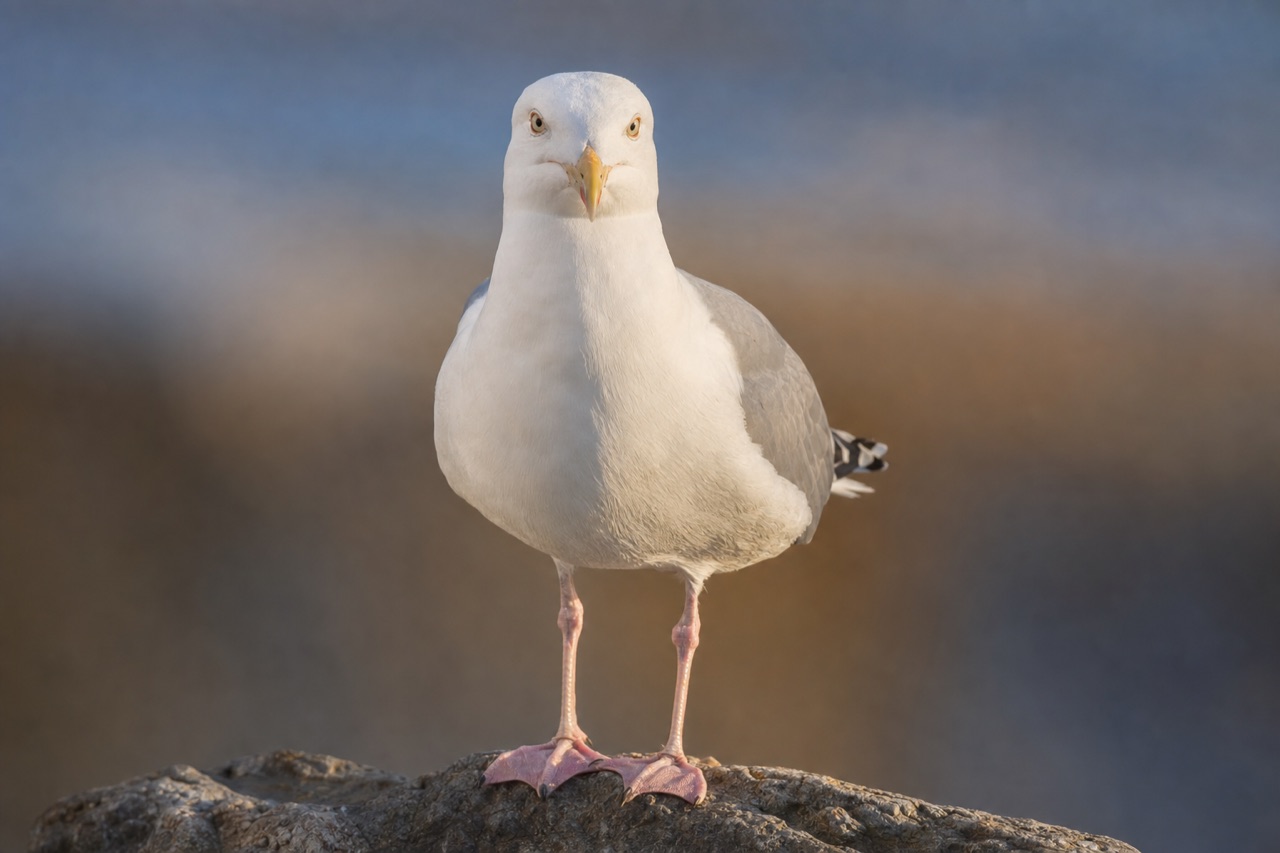
AI-generated educational wildlife portrait — World Animal Rescue Network · AI visualisation, not a photograph
In brief
Gulls belong to the family Laridae — there is no species called 'seagull'; British gulls include herring, lesser black-backed, black-headed and kittiwake, with several Red-listed or declining while remaining common in urban and coastal settings.
Also in Animals A to Z · Animals that start with G
By WARN Research & Conservation Team Last updated
There is no bird species called a seagull. 'Seagull' is a casual name people apply to almost any white and grey gull near the coast — but ornithologists and conservation lists recognise separate species, each with different ecology, population trend and conservation status. Calling everything a seagull hides that split, and it hides serious decline in several British breeding gulls. Britain's regular gulls include the herring gull (Larus argentatus), lesser black-backed gull (Larus fuscus), great black-backed gull (Larus marinus), black-headed gull (Chroicocephalus ridibundus) and kittiwake (Rissa tridactyla) — a true cliff-nesting seabird. They range from the small black-headed gull of inland lakes and car parks to the massive great black-backed gull that predates other seabirds. Size, leg colour, wing pattern and season all matter for identification. Several British gulls are Red-listed. Herring gull breeding numbers have fallen substantially on cliffs and rooftops. Kittiwake — the gull with a yellow bill and black wing tip that never ventures to town bins — is Vulnerable globally and in steep decline on North Sea colonies. Lesser black-backed gull trends are mixed. The gull on your chip is probably a herring or lesser black-backed; the gull on the Arctic cliff may be a kittiwake in trouble — same family, different stories that a single misleading name collapses into one.
No 'seagull'
Informal name only — many distinct Laridae species
Red-listed UK
Herring gull and kittiwake among declining breeders
Kittiwake
Vulnerable globally — cliff specialist, not a bin scavenger
Urban adaptors
Herring and lesser black-backed nest on rooftops
Figures sourced from IUCN Red List — Rissa tridactyla (Kittiwake), BTO — BirdFacts: Herring Gull .
Gull: Quick Facts
| 'Seagull' | Not a species — informal name for Laridae gulls |
|---|---|
| Kittiwake status | Vulnerable globally; Red-listed in Britain |
| Herring gull | Amber-listed; coastal breeding declined |
| Urban nesters | Herring and lesser black-backed on rooftops |
| Largest gull | Great black-backed — predatory at seabird colonies |
| Inland gull | Black-headed — lakes, marshes, winter fields |
| Main seabird threat | Prey shortage, climate change, fisheries pressure |
Scientific Classification
| Kingdom | Animalia |
|---|---|
| Phylum | Chordata |
| Class | Aves |
| Order | Charadriiformes |
| Family | Laridae |
| Example genera | Larus, Rissa, Chroicocephalus |
| British species | Herring, lesser black-backed, great black-backed, black-headed, kittiwake |
Conservation Status
- IUCN Status
- Least Concern
- Population
- Family-wide; kittiwake Vulnerable; herring gull declining on coast
- Trend
- Varies — kittiwake decreasing; urban herring gull stable locally
- Assessed
- Varies by species
- CITES
- Not listed (family overview)
Kittiwake is Vulnerable globally. Herring gull is Amber-listed in Britain. Family overview — check species-level status for each gull.
Did you know?
Kittiwakes nest on cliff ledges and feed on fish at sea — they never scavenge chip shops, despite both being 'gulls'.
Key Facts: Gull
- 'Seagull' is not a species — herring gull, kittiwake and black-headed gull are separate birds with different trends.
- Herring gull breeding numbers have declined on cliffs and coasts despite appearing common in towns.
- Kittiwake is Vulnerable globally and declining on North Sea colonies — a true seabird, not an urban scavenger.
- Great black-backed gull is the largest, predatory on other seabirds and chicks.
- Black-headed gull is the small inland gull of lakes, fields and winter car parks.
- Feeding gulls at the coast or in towns concentrates behaviour problems without helping declining cliff breeders.
- Fisheries bycatch, avian flu, habitat loss and reduced fish stocks pressure offshore species like kittiwake.
Why 'seagull' is the wrong word
Casual language treats every white-and-grey bird at the seaside as the same animal. It is not. Herring gulls nest on rooftops and cliffs; kittiwakes nest only on narrow cliff ledges and never scavenge town rubbish; black-headed gulls breed inland on lakes and marshes as often as on coasts. Identification uses size, bill pattern, leg colour, wing tips and season — adult herring gull has pink legs and a red spot on the bill; kittiwake is smaller with a yellow bill and solid black wing tip; black-headed gull loses its dark hood in winter.
The seagull myth matters for conservation. Policy and public sympathy respond to species, not to a generic bird. Kittiwake colonies on Scottish and North Sea cliffs have declined sharply — food shortage linked to sandeel stock changes and climate-driven prey shifts is among the documented pressures. Herring gull urban populations created an impression of abundance while coastal breeding fell. Same family, opposite trajectories.
Learning to name the gull — herring, lesser black-backed, great black-backed, black-headed, kittiwake — is the first step toward understanding which gulls need help and which urban conflicts need management rather than conservation panic. A chip-scavenger on a promenade and a cliff-nesting kittiwake share little beyond plumage palette and taxonomy.
Juvenile gulls of several species remain brown and mottled for multiple years — beginner birdwatchers often misidentify young herring gulls as a separate species. Learning the progression from juvenile through sub-adult to adult plumage is essential for gull identification and for understanding which age classes dominate urban scavenging flocks outside breeding season.
The British gull cast — who lives where
Herring gull: large, pink-legged, scavenges coast and town, nests on rooftops and cliffs, Amber-listed in Britain with coastal breeding decline. Lesser black-backed gull: similar size, dark grey back, yellow legs, nests on rooftops and islands, trends mixed by region. Great black-backed gull: the largest gull, black back and wings, predatory — takes other birds' chicks and adult puffins at colonies.
Black-headed gull: small, white leading edge to wings, dark brown hood in summer, breeds on inland wetlands and coasts, winters in flocks on farmland and urban water. Kittiwake: medium, cliff ledge nester, black wing tip as if dipped in ink, yellow bill, feeds at sea — Red-listed in Britain, Vulnerable globally.
Common gull — confusingly named — is another smaller species, breeding in Scotland and northern England. Each occupies a niche: inland wetland, urban rooftop, open sea cliff or predatory top tier. Winter flocks on estuaries and ploughland often mix species — identification in flight and at rest separates the conservation stories hidden inside the generic 'seagull' label.
Great black-backed gulls function as apex predators at seabird colonies — taking puffins, terns and smaller gulls. Their presence at a colony increases predation pressure on ground-nesting species and complicates conservation management where multiple gull species coexist on the same cliff or island.
Urban gulls, fishing boats and the chip problem
Herring and lesser black-backed gulls exploit human food waste — landfill, fish processing, harbour discards, tourist chips. Urban nesting on rooftops increased as coastal cliff sites became crowded or prey-poor, bringing gulls into conflict with residents — noise, mess, nest defence dive-bombing. Culling and egg-oiling are management tools in some towns; they address symptoms rather than the food subsidies that sustain urban populations.
Feeding gulls chips at the coast habituates birds to human food, increases aggression at picnic sites and teaches juvenile gulls to beg rather than fish. It does not help kittiwakes fishing sandeels offshore. Separating urban management from seabird conservation is essential: the herring gull on your roof is not the kittiwake failing to breed on a North Sea stack.
Fisheries matter for offshore gulls. Sandeel availability drives kittiwake breeding success; discards from trawlers historically supplemented gulls but discard reform has reduced that food stream. Climate-driven shifts in prey distribution affect cliff nesters first — the birds that never visit town. Understanding which gull you are watching determines whether your action should be bin lids or marine policy.
Black-headed gulls are the gull most people see inland — wintering on playing fields, park lakes and farmland after breeding on wetlands. Their inland abundance creates another layer of confusion with 'seagull' language — the bird on a city lake in December may be a black-headed gull that never saw the sea all year.
Red lists, kittiwake cliffs and what actually helps
British Red List status for gulls includes herring gull and kittiwake among breeding birds of concern. Kittiwake global Vulnerable status reflects North Atlantic colony failures linked to prey shortage and warming seas. Herring gull decline is coastal — urban numbers masked the trend until surveys separated rooftop from cliff populations.
Helping gulls means different actions by species. Kittiwake: marine protected areas, sustainable sandeel fisheries, climate mitigation — not chip discipline alone. Herring gull on coast: protect undisturbed breeding cliffs, reduce entanglement in fishing gear. Urban herring gull: secure bin lids, avoid deliberate feeding, manage rooftop nesting through building design rather than indiscriminate culling.
A family-level gull guide exists because people search 'seagull' and deserve accurate correction: many species, several in decline, no single bird called seagull. The gull you notice is probably common locally; the gull in conservation trouble may never visit your harbour. Naming the species is the first conservation act available to anyone with binoculars or a phone camera.
International cooperation matters for kittiwake and herring gull conservation — North Sea fish stocks and fishing effort cross national boundaries. A gull conservation strategy that stops at the harbour wall misses the offshore food web that cliff nesters depend on entirely.
What WARN Does
WARN publishes free, sourced species education that corrects common myths before they distort conservation. 'Seagull' is not a species — and several British gulls are Red-listed while chip-scavengers still seem abundant.
If this guide helps you understand wildlife and the pressures it faces, a gift to WARN supports habitat protection and free public education in our partner countries.
Gull: Frequently Asked Questions
Is 'seagull' a real species?
Which gulls are declining in Britain?
Should I feed gulls at the beach?
What is a kittiwake?
Why do gulls nest on rooftops?
Where do gulls live?
Are gulls dangerous?
How long do gulls live?
What do gulls eat?
Sources & References
Population figures, conservation status and biological facts on this page are drawn from authoritative scientific and intergovernmental sources.
Terms used on this page
Plain-English definitions, from our wildlife and conservation glossary.
Explore more animals
Discover more animals, their habitats and their conservation status in the WARN wildlife-guide library.
Enjoyed this Gull guide?
Receive appeal updates, animal-welfare news and published funding reports. Unsubscribe any time.
We only use your address for WARN updates. See our privacy policy.