Guinea Pig Breed · Domestic (Silkie × Crested cross)
Coronet
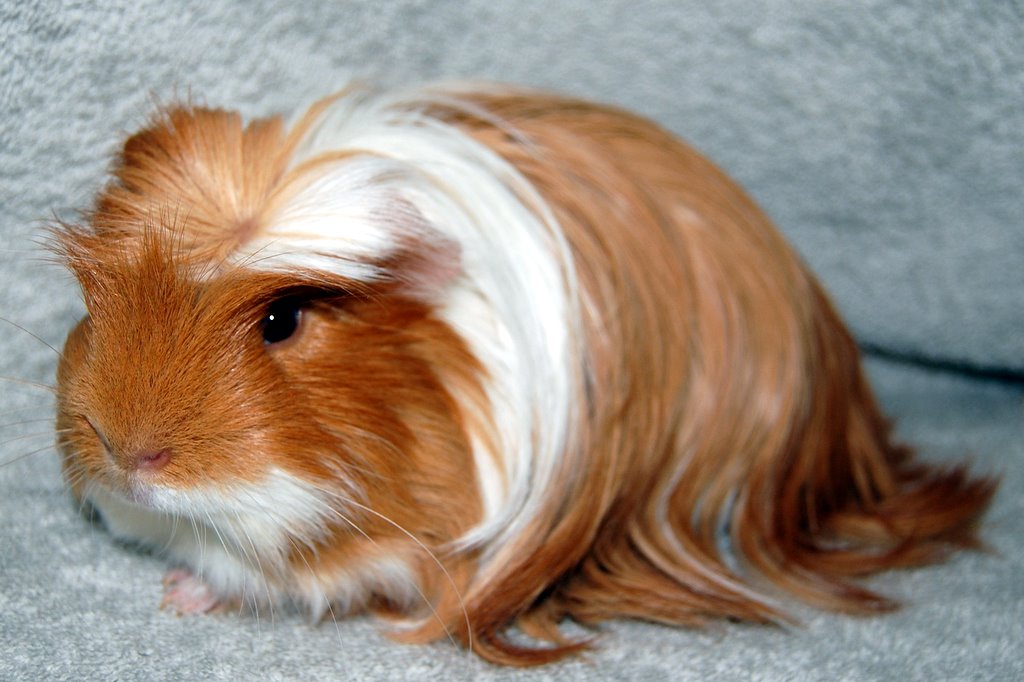
Silkie-length coat with a central crest rosette — long hair plus a crown.
By WARN Research & Conservation TeamLast updated
In brief
The Coronet guinea pig merges a Silkie-length sweeping coat with a single crest rosette on the crown — long hair plus a central cowlick. Its defining trait is dual grooming demand: daily longhair care plus crest maintenance without matting the show-piece rosette.
What are the key facts about a Coronet?
The Coronet is a guinea pig breed from Domestic (Silkie × Crested cross): medium (0.9–1.2 kg), sweet, sociable, grooming-intensive. Silkie-length coat with a central crest rosette — long hair plus a crown.
| Origin | Domestic (Silkie × Crested cross) |
|---|---|
| Size | Medium (0.9–1.2 kg) |
| Adult weight | 900–1,200 g (2–2.6 lb); crest adds height; long coat visually lengthens the body |
| Lifespan | 5–7 years |
| Coat type | Long, silky hair flowing backward from a defined circular crest rosette on the crown. Daily combing from crest to rump; crest itself needs gentle radial brushing to preserve shape. Rear hygiene trims match Silkie requirements. |
| Temperament | Sweet, sociable, grooming-intensive |
| Best suited to | Experienced cavy keepers enjoying both longhair grooming and show-style presentation — Coronets need companions but introductions must prevent coat chewing on the crest. |
Is a Coronet a good guinea pig for you?
A Coronet is a good guinea pig when your home matches experienced cavy keepers enjoying both longhair grooming and show-style presentation — coronets need companions but introductions must prevent coat chewing on the crest.. It is a sweet, sociable, grooming-intensive medium (0.9–1.2 kg) breed from Domestic (Silkie × Crested cross).
Silkie-length coat with a central crest rosette — long hair plus a crown. That one-line pitch is not a care plan. Factor grooming (Long, silky hair flowing backward from a defined circular crest rosette on the crown. Daily combing from crest to rump; crest itself needs gentle radial brushing to preserve shape. Rear hygiene trims match Silkie requirements.), typical adult size (900–1,200 g (2–2.6 lb); crest adds height; long coat visually lengthens the body), and the health issues listed below before you pay a deposit.
Meet adults of the breed, not only puppies or kittens, and prefer rescue or health-screened homes. A Coronet that looks right in a photo can still be the wrong animal for a small flat, a full-time office job, or a household that wanted a low-energy companion.
What is a Coronet?
Silkie-length coat with a central crest rosette — long hair plus a crown. Origin is Domestic (Silkie × Crested cross); coat or markings are described as Long, silky hair flowing backward from a defined circular crest rosette on the crown. Daily combing from crest to rump; crest itself needs gentle radial brushing to preserve shape. Rear hygiene trims match Silkie requirements..
Kennel and registry labels describe a type. Individual Coronets still vary, and rescue animals may be mixes.
Where does the Coronet come from?
Coronets come from Domestic (Silkie × Crested cross). Coronets were developed by crossing Silkie (Sheltie) longhairs with Crested cavies to combine backward mane flow with a central crown rosette.
British and European standards judge crest placement, symmetry amid long coat and overall coat length. Pet Coronets often arrive from breeders selling 'fancy' cavies without grooming education. The crest rosette is fragile — cage mates barber it first. Welfare advisers recommend Coronets only when owners already manage Peruvians or Silkies successfully; otherwise choose a Crested smooth coat or American for lower grooming load.
How much care does a Coronet need?
Plan 5–7 years of food, vet care, grooming and time. A Coronet is medium (0.9–1.2 kg) (900–1,200 g (2–2.6 lb); crest adds height; long coat visually lengthens the body) from Domestic (Silkie × Crested cross), with coat care described as long, silky hair flowing backward from a defined circular crest rosette on the crown. daily combing from crest to rump; crest itself needs gentle radial brushing to preserve shape. rear hygiene trims match silkie requirements..
Match daily exercise to the sweet, sociable, grooming-intensive temperament rather than to Instagram.
Grooming follows the coat, not a generic clip: Long, silky hair flowing backward from a defined circular crest rosette on the crown. Daily combing from crest to rump; crest itself needs gentle radial brushing to preserve shape. Rear hygiene trims match Silkie requirements.. Keep the animal lean; extra weight is a joint and heart tax, especially in a medium guinea pig.
Budget for unexpected vet bills. The health section below is why “cheap to buy” is not the same as cheap to keep.
What surprises people about the Coronet?
A few details about the breed, alongside the practical care information in this guide.
- Coronets combine Silkie length with the Crested's single crown rosette.
- Show preparation parts long hair around the crest to display symmetry.
- Barbering often targets the crest first — separate bullies quickly.
- Coronet is a distinct breed type, not merely a Silkie with accidental rosette.
What health issues should you know about in a Coronet?
Health concerns to discuss with your vet, including changes to watch for and everyday care. This is general guidance, not veterinary advice — always speak to your vet.
Wool block
Long Silky hair plus crest grooming increases ingested hair volume.
Care: Daily combing, unlimited hay and emergency care for gut stasis signs.
Crest barbering
Dominant cage mates chew the crown rosette, causing stress and skin nicks.
Care: Increase space, enrich and separate if crest damage continues.
Obesity
Long coats conceal rib coverage — overweight Coronets struggle to groom their own rears.
Care: Weigh weekly, limit pellets and trim rear coat for hygiene.
Who should skip a Coronet?
Skip a Coronet if you are homes that cannot match a sweet, sociable, grooming-intensive medium (0.9–1.2 kg) guinea pig from Domestic (Silkie × Crested cross). This Domestic (Silkie × Crested cross) guinea pig is medium (0.9–1.2 kg) and sweet, sociable, grooming-intensive — the mismatch is usually lifestyle, not a missing accessory.
This page is allowed to say no. Skip if you are homes that cannot match a sweet, sociable, grooming-intensive medium (0.9–1.2 kg) guinea pig from Domestic (Silkie × Crested cross).
A different guinea pig breed on this site may fit. Wanting “a Coronet” after a film or a colour photo is not a reason to ignore the skip list.
What are the hidden catches with a Coronet?
The hidden cost of a Coronet is usually not the purchase price. It is years of care, the health list on this page, and the mismatch between a sweet, sociable, grooming-intensive animal and a busy home.
The impulse-buy catch
A Coronet from Domestic (Silkie × Crested cross) is often sold on looks. Coat, colour and size are not a temperament test. Meet the adult animal, ask about health screening, and walk away from pressure sales.
The wool block catch
Long Silky hair plus crest grooming increases ingested hair volume. Daily combing, unlimited hay and emergency care for gut stasis signs.
The crest barbering catch
Dominant cage mates chew the crown rosette, causing stress and skin nicks. Increase space, enrich and separate if crest damage continues.
How does a Coronet compare with Crested and Lunkarya?
A Coronet is not interchangeable with Crested and Lunkarya. Compare origin, size, lifespan and temperament before you choose — those four lines prevent most regret.
| Guinea Pig fact | Coronet | Crested | Lunkarya |
|---|---|---|---|
| Origin | Domestic (Silkie × Crested cross) | Domestic (show standard) | Sweden (domestic mutation) |
| Size | Medium (0.9–1.2 kg) | Medium (0.9–1.2 kg) | Medium (0.8–1.1 kg) |
| Lifespan | 5–7 years | 5–7 years | 5–7 years |
| Temperament | Sweet, sociable, grooming-intensive | Calm, sociable, inquisitive | Gentle, shy until bonded, needs grooming |
What is the verdict on the Coronet?
Choose a Coronet only if the care, skip-if and health sections still look like your life after a week of thinking. Otherwise pick a different guinea pig or wait. Rescue is usually the better first door than a waiting-list puppy or kitten.
If the match is real, budget for 5–7 years of vet care and do not skip health screening. If it is not, walking away is the kind choice — for you and for the animal.
Guinea pigs deserve proper care
Guinea pigs are social, gentle companions that need pairs, spacious enclosures and vitamin C every day. WARN publishes these guides so fewer end up in rescues after impulse purchases.