Guinea Pig Breed · Domestic (rosette standard)
Abyssinian
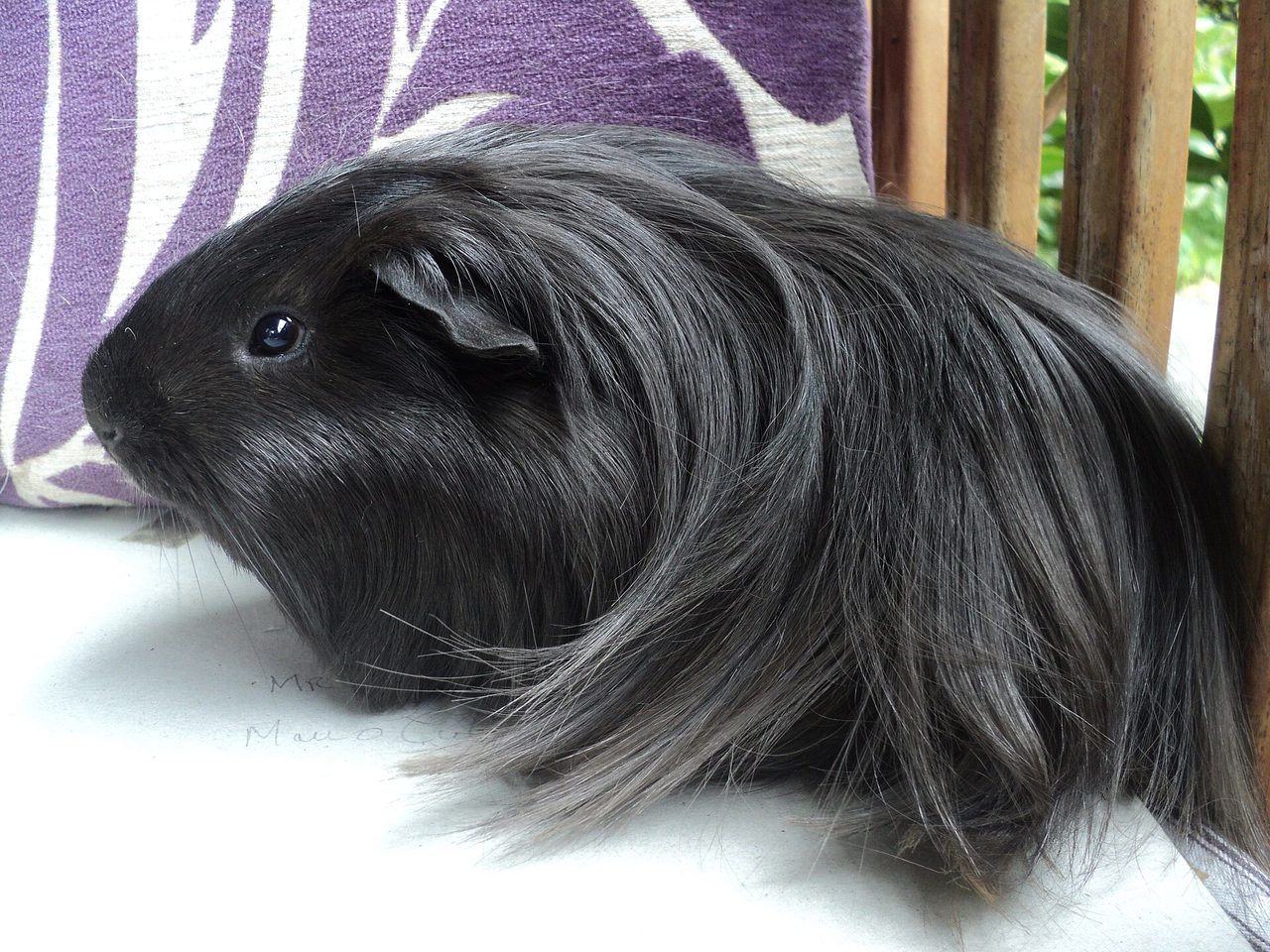
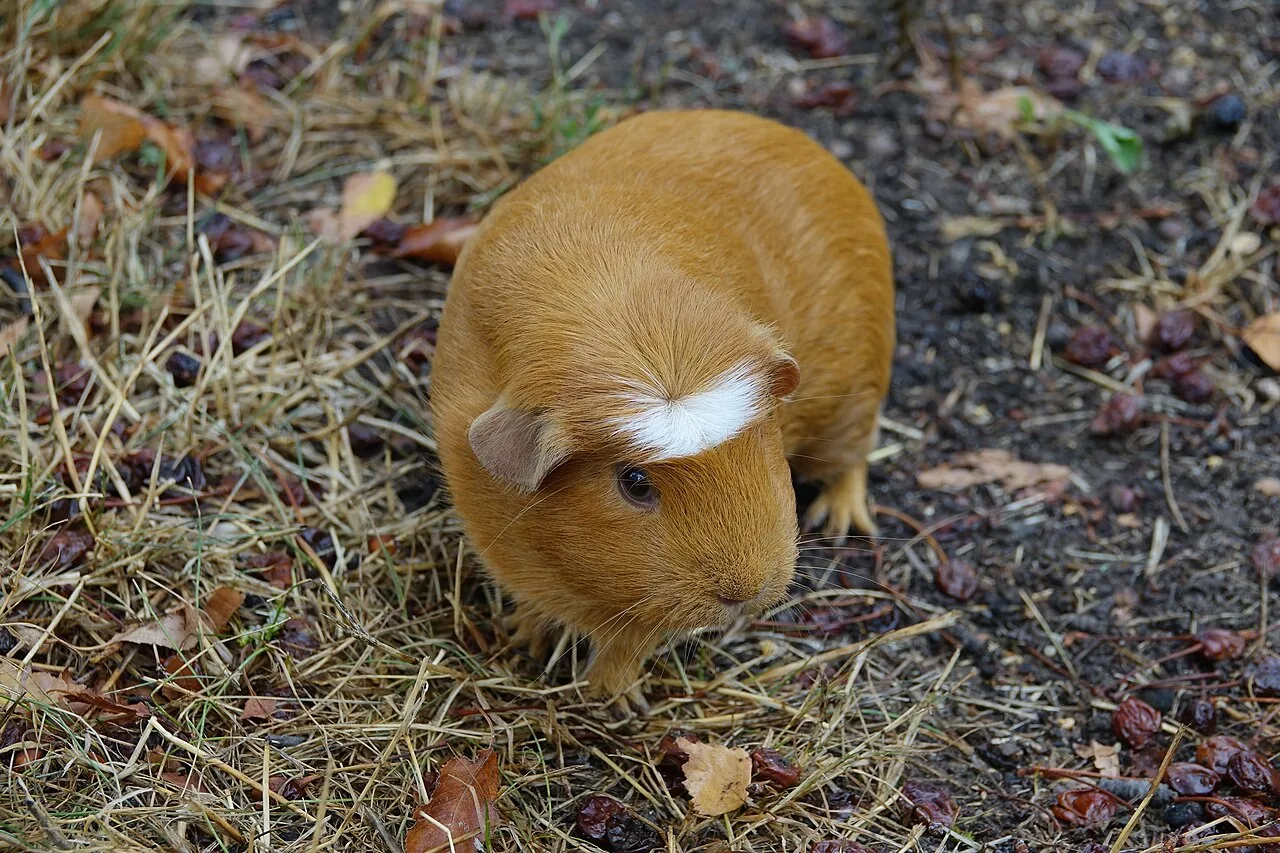
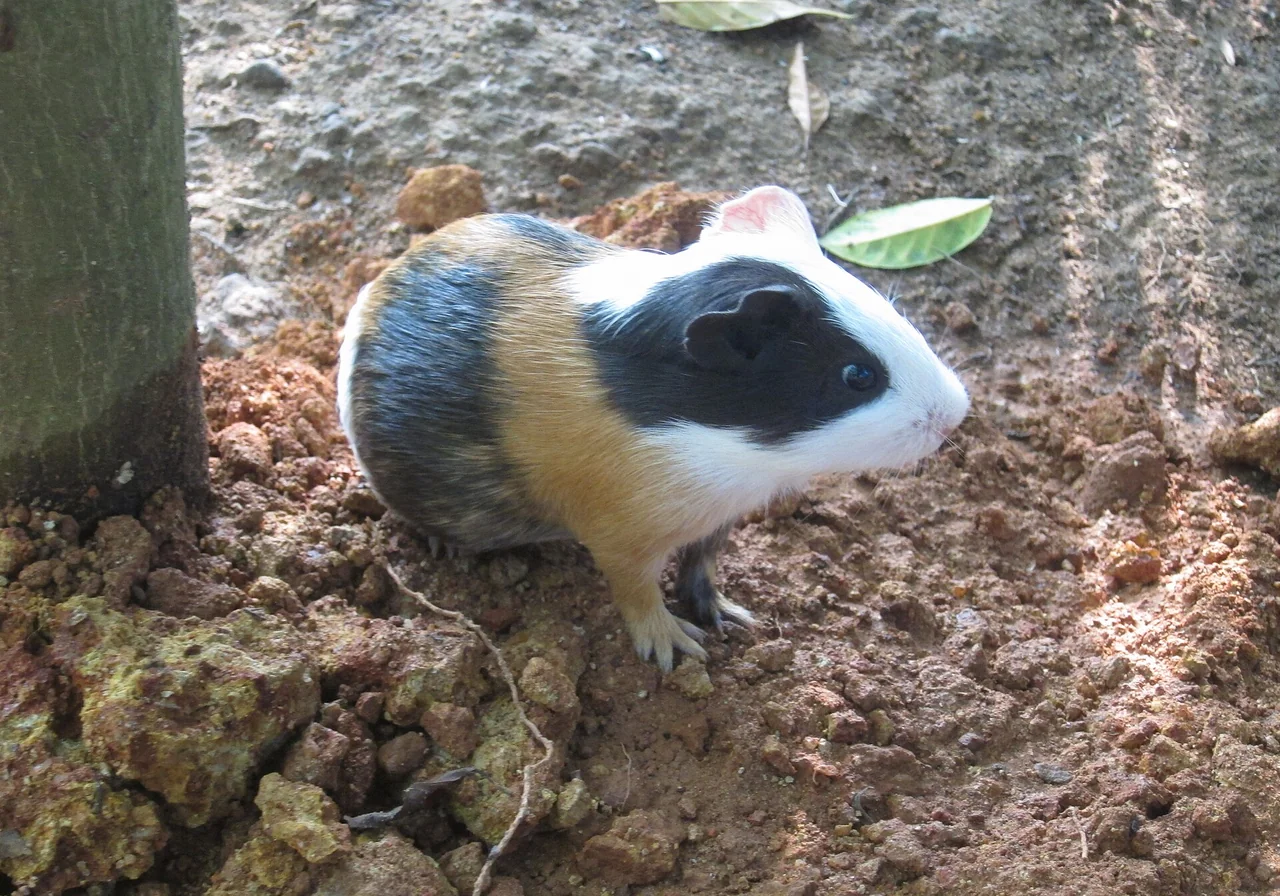
Distinctive rosettes of fur standing in cowlicks — a textured, lively companion.
By WARN Research & Conservation TeamLast updated
In brief
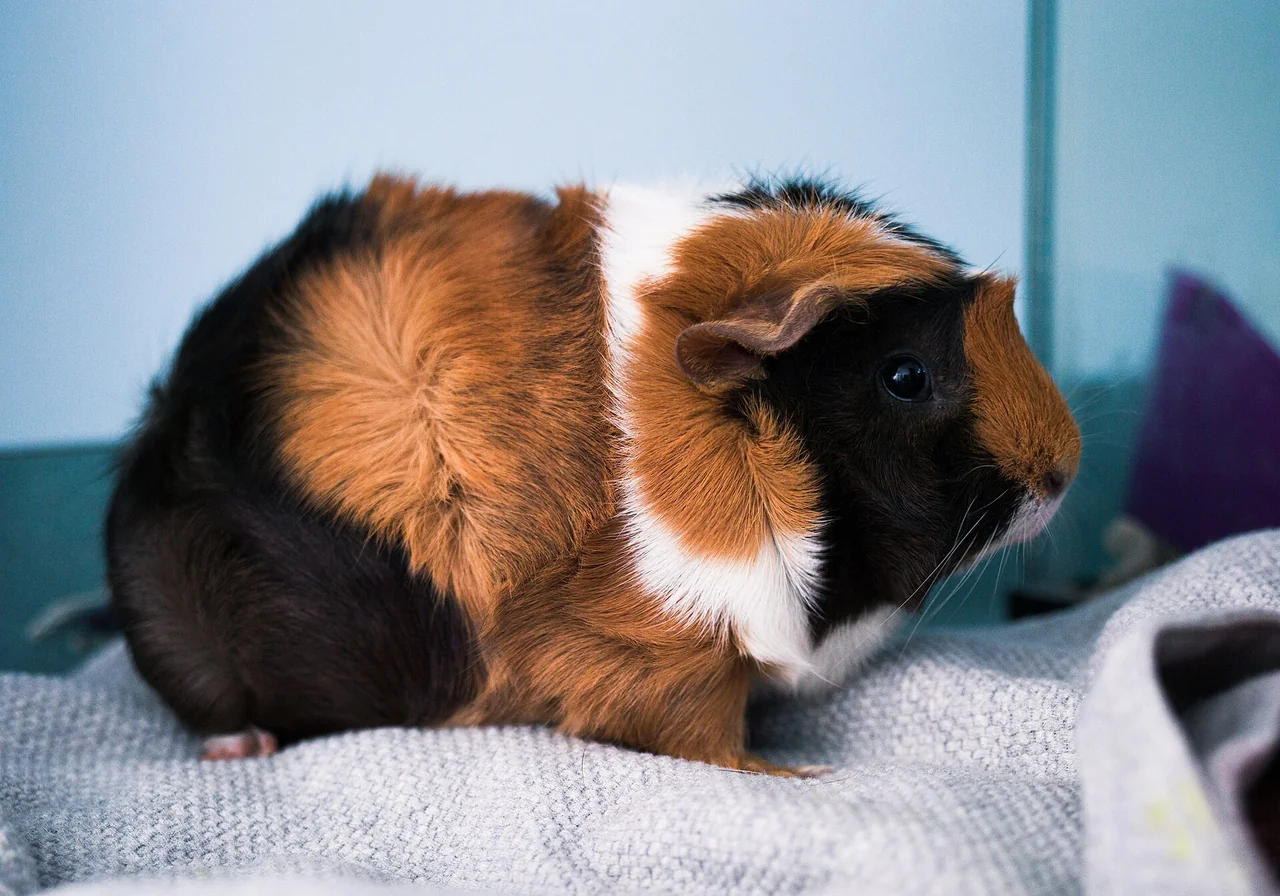
The Abyssinian guinea pig is instantly recognisable by rosettes — cowlicks of fur radiating from fixed points across the body, ideally eight or more in show specimens. Its defining trait is a lively, textured coat on an energetic cavy that still demands paired housing, unlimited hay and daily vitamin C like any smooth-coated companion.
What are the key facts about a Abyssinian?
The Abyssinian is a guinea pig breed from Domestic (rosette standard): medium (0.9–1.2 kg), energetic, curious, talkative. Distinctive rosettes of fur standing in cowlicks — a textured, lively companion.
| Origin | Domestic (rosette standard) |
|---|---|
| Size | Medium (0.9–1.2 kg) |
| Adult weight | 900–1,200 g (2–2.6 lb); slightly narrower in profile than some American lines, with rosettes adding visual bulk |
| Lifespan | 5–7 years |
| Coat type | Short to medium coat with symmetrical rosettes on shoulders, hips and rump; fur stands in peaks rather than lying flat. Rosettes trap less debris than Peruvians but need brushing during moults to prevent tangles at the base. Colours include agouti, brindle, tortoiseshell and solid selfs. |
| Temperament | Energetic, curious, talkative |
| Best suited to | Attentive indoor keepers who enjoy daily interaction and can provide 120 × 60 cm or larger pens for at least two compatible cavies. Abyssinians suit families ready for vocal, curious pigs — not children who expect a passive lap pet without enrichment. |
Is a Abyssinian a good guinea pig for you?
A Abyssinian is a good guinea pig when your home matches attentive indoor keepers who enjoy daily interaction and can provide 120 × 60 cm or larger pens for at least two compatible cavies. abyssinians suit families ready for vocal, curious pigs — not children who expect a passive lap pet without enrichment.. It is a energetic, curious, talkative medium (0.9–1.2 kg) breed from Domestic (rosette standard).
Distinctive rosettes of fur standing in cowlicks — a textured, lively companion. That one-line pitch is not a care plan. Factor grooming (Short to medium coat with symmetrical rosettes on shoulders, hips and rump; fur stands in peaks rather than lying flat. Rosettes trap less debris than Peruvians but need brushing during moults to prevent tangles at the base. Colours include agouti, brindle, tortoiseshell and solid selfs.), typical adult size (900–1,200 g (2–2.6 lb); slightly narrower in profile than some American lines, with rosettes adding visual bulk), and the health issues listed below before you pay a deposit.
Meet adults of the breed, not only puppies or kittens, and prefer rescue or health-screened homes. A Abyssinian that looks right in a photo can still be the wrong animal for a small flat, a full-time office job, or a household that wanted a low-energy companion.
What is a Abyssinian?
Distinctive rosettes of fur standing in cowlicks — a textured, lively companion. Origin is Domestic (rosette standard); coat or markings are described as Short to medium coat with symmetrical rosettes on shoulders, hips and rump; fur stands in peaks rather than lying flat. Rosettes trap less debris than Peruvians but need brushing during moults to prevent tangles at the base. Colours include agouti, brindle, tortoiseshell and solid selfs..
Kennel and registry labels describe a type. Individual Abyssinians still vary, and rescue animals may be mixes.
Where does the Abyssinian come from?
Abyssinians come from Domestic (rosette standard). Despite the exotic name, Abyssinian guinea pigs were developed in Europe from existing cavy stock rather than imported from East Africa.
Nineteenth-century fanciers selected animals showing multiple rosette cowlicks, formalising placement rules in British and American breed standards by the early twentieth century. Show judges score rosette count, symmetry and clarity of ridges between cowlicks — pet-quality animals may show fewer rosettes but identical welfare needs. Abyssinians remain among the most popular pet-shop cavies after Americans because their scruffy charm photographs well on social media. Their energetic temperament means they often wheek loudly at feeding time and explore new tunnels eagerly during floor time. Welfare advisers note that rosette grooming is moderate compared with longhairs — yet space, companionship and exotics veterinary care remain non-negotiable for the full five-to-seven-year lifespan.
How much care does a Abyssinian need?
Plan 5–7 years of food, vet care, grooming and time. A Abyssinian is medium (0.9–1.2 kg) (900–1,200 g (2–2.6 lb); slightly narrower in profile than some American lines, with rosettes adding visual bulk) from Domestic (rosette standard), with coat care described as short to medium coat with symmetrical rosettes on shoulders, hips and rump; fur stands in peaks rather than lying flat. rosettes trap less debris than peruvians but need brushing during moults to prevent tangles at the base. colours include agouti, brindle, tortoiseshell and solid selfs..
This temperament does not thrive on a 20-minute walk and eight hours alone.
Grooming follows the coat, not a generic clip: Short to medium coat with symmetrical rosettes on shoulders, hips and rump; fur stands in peaks rather than lying flat. Rosettes trap less debris than Peruvians but need brushing during moults to prevent tangles at the base. Colours include agouti, brindle, tortoiseshell and solid selfs.. Keep the animal lean; extra weight is a joint and heart tax, especially in a medium guinea pig.
Budget for unexpected vet bills. The health section below is why “cheap to buy” is not the same as cheap to keep.
What surprises people about the Abyssinian?
A few details about the breed, alongside the practical care information in this guide.
- Show standards ideally require eight or more rosettes with a clear ridge between each cowlick.
- The breed name is historical — Abyssinians were bred in Europe, not imported from Ethiopia.
- Abyssinians often carry more energy than some smooth-coated lines and benefit from extra tunnel enrichment.
- Rosette patterns are fixed at birth; new rosettes do not appear as the cavy matures.
What health issues should you know about in a Abyssinian?
Health concerns to discuss with your vet, including changes to watch for and everyday care. This is general guidance, not veterinary advice — always speak to your vet.
Skin irritation at rosettes
Moisture or debris trapped at rosette bases can cause localised dermatitis, especially if bedding is damp or urine-soiled.
Care: Keep bedding dry, spot-clean daily and brush gently during moults. Consult an exotics vet if bald patches or scratching persist.
Dental malocclusion
Overgrown molars cause drooling and weight loss regardless of coat type; Abyssinians show no immunity because of rosettes.
Care: Unlimited timothy hay, weekly weighing and prompt dental treatment under sedation when appetite drops.
Vitamin C deficiency
Scurvy develops without daily fresh vegetables; rough coat and stiff gait appear before rosette quality changes.
Care: Feed pepper and leafy greens daily; avoid relying on pellets alone for vitamin C.
Who should skip a Abyssinian?
Skip a Abyssinian if you are owners who wanted a low-exercise companion. This Domestic (rosette standard) guinea pig is medium (0.9–1.2 kg) and energetic, curious, talkative — the mismatch is usually lifestyle, not a missing accessory.
This page is allowed to say no. Skip if you are owners who wanted a low-exercise companion.
A different guinea pig breed on this site may fit. Wanting “a Abyssinian” after a film or a colour photo is not a reason to ignore the skip list.
What are the hidden catches with a Abyssinian?
The hidden cost of a Abyssinian is usually not the purchase price. It is years of care, the health list on this page, and the mismatch between a energetic, curious, talkative animal and a busy home.
The impulse-buy catch
A Abyssinian from Domestic (rosette standard) is often sold on looks. Coat, colour and size are not a temperament test. Meet the adult animal, ask about health screening, and walk away from pressure sales.
The skin irritation at rosettes catch
Moisture or debris trapped at rosette bases can cause localised dermatitis, especially if bedding is damp or urine-soiled. Keep bedding dry, spot-clean daily and brush gently during moults. Consult an exotics vet if bald patches or scratching persist.
The dental malocclusion catch
Overgrown molars cause drooling and weight loss regardless of coat type; Abyssinians show no immunity because of rosettes. Unlimited timothy hay, weekly weighing and prompt dental treatment under sedation when appetite drops.
How does a Abyssinian compare with Peruvian and Silkie?
A Abyssinian is not interchangeable with Peruvian and Silkie. Compare origin, size, lifespan and temperament before you choose — those four lines prevent most regret.
| Guinea Pig fact | Abyssinian | Peruvian | Silkie |
|---|---|---|---|
| Origin | Domestic (rosette standard) | South America (domestic longhair) | Domestic (longhair mutation) |
| Size | Medium (0.9–1.2 kg) | Medium (0.9–1.2 kg) | Medium (0.8–1.1 kg) |
| Lifespan | 5–7 years | 5–7 years | 5–7 years |
| Temperament | Energetic, curious, talkative | Gentle, shy until bonded, needs grooming | Calm, gentle, needs daily grooming |
What is the verdict on the Abyssinian?
Choose a Abyssinian only if the care, skip-if and health sections still look like your life after a week of thinking. Otherwise pick a different guinea pig or wait. Rescue is usually the better first door than a waiting-list puppy or kitten.
If the match is real, budget for 5–7 years of vet care and do not skip health screening. If it is not, walking away is the kind choice — for you and for the animal.
Guinea pigs deserve proper care
Guinea pigs are social, gentle companions that need pairs, spacious enclosures and vitamin C every day. WARN publishes these guides so fewer end up in rescues after impulse purchases.