Wildlife Guide · North Pacific — eastern population from Mexico to the Arctic & Small, severely depleted western population off Russia
Gray Whale
Eschrichtius robustus (Lilljeborg, 1861) — family Eschrichtiidae
One of the longest migrations of any mammal, and a whale that feeds by rolling on the seabed.
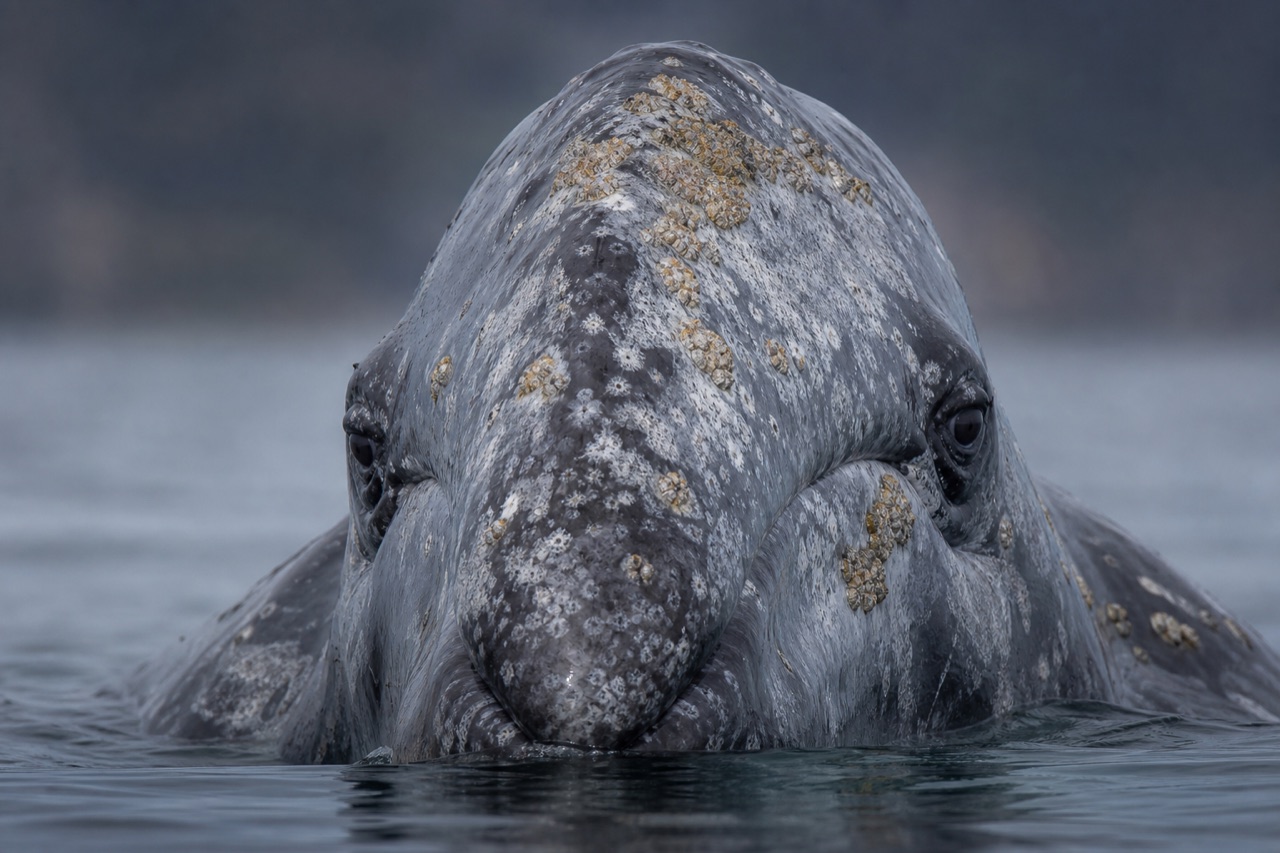
AI-generated educational wildlife portrait — World Animal Rescue Network · AI visualisation, not a photograph
In brief
The gray whale migrates up to around 20,000 km a year between Arctic feeding grounds and Mexican calving lagoons, and is the only baleen whale that feeds mainly by rolling on the seabed to filter sediment.
Also in Animals A to Z · Animals that start with G
By WARN Research & Conservation Team Last updated
The gray whale makes one of the longest migrations of any mammal, travelling up to roughly 20,000 km a year between Arctic feeding grounds and the lagoons of Baja California where it calves. It is also the only baleen whale that feeds primarily by rolling onto its side on the seafloor and sucking up sediment, straining amphipods from the mud. The eastern North Pacific population recovered strongly after whaling ended, and is one of the clearest large-whale recovery stories. The western population did not, and remains Critically Endangered.
~20,000 km
Annual round-trip migration — among the longest of any mammal
Benthic
The only baleen whale that feeds mainly from the seafloor
~15 m
Adult length
Recovered
The eastern Pacific population rebounded after whaling ended
Figures sourced from IUCN Red List — Eschrichtius robustus, CITES Appendices .
Gray Whale: Quick Facts
| Length | ~15 m |
|---|---|
| Migration | Up to ~20,000 km per year |
| Feeding | Benthic — filters seafloor sediment |
| Calving grounds | Baja California lagoons, Mexico |
| Eastern population | Recovered; delisted in the US in 1994 |
| Western population | Critically Endangered |
Scientific Classification
| Kingdom | Animalia |
|---|---|
| Phylum | Chordata |
| Class | Mammalia |
| Order | Artiodactyla |
| Infraorder | Cetacea |
| Family | Eschrichtiidae |
| Species | Eschrichtius robustus |
Conservation Status
- IUCN Status
- Least Concern (species); western Pacific subpopulation Critically Endangered
- Population
- Tens of thousands in the eastern North Pacific
- Trend
- Eastern population recovered; recent unusual mortality events recorded
- Assessed
- 2018
- CITES
- Appendix I
The North Atlantic population was hunted to extinction centuries ago. Recent mass strandings of emaciated whales point to prey availability in warming Arctic feeding grounds.
Did you know?
Most gray whales are right-sided: they roll onto the same flank to feed, wearing the baleen down more on that side.
Key Facts: Gray Whale
- Gray whales migrate up to roughly 20,000 km a year.
- They feed by rolling on the seabed and filtering amphipods from sediment.
- The eastern North Pacific population recovered strongly after whaling protection.
- The western Pacific population remains Critically Endangered.
- Whalers called them devil fish for the ferocity with which mothers defended calves.
Feeding on the bottom
Gray whales are unique among baleen whales in feeding mainly from the seafloor. A whale rolls onto its side, usually the right, and suctions up sediment, then strains small crustaceans — principally amphipods — through short coarse baleen.
The habit leaves visible feeding pits on the seabed and stirs nutrients into the water column, so gray whales physically rework the Arctic shelf where they feed. Most individuals show more wear on the right side of the baleen, in the same way people are right-handed.
The migration
Each autumn gray whales leave Arctic and sub-Arctic feeding grounds and travel south along the North American coast to shallow, warm, hypersaline lagoons in Baja California, where calves are born. In spring they return north.
Because the route hugs the coast, the migration is visible from land and supports substantial whale-watching. It also concentrates the entire population into a narrow coastal corridor, which makes them exposed to vessel traffic, entanglement and coastal development along the whole route.
Recovery, and the population that did not recover
Commercial whaling reduced gray whales severely. After protection, the eastern North Pacific population rebounded to tens of thousands and was removed from the US endangered species list in 1994 — one of the strongest large-whale recovery cases on record.
The western North Pacific population, which feeds off Sakhalin, did not recover in the same way and remains Critically Endangered, with tracking showing some individuals crossing to the eastern side. The North Atlantic population was hunted to extinction centuries ago, though occasional strays now appear as Arctic ice retreats.
Modern pressures
Gray whales face entanglement in fishing gear, vessel strikes along a coastal migration route, noise and disturbance from shipping and industrial activity, and changes in the Arctic benthic communities they depend on.
Unusual mortality events have been recorded in recent years, with large numbers of emaciated whales stranding, and reduced prey availability in warming Arctic feeding grounds is a leading hypothesis. A recovered population is not a secure one when its food supply is shifting.
What WARN Does
WARN publishes free, sourced species education including conservation's genuine successes and their limits. The eastern gray whale shows that a heavily hunted large whale can recover once killing stops — and recent mortality events show that protection from hunting does not protect a species from what is happening to its food.
If this guide helps you understand wildlife and the pressures it faces, a gift to WARN supports habitat protection and free public education in our partner countries.
Gray Whale: Frequently Asked Questions
How far do gray whales migrate?
How do gray whales feed?
Are gray whales endangered?
Why were gray whales called devil fish?
What do gray whales eat?
Where do gray whales live?
Are gray whales dangerous?
How long do gray whales live?
How big is a gray whale?
Sources & References
Population figures, conservation status and biological facts on this page are drawn from authoritative scientific and intergovernmental sources.
Terms used on this page
Plain-English definitions, from our wildlife and conservation glossary.
Explore more animals
Discover more animals, their habitats and their conservation status in the WARN wildlife-guide library.
Enjoyed this Gray Whale guide?
Receive appeal updates, animal-welfare news and published funding reports. Unsubscribe any time.
We only use your address for WARN updates. See our privacy policy.