Wildlife Guide · Britain and Europe — Lampyris noctiluca & New Zealand — Arachnocampa luminosa in caves and ravines
Glow-worm
Lampyris noctiluca (Linnaeus, 1767) in Britain; Arachnocampa luminosa (Skuse, 1890) in New Zealand — unrelated animals sharing one name
Not a worm. In Britain a beetle larva and larviform female; in New Zealand a fungus gnat larva fishing with silk.
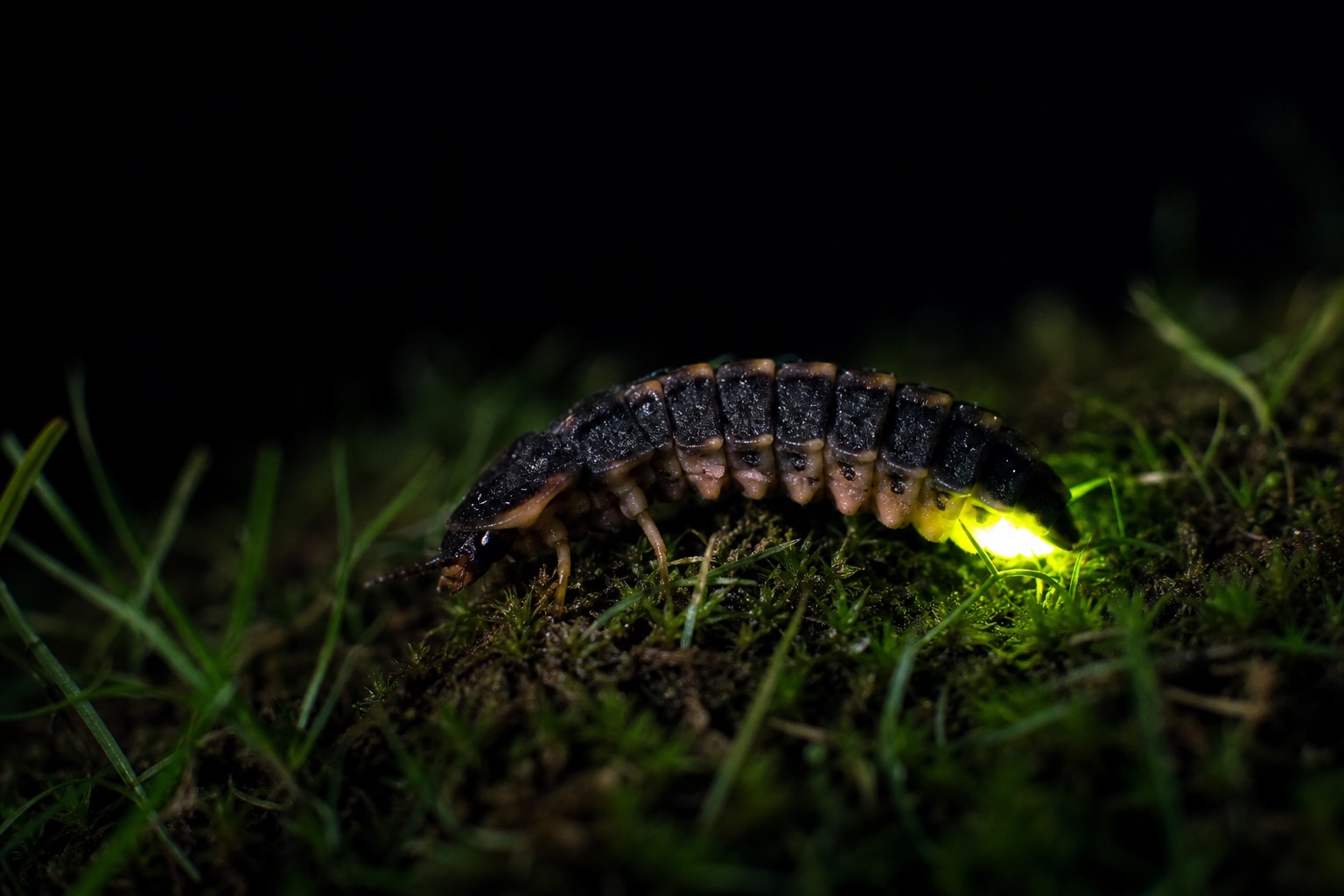
AI-generated educational wildlife portrait — World Animal Rescue Network · AI visualisation, not a photograph
In brief
Glow-worm is not one animal: in Britain and Europe it usually means the beetle Lampyris noctiluca, whose larviform female glows green to attract mates; in New Zealand it means the fungus gnat Arachnocampa luminosa, whose larvae glow in caves to lure prey into silk traps.
Also in Animals A to Z · Animals that start with G
By WARN Research & Conservation TeamLast updated
Glow-worm is a shared English name for bioluminescent animals that are not worms at all. In Britain and much of Europe the glow-worm is Lampyris noctiluca, a beetle in which the wingless female resembles a larva and glows green from her abdomen to attract flying males. In New Zealand the name goes to Arachnocampa luminosa, a fungus gnat whose predatory larvae live in caves and ravines, producing blue-green light to lure insects into sticky silk snares. Two unrelated lineages, one colloquial label. Both use light for reproduction or feeding, but the mechanism, habitat and life cycle differ completely. A guide that treats 'glow-worm' as one species will answer the wrong question for half its readers. The correction is taxonomic before it is ecological.
2 animals
Unrelated species sharing the English name
Green
European female glow — abdomen lantern
Blue-green
New Zealand cave larva glow — fishing light
Not worms
Beetle (Coleoptera) versus fly (Diptera)
Figures sourced from Buglife — glow-worm decline in Britain, Te Ara — New Zealand glow-worm .
Glow-worm: Quick Facts
| European animal | Beetle Lampyris noctiluca |
|---|---|
| New Zealand animal | Fungus gnat larva Arachnocampa luminosa |
| European glow | Green — adult female abdomen |
| NZ glow | Blue-green — predatory larva |
| Purpose | Mate attraction (EU) versus prey lure (NZ) |
| Name accuracy | Neither is a worm |
Scientific Classification
| Kingdom | Animalia |
|---|---|
| European — Phylum | Arthropoda |
| European — Class | Insecta (Coleoptera: Lampyridae) |
| European — Species | Lampyris noctiluca |
| New Zealand — Class | Insecta (Diptera: Keroplatidae) |
| New Zealand — Species | Arachnocampa luminosa |
| Shared name | Glow-worm — two unrelated bioluminescent insects |
Conservation Status
- IUCN Status
- Not Evaluated
- Population
- No global estimate; local declines reported for Lampyris in Britain
- Trend
- Decreasing in parts of Europe — habitat and light pollution
- Assessed
- Lampyris not globally Red-Listed
- CITES
- Not listed
European glow-worm declines are documented in national monitoring though the species lacks a global IUCN assessment. Cave tourism management protects New Zealand populations locally.
Did you know?
The European glow-worm female looks like a larva, glows like a lantern and never develops wings — while the male is a small flying beetle that finds her by that green light alone.
Key Facts: Glow-worm
- Glow-worm is a common name applied to unrelated bioluminescent animals, not a single species.
- European Lampyris noctiluca is a firefly beetle; the glowing adult female is wingless and larva-like.
- New Zealand Arachnocampa luminosa is a fungus gnat; only the larva glows, hanging silk snares in caves.
- European males fly and are not luminous; they find females by the green glow on grassland banks.
- Both use bioluminescence but for different purposes — mating signal versus prey attraction.
- European glow-worms have declined in parts of Britain, linked to habitat loss and light pollution.
Britain and Europe: the beetle that is not a worm
Lampyris noctiluca belongs to Coleoptera, the beetles, in the family Lampyridae — the same broad group as fireflies, though European glow-worms behave differently from the flashing American fireflies most people picture. The larva is a predatory grub feeding on snails and slugs. The adult female retains a larval appearance — soft wingless body — and climbs vegetation at night to glow continuously from the last abdominal segments.
Flying males, smaller and winged, locate her by that green light. After mating she extinguishes the lantern and lays eggs. Adult females do not feed; the glow is pure reproductive advertising. Grassland banks, hedgerows and railway embankments with snail populations are traditional sites; loss of rough grassland and artificial light at night are among the pressures cited in British decline reports.
New Zealand: the cave larva fishing with silk
Arachnocampa luminosa is a dipteran — a true fly in the family Keroplatidae. Only the larva bioluminesces. It builds mucus tubes on cave ceilings or overhangs in ravines, then dangles sticky silk threads tipped with mucus droplets. Insects attracted to the blue-green glow become entangled; the larva reels them in.
Tourism to glow-worm caves — Waitomo is the famous example — depends on these larvae. Disturbance, light pollution and habitat change affect populations locally. The life cycle is fly-like: larva, pupa, short-lived adult gnat that does not glow. Calling it a worm misleads on every count except shape in the dark.
Bioluminescence — same word, different chemistry and purpose
Both animals produce cold light through luciferin-luciferase reactions, but the evolutionary origins of their systems differ because beetles and flies are not close relatives. In Lampyris the light is a mate beacon — maximal at female peak fertility. In Arachnocampa it is a trap lure — maximal where flying insects are dense.
Light pollution interferes with the beetle's signal more than with the cave fly's, because cave systems are dark by definition while European grasslands are increasingly lit. That asymmetry shapes conservation advice: reduce unnecessary outdoor lighting near known glow-worm banks; protect cave access regimes that limit vibration and torch glare.
Why one name covers two animals
English colloquial names often track appearance over ancestry. A elongated glowing creature in grass and a dangling glowing thread in a cave both earned 'worm' before children learned phyla. Disambiguation is now a search-engine problem: queries from Britain and New Zealand return the same headword for different animals.
This page treats both because that is what the name requires. If you are on a chalk bank in Sussex on a June night, you want Lampyris. If you are in a Waitomo boat, you want Arachnocampa. Neither is a worm.
What WARN Does
WARN publishes free invertebrate education that disambiguates shared common names before answering biology questions. Glow-worm is a high-traffic example of one English word mapping to two unrelated animals — answering without naming which one fails half the readers.
If this guide helps you understand wildlife and the pressures it faces, a gift to WARN supports habitat protection and free public education in our partner countries.
Glow-worm: Frequently Asked Questions
What do glow-worms eat?
Where do glow-worms live?
Are glow-worms dangerous?
How long do glow-worms live?
How big are glow-worms?
Why are there two different glow-worms?
Sources & References
Population figures, conservation status and biological facts on this page are drawn from authoritative scientific and intergovernmental sources.
Explore more animals
Discover more animals, their habitats and their conservation status in the WARN wildlife-guide library.