Wildlife Guide · Worldwide except Australasia and Antarctica & British garden finches include chaffinch, goldfinch, greenfinch, bullfinch and linnet
Finch
Fringillidae — family of seed-eating passerines including Fringilla, Carduelis, Pyrrhula and related genera
The seed specialists at your feeder — a family built for cracking husks.
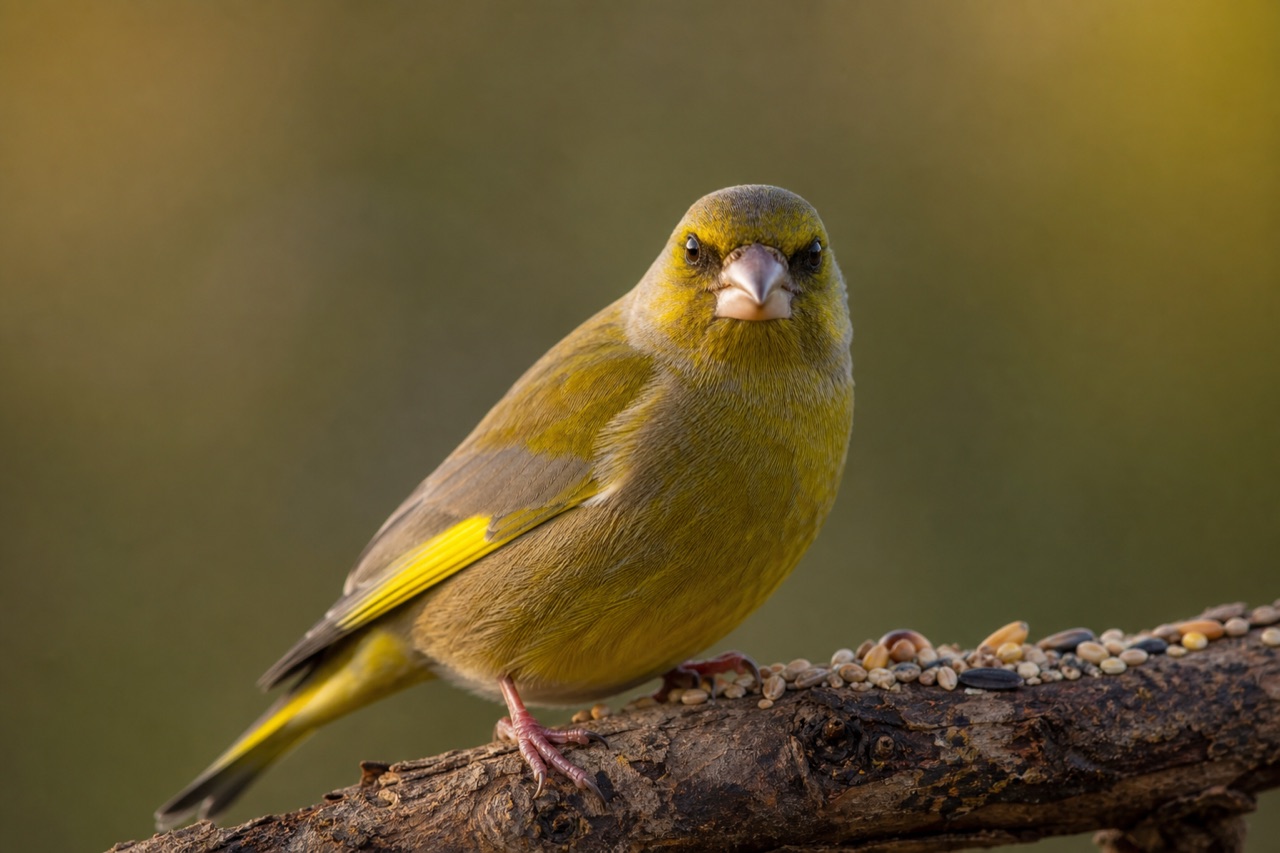
AI-generated educational wildlife portrait — World Animal Rescue Network · AI visualisation, not a photograph
In brief
Finches are seed-eating birds in the family Fringillidae with conical bills adapted for husking seeds; British garden species include chaffinch, goldfinch, greenfinch and bullfinch, with population trends varying from abundant to disease-affected.
Also in Animals A to Z · Animals that start with F
By WARN Research & Conservation Team Last updated
Finches are seed-eating passerines in the family Fringillidae, built for one job: extracting and husking small hard seeds with a conical bill. In British gardens the regular finches are chaffinch, goldfinch, greenfinch and bullfinch — plus siskin and redpoll in birch woodland, and linnet on rough ground. Each species uses the same bill type differently: goldfinches take tiny nyjer and teasel seeds; chaffinches handle larger seeds on the ground; bullfinches clip fruit buds in orchards with a broad, powerful bill. Finches dominate garden feeding stations in winter. Peanuts, sunflower hearts, nyjer and mixed seed attract them in mixed flocks — often with chaffinches on the ground beneath hanging feeders taking spillage. Their presence is one of the clearest indicators that a garden feeding setup is working. Mixed finch flocks at a busy feeder are also a disease transmission risk — which is why feeder hygiene matters as much as food choice for greenfinch recovery. Status within the family is not uniform. Chaffinches and goldfinches remain widespread. Greenfinches declined sharply in Britain from trichomonosis — a parasite spread at feeders — and are recovering slowly. Bullfinches are local, shy and sometimes blamed by fruit growers for bud damage. Searching 'finch' without naming the species leads to wrong food and wrong conservation concern — a family guide is the honest starting point before you follow a species-level page.
Conical bill
Built for seed husking — the finch signature
4+ regulars
Chaffinch, goldfinch, greenfinch, bullfinch in many gardens
Trichomonosis
Disease that hit greenfinch populations hard from 2006
Nyjer specialist
Goldfinch attracted by fine nyjer seed in tube feeders
Figures sourced from IUCN Red List — Chloris chloris (Greenfinch), BTO — Trichomonosis and greenfinches .
Finch: Quick Facts
| Bill shape | Conical — adapted for seed husking |
|---|---|
| Main garden species | Chaffinch, goldfinch, greenfinch, bullfinch |
| Key feeder food | Sunflower hearts, nyjer, peanuts, mixed seed |
| Greenfinch issue | Trichomonosis outbreak from mid-2000s |
| Goldfinch attractant | Nyjer seed in mesh tube feeder |
| Nest site | Trees, shrubs, hedges — compact moss cup |
| Feeder hygiene | Weekly cleaning reduces disease spread |
Scientific Classification
| Kingdom | Animalia |
|---|---|
| Phylum | Chordata |
| Class | Aves |
| Order | Passeriformes |
| Family | Fringillidae |
| Example genera | Fringilla, Carduelis, Pyrrhula, Loxia |
| British garden species | Chaffinch, goldfinch, greenfinch, bullfinch |
Conservation Status
- IUCN Status
- Least Concern
- Population
- Family-wide; chaffinch and goldfinch abundant in Britain
- Trend
- Greenfinch decreased from trichomonosis; goldfinch increased in gardens
- Assessed
- Varies by species
- CITES
- Not listed (family overview)
Family overview. Greenfinch British populations affected by trichomonosis. Most garden finches remain Least Concern globally.
Did you know?
Goldfinches were kept as cage birds for centuries — their skill at extracting tiny seeds gave the collective name 'a charm of goldfinches'.
Key Facts: Finch
- Finches are seed specialists with conical bills — the family at most British garden feeders.
- Chaffinch, goldfinch, greenfinch and bullfinch are the usual garden species; each uses different seed sizes.
- Greenfinch populations in Britain fell sharply from trichomonosis spread at shared feeders — hygiene matters.
- Goldfinches need nyjer or fine seed in mesh tube feeders; chaffinches take spillage on the ground.
- Bullfinches are shy, local and clip fruit buds — orchard conflict is real but localised.
- Clean feeders regularly, rotate water and remove mouldy seed to reduce disease transmission.
- Finch status varies by species — family-level 'finch' searches need species-level follow-up for accurate concern.
The garden finches — who eats what
The chaffinch is the commonest finch in Britain — pink-breasted male, brown female, white wing bars in flight. It takes seed on the ground and from tray feeders, and picks spillage beneath hanging stations. Its song is a descending cascade ending in a flourish, heard from woodland edge and garden trees from spring.
The goldfinch is unmistakable: red face, black-and-white head, gold wing bar. It feeds on fine seeds — nyjer, teasel, dandelion — and clings to mesh feeders in acrobatic flocks. A nyjer feeder often pulls goldfinches within weeks where the species is present. Goldfinches have increased in gardens as nyjer feeding became common — one of the few species whose garden trend runs against general farmland loss.
The greenfinch is bulky and olive-yellow with yellow wing flashes. It uses heavy seed and peanuts but was devastated by trichomonosis from the mid-2000s. Numbers are recovering but remain below former levels in many areas. The greenfinch story is the cautionary tale of garden feeding — concentration at feeders spread disease faster than natural foraging ever could.
The bullfinch is pink-grey with a black cap — shy, local, visiting gardens near scrub and orchards. Its broad bill clips fruit buds, which brings conflict with fruit growers in some districts. Bullfinches are the finch most people want but cannot attract — because scrub structure matters more than seed provision.
Feeders, hygiene and trichomonosis
Finch feeding concentrates birds at shared resources — exactly the conditions that spread disease. Trichomonosis, caused by the parasite Trichomonas gallinae, produces lesions in the throat that prevent swallowing. Infected birds appear fluffed, lethargic and unable to feed. The outbreak that began in British greenfinches around 2006 caused widespread mortality and remains the main reason greenfinch numbers have not fully recovered.
Feeder hygiene reduces transmission: wash feeders weekly with hot water and dry thoroughly; rotate feeding sites so droppings do not accumulate; remove mouldy or wet seed promptly; provide fresh water changed daily. If sick finches appear — puffed feathers, difficulty swallowing — pause feeding briefly to disperse birds and report to local wildlife health monitoring where available. A quiet week without feeders can break the transmission chain without harming birds that still find natural food.
Not all finch decline is disease. Habitat loss affects linnet and bullfinch on farmland. But for greenfinch specifically, the trichomonosis story is the defining conservation event of recent decades — and it is directly linked to garden feeding practice. The finch at your feeder is part of a family shaped by seed chemistry and bill mechanics — and by how cleanly we maintain the feeding stations that concentrate them.
Breeding, song and the nest in a hedge
Finches nest in trees, shrubs and hedges — typically a compact cup of moss, grass and hair, often in conifer or evergreen where available. Chaffinches favour forked branches; goldfinches use terminal twigs in trees and tall shrubs; bullfinches choose dense scrub lower down. Nest height and concealment vary by species — goldfinch nests are often surprisingly exposed on outer twigs, relying on camouflage rather than deep cover.
Male finches sing to hold territory from late winter. Chaffinch song is the best known — loud, repeated, ending in a characteristic flourish. Goldfinch song is softer, twittering, often in flight. Bullfinch song is quiet and easily missed. Regional chaffinch dialects exist — birds respond more strongly to local song types, which is why playback from another region may fail to provoke a response.
Cats take finches at feeders and nestlings in accessible hedges. Sparrowhawks take adults at feeders routinely — a natural predator whose presence indicates a healthy prey base rather than a garden problem. Window strikes affect finches when feeders sit close to large panes reflecting vegetation. Nest failure from predation is highest in thin, trimmed hedges without dense inner structure — another reason untidy hedgerows help finches as well as dunnocks and thrushes.
Why a family guide beats guessing the species
Searching 'finch' is legitimate — many people know the feeder birds without naming chaffinch or goldfinch. But advice differs: nyjer for goldfinch, ground seed for chaffinch, scrub nearby for bullfinch, feeder hygiene for greenfinch recovery. A family overview sets the shared frame — seed bills, feeder ecology, disease risk — before a reader follows a species-level guide.
Globally, Fringillidae includes crossbills, hawfinches, siskins and many island endemics with narrower ranges and higher threat. The British garden finches are mostly Least Concern, with greenfinch the cautionary tale. Hawfinch — massive bill, shy, local — visits some gardens near ancient woodland but is not a feeder regular. Crossbills breed in pine plantations and rarely appear at garden stations.
The finch at your feeder is part of a family shaped by seed chemistry and bill mechanics — and by how cleanly we maintain the feeding stations that concentrate them. Naming the species matters because conservation concern, food preference and habitat need all split at species level even when the birds share a feeder tray.
What WARN Does
WARN publishes free, sourced species education for the birds people feed without always naming. 'Finch' is a family of seed specialists — and greenfinch trichomonosis showed that garden feeding carries responsibility as well as reward.
If this guide helps you understand wildlife and the pressures it faces, a gift to WARN supports habitat protection and free public education in our partner countries.
Finch: Frequently Asked Questions
What is the most common finch in Britain?
What seed attracts goldfinches?
Why did greenfinches disappear from my garden?
How do I clean bird feeders safely?
What do finches eat?
Where do finches live?
Are finches dangerous?
How long do finches live?
How big are finches?
Sources & References
Population figures, conservation status and biological facts on this page are drawn from authoritative scientific and intergovernmental sources.
Terms used on this page
Plain-English definitions, from our wildlife and conservation glossary.
Explore more animals
Discover more animals, their habitats and their conservation status in the WARN wildlife-guide library.
Enjoyed this Finch guide?
Receive appeal updates, animal-welfare news and published funding reports. Unsubscribe any time.
We only use your address for WARN updates. See our privacy policy.