Wildlife Guide · Poland, Belarus, Russia, Romania, Ukraine and reintroduced populations across Europe
European Bison
Bison bonasus (Linnaeus, 1758) — family Bovidae
Europe's largest land mammal, hunted to extinction in the wild and rebuilt from fifty-four survivors.
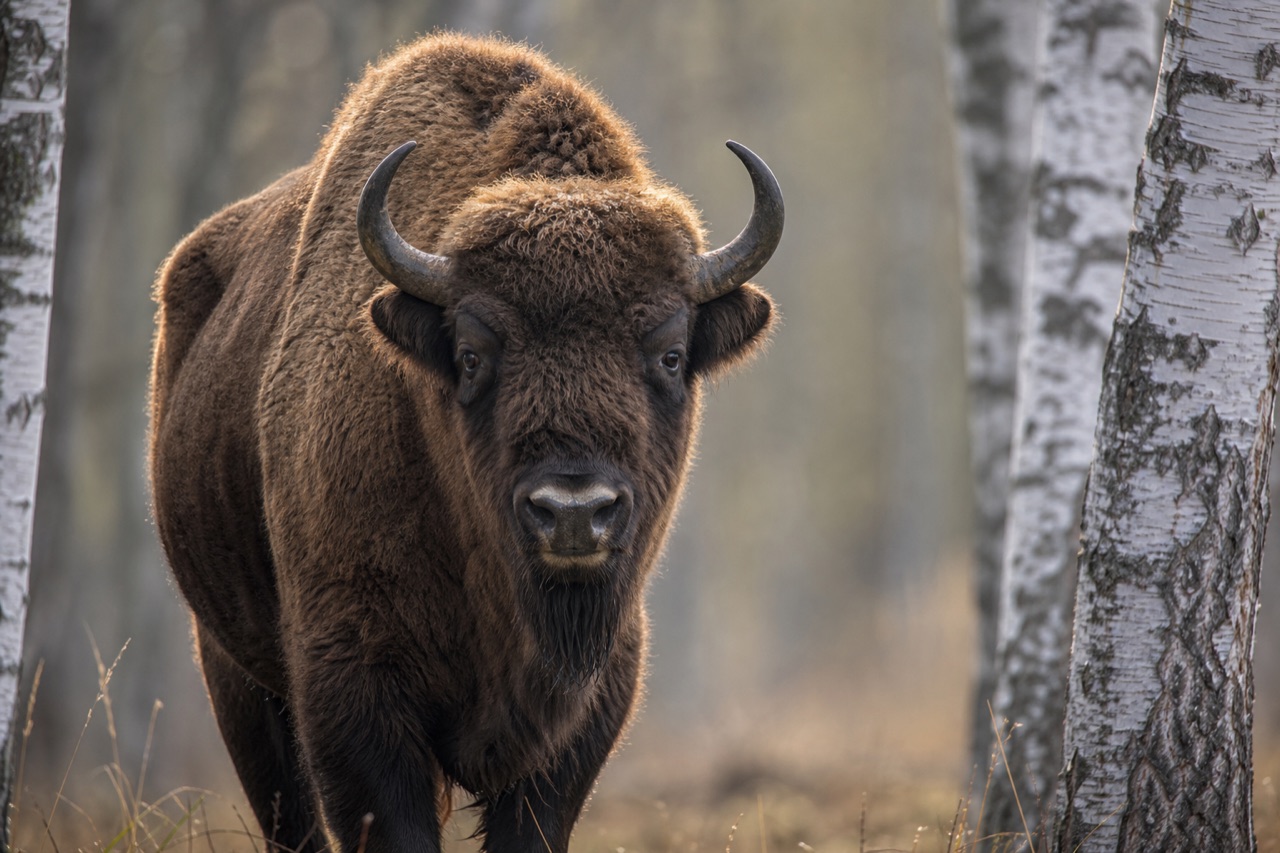
AI-generated educational wildlife portrait — World Animal Rescue Network · AI visualisation, not a photograph
In brief
The European bison (Bison bonasus) is Europe's largest land mammal, restored from around fifty-four captive animals when the last wild individual died in 1927 to more than 6,800 wild bison today through captive breeding and reintroduction.
Also in Animals A to Z · Animals that start with E
How you can help
You can support the related appeal — read its purpose, recipient status and fund terms first — or give once to where it is needed most. Sharing accurate information helps too.
By WARN Research & Conservation Team Last updated
The European bison, or wisent, is the heaviest land mammal in Europe — a shaggy, forest-dwelling bovid closely related to the American bison but adapted to woodland rather than open prairie. Bulls can exceed 900 kg. The species once ranged across the deciduous and boreal forests of Europe, from Spain to the Caucasus. By the early twentieth century, hunting and habitat loss had eliminated every wild European bison. The last wild animal was shot in the Caucasus in 1927. At that point, the entire species existed in captivity — around fifty-four animals in zoos and private estates, descended from an even smaller founder pool. From that genetic bottleneck, breeding programmes rebuilt the population. There are now more than 6,800 wild European bison across Poland, Belarus, Russia and reintroduced sites from Germany to Romania. The recovery is genuine and remarkable, but the European bison is not a species that can be left alone. Populations are fragmented, genetically bottlenecked, and dependent on active management — habitat protection, anti-poaching, supplementary winter feeding in some reserves, and careful genetic exchange between herds. The Near Threatened listing reflects this: a major comeback that still requires hands-on conservation.
~54
Captive animals when the last wild bison died in 1927
6,800+
Wild European bison today across reintroduced populations
900+ kg
Large bull weight — Europe's heaviest land mammal
Near Threatened
IUCN status — recovered but not yet secure
Figures sourced from IUCN Red List — Bison bonasus, Natural History Museum — European bison .
European Bison: Quick Facts
| Weight | 400–920 kg |
|---|---|
| Habitat | Deciduous and mixed forest with open glades |
| 1927 | Last wild individual killed; ~54 captive survivors |
| Wild population | 6,800+ and growing |
| Also called | Wisent |
| Diet | Browser — leaves, bark, shoots, woodland grasses |
| Main threats | Habitat loss, poaching, inbreeding, fragmentation |
Scientific Classification
| Kingdom | Animalia |
|---|---|
| Phylum | Chordata |
| Class | Mammalia |
| Order | Artiodactyla |
| Family | Bovidae |
| Genus | Bison |
| Species | Bison bonasus |
Conservation Status
- IUCN Status
- Near Threatened
- Population
- 6,800+ wild; several thousand in captivity
- Trend
- Increasing through reintroduction and breeding
- Assessed
- 2020
- CITES
- Appendix III (Belarus)
Restored from around fifty-four captive animals in 1927. Populations are growing but remain genetically bottlenecked and require active management.
Did you know?
Every European bison alive today descends from around twelve founders — the entire species was rebuilt from a genetic base smaller than a single classroom.
Key Facts: European Bison
- European bison are Europe's largest land mammal, adapted to forest rather than open grassland.
- The last wild individual was shot in 1927; the entire species then survived in captivity from around fifty-four animals.
- Captive breeding and reintroduction have rebuilt the wild population to more than 6,800 animals.
- The species is Near Threatened — a major recovery, but populations remain fragmented and actively managed.
- Two genetic lines persist — the Lowland-Caucasian and the Bialowieza line — from the captive founder pool.
- Forest habitat loss, poaching and inbreeding depression remain concerns despite the population increase.
- Reintroduction continues across Europe, with herds now in Germany, Romania, Spain and other countries.
From extinction to six thousand
The European bison's recovery is among the most successful mammal restorations in history. Wild hunting eliminated the species across its range during the nineteenth and early twentieth centuries. The last confirmed wild animal — a Caucasian bison — was killed in 1927 in the western Caucasus. Every European bison alive at that moment was in a zoo or private collection.
The captive population numbered around fifty-four animals, descended from just twelve founders. Two breeding lines were maintained: the Lowland-Caucasian line and the Białowieża line, reflecting the two subspecies that had existed in the wild. Careful managed breeding minimised inbreeding and preserved what genetic diversity remained. Reintroduction to the Białowieża Forest in Poland began in 1952, and the wild population grew steadily from there.
By the 2020s, more than 6,800 wild bison roamed forests across Poland, Belarus, Russia, Ukraine, Romania, Germany and other countries. Reintroduction continues — new herds established in the Netherlands, Spain and the Czech Republic — but each release requires years of preparation, habitat assessment and post-release monitoring. International pedigree coordination keeps breeding and reintroduction aligned across the continent. Without that coordination, the recovery would have stalled long ago.
A forest bison, not a prairie bison
European bison are not American bison in a different continent. They are forest animals: browsing on leaves, bark, shoots and woodland grasses rather than grazing open prairie. Herds are smaller — typically fewer than thirty animals — movements are less dramatic, and the habitat they require is deciduous and mixed forest with open glades and meadows where sunlight reaches the ground.
This matters for reintroduction. European bison need forest — not just any land, but woodland with enough understorey browse and open areas for grazing. Reintroduction projects in Germany's Rothaar Mountains, Romania's Vânători-Neamț and Spain's San Cebrián have succeeded where suitable forest exists. Projects on unsuitable land — open grassland without tree cover, or forest too dense for ground vegetation — have failed. Bison released into pine plantations without understorey browse struggle to find food through winter.
European bison also shape the forest they inhabit. Their browsing opens the understorey, their wallowing creates small clearings, and their dung supports invertebrate communities. In the Białowieża Forest — the largest remaining tract of old-growth lowland forest in Europe — bison have been part of the ecosystem for decades since reintroduction, and their ecological role is increasingly studied as reintroduction expands to other European woodlands.
The genetic bottleneck
Every European bison alive today descends from around twelve founders. That is an extraordinarily narrow genetic base for a large mammal, and inbreeding depression — reduced fertility, weaker immune function, lower calf survival — has been a documented concern throughout the recovery.
Managed breeding programmes track pedigree carefully and exchange animals between herds to maintain diversity. The two genetic lines — Lowland-Caucasian and Białowieża — are managed to preserve distinct ancestry while avoiding further inbreeding. Hybridisation between the lines is controlled: some herds are maintained as pure Białowieża, others as Lowland-Caucasian, and a third category of mixed-line herds exists for genetic management. Pedigree records for every captive and reintroduced bison are maintained centrally.
The result is a population that has grown numerically but remains genetically vulnerable. A disease outbreak, a severe winter, or a poaching event in a small reintroduced herd can remove genetic diversity that took decades to build. The European bison recovery is measured in headcount, but the genetic health of the species requires continuing active management that cannot be discontinued without risk. Future reintroductions must draw from genetically managed source herds, not simply from whichever reserve has surplus animals.
What Near Threatened means here
The IUCN Near Threatened listing reflects genuine progress and remaining risk. More than 6,800 wild bison is a remarkable number compared with fifty-four captive animals in 1927. But populations are fragmented across isolated reserves and reintroduced sites, poaching occurs in eastern parts of the range — particularly in the Caucasus and Ukraine — and habitat quality varies sharply between well-managed reserves and marginal forest.
Reintroduction continues — new herds established in countries where the species had been absent for centuries — but each new population requires long-term management, habitat protection and genetic monitoring. The European bison is no longer on the brink, but it is not yet a species that can be left alone. Supplementary feeding in harsh winters, veterinary intervention, and anti-poaching patrols are part of normal management at most wild sites across its range.
The Near Threatened listing also acknowledges that the species' range remains far smaller than its historical extent. European bison once ranged from Spain to the Caucasus; today they occupy a fraction of that area, concentrated in central and eastern Europe. Full ecological restoration — bison as a widespread forest species — remains a long-term goal, not a current reality, and every new reintroduction site adds management obligations that persist for decades after the first animals are released.
What WARN Does
WARN publishes free, sourced species education for recovery stories that are real but incomplete. The European bison went from fifty-four captive animals to more than six thousand in the wild — a genuine success that still requires active management, which is the detail most retellings leave out.
If this guide helps you understand wildlife and the pressures it faces, a gift to WARN supports habitat protection and free public education in our partner countries.
How can I help save the european bison?
Explore practical ways to support the european bison, from everyday choices and sharing reliable information to reviewing a related appeal before giving.
Explore ways to support
Read the related appeal’s purpose, recipient status and fund terms. Choose an affordable gift after checking what is proposed and what has been reported.
Ease the pressures
Avoid the wildlife trade and souvenirs, never buy wild animals as pets, and choose sustainable, habitat-friendly products — the threats behind the european bison's decline fall when demand does.
Spread the word
Share accurate, sourced information about the european bison. Wider awareness is what turns concern into lasting protection.
European Bison: Frequently Asked Questions
How can I help save the european bison?
Are European bison extinct?
How many European bison are left?
What is the difference between European and American bison?
Why are European bison Near Threatened?
Where can you see wild European bison?
How did European bison recover from fifty-four animals?
Where can I compare this recovery with extinctions that finished?
Sources & References
Population figures, conservation status and biological facts on this page are drawn from authoritative scientific and intergovernmental sources.
Terms used on this page
Plain-English definitions, from our wildlife and conservation glossary.
Explore more animals
Discover more animals, their habitats and their conservation status in the WARN wildlife-guide library.
Enjoyed this European Bison guide?
Receive appeal updates, animal-welfare news and published funding reports. Unsubscribe any time.
We only use your address for WARN updates. See our privacy policy.