Wildlife Guide · Indonesia & Malaysia
Elephant
Elephantidae — Elephas maximus, Loxodonta africana, Loxodonta cyclotis
Three living species — not one elephant, and not one Red List badge.
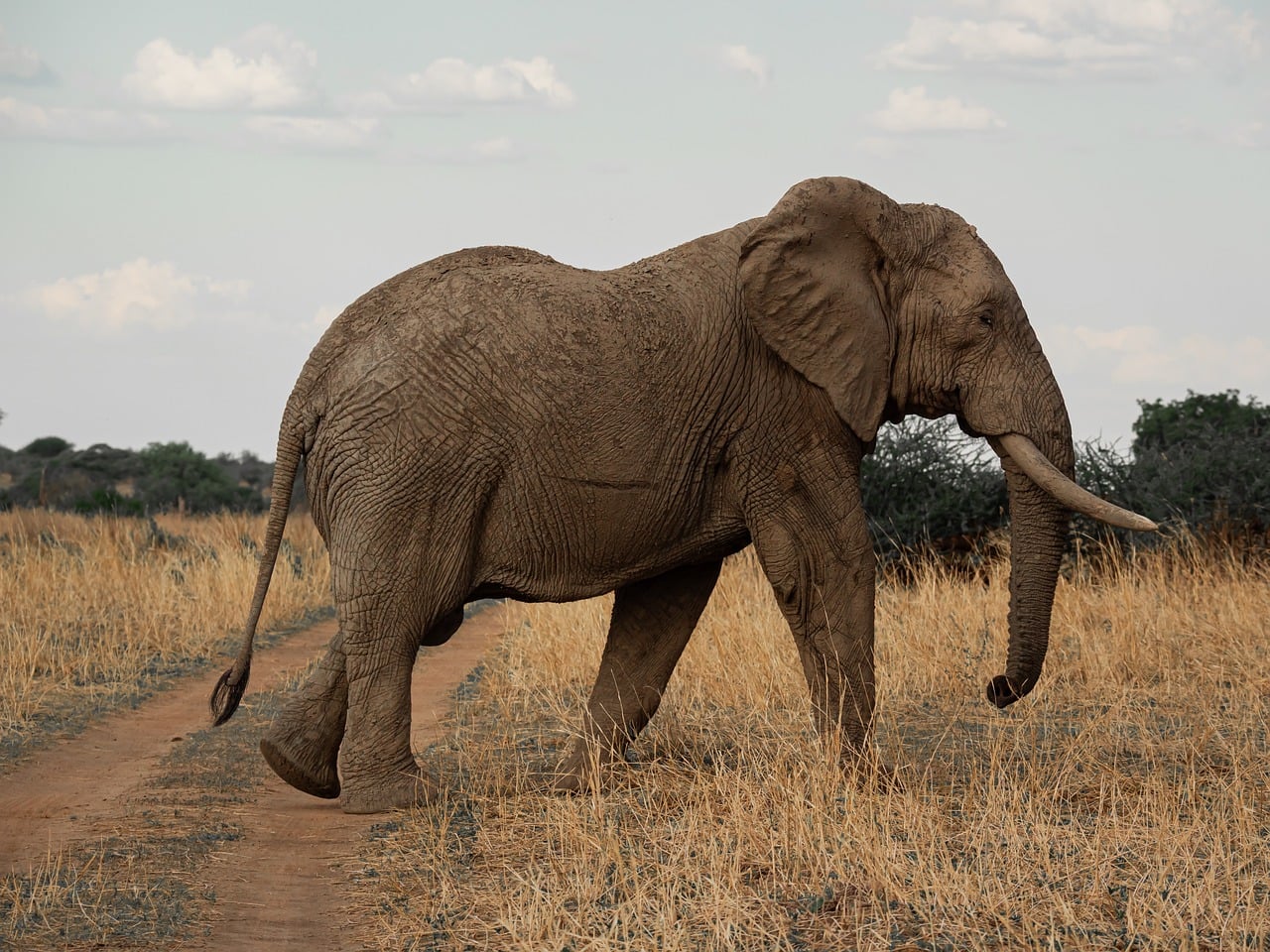
Photo: Shadow Ayush / Wikimedia Commons (CC BY-SA 4.0)
In brief
Elephants are three living species, not one. Asian and African savanna elephants are Endangered; African forest elephants are Critically Endangered. Gestation is about 22 months. The related appeal explains potential support and the current funding status; this guide does not confirm a WARN grant. Asian elephants have one trunk-tip finger; African elephants have two.
Also in Animals A to Z · Animals that start with E
How you can help
You can symbolically adopt an elephant from £5 a month — a donation to WARN’s Asian elephant appeal for Indonesia and Malaysia, with a personalised certificate you can keep or give as a gift — or give once to where it is needed most.
By WARN Research & Conservation Team Checked against IUCN Red List assessments for Asian, savanna and forest elephants Last updated
Elephants are three living species in family Elephantidae: the Asian elephant (Endangered), the African savanna elephant (Endangered) and the African forest elephant (Critically Endangered). They are the largest land animals, with a 22-month gestation. This page is the group guide: species splits, ivory, snares and conflict. The related appeal explains potential support and the current funding status; this guide does not confirm a WARN grant. It does not fund African ivory patrols as a field programme. Symbolic adoption: adopt an elephant. Donor path: donate elephant rescue abroad. Borneo pygmy elephants: borneo pygmy elephant.
Looking for something specific?
These notes clarify the guide’s scope, common mix-ups and related information.
- A named tourist-camp elephant with rides. WARN does not offer that.
- African savanna or forest fieldwork. The related appeal explains potential support and the current funding status; this guide does not confirm a WARN grant.
- Treating all elephants as one IUCN listing. Forest elephants are Critically Endangered.
- Posting fruit or volunteering untrained — use elephant appeal.
40–50k
Wild Asian elephants remaining (IUCN)
22 mo
Gestation — longest of any land mammal
3
Living elephant species
CR
African forest elephant — Critically Endangered
Figures sourced from San Diego Zoo Wildlife Alliance — elephant identification and trunk-tip fingers, IUCN Red List — Elephas maximus (Asian elephant), 2020, IUCN — African forest elephant (Loxodonta cyclotis) and other references on this page.
Elephant: Quick Facts
| Lifespan | ~60–70 years in the wild |
|---|---|
| Gestation | ~22 months |
| Young | Usually one calf |
| Baby name | Calf |
| Group name | Herd |
| CITES | Appendix I |
Scientific Classification
| Kingdom | Animalia |
|---|---|
| Phylum | Chordata |
| Class | Mammalia |
| Order | Proboscidea |
| Family | Elephantidae |
| Living species | Elephas maximus, Loxodonta africana, Loxodonta cyclotis |
Conservation Status
- IUCN Status
- Endangered to Critically Endangered depending on species
- Population
- ~40,000–50,000 wild Asian elephants; ~350,000 savanna; ~135,000 forest (DNA revision)
- Trend
- Decreasing
- Assessed
- Asian 2020 publication; African species assessed separately
- CITES
- Appendix I
The related appeal explains potential support and the current funding status; this guide does not confirm a WARN grant. African ivory context is education.
Did you know?
An elephant's trunk contains tens of thousands of muscles and no bone — dextrous enough to lift a blade of grass and strong enough to push over a small tree.
Key Facts: Elephant
- Three living species: Asian Endangered, African savanna Endangered, African forest Critically Endangered.
- Gestation is about 22 months. Recovery is inherently slow.
- Asian elephants: mainly some males carry prominent tusks. African savanna: usually both sexes.
- The related appeal explains potential support and the current funding status; this guide does not confirm a WARN grant.
- Snares, crop conflict and ivory are different threat stories. Do not collapse them into one slogan.
- Do not claim a gift funds one named elephant or one invoiced patrol day.
How to use this elephant species guide
Match the query to the right WARN page. This URL is the elephant family hub: three species, ivory, snares and conflict. Named camp elephants, African ivory patrols and UK zoo visits are different jobs. Use the table and the links below rather than mixing those intents.
- 1
Confirm the species
Asian, African savanna and African forest are different species with different IUCN badges. The related appeal explains potential support and the current funding status; this guide does not confirm a WARN grant.
- 2
Use the comparison table
Ears, tusks, back shape and population differ. African elephants have two trunk-tip fingers; Asian elephants have one.
- 3
Separate ivory from snares
African poaching is largely an ivory story. Southeast Asian elephants are also maimed by snares and shot in crop conflict. Both can be true.
- 4
Help through partner grants, not parcels
Give at elephant appeal. Do not claim £X funds one named patrol day.
What is an elephant?
An elephant is a large herbivorous mammal in family Elephantidae. It is not one species. Three living species remain: Elephas maximus (Asian), Loxodonta africana (African savanna) and Loxodonta cyclotis (African forest). They share trunks, tusks in some individuals, and the longest gestation of any land mammal.
A baby is a calf. A female is a cow. A male is a bull. A group is a herd. The trunk has tens of thousands of muscles and no bone.
This page is the family encyclopaedia. Borneo pygmy elephants: borneo pygmy elephant. Appeal: elephant appeal.
The related appeal explains potential support and the current funding status; this guide does not confirm a WARN grant. It does not run African parks.
How many elephant species are there?
Three living species, recognised as separate since African forest elephants were split from savanna elephants. Mammoths and mastodons are extinct relatives, not a fourth living species. Copying one species' tusks or IUCN badge onto "the elephant" is how worksheets go wrong.
Asian elephants have smaller rounded ears, an arched back and one finger-like projection at the trunk tip. African savanna elephants have large fan-shaped ears, a dipped back and two trunk-tip fingers. Forest elephants are smaller, with oval ears and straighter tusks.
Copying one species' tusks or IUCN badge onto "the elephant" is how worksheets go wrong.
See the comparison table on this page.
How many elephants are left?
The IUCN estimates roughly 40,000–50,000 wild Asian elephants. African savanna elephants number on the order of 350,000 (Endangered). African forest elephants were revised toward about 135,000 in a DNA-based assessment and remain Critically Endangered. All three are in long-term decline.
These are estimates, not a named-elephant register.
WARN does not publish a weekly headcount. Indonesia and Malaysia hold a small share of Asian elephants — which is why each snared animal matters.
Do not add the three totals and call it one species.
What is the difference between Asian and African elephants?
They are different genera. Asian elephants are smaller, with smaller rounded ears, an arched back, one trunk-tip finger, and prominent tusks mainly in some males. African savanna elephants are larger, with fan-shaped ears, a saddle back, two trunk-tip fingers, and tusks usually in both sexes. Forest elephants are a third species of denser Central and West African rainforest.
IUCN: Asian Endangered; savanna Endangered; forest Critically Endangered.
WARN field work is Asian. African ivory history on this page is education.
Full table below. Bornean elephants are an Asian subspecies story at borneo pygmy elephant.
How long do elephants live?
Wild elephants can live roughly 60–70 years. Some captive settings are shorter; published median figures for captive female Asian elephants are lower than the best wild lives. Orphans without a herd lose the teaching that keeps adults alive. Lifespan is why killing a matriarch damages more than one animal.
Lifespan is why killing a matriarch damages more than one animal. Herds remember water, routes and danger.
This is not an IUCN generation length to ignore. Twenty-two-month pregnancies cannot replace adults killed this season.
WARN does not run a UK elephant collection.
How long are elephants pregnant?
About 22 months — the longest gestation of any land mammal. Usually one calf, weaned around five years. That calendar is why "save the elephants" cannot be a one-off weekend. Twenty-two-month pregnancies cannot replace adults killed this season or this year.
If you searched because of a tourist camp pregnancy, that is a welfare and ethics question, not a wild recovery plan.
Speak to a veterinary specialist for captive animals. This guide does not replace clinical advice.
Programme: elephant appeal.
Do all elephants have tusks?
No. In African savanna elephants both sexes usually grow visible tusks. In Asian elephants, prominent tusks occur mainly in some males; many males are tuskless or carry short tushes, and many females show little tusk beyond the lip. Forest elephants typically have tusks in both sexes, often straighter.
Ivory poaching targets tusked animals and can shift the share of tuskless elephants over generations.
Tusks are teeth. They are not optional jewellery.
WARN does not sell ivory and does not fund a "tusk insurance" product.
Why are elephants in conflict with people?
Elephants eat huge amounts and walk far. When forest becomes farmland, they raid crops. A single night can destroy a smallholder's harvest. People respond with fire, fences, poison or guns. In Sri Lanka and parts of India, human-caused deaths dominate recorded elephant mortality — education on this page, not a WARN grant geography.
Effective mitigation is early warning, deterrents, land-use corridors and making non-lethal tolerance possible for farming households.
The related appeal explains potential support and the current funding status; this guide does not confirm a WARN grant. It does not claim a Sri Lanka field team.
Read donate elephant rescue abroad for the donor fork.
Why are elephants poached for ivory?
Ivory is dentine from tusks. CITES listed African elephants on Appendix I in 1989; Asian elephants were already Appendix I. Poaching fell, then surged again in the 2000s, especially hitting forest elephants. China's 2017 domestic ivory-market closure correlated with falling demand; illegal sales shifted online.
Southeast Asian elephants are also killed and maimed by snares set for other animals, not only by ivory gangs.
WARN does not run African ivory patrols. This hub cites the trade so the query gets a sourced answer.
Do not buy ivory. Do not donate expecting a named tusker.
Are elephants endangered?
Asian and African savanna elephants are Endangered. African forest elephants are Critically Endangered. There is no single honest badge for "the elephant". Vulnerable would understate forest elephants; using only Critically Endangered would overstate some savanna populations. Endangered is still a threatened category.
Endangered is a threatened category. It is not Extinct in the Wild.
CITES Appendix I covers international commercial ivory trade rules. Domestic markets and online sales are the leak.
This page will not rank charities. WARN's job in this query is Indonesia and Malaysia grants plus accurate species splits.
How do elephants communicate?
They use infrasonic rumbles below human hearing that travel kilometres through air and ground. They also use trunk touch, scent and higher calls. Matriarchs carry spatial memory of water and danger. Asian elephants are among the species that have passed a mirror self-recognition test.
Memory is why trauma — capture, cull of a family, translocation — lasts.
Communication is biology, not a sponsorship soundtrack.
WARN does not offer a named elephant with weekly "letters from the herd".
How can I help elephants?
Fund partner-led veterinary response, snare-wound care and coexistence in Indonesia and Malaysia rather than posting fruit or paying for rides. Give at elephant appeal or donate elephant rescue abroad.
Do not claim a gift funds one invoiced ranger day or one named elephant. Some appeal tiers are illustrations only. Symbolic adoption: adopt an elephant.
US donors: WARN is not a 501(c)(3). African ivory patrols are not this appeal.
If you want a UK zoo visit, stop here. If you want field grants, use the appeal URLs.
Asian vs African savanna vs African forest elephant
| Attribute | Asian | African savanna | African forest |
|---|---|---|---|
| Scientific name | Elephas maximus | Loxodonta africana | Loxodonta cyclotis |
| IUCN status | Endangered | Endangered | Critically Endangered |
| Population | ~40,000–50,000 | ~350,000 | ~135,000 |
| Ears | Smaller, rounded | Large, fan-shaped | Smaller, oval |
| Back shape | Arched | Saddle / dipped | Rounded |
| Tusks | Mainly some males | Usually both sexes | Both sexes, often straighter |
| Trunk tip | One finger-like projection | Two finger-like projections | Two finger-like projections |
| Appeal scope and funding status | Indonesia and Malaysia | Education only | Education only |
What WARN Does
WARN publishes this guide for education and is developing support through assessed animal-welfare grants. A species range, source citation or photograph does not establish a recipient or funding agreement. Check /about/where-your-money-goes/#grant-register for published grant and payment records; records not yet published must not be read as zero activity. Review /appeals/elephants/ separately for the appeal purpose and terms.
A gift at /appeals/elephants/ helps fund partner veterinary and coexistence work for Asian elephants in Indonesia and Malaysia. Illustrations, not a named-elephant invoice, and not a claim that a gift buys one patrol day. Not African ivory patrols.
How can I help save the elephant?
Explore practical ways to support the elephant, from everyday choices and sharing reliable information to reviewing a related appeal before giving.
Explore ways to support
Read the related appeal’s purpose, recipient status and fund terms. Choose an affordable gift after checking what is proposed and what has been reported.
Ease the pressures
Avoid the wildlife trade and souvenirs, never buy wild animals as pets, and choose sustainable, habitat-friendly products — the threats behind the elephant's decline fall when demand does.
Spread the word
Share accurate, sourced information about the elephant. Wider awareness is what turns concern into lasting protection.
Elephant: Frequently Asked Questions
How can I help save the elephant?
What is an elephant?
How many elephant species are there?
How many elephants are left?
What is the difference between Asian and African elephants?
How long do elephants live?
How long are elephants pregnant?
Do all elephants have tusks?
Why are elephants in conflict with people?
Why are elephants poached for ivory?
Are elephants endangered?
How do elephants communicate?
How can I help elephants?
Sources & References
Population figures, conservation status and biological facts on this page are drawn from authoritative scientific and intergovernmental sources.
- San Diego Zoo Wildlife Alliance — elephant identification and trunk-tip fingers
- IUCN Red List — Elephas maximus (Asian elephant), 2020
- IUCN — African forest elephant (Loxodonta cyclotis)
- IUCN — African savanna elephant (Loxodonta africana)
- CITES — Appendices (elephant listings)
- GOV.UK Gift Aid — available only on gifts to UK registered charities
- Encyclopaedia Britannica — Elephant
Related Rescue Guides
Selected guides that explain this animal’s rescue, habitat needs or ways to help. Check each appeal for its current funding status.
Terms used on this page
Plain-English definitions, from our wildlife and conservation glossary.
Latest Elephant Stories
Quick, fact-checked reads on the elephant — amazing facts, key questions and the threats it faces.
Species
12 Amazing Facts About the Asian Elephant
From a 22-month pregnancy to a trunk with tens of thousands of muscles, here are 12 surprising, science-backed facts about Asia's largest land animal.
Read the storySpecies
Asian vs African Elephant: 7 Key Differences
Ears, back shape, tusks and size all set Asian and African elephants apart. Here is a clear, science-backed guide to telling the world's three elephant species apart.
Read the storySpecies
Why Are Asian Elephants Endangered — And What's Being Done
Habitat loss, snares and conflict with farmers have cut Asian elephant numbers by at least half in three generations. Here's what's driving the decline — and what offers hope.
Read the storyExplore more animals
Discover more animals, their habitats and their conservation status in the WARN wildlife-guide library.
Enjoyed this Elephant guide?
Receive appeal updates, animal-welfare news and published funding reports. Unsubscribe any time.
We only use your address for WARN updates. See our privacy policy.