Dog Breed · England
Staffordshire Bull Terrier
A muscular terrier nicknamed the 'nanny dog' for patience with children when well raised.
By WARN Research & Conservation TeamLast updated
In brief
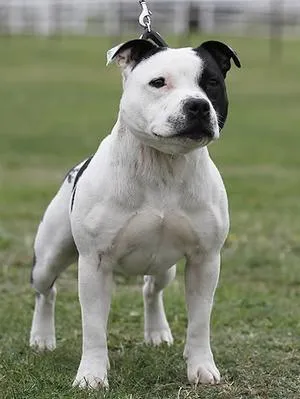
The Staffordshire Bull Terrier is a muscular, affectionate medium breed from the English Midlands, bred from bulldog and terrier stock. Despite a fierce-looking build, the well-raised 'Staffie' is famously fond of people, especially children, earning its old nickname of the 'nanny dog'.
What are the key facts about a Staffordshire Bull Terrier?
The Staffordshire Bull Terrier is a dog breed from England: medium (11–17 kg), bold, affectionate, reliable. A muscular terrier nicknamed the 'nanny dog' for patience with children when well raised.
| Origin | England |
|---|---|
| Size | Medium (11–17 kg) |
| Weight | Females 11-15.4 kg (24-34 lb), males 13-17 kg (28-38 lb) |
| Lifespan | 10–14 years |
| Coat | A short, smooth, close-lying single coat that sits tight to the muscular body in colours such as red, fawn, black, blue, brindle or any of these with white. Grooming is minimal: a weekly rub-down with a rubber grooming mitt or bristle brush removes loose hair and keeps the coat glossy. They are low to moderate shedders, need only occasional baths, and the short coat offers little protection from cold, so many appreciate a coat in winter. |
| Temperament | Bold, affectionate, reliable |
| Good with | A genuinely people-focused family dog that typically adores children when socialised and supervised. Staffies suit committed owners, including capable first-timers, who will provide training, exercise and company; they hate being left alone for long. They can be dog-selective, so careful socialisation and management around other dogs matter. They adapt to flats if well exercised, needing around an hour of vigorous activity and play each day. |
Is a Staffordshire Bull Terrier a good dog for you?
A Staffordshire Bull Terrier is a good dog when your home matches a genuinely people-focused family dog that typically adores children when socialised and supervised. staffies suit committed owners, including capable first-timers, who will provide training, exercise and company; they hate being left alone for long. they can be dog-selective, so careful socialisation and management around other dogs matter. they adapt to flats if well exercised, needing around an hour of vigorous activity and play each day.. It is a bold, affectionate, reliable medium (11–17 kg) breed from England.
A muscular terrier nicknamed the 'nanny dog' for patience with children when well raised. That one-line pitch is not a care plan. Factor grooming (A short, smooth, close-lying single coat that sits tight to the muscular body in colours such as red, fawn, black, blue, brindle or any of these with white. Grooming is minimal: a weekly rub-down with a rubber grooming mitt or bristle brush removes loose hair and keeps the coat glossy. They are low to moderate shedders, need only occasional baths, and the short coat offers little protection from cold, so many appreciate a coat in winter.), typical adult size (Females 11-15.4 kg (24-34 lb), males 13-17 kg (28-38 lb)), and the health issues listed below before you pay a deposit.
Meet adults of the breed, not only puppies or kittens, and prefer rescue or health-screened homes. A Staffordshire Bull Terrier that looks right in a photo can still be the wrong animal for a small flat, a full-time office job, or a household that wanted a low-energy companion.
What is a Staffordshire Bull Terrier?
A muscular terrier nicknamed the 'nanny dog' for patience with children when well raised. Origin is England; coat or markings are described as A short, smooth, close-lying single coat that sits tight to the muscular body in colours such as red, fawn, black, blue, brindle or any of these with white. Grooming is minimal: a weekly rub-down with a rubber grooming mitt or bristle brush removes loose hair and keeps the coat glossy. They are low to moderate shedders, need only occasional baths, and the short coat offers little protection from cold, so many appreciate a coat in winter..
Kennel and registry labels describe a type. Individual Staffordshire Bull Terriers still vary, and rescue animals may be mixes.
Where does the Staffordshire Bull Terrier come from?
Staffordshire Bull Terriers come from England. The Staffordshire Bull Terrier was developed in the early 19th century in the Black Country and Staffordshire region of England, where miners and ironworkers crossed bulldogs with local terriers to create a compact, agile, tenacious dog.
The breed's early history is bound up with the cruel blood sports of bull-baiting and dog-fighting, both outlawed in Britain by the Cruelty to Animals Act of 1835, after which breeders increasingly selected for the affectionate, people-friendly temperament seen today. The Kennel Club formally recognised the Staffordshire Bull Terrier in 1935, with breed enthusiasts such as Joseph Dunn championing its acceptance. It has since become one of Britain's most popular companion breeds, prized for loyalty and devotion to its family.
How much care does a Staffordshire Bull Terrier need?
Plan 10–14 years of food, vet care, grooming and time. A Staffordshire Bull Terrier is medium (11–17 kg) (Females 11-15.4 kg (24-34 lb), males 13-17 kg (28-38 lb)) from England, with coat care described as a short, smooth, close-lying single coat that sits tight to the muscular body in colours such as red, fawn, black, blue, brindle or any of these with white. grooming is minimal: a weekly rub-down with a rubber grooming mitt or bristle brush removes loose hair and keeps the coat glossy. they are low to moderate shedders, need only occasional baths, and the short coat offers little protection from cold, so many appreciate a coat in winter..
Match daily exercise to the bold, affectionate, reliable temperament rather than to Instagram.
Grooming follows the coat, not a generic clip: A short, smooth, close-lying single coat that sits tight to the muscular body in colours such as red, fawn, black, blue, brindle or any of these with white. Grooming is minimal: a weekly rub-down with a rubber grooming mitt or bristle brush removes loose hair and keeps the coat glossy. They are low to moderate shedders, need only occasional baths, and the short coat offers little protection from cold, so many appreciate a coat in winter.. Keep the animal lean; extra weight is a joint and heart tax, especially in a medium dog.
Budget for unexpected vet bills. The health section below is why “cheap to buy” is not the same as cheap to keep.
What surprises people about the Staffordshire Bull Terrier?
A few details about the breed, alongside the practical care information in this guide.
- The breed's enduring 'nanny dog' nickname reflects its long reputation for patience and gentleness with children in family homes.
- Staffies are one of only a few breeds the UK Kennel Club describes as 'totally reliable' with people, despite their tough appearance.
- The breed was recognised by the Kennel Club only in 1935, comparatively late, decades after the blood sports it was originally bred for had been banned.
- A distinctive 'smile', where a relaxed Staffie pulls its lips back as if grinning, is so characteristic that owners often call it the breed's trademark expression.
What health issues should you know about in a Staffordshire Bull Terrier?
Health concerns to discuss with your vet, including changes to watch for and everyday care. This is general guidance, not veterinary advice — always speak to your vet.
Hip dysplasia
An inherited malformation of the hip joint that can cause stiffness, lameness, or arthritis as the dog ages.
Care: Keep dogs lean, choose health-screened parents, and seek vet advice for pain management or surgery if needed.
Skin allergies
Itching, ear infections, and paw licking may reflect food or environmental allergies.
Care: Your vet can diagnose triggers and prescribe appropriate treatment.
Cataracts
Cataracts can occur in this breed and may need veterinary monitoring.
Care: Discuss prevention and treatment with your vet.
Who should skip a Staffordshire Bull Terrier?
Skip a Staffordshire Bull Terrier if you are homes that cannot match a bold, affectionate, reliable medium (11–17 kg) dog from England. This England dog is medium (11–17 kg) and bold, affectionate, reliable — the mismatch is usually lifestyle, not a missing accessory.
This page is allowed to say no. Skip if you are homes that cannot match a bold, affectionate, reliable medium (11–17 kg) dog from England.
A different dog breed on this site may fit. Wanting “a Staffordshire Bull Terrier” after a film or a colour photo is not a reason to ignore the skip list.
What are the hidden catches with a Staffordshire Bull Terrier?
The hidden cost of a Staffordshire Bull Terrier is usually not the purchase price. It is years of care, the health list on this page, and the mismatch between a bold, affectionate, reliable animal and a busy home.
The impulse-buy catch
A Staffordshire Bull Terrier from England is often sold on looks. Coat, colour and size are not a temperament test. Meet the adult animal, ask about health screening, and walk away from pressure sales.
The hip dysplasia catch
An inherited malformation of the hip joint that can cause stiffness, lameness, or arthritis as the dog ages. Keep dogs lean, choose health-screened parents, and seek vet advice for pain management or surgery if needed.
The skin allergies catch
Itching, ear infections, and paw licking may reflect food or environmental allergies. Your vet can diagnose triggers and prescribe appropriate treatment.
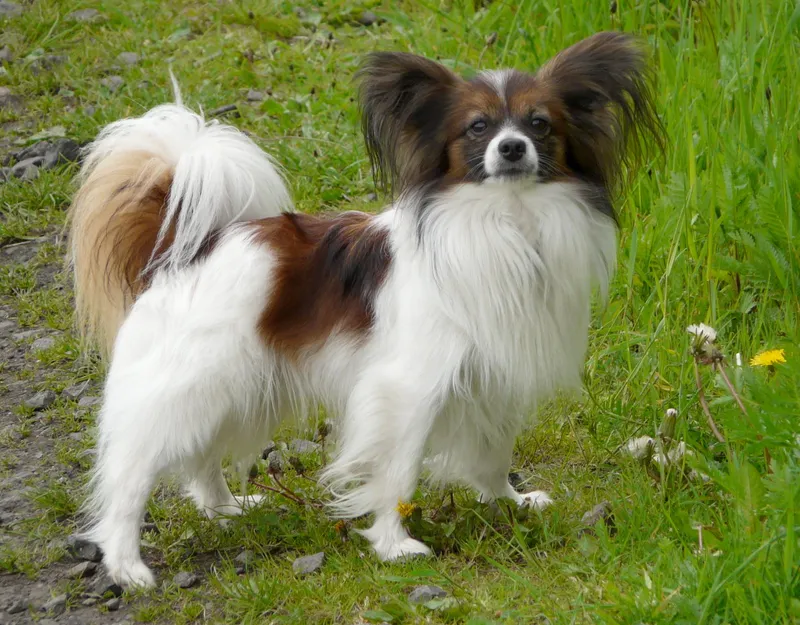
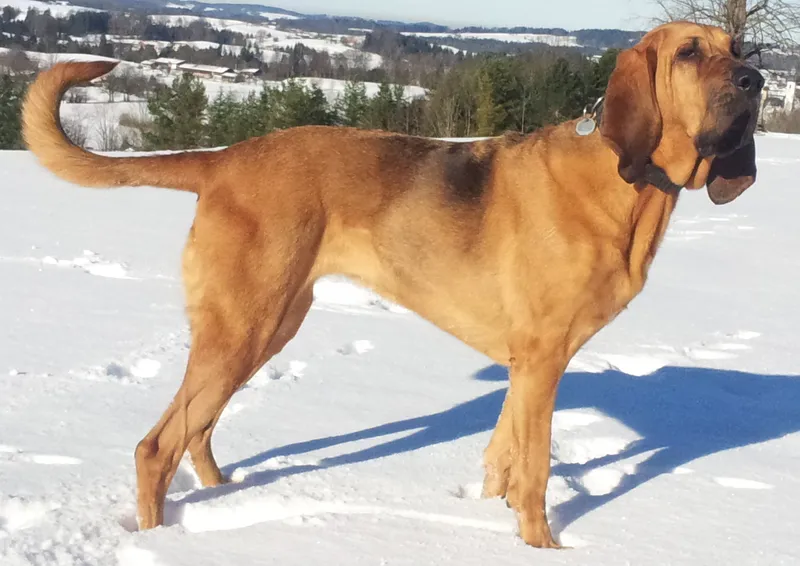
How does a Staffordshire Bull Terrier compare with Papillon and Bloodhound?
A Staffordshire Bull Terrier is not interchangeable with Papillon and Bloodhound. Compare origin, size, lifespan and temperament before you choose — those four lines prevent most regret.
| Dog fact | Staffordshire Bull Terrier | Papillon | Bloodhound |
|---|---|---|---|
| Origin | England | France/Belgium | Belgium/France |
| Size | Medium (11–17 kg) | Toy (3–5 kg) | Large (36–50 kg) |
| Lifespan | 10–14 years | 12–16 years | 10–14 years |
| Temperament | Bold, affectionate, reliable | Alert, friendly, intelligent | Gentle, stubborn, determined |
What is the verdict on the Staffordshire Bull Terrier?
Choose a Staffordshire Bull Terrier only if the care, skip-if and health sections still look like your life after a week of thinking. Otherwise pick a different dog or wait. Rescue is usually the better first door than a waiting-list puppy or kitten.
If the match is real, budget for 10–14 years of vet care and do not skip health screening. If it is not, walking away is the kind choice — for you and for the animal.
Every dog deserves a chance
Whatever breed steals your heart, millions of dogs around the world have no home at all. A symbolic adoption or a gift to WARN funds humane care for street and community dogs — vaccination, neutering and emergency treatment.