Wildlife Guide · North America — Alaska, Canada, the contiguous United States and northern Mexico & Coasts, large lakes and major rivers
Bald Eagle
Haliaeetus leucocephalus (Linnaeus, 1766) — family Accipitridae
A fish eagle that came back from about 400 pairs — and one of conservation's clearest wins.
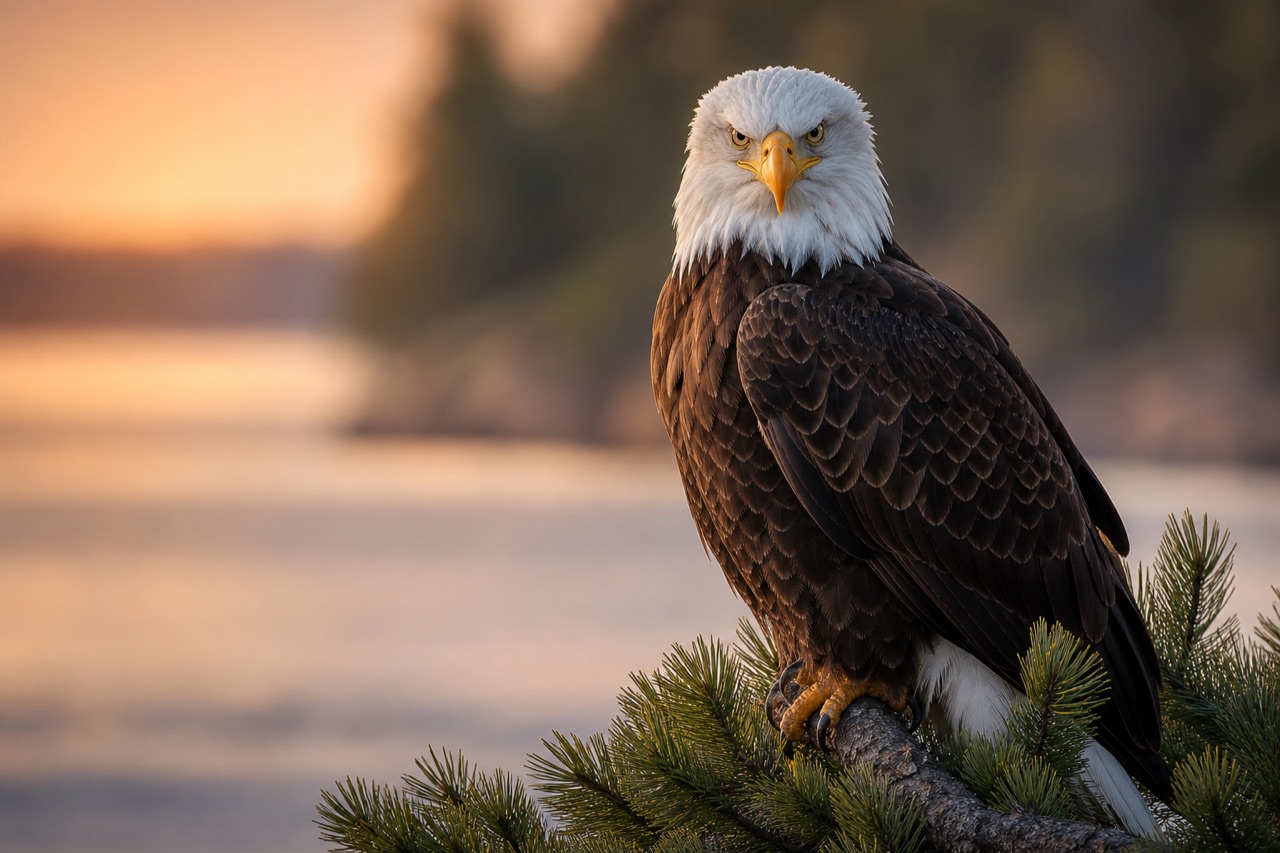
AI-generated educational wildlife portrait — World Animal Rescue Network · AI visualisation, not a photograph
In brief
The bald eagle (Haliaeetus leucocephalus) is a large North American fish eagle that recovered from roughly 400 nesting pairs in the contiguous United States in the 1960s to tens of thousands today, after DDT was banned and legal protection was strengthened.
Also in Animals A to Z · Animals that start with B
By WARN Research & Conservation Team Last updated
The bald eagle is a large North American fish eagle, unmistakable as an adult with its white head and tail against a dark brown body. It is not bald: the name comes from an older sense of 'balde', meaning white. Its real significance is as a recovery story. By the early 1960s the population in the contiguous United States had fallen to a few hundred nesting pairs, driven down by shooting, habitat loss and above all DDT, which thinned eggshells so severely that eggs broke under the incubating parent. After DDT was banned and legal protection tightened, the population rebounded to tens of thousands of pairs. It remains one of the most cited demonstrations that removing a specific chemical cause can reverse a collapse.
~2 m
Wingspan of a large adult
~400
Nesting pairs left in the contiguous US in the early 1960s
5 years
Age at which the white head and tail appear
1 tonne
Weight the largest recorded nests have reached
Figures sourced from IUCN Red List — Haliaeetus leucocephalus, CITES Appendices .
Bald Eagle: Quick Facts
| Wingspan | 1.8–2.3 m |
|---|---|
| Weight | 3–6.3 kg; females larger than males |
| Adult plumage | Acquired at about 5 years |
| Diet | Fish, carrion, waterfowl; steals from other birds |
| Nest | Reused and enlarged yearly; largest recorded near 1 tonne |
| Key threat | Lead poisoning from ammunition in carrion |
Scientific Classification
| Kingdom | Animalia |
|---|---|
| Phylum | Chordata |
| Class | Aves |
| Order | Accipitriformes |
| Family | Accipitridae |
| Genus | Haliaeetus |
| Species | Haliaeetus leucocephalus |
Conservation Status
- IUCN Status
- Least Concern
- Population
- Tens of thousands of nesting pairs across North America
- Trend
- Increasing
- Assessed
- 2021
- CITES
- Appendix II
Delisted from the US Endangered Species Act in 2007 but still protected under the Bald and Golden Eagle Protection Act.
Did you know?
Bald eagles add to the same nest year after year; the largest on record weighed close to a tonne before the tree gave way.
Key Facts: Bald Eagle
- Bald eagles are not bald — 'balde' is an old word for white.
- Adults gain the white head and tail at about five years old; juveniles are mottled brown.
- DDT thinned eggshells and was the principal cause of the mid-century collapse.
- The US population fell to roughly 400 nesting pairs and has since recovered to tens of thousands.
- They are opportunists: fish, carrion and food stolen from other birds all feature.
- Lead poisoning from ammunition fragments in carrion remains a significant ongoing cause of death.
The DDT collapse
DDT applied across mid-twentieth-century North America washed into waterways, entered aquatic food chains and concentrated in fish-eating birds at the top. In eagles the breakdown product DDE interfered with calcium deposition, producing eggshells so thin they cracked under the weight of an incubating adult.
Combined with shooting and the loss of large waterside nesting trees, the effect was catastrophic. The species was reduced to around 400 nesting pairs in the contiguous United States, while remaining relatively secure in Alaska and Canada.
How the recovery happened
Three things, in sequence: DDT was banned in the United States in 1972; legal protection was enforced under federal law; and nest sites were protected and birds reintroduced to areas where they had been lost.
The response was rapid once eggshell thinning stopped. Numbers climbed through the following decades and the bald eagle was removed from the US endangered species list in 2007, remaining protected under separate eagle-specific legislation. Its IUCN status is Least Concern.
Hunting, scavenging and stealing
Bald eagles are primarily fish eaters, snatching prey from at or just below the surface with their feet. But they are unfussy opportunists: they scavenge carrion heavily, take waterfowl and small mammals, and routinely harass ospreys and other birds into dropping their catch.
That kleptoparasitic habit was noted early. Benjamin Franklin's often-quoted disparagement of the bald eagle as a bird of 'bad moral character' referred precisely to this behaviour — though the story that he proposed the turkey as a national symbol instead is a later embellishment.
The threat that remains: lead
The modern problem is lead. Eagles scavenging carcasses and gut piles left by hunters ingest fragments of lead ammunition, which dissolve in the acidic stomach and cause acute poisoning. Studies across North America have found lead exposure in a large proportion of tested bald and golden eagles, with a measurable population-level effect on growth rates.
The fix is well understood — non-lead ammunition — and uptake is rising but incomplete. Vehicle collisions at roadside carrion, electrocution on power infrastructure and disturbance at nest sites make up the remainder of the modern threat picture.
What WARN Does
WARN publishes free, sourced species education, including the cases where conservation demonstrably worked. The bald eagle shows that identifying a specific chemical cause and removing it can reverse a collapse — and that the follow-on threat, in this case lead ammunition, often needs the same treatment before recovery is complete.
If this guide helps you understand wildlife and the pressures it faces, a gift to WARN supports habitat protection and free public education in our partner countries.
Bald Eagle: Frequently Asked Questions
Why is the bald eagle called bald?
Are bald eagles still endangered?
What caused the bald eagle's decline?
At what age do bald eagles get their white head?
What is the biggest threat to bald eagles today?
What do bald eagles eat?
Where do bald eagles live?
Are bald eagles dangerous?
How long do bald eagles live?
How big is a bald eagle?
Sources & References
Population figures, conservation status and biological facts on this page are drawn from authoritative scientific and intergovernmental sources.
Terms used on this page
Plain-English definitions, from our wildlife and conservation glossary.
Explore more animals
Discover more animals, their habitats and their conservation status in the WARN wildlife-guide library.
Enjoyed this Bald Eagle guide?
Receive appeal updates, animal-welfare news and published funding reports. Unsubscribe any time.
We only use your address for WARN updates. See our privacy policy.