Wildlife Guide · Sulawesi and nearby Indonesian islands & Wallacea — forest and wetland
Babirusa
Babyrousa babyrussa and related species — family Suidae
The pig whose upper tusks grow through the roof of its own snout.
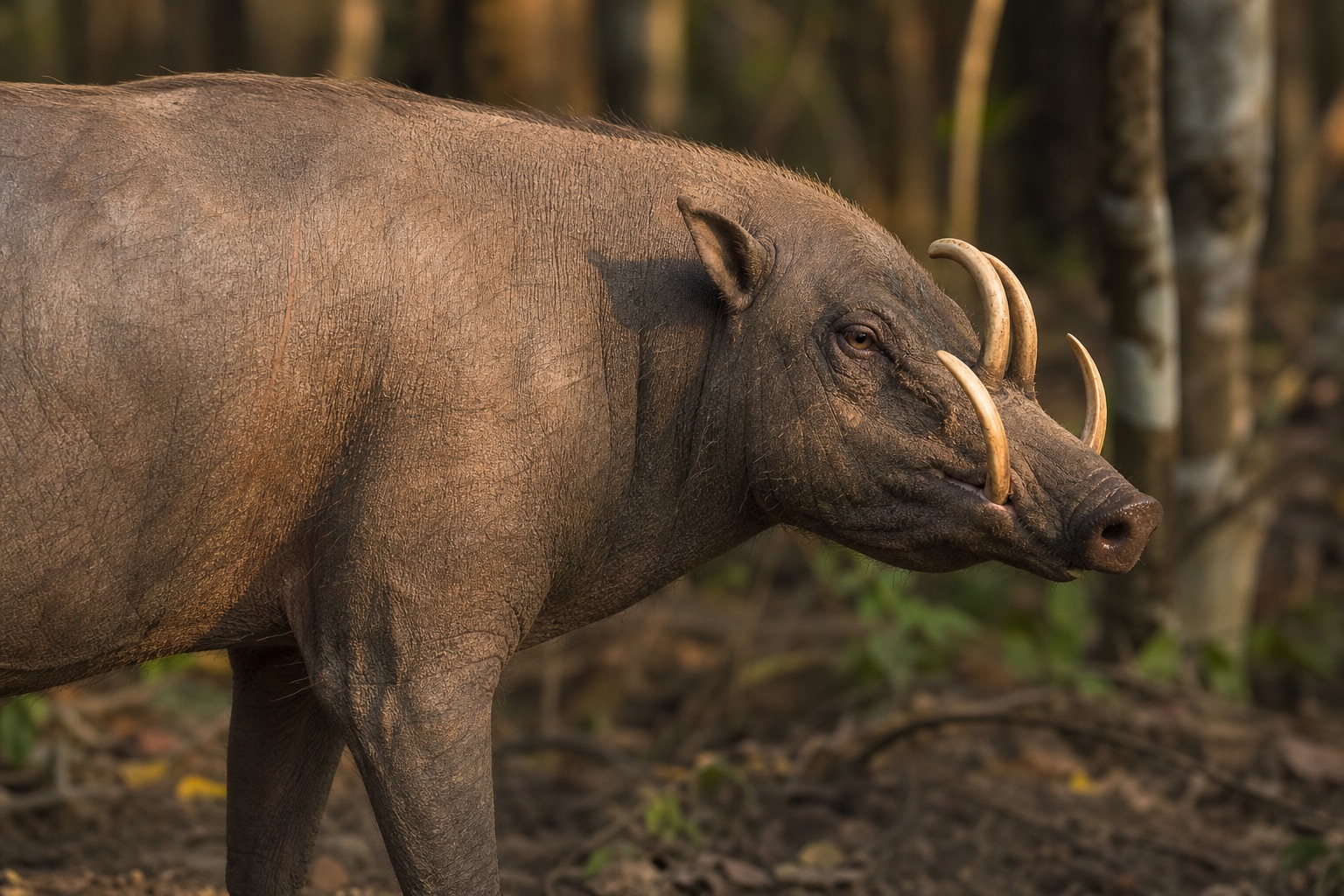
AI-generated educational wildlife portrait — World Animal Rescue Network · AI visualisation, not a photograph
In brief
Babirusas are forest pigs of Sulawesi and Wallacea whose males grow upper canines that pierce the snout roof and curve upward; they are listed Vulnerable, threatened by hunting and forest loss.
Also in Animals A to Z · Animals that start with B
How you can help
You can support the related appeal — read its purpose, recipient status and fund terms first — or give once to where it is needed most. Sharing accurate information helps too.
By WARN Research & Conservation Team Last updated
Babirusas are forest pigs endemic to Wallacea — centred on Sulawesi and some neighbouring islands — and among the strangest-looking large mammals in the region. Males carry four tusks: the lower canines curve upward as in other pigs, but the upper canines grow upward and backward, piercing the skin and bone of the snout roof and curving back toward the forehead. In older males the upper tusks can loop dangerously close to the skull. They browse and root in forest and visit salt licks and wetlands. Locally they are hunted for meat; habitat loss from logging and conversion reduces forest cover across Sulawesi. Most populations are listed Vulnerable, with some island forms more threatened. The tusks that make males photogenic also make them targets.
4
Tusks in males — uppers pierce the snout roof
Vulnerable
IUCN status for most populations
Wallacea
Endemic to Sulawesi and nearby islands
Forest
Browser and rooter of understory and wetlands
Figures sourced from IUCN Red List — Babyrousa babyrussa, Arkive — babirusa ecology .
Babirusa: Quick Facts
| Tusks | Upper canines pierce snout roof in males |
|---|---|
| Family | Suidae — forest pigs |
| Range | Sulawesi and Wallacea |
| Diet | Leaves, fruit, fungi, roots |
| IUCN status | Vulnerable |
| Main threats | Hunting; forest conversion |
Scientific Classification
| Kingdom | Animalia |
|---|---|
| Phylum | Chordata |
| Class | Mammalia |
| Order | Artiodactyla |
| Family | Suidae |
| Genus | Babyrousa |
| Species | Several — B. babyrussa and allied forms |
Conservation Status
- IUCN Status
- Vulnerable
- Population
- Unknown — inferred declining
- Trend
- Decreasing
- Assessed
- 2016
- CITES
- Appendix I
Hunting and forest loss across Sulawesi continue. Island-specific populations may face sharper pressure than the genus-wide listing suggests.
Did you know?
Male babirusa upper tusks grow up through the snout roof and curve back toward the forehead — sometimes approaching the skull in very old animals.
Key Facts: Babirusa
- Male babirusas grow upper canines that pierce the skin and bone of the snout roof and curve back toward the forehead.
- They are forest pigs in the family Suidae, endemic to Sulawesi and parts of Wallacea — not closely related to deer despite the tusk display.
- Most populations are listed Vulnerable, declining from hunting and forest loss.
- Babirusas browse leaves, fruit and fungi and root in soil; they also visit volcanic salt licks.
- Tusk form varies by species and age; extreme upper tusk growth can interfere with feeding in very old males.
- Forest conversion and hunting pressure on Sulawesi affect babirusas across the same landscapes as anoa and crested macaques.
Tusks through the snout
In male babirusas the upper canine teeth do not stop at the lip. They grow upward, pierce the maxillary bone and skin of the snout roof, and curve backward — sometimes toward the forehead or eye region in very old animals. Lower canines also elongate and curve upward but remain outside the snout.
The function is partly sexual display and combat between males rather than predation — babirusas eat vegetable matter. Fights with interlocking upper tusks occur, and extreme tusk growth may become a handicap if curves interfere with vision or feeding. Females lack the dramatic upper tusk development.
Forest pig of Wallacea
Babirusas inhabit rainforest, riverine forest and wetland edges on Sulawesi and some satellite islands. They are more arboreal than domestic pigs in habit — older accounts describe them resting in tree forks, though they are not specialist climbers. Diet includes leaves, fruit, fungi and roots uncovered by rooting.
Wallacea holds several babirusa species or subspecies split across islands. Sulawesi's complex shape isolated populations that differ in tusk form and coat. All share vulnerability to the same island-wide pressures: hunting and deforestation.
Hunting and habitat loss
Babirusa meat is valued locally, and tusks enter ornamental trade. Snares and guns take animals from forest that is simultaneously being logged or converted to agriculture and plantations. Populations decline faster in accessible lowland forest than in steep interior ranges, but even remote areas face hunting when roads advance.
The Vulnerable listing covers the most widespread forms; rarer island populations may qualify for higher threat categories. Survey data are incomplete, which is typical for Sulawesi forest mammals — absence of records often reflects inaccessibility rather than security.
What WARN Does
WARN publishes free, sourced species education for Wallacea endemics. Babirusas are widely shared for their tusks, but the conservation reality on Sulawesi is hunting and forest conversion — the same pressures affecting anoa and crested macaques on the same island.
If this guide helps you understand wildlife and the pressures it faces, a gift to WARN supports habitat protection and free public education in our partner countries.
How can I help save the babirusa?
Explore practical ways to support the babirusa, from everyday choices and sharing reliable information to reviewing a related appeal before giving.
Explore ways to support
Read the related appeal’s purpose, recipient status and fund terms. Choose an affordable gift after checking what is proposed and what has been reported.
Ease the pressures
Avoid the wildlife trade and souvenirs, never buy wild animals as pets, and choose sustainable, habitat-friendly products — the threats behind the babirusa's decline fall when demand does.
Spread the word
Share accurate, sourced information about the babirusa. Wider awareness is what turns concern into lasting protection.
Babirusa: Frequently Asked Questions
How can I help save the babirusa?
Why do babirusa tusks go through the snout?
What is a babirusa?
Are babirusas endangered?
What do babirusas eat?
Where do babirusas live?
Can babirusa tusks hurt the animal?
Are babirusas dangerous?
How long do babirusas live?
How big is a babirusa?
Sources & References
Population figures, conservation status and biological facts on this page are drawn from authoritative scientific and intergovernmental sources.
Terms used on this page
Plain-English definitions, from our wildlife and conservation glossary.
Explore more animals
Discover more animals, their habitats and their conservation status in the WARN wildlife-guide library.
Enjoyed this Babirusa guide?
Receive appeal updates, animal-welfare news and published funding reports. Unsubscribe any time.
We only use your address for WARN updates. See our privacy policy.