Wildlife Guide · Sulawesi, Indonesia & Endemic — lowland and mountain forests
Anoa
Bubalus depressicornis and B. quarlesi — dwarf buffalo of Sulawesi
The smallest wild cattle on Earth — endemic to Sulawesi and declining in both forest types.
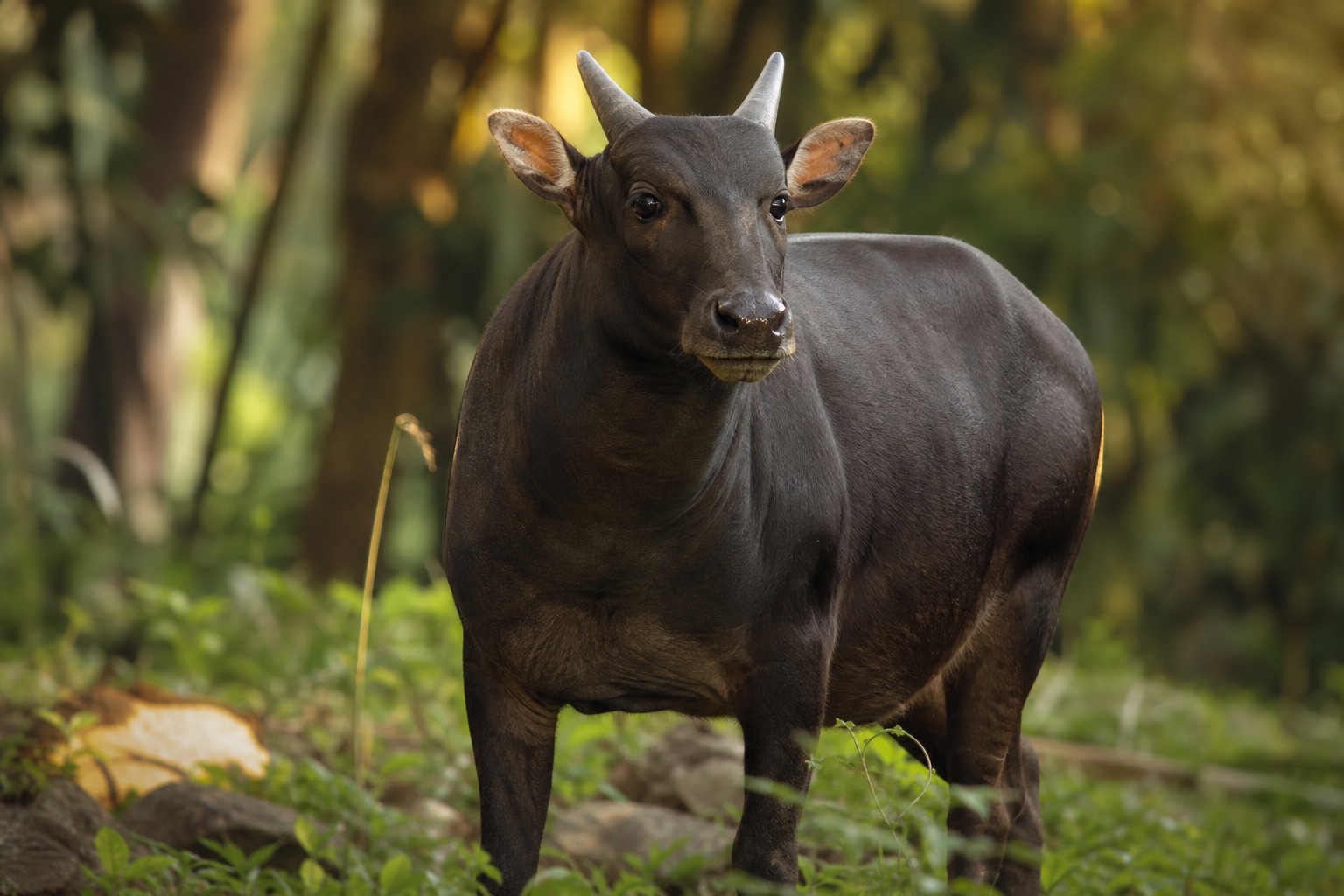
AI-generated educational wildlife portrait — World Animal Rescue Network · AI visualisation, not a photograph
In brief
Anoa are dwarf buffalo endemic to Sulawesi, Indonesia — the smallest wild cattle at roughly 90 cm shoulder height — with lowland and mountain species both listed Endangered and declining through hunting and forest loss.
Also in Animals A to Z · Animals that start with A
How you can help
You can support the related appeal — read its purpose, recipient status and fund terms first — or give once to where it is needed most. Sharing accurate information helps too.
By WARN Research & Conservation Team Last updated
Anoa are dwarf buffalo endemic to Sulawesi — the large island at the heart of Wallacea between Borneo and New Guinea. Two species are recognised: the lowland anoa, Bubalus depressicornis, of lowland forest, and the mountain anoa, B. quarlesi, of higher elevation forest. Both are dark, compact bovids with short straight horns, standing roughly 90 centimetres at the shoulder — the smallest wild cattle in the world. They fill the ecological role of a small forest buffalo, browsing understory vegetation and wallowing in mud. Locally they are hunted for meat and horns, and forest conversion for agriculture, plantations and mining removes habitat across Sulawesi. Both species are listed Endangered, with declining populations inferred from habitat loss and hunting rather than from comprehensive surveys.
~90 cm
Shoulder height — smallest wild cattle
2
Species — lowland and mountain anoa
Endemic
Confined to Sulawesi, Wallacea
Forest
Lowland and montane — separate species by elevation
Figures sourced from IUCN Red List — Bubalus depressicornis, IUCN Red List — Bubalus quarlesi .
Anoa: Quick Facts
| Shoulder height | Roughly 90 cm — smallest wild cattle |
|---|---|
| Species | Lowland and mountain anoa |
| Range | Sulawesi only — Wallacea endemic |
| Habitat | Lowland and montane forest |
| IUCN status | Endangered (both species) |
| Main threats | Hunting; forest conversion |
Scientific Classification
| Kingdom | Animalia |
|---|---|
| Phylum | Chordata |
| Class | Mammalia |
| Order | Artiodactyla |
| Family | Bovidae |
| Genus | Bubalus |
| Species | B. depressicornis (lowland); B. quarlesi (mountain) |
Conservation Status
- IUCN Status
- Endangered
- Population
- Unknown — inferred declining
- Trend
- Decreasing
- Assessed
- 2016
- CITES
- Appendix I
Both Sulawesi anoa species are Endangered. Data are poor, but hunting and forest loss continue across the island.
Did you know?
Anoa are dwarf buffalo confined to Sulawesi — at roughly 90 centimetres shoulder height they are the smallest wild cattle on Earth.
Key Facts: Anoa
- Anoa are the smallest wild cattle, standing roughly 90 centimetres at the shoulder — dwarf buffalo endemic to Sulawesi.
- Two species are recognised: lowland anoa in lowland forest and mountain anoa at higher elevations.
- Both are listed Endangered, with populations inferred to be declining from hunting and habitat loss.
- Sulawesi sits in Wallacea — a zone of high endemism where Asian and Australian faunas meet — and anoa occur nowhere else.
- Forest conversion for agriculture, plantations and infrastructure removes understory habitat anoa need for browsing and wallowing.
- Hunting for meat and horns continues across much of Sulawesi where enforcement is weak and forest access has expanded.
The smallest wild cattle
Domestic cattle and their wild relatives span a wide size range, but anoa anchor the bottom. At roughly 90 centimetres shoulder height and a body mass far below domestic buffalo, they are adapted to dense forest rather than open grassland. Short horns, dark coat and a compact build let them move through understory and wallow in forest mud.
Lowland and mountain species partition elevation. Lowland anoa occupy tropical forest below roughly 1,000 metres; mountain anoa range higher. The split is not always obvious in the field, and historical confusion between the two complicated taxonomy and assessment.
Wallacea and Sulawesi endemism
Sulawesi's shape — four long peninsulas around a central mass — created isolated forest refuges that evolved distinctive mammals. Anoa are among them, alongside babirusas, macaques and tarsiers covered in companion guides on this tier. Wallacea as a whole has high endemism and relatively low formal protection compared with the species richness it holds.
Anoa require intact forest with water for wallowing. They are not pasture animals; clearing for smallholder gardens, oil palm and other crops removes the understory and wallows they use, and road building opens previously inaccessible forest to hunters.
Hunting and forest conversion
Anoa are hunted for meat across Sulawesi, and horns enter local trade. The animals are shy and difficult to study, which means population data are largely inferred from habitat trends and interview surveys rather than direct counts. Where forest is cleared or hunting is unchecked, anoa disappear from accessible areas long before a range-wide extinction is recorded.
Both species carry Endangered listings. The mountain anoa may be the more threatened of the two, with higher-elevation forest also under pressure from shifting agriculture and logging, but lowland forest loss is faster and lowland anoa face the sharper immediate decline in many provinces.
What protection requires
Effective protection means enforcing hunting restrictions in remaining forest blocks, maintaining connectivity between reserves, and securing wallow sites and water sources. Captive breeding programmes exist for both species, but release requires forest that is safe from hunting — a condition not met in most of Sulawesi.
Without reduced hunting pressure and halted forest conversion, fenced reserves and captivity become the default refuge for a mammal that evolved as a free-ranging forest buffalo. The Endangered listing describes trajectory; reversing it requires forest standing and guns absent — neither achieved across most of the island.
What WARN Does
WARN publishes free, sourced species education for Wallacea endemics that receive little coverage outside Indonesia. Anoa are the smallest wild cattle on Earth and exist only on Sulawesi, where hunting and forest conversion continue across both lowland and mountain species.
If this guide helps you understand wildlife and the pressures it faces, a gift to WARN supports habitat protection and free public education in our partner countries.
How can I help save the anoa?
Explore practical ways to support the anoa, from everyday choices and sharing reliable information to reviewing a related appeal before giving.
Explore ways to support
Read the related appeal’s purpose, recipient status and fund terms. Choose an affordable gift after checking what is proposed and what has been reported.
Ease the pressures
Avoid the wildlife trade and souvenirs, never buy wild animals as pets, and choose sustainable, habitat-friendly products — the threats behind the anoa's decline fall when demand does.
Spread the word
Share accurate, sourced information about the anoa. Wider awareness is what turns concern into lasting protection.
Anoa: Frequently Asked Questions
How can I help save the anoa?
What is an anoa?
How big is an anoa?
Where do anoa live?
Are anoa endangered?
What threatens anoa?
How is anoa related to other cattle?
What do anoas eat?
Are anoas dangerous?
How long do anoas live?
Sources & References
Population figures, conservation status and biological facts on this page are drawn from authoritative scientific and intergovernmental sources.
Terms used on this page
Plain-English definitions, from our wildlife and conservation glossary.
Explore more animals
Discover more animals, their habitats and their conservation status in the WARN wildlife-guide library.
Enjoyed this Anoa guide?
Receive appeal updates, animal-welfare news and published funding reports. Unsubscribe any time.
We only use your address for WARN updates. See our privacy policy.