Symbolic adoption · sea turtles
Adopt a Sea Turtle
Help sea turtles survive a crowded ocean. Your symbolic sea turtle adoption is a donation to WARN’s sea turtle appeal, which is raising funds for specialist care, reducing threats and protecting nesting habitat — with a personalised certificate for you or someone you love.
- Personalised digital certificate — for you, or with a gift recipient’s name
- From £5 a month (about 16p a day), or a one-off gift
- Supports WARN’s sea turtle appeal
- Cancel future monthly payments any time
A symbolic adoption is a donation, not ownership of an animal. How it works
.jpg)
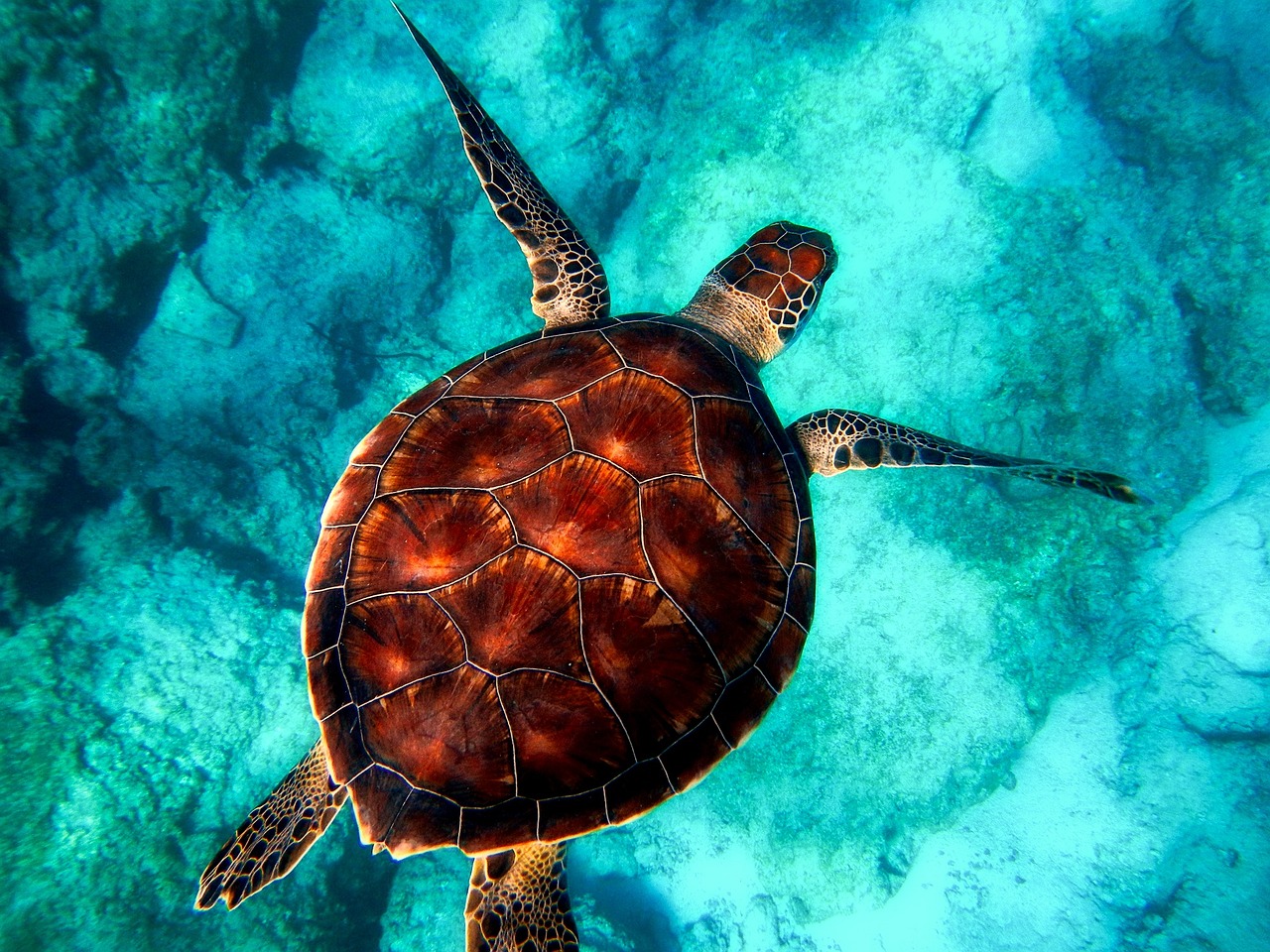
About this photo
Sea turtle at Kaputas Beach, Turkey, published by Randall Ruiz on 30 May 2017 under CC0. The source does not record a capture date. This is a species photograph, not a documented WARN rescue or release.
In short
You can adopt a sea turtle symbolically with WARN from £5 a month (about 16p a day) or with a one-off gift. Your donation supports WARN’s sea turtle appeal, and you receive a personalised digital certificate that can name a gift recipient. It is symbolic: no individual animal is assigned to you.
By WARN Research & Conservation TeamChecked against Species sources and WARN funding informationLast updated
What you get
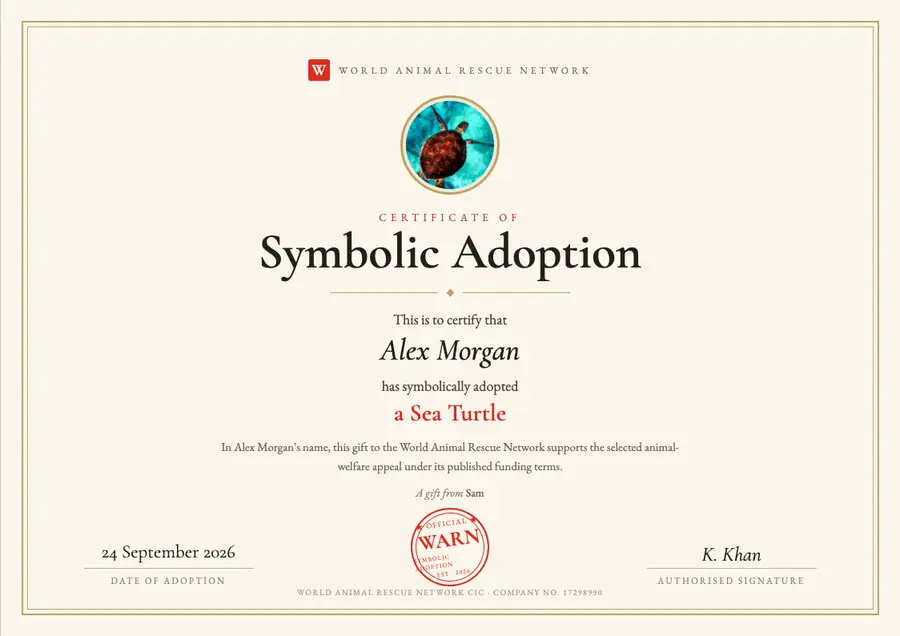
- Personalised digital certificate (PDF), emailed after a successful payment
- Option to put a gift recipient’s name on the certificate
- Payment confirmation and links to the species guide and appeal
Choose your adoption
Cancel future monthly gifts at any time · Secure Stripe checkout.
Secure donation · accepted methods
Secure card checkout powered by Stripe. Card details are entered on Stripe; available wallets depend on your device and browser.
Your gift supports WARN’s sea turtle appeal. Read the appeal · Manage a monthly gift
Why sea turtles need help
WWF identifies accidental capture in fishing gear, illegal trade and climate change among the main threats to sea turtles. Their lives connect offshore feeding grounds, long migrations and the beaches where they nest, so harm in one place reaches them everywhere.
Different threats need different help: specialist care for injured turtles, work to reduce accidental capture, and protection for nests and nesting beaches.
Explore the sea turtle species guide →What the appeal is raising funds for
Specialist care
Assessment and recovery for injured sea turtles.
Reducing harm
Work that addresses a documented local threat, such as accidental capture.
Nesting habitat
Protection and monitoring of nests and nesting beaches.
WARN assesses local organisations before making grants. How recipients are selected · Grant records
A gift that needs no wrapping
Give a sea turtle adoption as a gift
-
Turn on the gift option
Switch on “Send as a gift to someone” and type their name exactly as it should appear.
-
Pay with your own email
The certificate comes to you, so the surprise is not spoiled.
-
Forward or print it
Nothing is posted, so there is no postal deadline — handy for last-minute presents.
The fine print, answered
Sea Turtle adoption questions
What does symbolic sea turtle adoption mean?
What will I receive?
Can I give a sea turtle adoption as a gift?
How much does it cost to adopt a sea turtle symbolically?
Where is my adoption gift intended to go?
Does the pictured animal receive my gift?
When will the certificate arrive?
Can I restrict my gift to a narrower purpose?
Can I choose one-off or monthly giving?
Can I cancel regular payments?
Is my gift eligible for Gift Aid?
Are recipients already selected and paid?
Can I help without donating?
Grant register
Approved commitments and completed payments are different stages. Public records identify recipients and purposes without exposing donor details, banking information or sensitive wildlife locations.
Records not yet published
A reconciled financial summary and individual grant records have not yet been published here. This is a reporting status, not a statement that income, expenditure or grants are zero. Contact WARN for information about your gift.
Ask about a donation or grantWhere your adoption gift goes
WARN's target is for at least 80% of unrestricted donations to support eligible animal-welfare programmes. This is a planning target, not an achieved result. Named appeals follow their own published fund terms.
- Programme funding target
- At least 80% of unrestricted donations to frontline programme delivery — grants to partner shelters, sanctuary capacity, veterinary care and rescue.
- What the rest covers
- Essential fundraising, communications, governance and operations. The funding policy distinguishes planning targets from actual reported spending.
- Who delivers the work
- Eligible organisations assessed before a grant is approved. WARN is developing grant-making and does not operate its own rescue centres. Published records identify actual recipients and payments. How partners are selected.
- Legal status
- World Animal Rescue Network CIC is a Community Interest Company — not a registered charity, and not Gift Aid eligible. Registration status.
Suggested amounts are contribution choices, not verified treatment costs or guarantees of an individual rescue outcome. Read the selected appeal’s purpose and funding terms.
Full breakdown: where your money goes →Sources and further reading
The sources explain species needs and professional approaches. Citing an organisation does not establish a WARN partnership or grant.