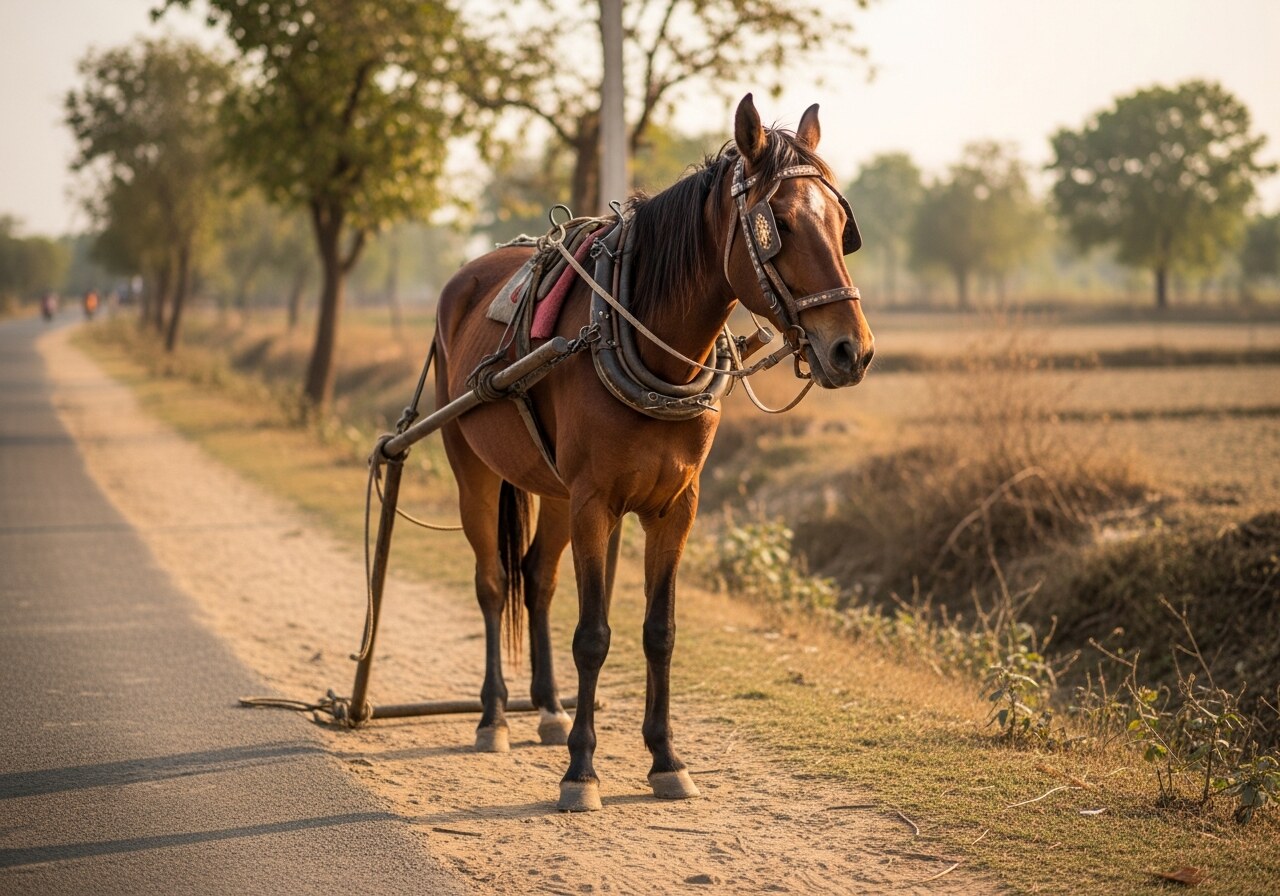
Working horse in harness on dirt road
Species

· GLOBAL · 6 min read

Horse Rescue: The Forgotten 200 Million Working Equines

In brief

Horse rescue in the UK and US usually means racing retirees or surrendered companions. Globally, the larger crisis is the 200 million working horses, donkeys, and mules who never come home. This briefing covers this subject in GLOBAL.

Horse rescue is one of the most searched animal-welfare phrases in the English-speaking world. In the UK and the US, it usually refers to retired racing thoroughbreds, surrendered family ponies, or horses pulled from neglect cases. Globally, however, the bigger horse-rescue story is happening in brick kilns, construction sites, and freight yards in Pakistan, Peru, Egypt, and Kenya.

What should you know about the problem?

  • An estimated 200 million working horses, donkeys, and mules support livelihoods worldwide.
  • Roughly 600 million people depend directly on a working equine for their daily income.
  • Most working equines die from preventable causes: harness wounds, parasitism, dehydration, and overloading.
  • A single set of properly fitted harness equipment can extend a working horse's life by years.

What working-equine rescue looks like?

It is not adoption — most working horses cannot stop working without their human family losing its income. Working-equine rescue is mobile veterinary medicine, free farriery, harness redistribution, dental care, and owner education delivered at the work site. Done well, it improves both animal welfare and household income, because a healthier horse can work more sustainably for longer.

How you can help?

If you are in the UK or US, look up reputable thoroughbred-retirement and equine-rescue organisations near you for adoption or sponsorship. If you want to support working equines internationally, fund mobile-clinic programmes — they deliver the highest welfare impact per dollar of any equine-rescue intervention currently measured.

Is it true that an estimated 200 million working horses, donkeys, and mules support livelihoods worldwide?

An estimated 200 million working horses, donkeys, and mules support livelihoods worldwide. An estimated 200 million working horses, donkeys, and mules support livelihoods worldwide is one of the details people actually search for about this subject. It holds as a field note from GLOBAL; it is not a care sheet and not a substitute for the species guide.

Is it true that roughly 600 million people depend directly on a working equine for their daily income?

Roughly 600 million people depend directly on a working equine for their daily income. Roughly 600 million people depend directly on a working equine for their daily income is one of the details people actually search for about this subject. It holds as a field note from GLOBAL; it is not a care sheet and not a substitute for the species guide.

Is it true that most working equines die from preventable causes: harness wounds, parasitism, dehydration, and overloading?

Most working equines die from preventable causes: harness wounds, parasitism, dehydration, and overloading. Most working equines die from preventable causes: harness wounds, parasitism, dehydration, and overloading is one of the details people actually search for about this subject. It holds as a field note from GLOBAL; it is not a care sheet and not a substitute for the species guide.

Is it true that a single set of properly fitted harness equipment can extend a working horse's life by years?

A single set of properly fitted harness equipment can extend a working horse's life by years. A single set of properly fitted harness equipment can extend a working horse's life by years is one of the details people actually search for about this subject.

What is this briefing not?

This briefing is not a substitute for the full this subject wildlife guide, not a pet-care manual, and not a first-person field dispatch. It is a desk-researched explainer for people who searched a specific question about this subject. The setting is GLOBAL.

Horse Rescue: The Forgotten 200 Million Working Equines sits in the newsroom as a species explainer. It is not a Field notes dispatch from a partner clinic, and it is not a reason to keep this subject. Location context: GLOBAL.

Who should skip this page?

Skip this page if you wanted a complete IUCN-style species profile, veterinary advice, or permission to keep this subject as a pet. You will not find those here. Read the wildlife guide next if you need status, range and sources in one place.

Skip it if you needed veterinary instructions, a travel itinerary, or a fundraising story dressed up as science. The skip is the point: a page that cannot say no is not a guide.

How does this briefing compare to the full species guide?

This page answers the search in the headline. The wildlife guide answers status, threats, and what is actually known. Use both; do not cite the listicle as if it were the Red List. Horse rescue in the UK and US usually means racing retirees or surrendered companions.

What is the catch with a short wildlife briefing?

The catch with wildlife listicles is that a true fact can still be the wrong takeaway. “Amazing” is not the same as “safe to keep”, and a number without a source is trivia. Every figure on this page should be read against the cited IUCN or zoo pages, not against a screenshot.

Factory “12 facts” pages elsewhere on the web pad the same three sentences. Here each heading is a real question, each answer is meant to stand alone, and the sources at the end are the audit trail. If a number is not on this page or in those sources, we did not invent it.

What should you do after reading this?

Use this briefing to answer the question in the title, then go to the species guide for status and sources. If you want to help this subject, fund habitat and enforcement — do not buy the animal. Horse rescue in the UK and US usually means racing retirees or surrendered companions.

If you want to support WARN’s partner work, donate knowing we are a community interest company, not a registered charity. If you want the animal itself, you have the wrong page.

Read the verdict on the first screen, the skip-if before you share the page, and the sources at the end before you quote a number. That is the whole contract of this briefing.

What do people ask about this briefing?

Is this this subject briefing a complete species guide?
No. It is a newsroom explainer for a specific search. Status, range and the full source list live on the wildlife guide where one exists. The briefing is set in GLOBAL. Horse rescue in the UK and US usually means racing retirees or surrendered companions.
Should you keep a this subject as a pet after reading this?
No. Amazing facts are not a care plan. Wild animals belong in wild habitat; buying one, posing with one, or sharing selling ads all worsen the trade. Location context on this page is GLOBAL. Horse rescue in the UK and US usually means racing retirees or surrendered companions.
Who should skip this this subject page?
Anyone who needed veterinary advice, a full IUCN profile, or permission to handle the animal. This page will tell you to leave if that is you. Horse rescue in the UK and US usually means racing retirees or surrendered companions.
What is the one-line answer on this subject?
Horse rescue in the UK and US usually means racing retirees or surrendered companions. Globally, the larger crisis is the 200 million working horses, donkeys, and mules who never come home. This briefing is set in GLOBAL. It is not a pet-care page and not a field dispatch.
Where is this this subject briefing set?
The location context is GLOBAL. That is geography for the story, not a claim that WARN runs a programme in every place named. Horse rescue in the UK and US usually means racing retirees or surrendered companions. Globally, the larger crisis is the 200 million working horses, donkeys, and mules who never come home.
Where does WARN work on this subject?
Only claim a programme where this site already names one. This briefing is desk research about this subject in GLOBAL; it does not invent a field team to match the headline. Read the species guide and appeals for funded work.
W

WARN Research & Conservation Team

World Animal Rescue Network

Published Updated 6 min read · 1,089 words
Share
Support animal rescue