Animal Comparison
Venomous vs Poisonous
Venom is injected by a bite or sting; poison is delivered when it is eaten, inhaled or absorbed. A rattlesnake is venomous; a poison dart frog is poisonous.
By WARN Research & Conservation Team Last updated
In brief — Venomous vs Poisonous
Injected equals venomous; eaten, inhaled or absorbed equals poisonous.
Venomous animals inject toxins with a bite or sting. Poisonous animals deliver toxins when they are eaten, inhaled or absorbed through skin or mucous membranes. A rattlesnake is venomous; a poison dart frog is poisonous. Some species can be both, but the delivery route is what the words describe.
See the difference
Images are shown at different scales. Read each caption for the species, source and context.
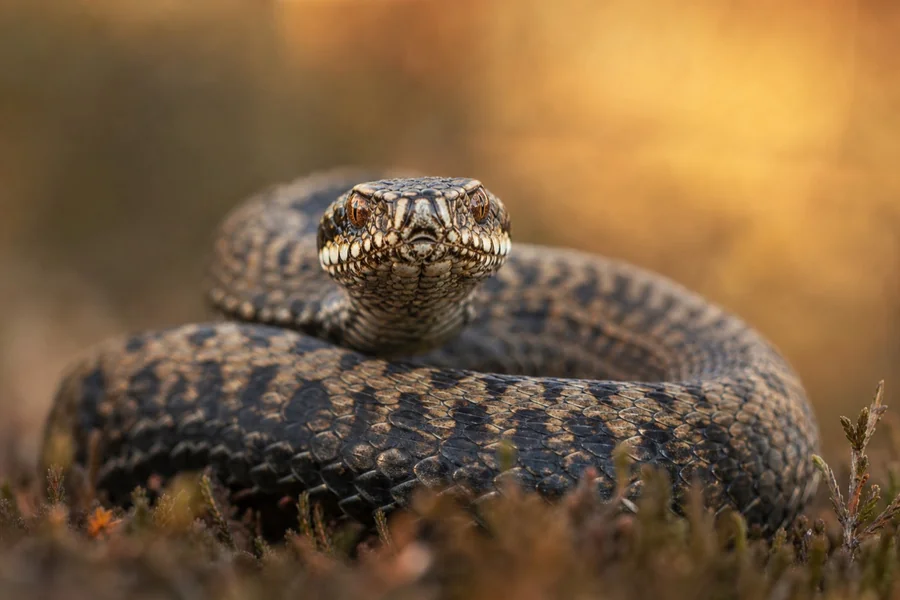
Venomous — toxin injected by bite or sting
AI-generated educational wildlife portrait — World Animal Rescue Network
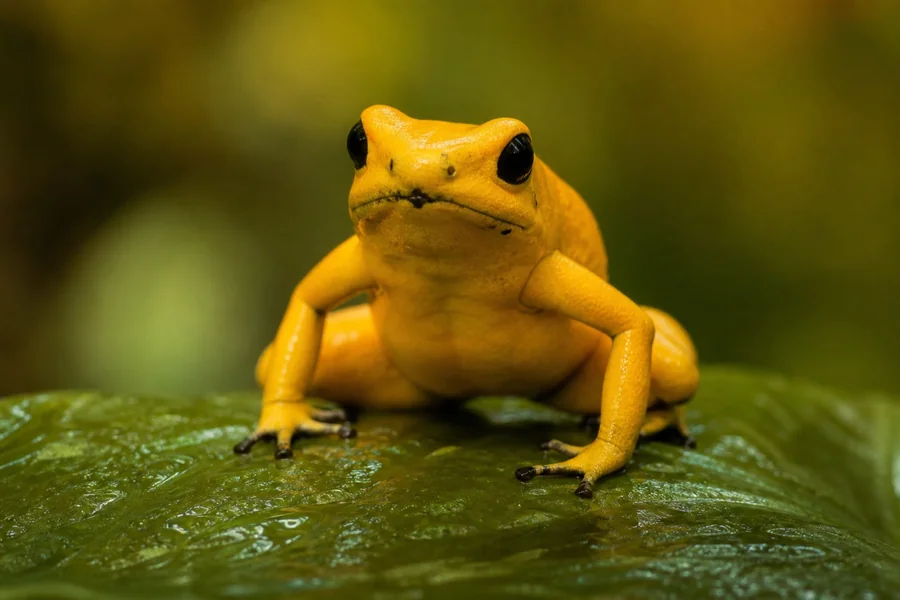
Poisonous — toxin delivered when eaten or touched
AI-generated educational wildlife portrait — World Animal Rescue Network
Venomous vs Poisonous: At a Glance
| Feature | Venomous | Poisonous |
|---|---|---|
| Delivery | Injected via bite, sting, spine or harpoon | Eaten, inhaled or absorbed on contact |
| Typical apparatus | Fangs, stingers, nematocysts, spines | Skin glands, tissues, secretions |
| Classic examples | Vipers, cobras, bees, jellyfish, platypus | Poison dart frogs, many toads, pufferfish tissues |
| Defence style | Active strike or sting | Often passive; aposematic colour common |
| Can an animal be both? | Yes — some secrete toxins usable either way | Yes — delivery route still defines the word used |
| Word root clue | Venom relates to hunting/injection traditions | Poison relates to ingested toxins |
| First-aid implication | Focus on bite/sting site and systemic signs | Focus on ingestion/contact and decontamination |
| Misuse in media | Poisonous snake is usually wrong for vipers | Venomous frog is usually wrong for dendrobatids |
| Human risk pattern | Often sudden after a strike | Often after eating or handling |
| Evolutionary note | Venoms often adapted for prey subjugation | Poisons often adapted as predation deterrents |
Size and physical differences
The words do not rank size or strength — a tiny box jellyfish can be venomous while a large toad can be poisonous.
Venomous and poisonous are treated as synonyms in everyday speech, and that habit creates avoidable confusion in news headlines, wildlife guides and first-aid advice. Biologists separate them by delivery. Venom is a toxin actively introduced into another animal through a wound — fangs, spines, stings or harpoons. Poison is a toxin that works when another animal ingests it, inhales it, or absorbs it from contact.
The distinction is not pedantry. It predicts behaviour: venomous animals often hunt or defend with a strike, while poisonous animals often advertise with colour and wait to be tasted or touched. A few species blur the line by secreting toxins that can enter through wounds as well as by contact, but the delivery route remains the useful definition.
This comparison sticks to marks you can use without laboratory gear: size, shape, behaviour and the words people actually type into a search box. Scientific names are given where they prevent a regional mix-up.
The delivery route is the whole difference
If a toxin is forced into tissues through a wound, the animal is venomous in that act. If the toxin works because another animal ate the flesh, licked the skin, or absorbed secretions, the animal is poisonous. That is why a cobra is venomous and a cane toad is poisonous, even though both can harm a dog. The chemistry can overlap; the ecology of delivery does not. Field observers should treat colour alone as weak evidence and combine it with shape, behaviour and habitat before naming what they see. Where published measurements disagree, this page gives the range rather than a single tidy figure that implies more certainty than the sources support. Field observers should treat colour alone as weak evidence and combine it with shape, behaviour and habitat before naming what they see. Where published measurements disagree, this page gives the range rather than a single tidy figure that implies more certainty than the sources support.
Why rattlesnakes are venomous, not poisonous
Vipers and elapids inject venom through fangs. The toxin is not primarily a contact poison on the skin of the snake. People who say poisonous snake are usually reaching for the correct medical idea — dangerous toxin — with the wrong word. Keeping the terms straight helps readers find the right first-aid guidance and the right species facts. Field observers should treat colour alone as weak evidence and combine it with shape, behaviour and habitat before naming what they see. Where published measurements disagree, this page gives the range rather than a single tidy figure that implies more certainty than the sources support. Field observers should treat colour alone as weak evidence and combine it with shape, behaviour and habitat before naming what they see. Where published measurements disagree, this page gives the range rather than a single tidy figure that implies more certainty than the sources support.
Why poison dart frogs are poisonous, not venomous
Dendrobatid frogs sequester alkaloids in the skin. A predator that bites or mouths the frog receives the dose. They do not fang-inject venom into prey the way a snake does. Captive frogs fed on non-toxic diets lose that chemical defence, which underlines that the poison is a property of delivery and diet, not a vague aura of danger. Field observers should treat colour alone as weak evidence and combine it with shape, behaviour and habitat before naming what they see. Where published measurements disagree, this page gives the range rather than a single tidy figure that implies more certainty than the sources support. Field observers should treat colour alone as weak evidence and combine it with shape, behaviour and habitat before naming what they see. Where published measurements disagree, this page gives the range rather than a single tidy figure that implies more certainty than the sources support.
Animals that complicate the neat story
Some newts and frogs have toxins that can enter through mucous membranes and wounds; some fish spines deliver venom while flesh may also be toxic if eaten. Spitting cobras project venom toward eyes — still an injection-style delivery onto sensitive tissue. The edge cases are real; they do not erase the usefulness of the main split for teaching and reporting. Field observers should treat colour alone as weak evidence and combine it with shape, behaviour and habitat before naming what they see. Where published measurements disagree, this page gives the range rather than a single tidy figure that implies more certainty than the sources support. Field observers should treat colour alone as weak evidence and combine it with shape, behaviour and habitat before naming what they see. Where published measurements disagree, this page gives the range rather than a single tidy figure that implies more certainty than the sources support.
How to use the words in practice
When writing or speaking, ask how the toxin would reach a person or predator. Bite or sting points to venomous. Meal or handling residue points to poisonous. If you only remember one line, remember: if it bites you and you die, it was venomous; if you bite it and you die, it was poisonous — a simplification with exceptions, but better than treating the words as interchangeable. Field observers should treat colour alone as weak evidence and combine it with shape, behaviour and habitat before naming what they see. Where published measurements disagree, this page gives the range rather than a single tidy figure that implies more certainty than the sources support. Field observers should treat colour alone as weak evidence and combine it with shape, behaviour and habitat before naming what they see. Where published measurements disagree, this page gives the range rather than a single tidy figure that implies more certainty than the sources support.
Did you know?
The classroom mnemonic still earns its keep: if it bites you and you die, it was venomous; if you bite it and you die, it was poisonous.
Venomous vs Poisonous: FAQs
What is the difference between venomous and poisonous?
Is a snake venomous or poisonous?
Is a poison dart frog venomous?
Can an animal be both venomous and poisonous?
Are bees venomous?
Why does the distinction matter?
Help protect animals
Learning about animals can help more people understand their needs. WARN raises funds for eligible animal-welfare organisations. Read the relevant appeal’s purpose, recipient status and fund terms, or share this free guide to raise awareness.
Stay connected with WARN
Receive appeal updates, animal-welfare news and published funding reports. Unsubscribe any time.
We only use your address for WARN updates. See our privacy policy.