Wildlife Guide · Central America & Northern South America
Poison Dart Frog
Family Dendrobatidae (Cope, 1865) — around 200 species
The colours are a warning label — and the poison is borrowed from lunch.
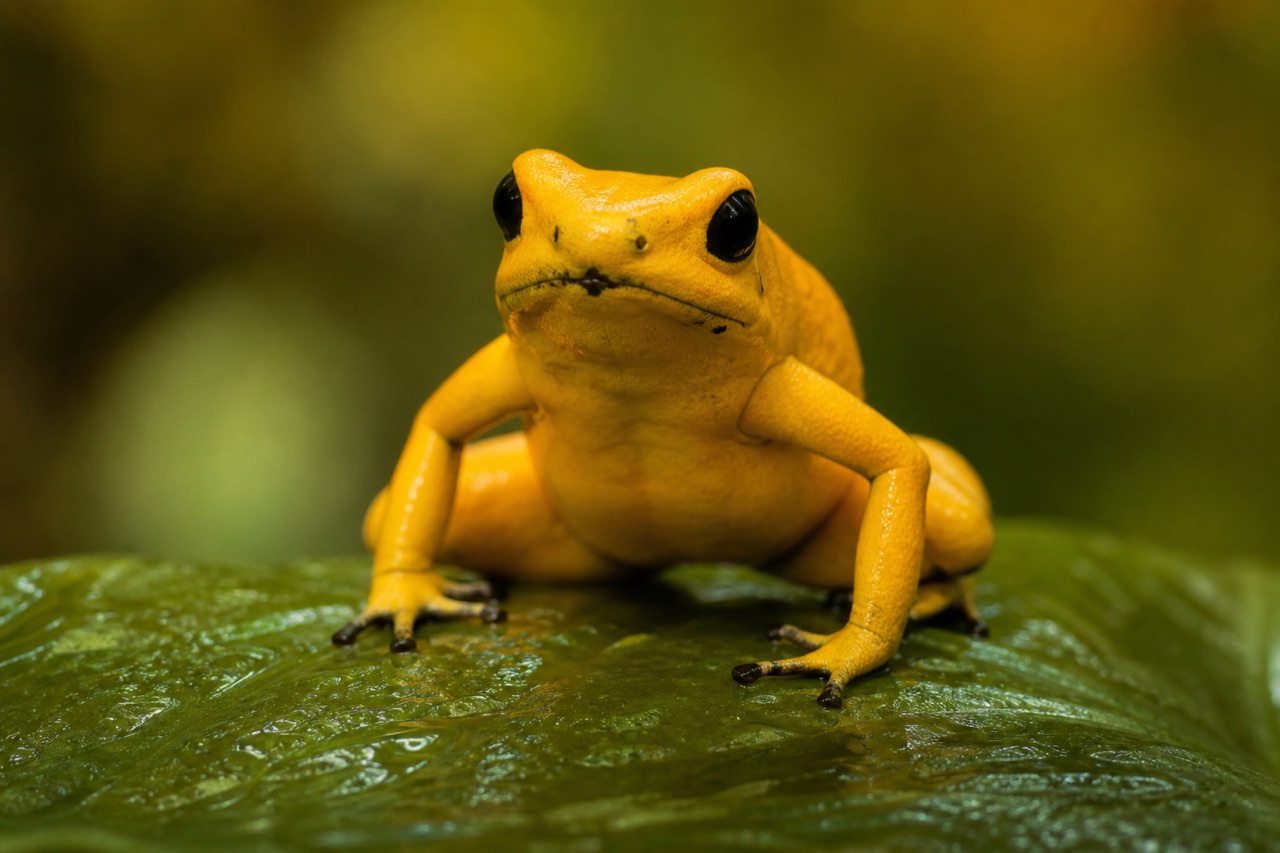
AI-generated educational wildlife portrait — World Animal Rescue Network · AI visualisation, not a photograph
In brief
Poison dart frogs are around 200 species of small brightly coloured frogs in the family Dendrobatidae, found in Central and South American rainforests; their toxins are absorbed from a diet of alkaloid-carrying invertebrates, so captive-bred individuals are entirely harmless.
Also in Animals A to Z · Animals that start with P
By WARN Research & Conservation Team Last updated
Poison dart frogs are small, brilliantly coloured amphibians of Central and South American rainforests, and almost everything memorable about them is a defence system. The colours are aposematic: a public notice to predators that the frog is not worth eating. The toxin behind that warning is not manufactured by the frog at all — it is sequestered from a diet of mites, ants and other small invertebrates that carry the alkaloids. That detail has a consequence people find hard to believe. A poison dart frog raised in captivity on fruit flies and crickets is completely non-toxic, and stays that way for life. The poison is a property of the forest, not of the animal.
~200
Species in the family Dendrobatidae
~1 mg
Batrachotoxin carried by a golden poison frog — lethal to 10–20 people
3
Species actually used to poison blowgun darts
0
Toxicity in captive-bred frogs raised on fruit flies
Figures sourced from IUCN Red List — Phyllobates terribilis, AmphibiaWeb — Dendrobatidae, CITES Appendices .
Poison Dart Frog: Quick Facts
| Length | 1.5–6 cm depending on species |
|---|---|
| Source of toxin | Diet — alkaloids from mites, ants and other invertebrates |
| Most toxic species | Golden poison frog (Phyllobates terribilis) |
| Alkaloids identified | Over 800 distinct compounds |
| Parental care | Males carry tadpoles individually to bromeliad pools |
| Main threats | Habitat loss, chytrid fungus, collection for the pet trade |
Scientific Classification
| Kingdom | Animalia |
|---|---|
| Phylum | Chordata |
| Class | Amphibia |
| Order | Anura |
| Family | Dendrobatidae |
| Genus | Phyllobates, Dendrobates, Oophaga and others |
| Species | Around 200 described species |
Conservation Status
- IUCN Status
- Varies by species — Least Concern to Critically Endangered
- Population
- Unknown for most species; many have small, fragmented ranges
- Trend
- Decreasing for most assessed species
- Assessed
- Varies
- CITES
- Appendix II for the family Dendrobatidae
Amphibians are the most threatened vertebrate class, with around 41% of assessed species at risk. Chytrid fungus has affected over 500 amphibian species worldwide and is implicated in around 90 presumed extinctions.
Did you know?
A golden poison frog can be handled safely if it has been captive-bred, and is lethal if it has not — the same species, the same animal, with the difference determined entirely by what it has eaten.
Key Facts: Poison Dart Frog
- Poison dart frogs do not produce their own toxins. They sequester alkaloids from mites, ants and other invertebrates in their diet.
- Captive-bred poison dart frogs fed on fruit flies and crickets are non-toxic, which is why they are kept safely in zoos and private collections.
- Only three of roughly 200 species were ever used to poison blowgun darts, all in the genus Phyllobates.
- The golden poison frog (Phyllobates terribilis) carries around 1 mg of batrachotoxin — among the most potent natural toxins known, and enough to kill 10 to 20 adult humans.
- Their bright colouration is aposematic: a warning signal to predators rather than camouflage. Bold colour is a form of defence in itself.
- Many species show elaborate parental care. Males guard eggs and carry newly hatched tadpoles on their backs to individual pools of water in bromeliads.
- The main threats are habitat loss, the chytrid fungus pandemic and collection for the pet trade. The golden poison frog is Endangered with a very small range.
Where the poison actually comes from
Poison dart frogs are chemical thieves. They eat mites, ants, beetles and other leaf-litter invertebrates that carry alkaloid compounds, extract those alkaloids, and concentrate them in glands in the skin. Over 800 distinct alkaloids have been identified from dendrobatid skin, and the mix varies with locality because the available prey varies.
The evidence for this is straightforward: frogs raised in captivity on a controlled diet never become toxic, and wild-caught frogs gradually lose their toxicity once removed from the source. It also means a species' danger depends on where it lives. The same species can be significantly toxic in one valley and much less so a short distance away, tracking the invertebrate community rather than the frog's genetics.
The golden poison frog
Phyllobates terribilis is the most toxic of the family and one of the most toxic animals known. An adult carries roughly 1 mg of batrachotoxin, a compound that locks sodium channels open and causes cardiac and respiratory failure. That quantity is enough to kill 10 to 20 adult humans, and there is no antidote.
It is also one of only three species genuinely associated with the practice that gave the family its English name. Emberá people of western Colombia wiped dart tips across the frog's back — the frog was not killed — and the darts remained effective for up to two years. The great majority of the roughly 200 dendrobatid species were never used this way and are far less toxic. The golden poison frog itself is Endangered, restricted to a small area of Colombian rainforest under pressure from clearance.
Fathers who carry their young
Dendrobatid parental care is unusually elaborate for amphibians. Females lay small clutches on the forest floor, and in most species the male guards them, returning to keep the eggs moist. When the tadpoles hatch, he lets them wriggle onto his back and carries them individually to water — usually the small pool held in the centre of a bromeliad, high in a tree.
In some species the mother then returns to each tadpole's pool at intervals and deposits an unfertilised egg for it to eat, since a bromeliad pool contains almost nothing else. That single behaviour turns a frog from an animal that abandons its eggs into one that provisions individual offspring for weeks, and it is why dendrobatids are studied so heavily by behavioural ecologists.
What threatens them
Habitat loss is the dominant pressure. Dendrobatids are rainforest specialists, many with very small ranges, and clearance for agriculture, logging and mining removes both the forest and the invertebrate community their chemical defence depends on.
The chytrid fungus, Batrachochytrium dendrobatidis, has moved through Central and South American amphibian populations with severe effect, and dendrobatids have not been spared. Collection for the pet trade adds a third pressure on the most desirable species, though captive breeding now supplies much of that demand and has reduced — without eliminating — the incentive to take wild animals. Several species are Endangered or Critically Endangered; many more have never been assessed.
What WARN Does
WARN publishes free, sourced species education covering the threats amphibians face — habitat loss, the chytrid pandemic and the exotic pet trade. Amphibians are the most threatened vertebrate class on Earth and receive a small fraction of conservation attention, so accurate free information about them is worth publishing on its own terms.
If this guide helps you understand wildlife and the pressures it faces, a gift to WARN supports habitat protection and free public education in our partner countries.
Poison Dart Frog: Frequently Asked Questions
Are poison dart frogs really poisonous?
Why are captive poison dart frogs not poisonous?
Why are poison dart frogs so brightly coloured?
Were poison dart frogs really used on darts?
What do poison dart frogs eat?
Where do poison dart frogs live?
Are poison dart frogs dangerous?
How long do poison dart frogs live?
How big is a poison dart frog?
Sources & References
Population figures, conservation status and biological facts on this page are drawn from authoritative scientific and intergovernmental sources.
Terms used on this page
Plain-English definitions, from our wildlife and conservation glossary.
Latest Poison Dart Frog Stories
Quick, fact-checked reads on the poison dart frog — amazing facts, key questions and the threats it faces.
Explore more animals
Discover more animals, their habitats and their conservation status in the WARN wildlife-guide library.
Enjoyed this Poison Dart Frog guide?
Receive appeal updates, animal-welfare news and published funding reports. Unsubscribe any time.
We only use your address for WARN updates. See our privacy policy.