Animal Comparison
Moth vs Butterfly
Butterflies usually have clubbed antennae and rest with wings closed; many moths have feathery antennae and rest open. The split is everyday, not a clean wall.
By WARN Research & Conservation Team Last updated
In brief — Moth vs Butterfly
Clubbed antennae and closed-wing rest usually mean butterfly; feathery antennae and night flight usually mean moth — with real exceptions.
Butterflies typically have thin antennae with clubbed tips and rest with wings closed above the back. Many moths have feathery or tapered antennae and rest with wings open or tented. Most butterflies fly by day; many moths fly at night — but the split is everyday convenience, not a single clean evolutionary divide.
See the difference
Images are shown at different scales. Read each caption for the species, source and context.
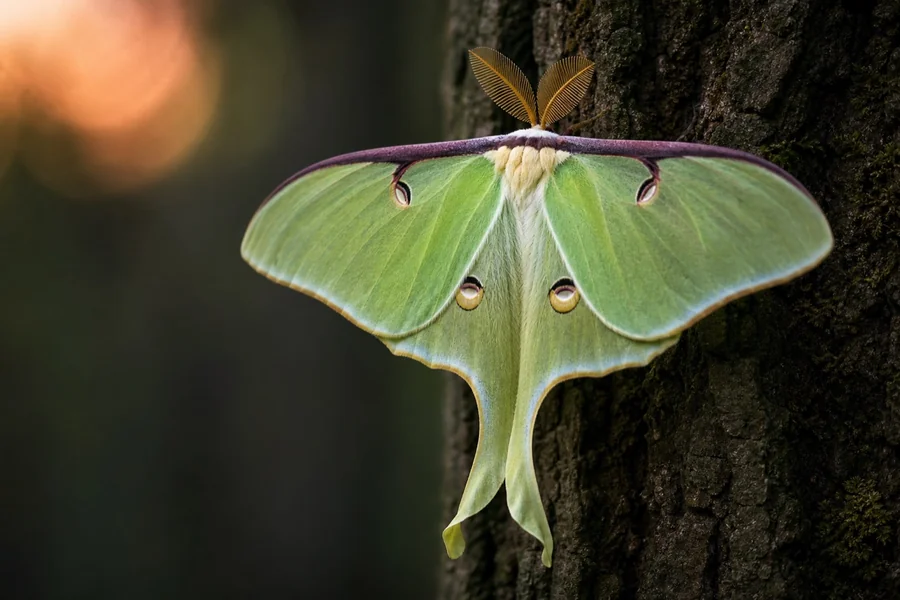
Moth — often feathery antennae; wings often open at rest
AI-generated educational wildlife portrait — World Animal Rescue Network
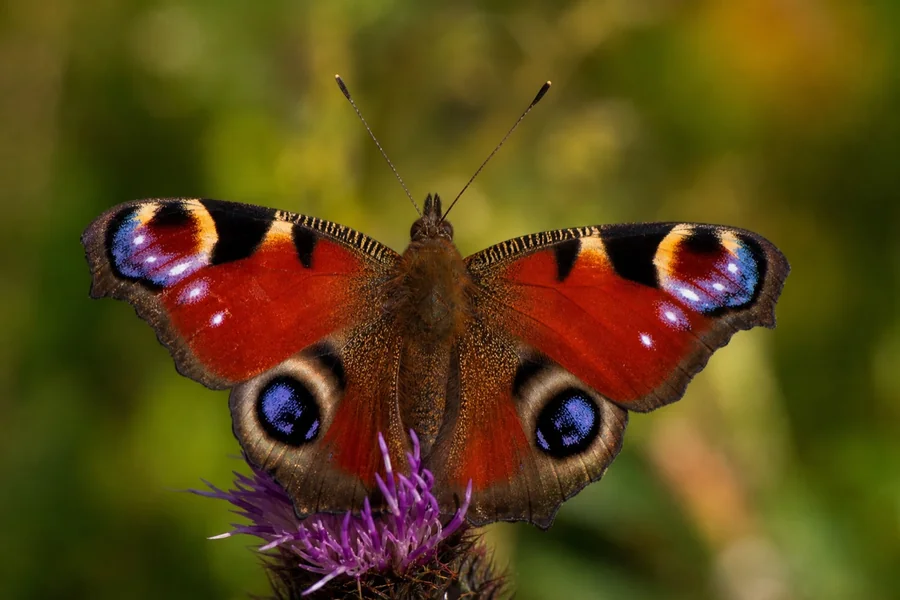
Butterfly — clubbed antennae; wings usually closed at rest
AI-generated educational wildlife portrait — World Animal Rescue Network
Moth vs Butterfly: At a Glance
| Feature | Moth | Butterfly |
|---|---|---|
| Antennae | Often feathery (males) or tapered; rarely clubbed | Usually slender with a clubbed tip |
| Resting wings | Often open or roof-like over the body | Usually held closed above the back |
| Activity | Many nocturnal; numerous day-flying species | Almost all diurnal |
| Pupal stage | Often a cocoon of silk | Usually a naked chrysalis |
| Wing coupling | Frenulum links wings in many moths | Different wing-coupling arrangement |
| Colour stereotype | Often cryptic; many are bright | Often colourful; many are brown or white |
| Body shape | Often thicker, hairier body | Often slenderer body |
| Species diversity | Vast majority of Lepidoptera | Far fewer species than moths |
| Garden examples | Hawk-moths, ermine moths, burnets | Peacock, cabbage white, monarch |
| Taxonomic note | Paraphyletic everyday group | Butterfly families within Lepidoptera |
Size and physical differences
Both groups span tiny species under 1 cm wingspan to large ones; atlas moths can exceed 25 cm across, larger than almost any butterfly.
People treat moth and butterfly as natural opposites: day versus night, pretty versus drab, clubbed antennae versus feathery ones. Those rules work often enough to be useful and fail often enough to mislead. Both belong to the order Lepidoptera — scaly-winged insects — and butterflies sit inside that wider moth-dominated tree rather than beside it as equals.
Field marks still matter. Antenna shape, resting posture and activity period separate most garden species quickly. What they do not do is create two tidy scientific camps. Several day-flying moths look more butterfly-like than moth-like, and a few butterflies break the textbook posture rules. A good comparison states the rules and the exceptions together.
This comparison sticks to marks you can use without laboratory gear: size, shape, behaviour and the words people actually type into a search box. Scientific names are given where they prevent a regional mix-up. Where published measurements disagree, this page gives the range rather than a single tidy figure that implies more certainty than the sources support.
Antennae — the most reliable quick check
If you can see the antenna tip clearly, start there. Butterflies nearly always show a distinct club or knob at the end of a thin shaft. Male moths of many families have comb-like or feathery antennae used to track pheromones; female moth antennae are often simpler but still lack a butterfly-style club. This mark fails less often than colour or time of day, which is why field guides lead with it. Field observers should treat colour alone as weak evidence and combine it with shape, behaviour and habitat before naming what they see. Where published measurements disagree, this page gives the range rather than a single tidy figure that implies more certainty than the sources support. Field observers should treat colour alone as weak evidence and combine it with shape, behaviour and habitat before naming what they see. Where published measurements disagree, this page gives the range rather than a single tidy figure that implies more certainty than the sources support.
How they hold their wings
Most butterflies land and snap the wings together vertically over the back, showing the underside. Many moths rest with the wings spread flat or folded in a roof shape hiding the abdomen. Skipper butterflies can look moth-like at rest, and some moths hold wings in confusing postures, so treat wing position as strong supporting evidence rather than a sole test. Field observers should treat colour alone as weak evidence and combine it with shape, behaviour and habitat before naming what they see. Where published measurements disagree, this page gives the range rather than a single tidy figure that implies more certainty than the sources support. Field observers should treat colour alone as weak evidence and combine it with shape, behaviour and habitat before naming what they see. Where published measurements disagree, this page gives the range rather than a single tidy figure that implies more certainty than the sources support.
Day, night and the exceptions
Butterflies are daylight fliers. Moths include the classic nocturnal majority and a long list of day-flying species — burnet moths, some tiger moths, hummingbird hawk-moths — that people misidentify as butterflies. Activity period is a useful prior, not a definition. A brightly coloured insect flying at noon can still be a moth if the antennae say so. Field observers should treat colour alone as weak evidence and combine it with shape, behaviour and habitat before naming what they see. Where published measurements disagree, this page gives the range rather than a single tidy figure that implies more certainty than the sources support. Field observers should treat colour alone as weak evidence and combine it with shape, behaviour and habitat before naming what they see. Where published measurements disagree, this page gives the range rather than a single tidy figure that implies more certainty than the sources support.
Cocoons, chrysalises and life history
Many moth larvae spin a silk cocoon before pupating. Butterfly pupae are typically a chrysalis without that silk wrapping, attached by a pad or silken girdle. The larval diets of both groups range from specialist plant feeders to, in a few moths, unusual diets such as keratin. Metamorphosis itself is shared; the packaging of the pupa is what differs in the stereotype. Field observers should treat colour alone as weak evidence and combine it with shape, behaviour and habitat before naming what they see. Where published measurements disagree, this page gives the range rather than a single tidy figure that implies more certainty than the sources support. Field observers should treat colour alone as weak evidence and combine it with shape, behaviour and habitat before naming what they see. Where published measurements disagree, this page gives the range rather than a single tidy figure that implies more certainty than the sources support.
Why the split is not taxonomically clean
Moth is not a single clade that excludes butterflies. Butterflies evolved from within the broader lepidopteran radiation, so moth in everyday speech means lepidopteran that is not a butterfly. That is why entomologists can sound pedantic about the question: the useful field distinction and the evolutionary tree are different tools. Honest comparison pages keep both in view. Field observers should treat colour alone as weak evidence and combine it with shape, behaviour and habitat before naming what they see. Where published measurements disagree, this page gives the range rather than a single tidy figure that implies more certainty than the sources support. Field observers should treat colour alone as weak evidence and combine it with shape, behaviour and habitat before naming what they see. Where published measurements disagree, this page gives the range rather than a single tidy figure that implies more certainty than the sources support.
Did you know?
There are far more moth species than butterfly species — butterflies are the familiar minority of a mostly nocturnal order.
Moth vs Butterfly: FAQs
What is the difference between a moth and a butterfly?
Do moths only come out at night?
Which has feathery antennae?
Are butterflies a type of moth?
Why do moths fly into lights?
Is a butterfly better than a moth?
Help protect animals
Learning about animals can help more people understand their needs. WARN raises funds for eligible animal-welfare organisations. Read the relevant appeal’s purpose, recipient status and fund terms, or share this free guide to raise awareness.
Stay connected with WARN
Receive appeal updates, animal-welfare news and published funding reports. Unsubscribe any time.
We only use your address for WARN updates. See our privacy policy.