Wildlife · Species comparisons
What is the difference between a dog and a wolf?
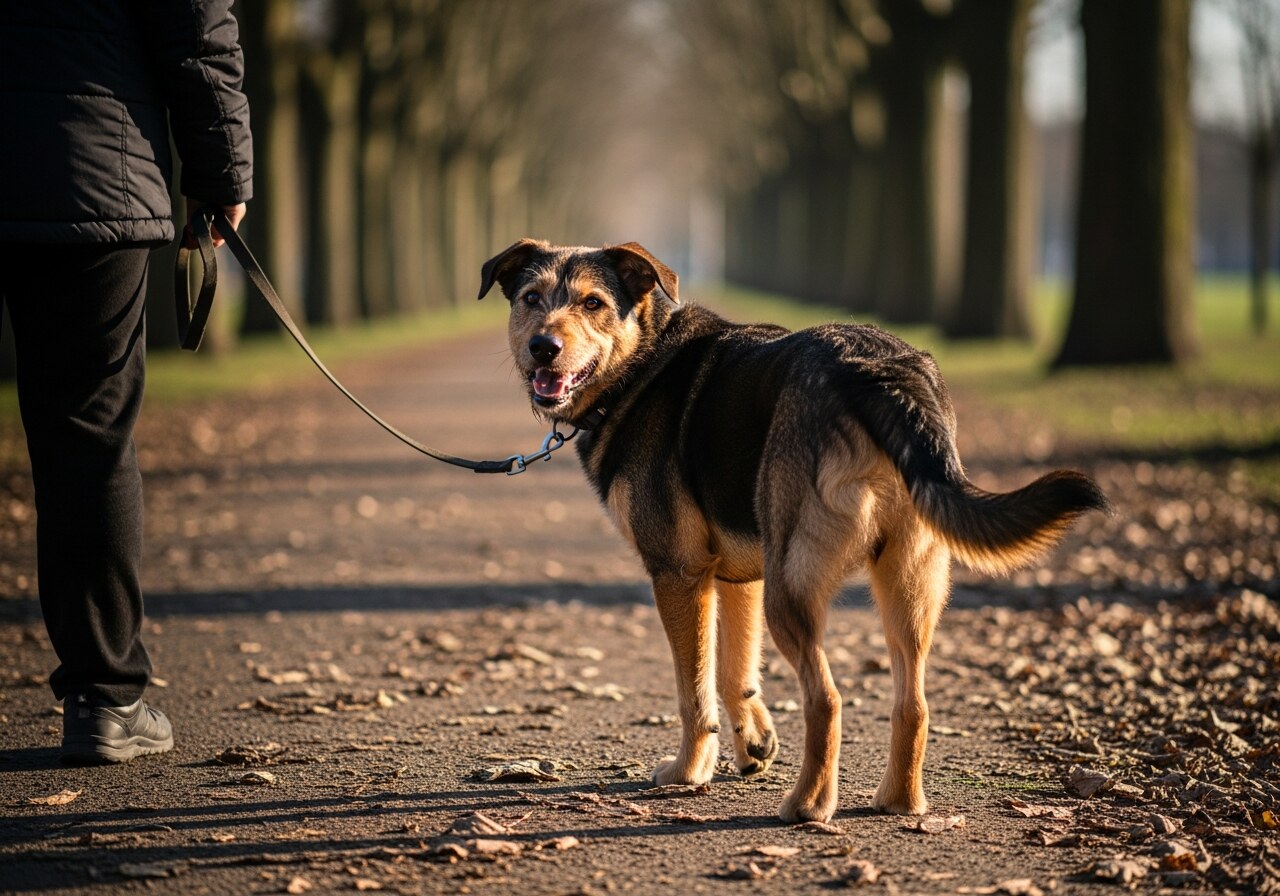
Dogs are domesticated grey wolves — same species, different subspecies — shaped by 15,000+ years of selective breeding.
In brief
Dogs (Canis lupus familiaris) are a domesticated subspecies of the grey wolf (Canis lupus). Dogs vary enormously in size and shape through selective breeding; wolves are larger, with longer legs, narrower chests and behaviours tuned for wild pack hunting.
By the WARN Research & Conservation TeamChecked against IUCN Red List & CITES sourcesLast updated
The domestic dog (Canis lupus familiaris) is a subspecies of the grey wolf (Canis lupus). Domestication began at least 15,000 years ago — possibly much earlier — as wolves scavenged near human camps. Selection for tameness, size, coat colour and task-specific behaviour produced modern breed diversity. Wolves retain wild morphology, pack hunting ecology and strong prey drive. Dogs excel at reading human social cues — a product of co-evolution. Grey wolves are Least Concern globally but extirpated from much of historic range.
15,000+
Years of dog domestication — minimum estimate
350+
Dog breeds recognised by FCI
LC
Grey wolf IUCN status — Least Concern globally
300M
Estimated unowned dogs worldwide — WHO figure
Quick facts
| Taxonomy | Same species — Canis lupus; dogs are subspecies familiaris |
|---|---|
| Morphology | Dogs: huge breed variation; wolves: uniform wild type |
| Behaviour | Dogs read human gestures; wolves retain full prey drive |
| Social | Wolves: pack hunters; dogs: adapted to human families |
| Street dogs | Domestic dogs — not wolves; form loose urban packs |
| Hybridisation | Wolf–dog crosses threaten wolf genetics in some regions |
Key takeaways
- Dogs are domesticated grey wolves — same species, different subspecies.
- 15,000+ years of selection produced enormous breed diversity.
- Dogs excel at human social cues; wolves retain pack hunting ecology.
- Street dogs are domestic — not wolves; WARN funds CNVR abroad.
- Wolf–dog hybridisation threatens wild wolf genetics in some regions.
- See WARN comparison for taxonomy, behaviour and welfare context.
Domestication and breed diversity
Archaeological and genetic evidence places dog domestication at least 15,000 years ago — multiple events may have occurred in different regions. Early selection favoured tameness and reduced fear response — traits linked to floppy ears, piebald coats and shorter muzzles through linked genetic pathways. Human breeders later shaped herding, guarding, hunting and companion traits — producing size range from Chihuahua to Great Dane within one subspecies. Wolves show no comparable morphological diversity — natural selection maintains hunting efficiency and predator avoidance across climates from Arctic to Middle East.
Behaviour and cognition
Dogs outperform wolves in reading human pointing gestures, gaze direction and emotional expression — skills honed through millennia of co-evolution. Wolves cooperate in coordinated pack hunts on large prey — elk, moose, bison — with strict dominance hierarchies. Feral dogs scavenge and form loose groups but rarely hunt like wolf packs. Wolf–dog hybridisation in Europe and North America introduces domestic genes into wild populations — threatening wolf genetic integrity where hybrid offspring backcross. Street dogs worldwide are Canis familiaris — WARN’s CNVR work addresses domestic populations, not wolf reintroduction.
Physical differences
Wolves have longer legs, narrower chests, larger brains relative to body size and stronger jaws than most dog breeds. Paw size, skull length and coat patterns follow wild-type uniformity — grey, black, white and brown phases occur naturally. Dogs show paedomorphic features — retained juvenile traits from selection — including bark vocalisation wolves use rarely as adults. Identifying wolf-dog hybrids requires genetic testing — phenotype alone misleads. Conservation programmes protect grey wolves in North America and Eurasia where rewilding debates continue separately from domestic welfare.
Welfare and conservation contexts
Pet dog welfare concerns — puppy mills, breed-specific health problems, abandonment — differ from wolf conservation — habitat protection, livestock conflict, hybridisation. Roughly 300 million unowned dogs live on streets worldwide per WHO estimates — a domestic welfare crisis WARN addresses through CNVR. Wolf reintroduction projects — Yellowstone is the famous example — restore ecosystem function but require community buy-in where ranching overlaps range. Donors should not conflate street-dog funding with wolf advocacy — different programmes, different outcomes.