Animal Comparison
Dog vs Wolf
Dogs are domesticated descendants of the grey wolf: smaller-brained, friendlier and endlessly varied. Wolves are wild, wary pack hunters that are bigger, stronger and longer-legged.
By the WARN Research & Conservation TeamChecked against IUCN Red List & CITES sourcesLast updated
In brief — Dog vs Wolf
A dog is a domesticated wolf: same species line, but bred to be tamer, smaller-brained and endlessly varied, while the wild wolf stays larger, stronger, longer-legged and warier of people.
The clearest difference is domestication: the dog (Canis lupus familiaris) is a tamed subspecies of the grey wolf (Canis lupus), bred over 15,000-plus years to live alongside people, while the wolf remains a wild pack hunter. They are close enough to interbreed, but a wolf is generally larger, longer-legged and more powerfully jawed, with a bigger skull, wary temperament and none of the dog's huge variety of shapes, sizes and coat colours.
See the difference
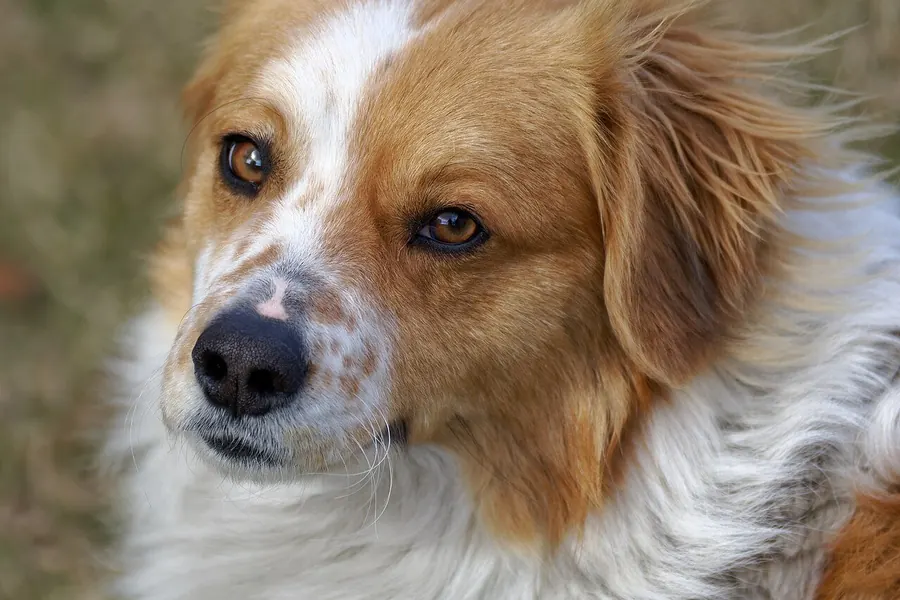
Dog — domesticated, tamer, endlessly varied
Photo: Jakub Hałun / Wikimedia Commons (CC BY-SA 4.0)
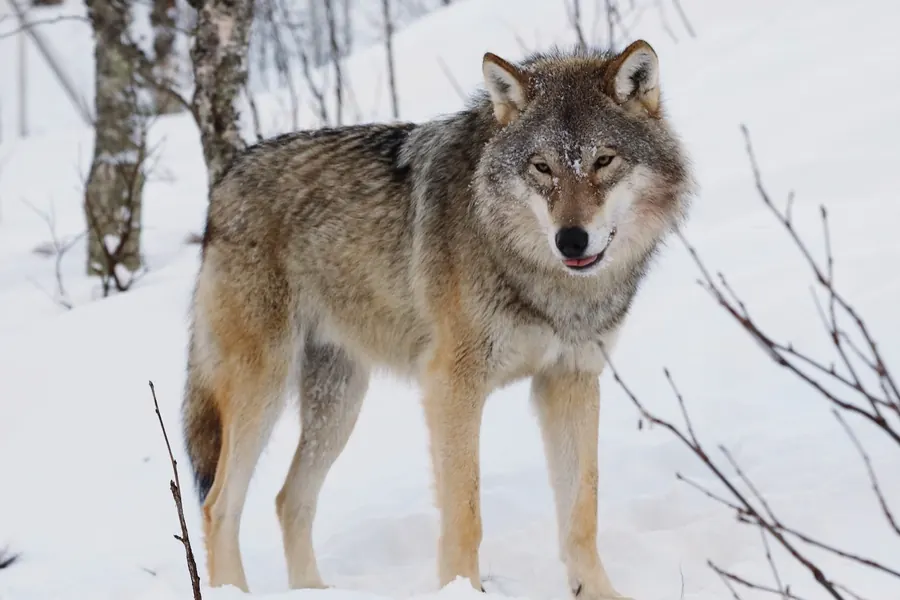
Wolf — wild, larger, longer-legged, wary of people
Source: Wikimedia Commons
Dog vs Wolf: At a Glance
| Feature | Dog | Wolf |
|---|---|---|
| Scientific name | Canis lupus familiaris | Canis lupus |
| Status | Domesticated subspecies of the wolf | Wild ancestor species |
| Shoulder height | Varies hugely by breed (~15-90 cm) | ~66-81 cm (26-32 in) |
| Weight | ~1-90 kg depending on breed | ~30-45 kg avg, up to 65 kg (143 lb) |
| Bite force (estimate) | ~230-250 PSI typical (some breeds far higher) | ~400 PSI (some estimates higher) |
| Build | Broad chest, shorter legs, varied | Narrow chest, long legs, large paws |
| Temperament | Tame, social with humans, barks often | Wary of humans, rarely barks, howls |
| Diet | Omnivorous; digests starch well | Carnivorous pack hunter of large prey |
| Lifespan | ~10-13 years (breed-dependent) | ~6-8 years wild, up to 14-16 years |
| Range | Worldwide, with people | Remote Northern Hemisphere wilderness |
| IUCN Red List status | Not assessed (domestic animal) | Least Concern (~200,000-250,000) |
Which is bigger & stronger?
A wolf is bigger and stronger than most dogs, standing around 66-81 cm at the shoulder and weighing roughly 30-45 kg on average (up to 65 kg), with a bite force estimated near 400 PSI, though giant dog breeds can match or exceed a wolf's height and bite.
Every domestic dog on Earth descends from the grey wolf, and genetically the two are almost identical, sharing roughly 99 percent of their DNA. Scientists classify the dog as a subspecies of the wolf (Canis lupus familiaris), domesticated somewhere between about 15,000 and 30,000 years ago from an extinct population of Pleistocene wolves. That shared ancestry means dogs and wolves can still interbreed and produce fertile young. Yet thousands of years of living with humans have reshaped the dog's body, brain and behaviour: dogs come in hundreds of breeds from a few kilograms to over 90, mature faster, bark far more and read human cues in ways wolves cannot. The wolf, by contrast, remains a wild, wary, cooperative pack hunter of the Northern Hemisphere.
Size, strength and build
A wolf is built for endurance hunting: long legs, a narrow deep chest, big feet and a large head, standing about 66-81 cm at the shoulder and weighing on average 30-45 kg, with the largest northern wolves reaching around 65 kg. Its jaws are more powerful than almost any dog's, with bite force commonly estimated near 400 PSI. Dogs span an enormous range, from a 1 kg Chihuahua to a 90 kg Mastiff, so no single figure describes them. Most dogs are smaller and less powerfully jawed than a wolf, though a handful of giant guarding breeds can match or exceed a wolf in height, weight and bite strength.
Appearance
Wolves are remarkably uniform: a grizzled grey, brown, black or white coat, erect ears, a straight bushy tail carried level or low, slanted amber eyes and a broad muzzle. Dogs, reshaped by selective breeding, come in hundreds of forms with floppy or pricked ears, curled or docked tails, blue eyes, patched and spotted coats, and body shapes from dachshund to greyhound that never occur in the wild. Compared with a similar-sized dog, a wolf has a bigger head, longer legs, larger paws and narrower chest, plus a distinctive loping gait.
Behaviour and intelligence
Wolves live in family packs and are cooperative, territorial and deeply wary of humans, communicating mostly by howling and body language rather than barking. Dogs have been bred for tameness: they bond readily with people, bark frequently, and are unusually skilled at reading human gestures such as pointing, a skill wolves largely lack. Dogs also mature faster and retain juvenile, playful traits into adulthood. The wolf's brain is proportionally larger than a similar-sized dog's, but the dog's social intelligence toward humans is unmatched in the wild.
Diet and hunting
Wolves are carnivores that hunt large hoofed prey such as deer, elk and moose in coordinated packs, running down quarry over distance and gorging when a kill is made. They can cover many kilometres a day and sprint at around 56-64 km/h (35-40 mph) in short bursts. Dogs are effectively omnivores: domestication gave them extra copies of the genes for digesting starch, so they thrive on a mixed diet including grains, an adaptation to living on human scraps that clearly separates their digestion from the wolf's meat-heavy one.
Range, habitat and conservation
Dogs live wherever people do, on every continent, and as a domestic animal are not assessed by the IUCN. Wild wolves are confined largely to the remote Northern Hemisphere, Canada, Alaska, and parts of Europe and Asia, occupying roughly two-thirds of their former range after centuries of persecution. Globally the grey wolf is listed as Least Concern by the IUCN, with an estimated 200,000-250,000 wild individuals and a stable population, although some regional populations remain seriously threatened.
Did you know?
Domestication left a visible mark on dogs' digestion: dogs carry extra copies of the genes that break down starch, so unlike their meat-hunting wolf ancestors they can thrive on a diet that includes grains — a genetic souvenir of thousands of years spent living on human leftovers.
Dog vs Wolf: FAQs
Are dogs and wolves the same animal?
Which is bigger, a dog or a wolf?
Can a dog beat a wolf in a fight?
How can you tell a wolf from a dog?
Did dogs come from wolves?
Do wolves live longer than dogs?
Can a dog and a wolf have puppies together?
These animals need us
Understanding wildlife is the first step to protecting it. WARN funds partner-led rescue and conservation where the need is greatest — your support keeps that work going.