Wildlife
What is the difference between a seal and a sea lion?
Ear flaps, flipper walk and swimming style — three field marks separate true seals from sea lions at a glance.
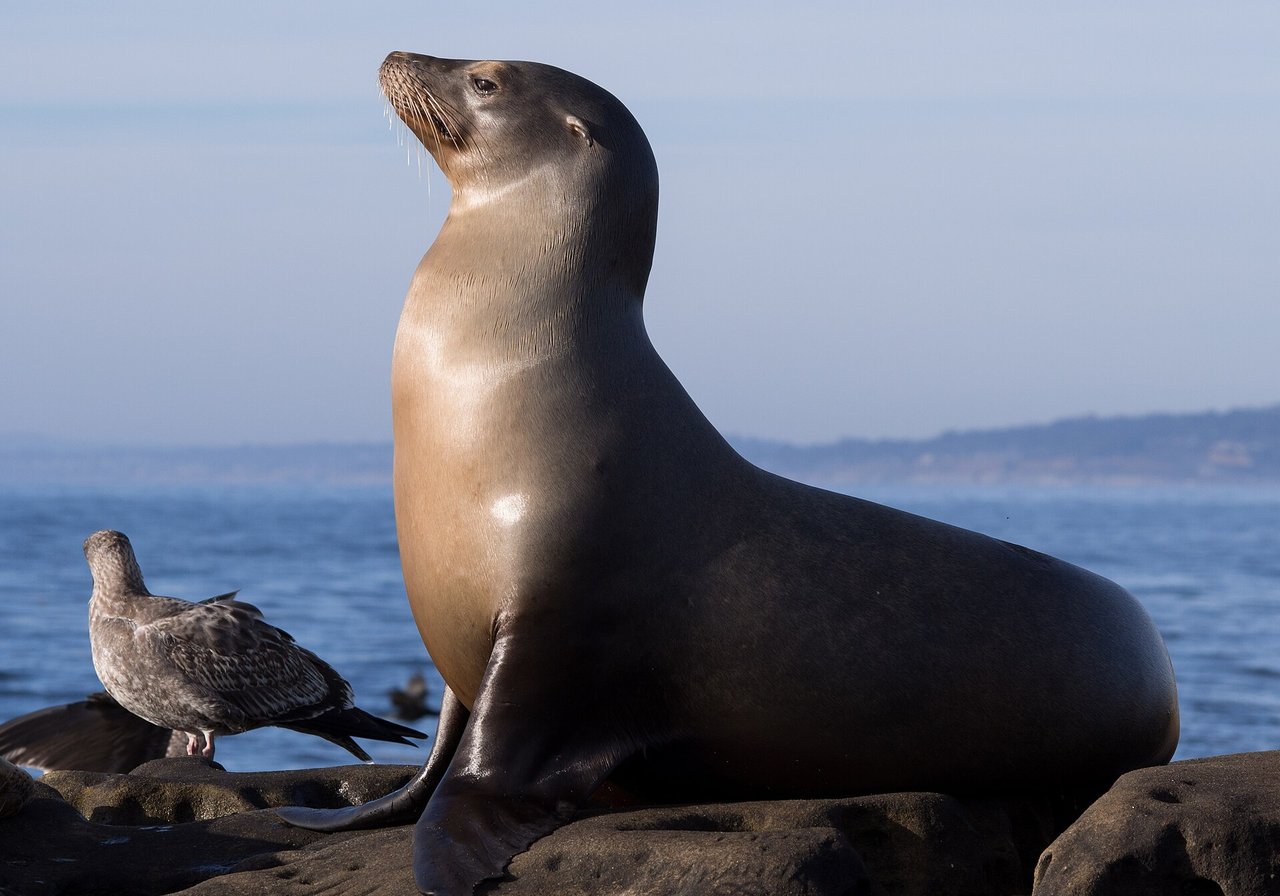
In brief
Sea lions have visible ear flaps and can walk on their flippers; true seals have no external ears and move on land by wriggling on their bellies. Both are pinnipeds but belong to different families.
By the WARN Research & Conservation TeamChecked against IUCN Red List & CITES sourcesLast updated
Seals and sea lions are both pinnipeds — fin-footed marine mammals — but they belong to different families with distinct anatomy and behaviour. True seals (Phocidae) lack visible ear flaps and wriggle on land; sea lions and fur seals (Otariidae) have external ears and can walk on all fours. NOAA Fisheries uses these traits in public identification guides. Both groups face entanglement, climate-driven prey shifts and habitat disturbance, though conservation priorities differ by species and region.
33
Living pinniped species (IUCN)
19
True seal (Phocidae) species
14
Eared seal (Otariidae) species
2
Pinniped families commonly seen on coasts
Quick facts
| True seals (Phocidae) | No external ear flap; hind flippers cannot rotate forward on land |
|---|---|
| Sea lions (Otariidae) | Visible ear flaps; rotate rear flippers to walk on land |
| Land movement | Seals hump on belly; sea lions walk on all fours |
| Swimming | Seals use hind-flipper sweeps; sea lions “fly” with front flippers |
| Vocalisation | Sea lions bark and roar; most true seals are quieter |
| Examples | Harbour seal vs California sea lion; elephant seal vs Steller sea lion |
Key takeaways
- Sea lions have visible ear flaps; true seals have only a small ear hole.
- Sea lions walk on land using all four flippers; true seals wriggle on their bellies.
- Sea lions swim with front flippers; true seals mainly use hind-flipper sweeps.
- Both are pinnipeds but belong to different families — Otariidae vs Phocidae.
- NOAA uses ear flaps and land movement as primary public ID features.
- Conservation status varies by species — check IUCN listings for each population.
Ears and head shape
The quickest field mark is the ear. Sea lions and fur seals have a small external ear flap — a triangular projection on the side of the head. True seals have only a small hole with no visible flap, giving a smoother profile. Head shape differs too: many sea lions have a longer, more tapered snout, while harbour and grey seals appear rounder. NOAA’s “Is it a seal or a sea lion?” guide recommends checking ears first when animals are hauled out on rocks or piers. At sea, ear flaps are harder to see, so flipper movement becomes the next clue.
Movement on land
On land, the flipper difference is dramatic. Sea lions and fur seals can rotate their hind flippers forward beneath the body and walk — or galumph — on all fours. True seals cannot rotate the hind flippers forward; they propel themselves with fore-flipper strokes while the rear flippers trail, producing the familiar caterpillar-like hump. Elephant seals — the largest true seals — move this way despite weighing thousands of kilograms. This land mobility helps sea lions climb steep rocks and navigate crowded rookeries, while true seals tend to stay on flatter haul-out sites.
Swimming and hunting
In water, otariids swim primarily with powerful front-flipper strokes — a motion often compared to flying underwater. Phocids rely more on side-to-side sweeps of the hind flippers, sometimes aided by the fore flippers for steering. Both are agile predators, but sea lions are more manoeuvrable in kelp forests and rocky coastlines where they pursue fish and squid. True seals include deep-diving specialists: elephant seals routinely reach depths beyond 1,000 metres. These ecological roles connect to different prey bases and different fishery bycatch patterns tracked by NOAA and national marine agencies.
Conservation context
Pinnipeds face entanglement in fishing gear, disturbance at breeding colonies, pollution and climate-driven shifts in prey distribution. The IUCN Red List status varies widely: some populations recover under protection while others — including certain sea lion stocks — decline from disease, prey collapse or conflict with fisheries. Identifying the species correctly helps reporters and citizen scientists submit accurate sightings to marine mammal stranding networks. WARN’s comparison page links identification to regional rescue context where partner programmes document entangled animals.