Species guides, rescue stories, and in-depth reporting on the animals WARN works to protect — from pangolin trafficking to street dog welfare, bear bile farming to habitat destruction.
Need a quick fact? Browse animal answers — searchable Q&A separate from newsroom articles.
182+
News articles and briefings
75,000+
Parrots estimated trafficked annually worldwide
Source: CITES and BirdLife International
1M+
Pangolins taken from the wild in the past decade (estimated)
Source: IUCN
17
Partner-network countries across South Asia, Southeast Asia, East Africa, Southern Africa and South America
Topics We Cover
The issues driving animal suffering worldwide — and what the evidence says about solving them.
The Global Wildlife Trafficking Crisis
wildlife trafficking · illegal wildlife trade · most trafficked animals
Wildlife trafficking is the fourth largest criminal enterprise on earth, generating an estimated $23 billion a year. It kills elephants for ivory, pangolins for scales, macaws for the pet trade, slow lorises for viral videos, and sun bears for bile. Unlike drug or arms trafficking, wildlife crime rarely draws serious criminal sentences — and the animals rarely survive long enough for justice to be served. WARN documents trafficking routes, supports rescue seizure partners, and funds rehabilitation for confiscated animals across Asia, Africa, and South America.
exotic pet trade · wild animals as pets · exotic pets UK · exotic pets USA
Millions of wild animals are sold as pets every year — slow lorises, parrots, reptiles, primates, and big cats among them. Many are captured as infants after their mothers are killed. Most die within a year of entering captivity. The exotic pet trade is driven by social media virality, poorly enforced import regulations, and a legal grey area that allows so-called "captive bred" animals to mask wild-caught origins. WARN works with seizure units and sanctuary partners to rehabilitate exotic pets and campaigns for tighter regulation of wild-animal ownership in source and consumer countries.
stray dogs worldwide · street dog welfare · how to help stray dogs · dog culling alternatives
An estimated 300 million unowned dogs live on the world's streets. They face starvation, disease, vehicle injuries, and in many countries systematic culling — a method the World Health Organization has repeatedly said does not reduce dog populations or rabies risk. The only approach that works is Capture, Neuter, Vaccinate, and Return (CNVR), combined with community education and responsible ownership programmes. WARN funds CNVR initiatives across South Asia, the Middle East, and sub-Saharan Africa — and documents the evidence base so it can be replicated elsewhere.
When a forest is cleared, the animals do not simply move on. They die, are captured, or starve at the fragmented edges of what remains. Orangutans, sun bears, spectacled bears, pangolins, and hundreds of bird species lose their homes to palm oil, cattle ranching, illegal logging, and infrastructure development. International climate frameworks rarely address the animal welfare dimension — the individual animals made homeless or killed in the process of clearing. WARN bridges that gap: funding on-the-ground rescue and rehabilitation for animals caught in the crossfire of deforestation.
Bear bile farming confines Asiatic black bears and sun bears in crush cages for decades to extract bile for traditional medicine. Dog and cat meat festivals slaughter thousands of animals under conditions that would be illegal in any Western country. Donkeys and horses are worked to death hauling goods in regions where no enforcement exists. These are not fringe issues — they affect tens of millions of animals annually. WARN investigates, documents, and funds intervention where the welfare case is clear and local partners have the capacity to act.
endangered birds · parrot conservation · bird trafficking · bird species extinction · most threatened birds
Bird population declines are well documented in temperate regions, but the most severe losses are happening in tropical forests, where hundreds of parrot, hornbill, and raptor species face extinction from trapping and habitat loss. The hyacinth macaw, the Spix's macaw, and dozens of Amazon parrot species are targeted because their intelligence and colour make them desirable as pets. Unlike garden bird decline, these losses are driven primarily by the illegal trade — and they are almost entirely preventable. WARN supports confiscation, rehabilitation, and captive-release programmes for trafficked birds across South America and South-East Asia.
Country briefings, species investigations, and rescue stories from the WARN team. Filter by topic or browse all 182+ articles.
BreakingJUN 16 2026 · VIETNAM
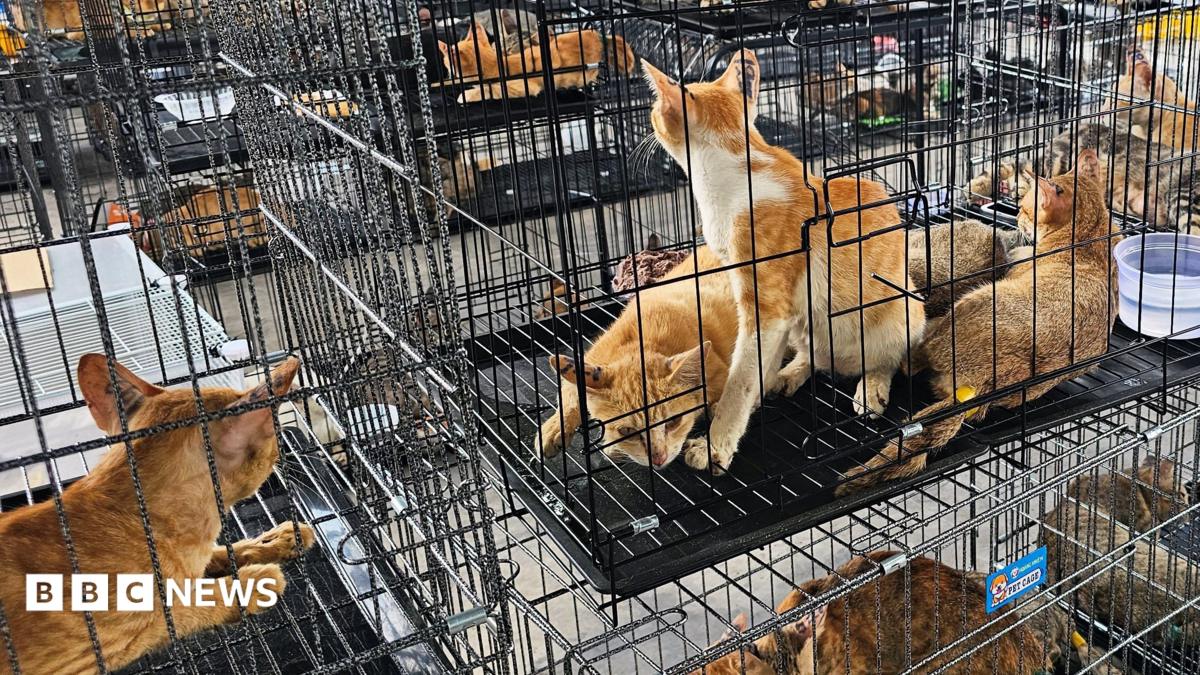
Vietnam Police Rescue More Than 400 Stolen Cats Bound for the Meat Trade
Authorities in southern Vietnam dismantled an alleged cat-theft ring in June 2026, recovering more than 400 live cats and dozens preserved on ice. Nine people were arrested after raids in Tay Ninh Province and Ho Chi Minh City.
Vietnam Police Rescue More Than 400 Stolen Cats Bound for the Meat Trade
Authorities in southern Vietnam dismantled an alleged cat-theft ring in June 2026, recovering more than 400 live cats and dozens preserved on ice. Nine people were arrested after raids in Tay Ninh Province and Ho Chi Minh City.
Three Rehabilitated Orangutans Released Back Into the Wild in East Kalimantan
Three Bornean orangutans — Bagus, Eboni and Ruby — were released into a protected forest in East Kutai, East Kalimantan, on 23 June 2026, after years of rehabilitation following rescue from the illegal pet trade. All three are Critically Endangered Pongo pygmaeus.
Why Are Sea Turtles Endangered? The Threats — and How to Help
Sea turtles have survived for more than 100 million years, yet within a few human generations most species have been pushed toward extinction. Here is what is driving the decline — bycatch, plastic, poaching and lost nesting beaches — and what actually helps.
How to Adopt an Animal as a Gift: Symbolic Animal Adoptions Explained
A symbolic animal adoption is one of the most meaningful gifts you can give — a present that funds real frontline conservation instead of adding to the clutter. Here is how symbolic adoptions work, what the recipient gets, and how to choose one.
How Does Deforestation Affect Animals? The Real Costs of Habitat Loss
Deforestation kills animals in slow motion. When forests are cleared for agriculture, logging or urban development, the effects on wildlife are immediate, cascading and often irreversible — and they are the direct cause of most of the animal rescue crises WARN responds to across Asia, Africa and South America.
Why Are Orangutans Endangered? Palm Oil, Deforestation and the Rescue Crisis in Borneo
Orangutans are endangered because of a single dominant cause: deforestation. All three remaining species have been reduced to small, fragmented populations in what remains of Borneo's and Sumatra's lowland and peat-swamp forests — and the crisis is getting worse, not better.
Borneo Deforestation and Palm Oil: The Wildlife Crisis in the World's Third Largest Island
Borneo is one of the most biodiverse places on Earth and one of the most rapidly deforested. More than half of the island's lowland forest has been lost in 40 years — a scale of destruction that has produced a permanent wildlife rescue crisis in Indonesia and Malaysia, two of WARN's partner-network countries.
Habitat Loss and Wildlife Extinction: The Single Biggest Threat to Wild Animals
Habitat loss — the destruction, degradation or fragmentation of the natural environments animals depend on — is the single largest driver of wildlife decline and extinction globally. It is the root cause behind most of the rescue crises WARN's programmes are designed to address across Asia, Africa and South America.
Reforestation Benefits for Wildlife: Why Planting Native Trees Saves Endangered Animals
Reforestation — the deliberate replanting of trees in degraded or cleared land — is one of the most effective interventions available for wildlife recovery. When done with the right species, in the right places, with long-term management, it can restore habitat corridors, recover biodiversity and give rescued animals somewhere safe to return to.
The Amur Leopard: The World's Rarest Big Cat and What It Tells Us About Saving Endangered Species
The Amur leopard is the world's rarest big cat, with fewer than 130 estimated to remain in the wild. It lives in the Russian Far East and northeast China — outside the countries WARN operates in — but its story is a global benchmark for what is possible when rescue, anti-poaching and protected-area work come together.
The Giant Panda: Why Conservation Status Matters and What the Panda's Story Tells Us About Saving Species
The giant panda is one of the world's most recognisable endangered animals — and one of its quiet conservation success stories. It lives only in China, outside the countries WARN operates in, but its journey from Endangered to Vulnerable is the clearest evidence we have that the right work, sustained for decades, can save a species.
The White Tiger: The Truth About the World's Most Misunderstood Big Cat
There are no wild white tigers anywhere on Earth — and there have not been for decades. Every white tiger alive today is the product of generations of deliberate inbreeding for entertainment. This briefing explains what white tigers actually are, the welfare crisis behind them, and how WARN's tiger appeal in Southeast Asia fits into the global response.