Wildlife
What is the difference between a turtle and a tortoise?
All tortoises are turtles, but not all turtles are tortoises — habitat and limb shape tell them apart.
In brief
Tortoises live on land with sturdy, unwebbed feet and high-domed shells. Turtles live in water and have webbed feet or flippers and more streamlined shells.
By the WARN Research & Conservation TeamChecked against IUCN Red List & CITES sourcesLast updated
Taxonomically, tortoises belong to the order Testudines — the turtle order — but “turtle” in everyday speech usually means aquatic or semi-aquatic species while “tortoise” means land specialists in the family Testudinidae. Sea turtles have flipper-like limbs; freshwater turtles have webbed feet; tortoises have column-like legs for walking on solid ground. The IUCN Red List classifies six of seven sea-turtle species as threatened, mainly from bycatch, coastal development and plastic pollution.
360+
Living turtle and tortoise species
7
Sea-turtle species worldwide
6/7
Sea-turtle species threatened (IUCN)
200M+
Years turtles have existed
Quick facts
| Taxonomy | Order Testudines — tortoises are a land-specialist family within it |
|---|---|
| Sea turtles | Flipper-like limbs; streamlined shells for ocean swimming |
| Freshwater turtles | Webbed feet; ponds, rivers and wetlands |
| Tortoises | Sturdy, unwebbed feet; high-domed shells; strictly terrestrial |
| Shell | Bony carapace and plastron — unique among vertebrates |
| Conservation | Six of seven sea turtles threatened — IUCN Marine Turtle Specialist Group |
Key takeaways
- All tortoises are turtles (Testudines), but “turtle” usually means aquatic species.
- Sea turtles have flippers; freshwater turtles have webbed feet; tortoises have columnar legs.
- Tortoise shells are typically high-domed; sea-turtle shells are streamlined for swimming.
- Six of seven sea-turtle species are threatened on the IUCN Red List.
- Bycatch, beach loss and plastic pollution are leading sea-turtle threats.
- Rescue and identification differ by group — marine vs terrestrial protocols apply.
Limbs and locomotion
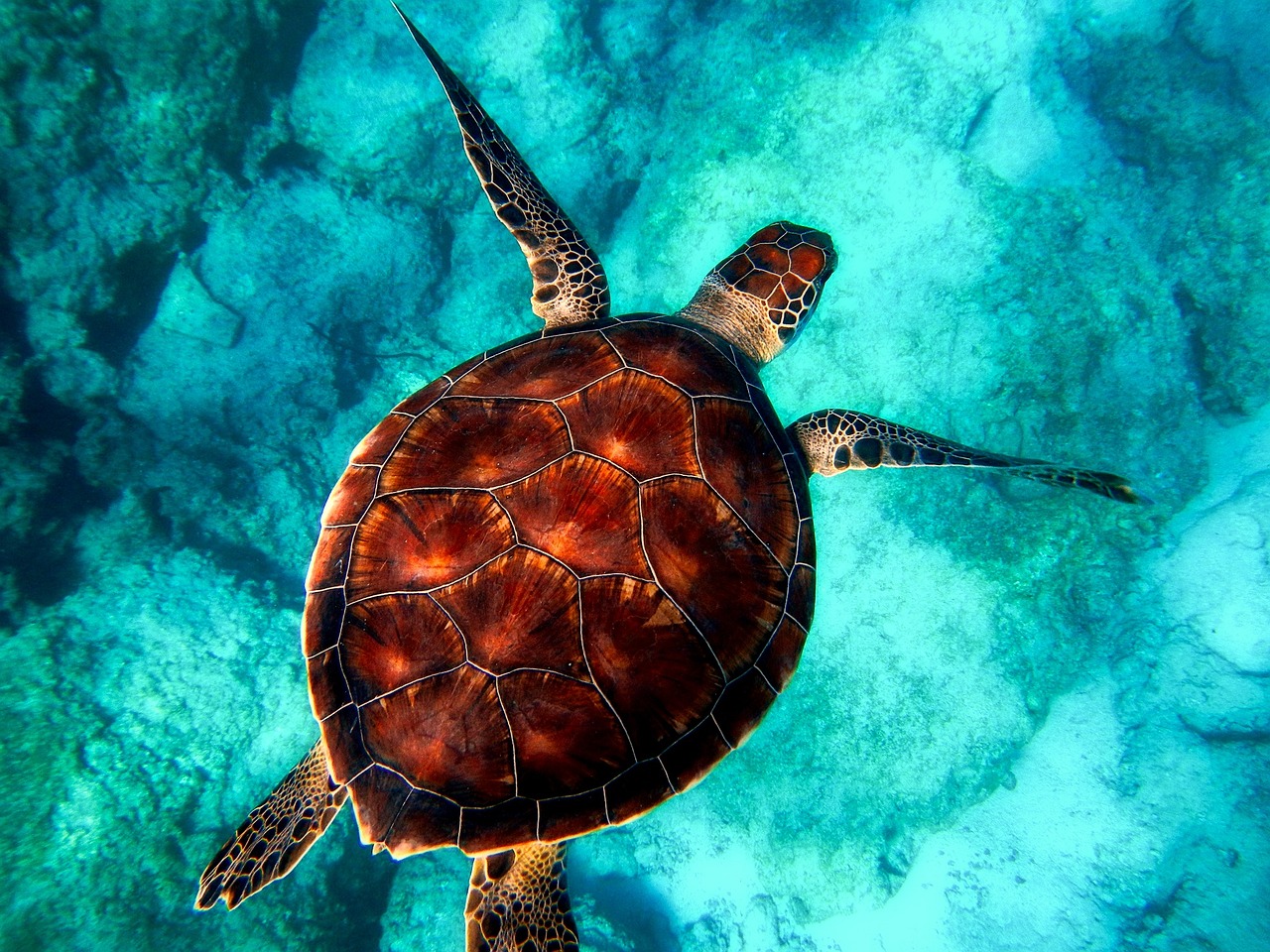
The clearest difference is in the feet. Tortoises have elephant-like columnar legs with unwebbed, clawed toes built for bearing weight on land. Freshwater turtles have webbed feet for paddling — think pond sliders and snapping turtles. Sea turtles have flipper-like forelimbs and reduced hind flippers adapted for long-distance ocean swimming. A tortoise plodding through savanna grassland and a green turtle gliding over a coral reef share a shell but occupy entirely different locomotor worlds. Misidentification matters because rescue protocols differ: a sea turtle stranded on a beach needs marine veterinary care, not terrestrial husbandry.
Shell shape and lifestyle
Tortoise shells tend to be high-domed, protecting against predators in slow terrestrial environments. Many freshwater turtles have flatter, streamlined shells for swimming. Sea turtles have lightweight, hydrodynamic shells — leatherback turtles replace a hard bony carapace with a leathery skin covering. Diet follows habitat: tortoises are mostly herbivorous grazers; freshwater turtles are often omnivorous; green sea turtles are herbivorous as adults while loggerheads crush hard-shelled prey. These ecological roles connect to different conservation threats — habitat loss for tortoises, bycatch and nesting-beach disturbance for sea turtles.
Nesting and reproduction
Sea turtles migrate long distances to nest on sandy beaches, laying clutches of eggs below the high-tide line. Hatchlings scramble to the sea — a journey where artificial light, predators and debris cause heavy mortality. Tortoises lay eggs in burrows or scrapes on land; hatchlings emerge fully terrestrial. Freshwater turtles nest near water. Temperature during incubation determines sex in many turtle species — a vulnerability as climate change skews sex ratios on nesting beaches. The IUCN Marine Turtle Specialist Group tracks population trends for all seven sea-turtle species.
Why sea turtles are endangered
Six of seven sea-turtle species are listed as Vulnerable, Endangered or Critically Endangered. Accidental capture in shrimp trawls, longlines and gillnets kills tens of thousands annually. Coastal development destroys nesting beaches; artificial lighting disorients hatchlings. Plastic ingestion blocks digestive tracts. Hawksbill turtles were hunted for tortoiseshell — now illegal under CITES Appendix I. Turtle-excluder devices in trawl nets, protected nesting beaches and fishery gear modifications are proven responses. WARN links donors to sea-turtle rescue and beach-protection programmes through partner appeals.
What WARN does
WARN links supporters to sea-turtle rescue and nesting-beach protection through partner programmes in coastal network countries. Funding targets veterinary care for injured turtles, hatchling protection and community patrols on nesting beaches.