Wildlife · Bird facts
Can owls turn their heads 360 degrees?
Owls rotate heads about 270 degrees — not a full circle — thanks to extra neck vertebrae and backup blood vessels.
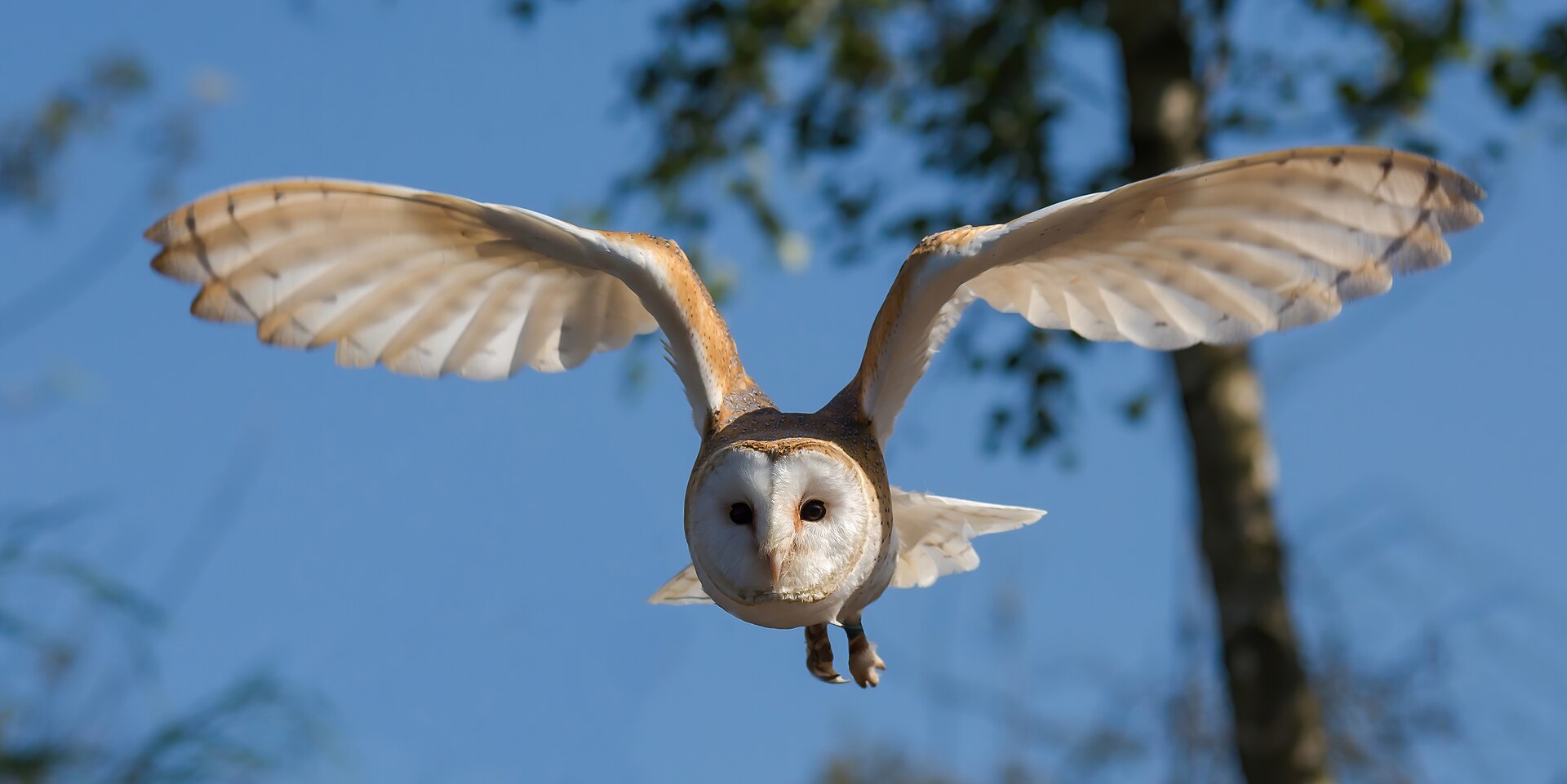
In brief
No — not a full rotation. Most owls can turn their heads about 270 degrees (roughly three-quarters of a circle) without moving their bodies. Their extra neck vertebrae and specialised blood vessels make that possible. Owls cannot turn heads a full 360 degrees — anatomy would tear arteries.
By WARN Research & Conservation Team Last updated
Owls cannot turn heads a full 360 degrees — anatomy would tear arteries. Most species reach roughly 270 degrees, three-quarters of a circle, without moving the body. Fourteen neck vertebrae (humans have seven) and a vascular backup system protect the brain during extreme rotation. Fixed eye sockets mean owls swivel the neck instead of moving eyes. Rodenticide and habitat loss threaten owl populations worldwide.
270°
Typical owl head rotation — not 360°
14
Neck vertebrae in owls vs 7 in humans
Fixed
Eye sockets — eyes cannot roll like humans
Silent
Flight — specialised feathers for stealth hunting
Quick facts
| Rotation limit | ~270° — full 360° would break blood vessels |
|---|---|
| Eyes | Forward-facing, fixed in sockets — neck turns scan surroundings |
| Neck bones | 14 vertebrae — double human count |
| Blood supply | Small connecting arteries when main vessels twist |
| Myth | 360° head spin — popular error in media |
| Threats | Rodenticide, habitat loss, vehicle collisions |
Key takeaways
- Owls rotate ~270° — not full 360°.
- Fixed eyes and 14 neck vertebrae enable rotation.
- Backup blood vessels protect brain during turns.
- 360° myth from media, not anatomy.
- Rodenticide and habitat loss threaten many species.
- Silent flight makes owls key rodent controllers.
Anatomy of extreme rotation
Owls evolved elongated, flexible necks because eye sockets are tubular and eyes cannot move within them. Fourteen cervical vertebrae provide range of motion; ligaments and muscle arrangement allow rapid snap turns toward prey sounds. At maximum rotation, carotid arteries stretch — owls possess enlarged foramina and auxiliary vessels that maintain blood flow when main arteries kink. Research using angiography confirmed backup circulation — without it, 270-degree turns would stroke the brain. True 360-degree rotation would require tearing vessels — biologically impossible without different design.
Why the 360-degree myth persists
Cartoons and horror tropes show owls spinning heads full circle — visually striking but false. Casual observers seeing near-180-degree turns from front to back overestimate total range. Barn owls and great horned owls demonstrate dramatic rotation that still stops short of full circle. Cornell Lab and veterinary literature correct the myth in education materials. Accurate biology matters for rehabilitation — neck injury from collision or barbed wire requires different triage than fictional anatomy suggests.
Hunting and ecology
Silent flight feathers let owls ambush rodents — leading natural rodent control in farms and forests. Many species nest in tree cavities or old buildings — habitat loss removes nest sites. Rodenticide in prey poisons owls secondarily — widespread cause of decline in barn owls and tawny owls in Europe. Vehicle strikes kill low-flying hunters along roads. Urban owl projects install nest boxes when old trees removed — partial mitigation requiring community maintenance.
Conservation context
Owls are apex small-mammal controllers — losing owls increases crop damage and disease vectors from rodent blooms. Accurate public understanding supports barn owl box programmes and rodenticide regulation. Myth-busting pages train readers to question similar errors about bats and ostriches — part of WARN myth-busters hub linking to owl wildlife guide and rainforest species depending on forest owls for pest control.
Frequently asked questions
Can owls turn their heads 360 degrees?
Why can owls turn heads so far?
Do owls have good eyesight?
Are owls endangered?
Why do owls rotate heads instead of eyes?
What threatens barn owls?
Sources & references
Related reading
More from Bird facts
More Wildlife answers
Stay connected with WARN
Receive appeal updates, animal-welfare news and published funding reports. Unsubscribe any time.
We only use your address for WARN updates. See our privacy policy.