Wildlife · Bird facts
Are penguins birds?
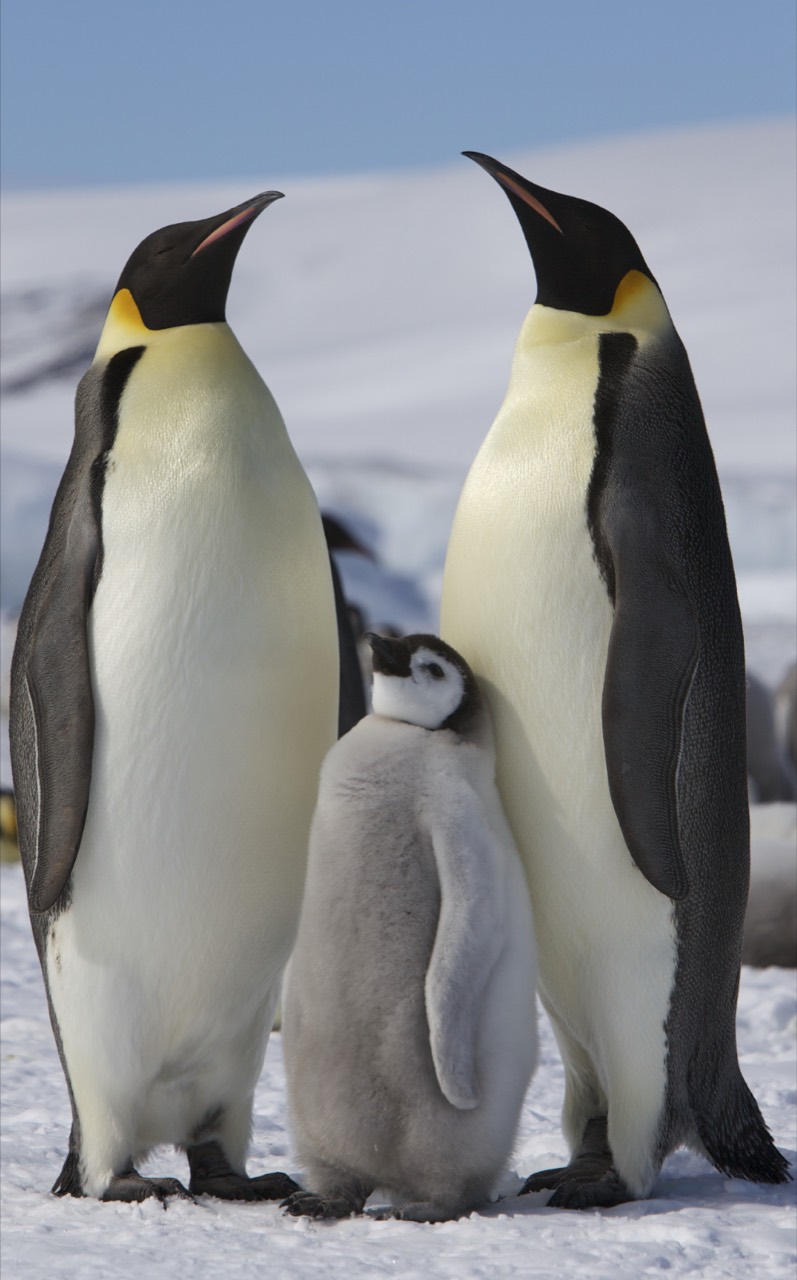
Penguins are flightless birds — feathers, eggs and warm blood, with wings evolved into swimming flippers.
In brief
Yes. Penguins are flightless birds in the order Sphenisciformes. They have feathers, lay hard-shelled eggs, and are warm-blooded — but their wings evolved into flippers for swimming. Penguins belong to order Sphenisciformes in class Aves — same group as eagles and sparrows.
By WARN Research & Conservation Team Last updated
Penguins belong to order Sphenisciformes in class Aves — same group as eagles and sparrows. They lay hard-shelled eggs, have feathers and are endothermic. Wings became flippers for swimming; bones denser than flying birds aid diving. All wild penguin species live in the Southern Hemisphere — never meet polar bears. Climate change, fisheries bycatch and oil spills threaten several species; African penguin is Endangered.
18
Living penguin species
500 m+
Emperor penguin dive depth record
EN
African penguin — Endangered (IUCN)
0
Penguins in Arctic — Southern Hemisphere only
Quick facts
| Class | Aves — birds, not fish or mammals |
|---|---|
| Flight | Flightless — wings are flippers for swimming |
| Feathers | Dense waterproof plumage — insulates in cold water |
| Range | Southern Hemisphere — Antarctica to Galápagos |
| Diving | Emperor penguins exceed 20-minute breath holds |
| Threats | Climate change, bycatch, oil spills, food shortage |
Key takeaways
- Penguins are birds — flightless, feathered, egg-laying.
- Wings are flippers; dense bones aid diving.
- All wild species live south of Equator.
- Never meet polar bears in nature.
- African penguin Endangered from fisheries and climate.
- Marine protection and spill prevention critical.
Bird traits penguins retain
Penguins have beaks without teeth, lay eggs, brood chicks and moult feathers — avian lifecycle. Warm-blooded metabolism maintains body temperature in Antarctic seas. Lungs breathe air — must surface to breathe despite deep dives. Hollow bones of flying birds replaced partly by solid marrow in penguins — ballast for diving. Counter-current heat exchangers in flippers reduce heat loss. These are bird adaptations modified for aquatic life, convergent with dolphins in streamlining but not in ancestry.
Why penguins are not mammals or fish
Mammals have hair and nurse with milk — penguins feed chicks regurgitated fish but do not lactate. Fish have gills and scales — penguins have feathers and lungs. Popular confusion arises because penguins swim expertly and live where few birds dominate marine niche. Emperor penguin dads brood eggs on feet through Antarctic winter — behaviour so extreme it reads as mammal-like parental care but remains avian incubation without placenta or milk.
Southern Hemisphere distribution
Galápagos penguin lives near Equator; emperors breed on Antarctic ice. No penguins native to Arctic — polar bears and penguins never co-occur in wild despite greeting card imagery. African penguin colonies collapse off Namibia and South Africa from food competition with fisheries and climate-driven prey shift. Magellanic and chinstrap penguins face similar pressure. Tourism and research stations disturb some colonies if not managed — balancing education with disturbance buffers.
Conservation
African penguin Endangered — population fell from millions to tens of thousands. Marine protected areas and fishery closures around colonies help when enforced. Oil spills cause mass mortality — single spill can kill thousands. Climate change reduces krill and fish prey for Antarctic species. WARN marine animals hub links penguin guide to sea turtle and fisheries themes — ocean health connects species.
Frequently asked questions
Are penguins birds or mammals?
Can penguins fly?
Do penguins live with polar bears?
Are penguins endangered?
How deep can penguins dive?
Why are African penguins declining?
Sources & references
Related reading
More from Bird facts
More Wildlife answers
Stay connected with WARN
Receive appeal updates, animal-welfare news and published funding reports. Unsubscribe any time.
We only use your address for WARN updates. See our privacy policy.