Wildlife Guide · Tropical and subtropical regions worldwide & Temperate zones with limited native diversity
Termite
Infraorder Isoptera within order Blattodea (cockroaches) — roughly 3,000 described species
Not ants — closer to cockroaches — and mounds that ventilate like passive air-conditioning.
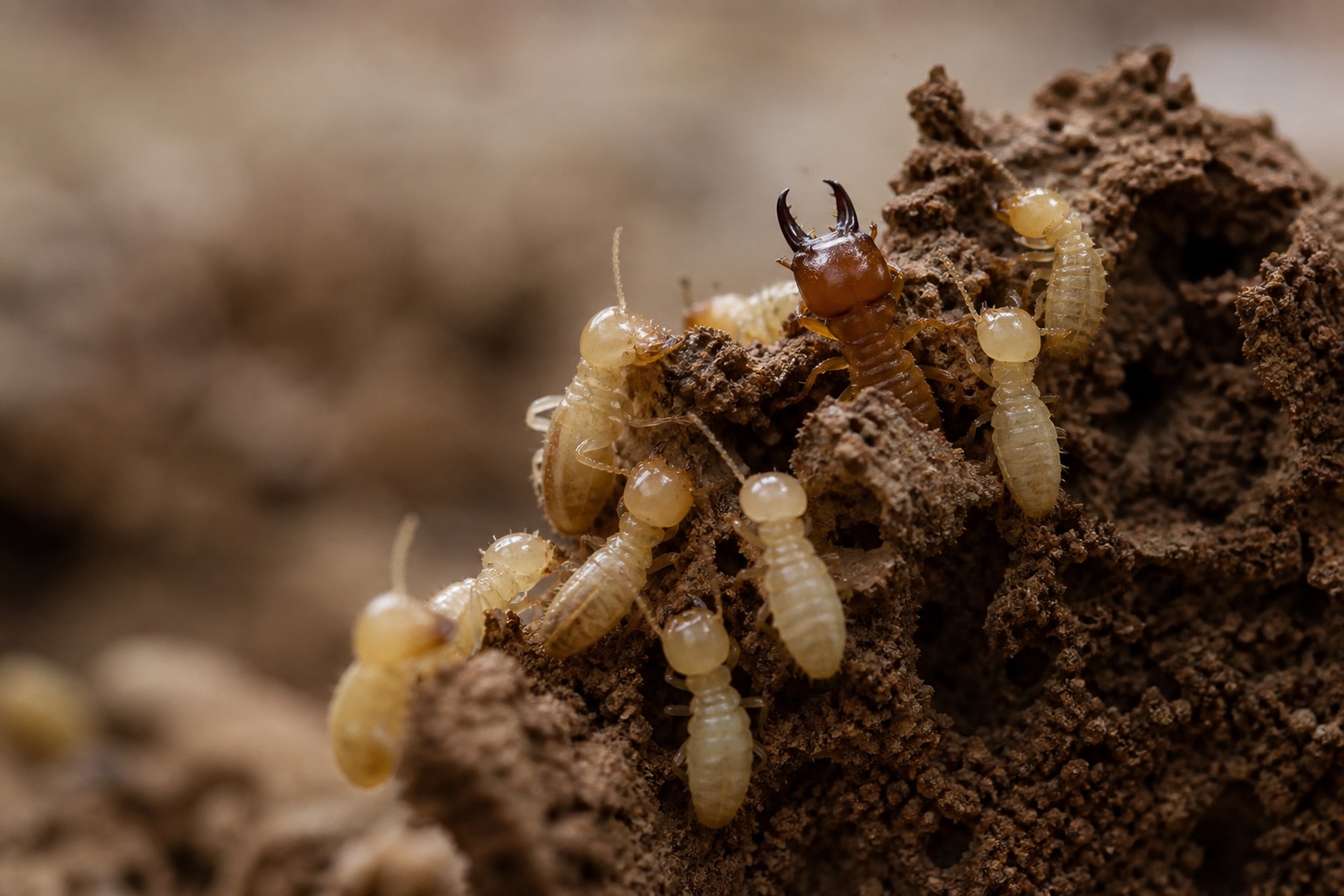
AI-generated educational wildlife portrait — World Animal Rescue Network · AI visualisation, not a photograph
In brief
Termites are eusocial cockroach relatives (Blattodea: Isoptera) that digest cellulose with symbiotic microbes or cultivated fungus; they build elaborate nests including ventilated mounds, and are ecologically vital decomposers though some species damage wooden buildings.
Also in Animals A to Z · Animals that start with T
By WARN Research & Conservation Team Last updated
Termites are eusocial insects once classified as their own order Isoptera but now placed within Blattodea alongside cockroaches. Colonies contain reproductive kings and queens, sterile workers and soldiers, and — in many species — a gut microbiome or cultivated fungus that digests cellulose from wood and plant fibre that most animals cannot use. They are among the dominant decomposers in tropical soils and, when they eat human structures, among the most expensive insect pests on Earth. People compare them to ants because both live in large colonies, but the resemblance is convergent. Termites are hemimetabolous cockroach relatives; ants are hymenopterans related to bees and wasps. Macrotermes mounds in Africa ventilate through a chimney effect studied by architects as a model for passive cooling. The engineering is real; the 'insect architect' headline is optional.
~3,000
Described termite species
Blattodea
Same order as cockroaches — not ants
Cellulose
Digested via gut symbionts or fungus gardens
Passive vent
Macrotermes mounds move air without fans
Figures sourced from Encyclopaedia of Life — Blattodea / termites, IUCN Red List .
Termite: Quick Facts
| Worker size | A few millimetres — soft-bodied, pale |
|---|---|
| Diet | Cellulose from wood and plant fibre |
| Habitat | Soil, wood, mounds and nests |
| Relation to ants | Not closely related — convergent eusociality |
| Relation to cockroaches | Same order (Blattodea) |
| Mound ventilation | Passive airflow in Macrotermes and allies |
Scientific Classification
| Kingdom | Animalia |
|---|---|
| Phylum | Arthropoda |
| Class | Insecta |
| Order | Blattodea |
| Infraorder | Isoptera |
| Families | Termitidae, Rhinotermitidae, Macrotermitidae and others |
| Species | Roughly 3,000 described |
Conservation Status
- IUCN Status
- Not Evaluated
- Population
- Not applicable at group level
- Trend
- Unknown for most species; habitat loss reduces decomposer capacity
- Assessed
- Most species unassessed
- CITES
- Not listed
Termites are rarely conservation priorities despite ecological importance. Narrow-range species may decline with forest loss without Red List entries.
Did you know?
Macrotermes termites farm fungus inside mounds that ventilate by convection — no fans, no moving parts, just geometry that architects have studied for passive building design.
Key Facts: Termite
- Termites are cockroach relatives (Blattodea), not ants — eusociality evolved independently.
- Colonies contain kings, queens, workers and soldiers; reproductives may live many years.
- Most species recycle dead wood and plant fibre in ecosystems; a minority attack buildings.
- Macrotermes and related genera cultivate fungus gardens inside mounds with passive ventilation.
- Ant versus termite identification: termites have straight antennae and a broad waist; ants have elbowed antennae and a narrow waist.
- Control of structural pests should target the colony, not individual insects seen indoors.
Why termites are not ants
Ants belong to Hymenoptera with elbowed antennae, a constricted waist and complete metamorphosis. Termites have straight bead-like antennae, a broad connection between thorax and abdomen, and gradual moulting without a pupal stage. Winged reproductives shed their wings after mating flights — the discarded wings on windowsills are a common sign of indoor swarmers.
Genetically, termites nest within cockroaches. That reclassification matters for understanding evolution: eusociality — overlapping generations, cooperative brood care and reproductive castes — arose at least twice here independently of ants, bees and wasps. Convergent solutions produced similar mound cities from unrelated starting material.
Digesting wood — symbionts and fungus gardens
Cellulose and lignin in wood are locked behind bonds most animals cannot break. Lower termites harbour flagellate protists or bacteria in the hindgut that ferment fibre. Macrotermes and related higher termites go further: workers cultivate Termitomyces fungus on chewed plant material inside the nest, and the colony eats the fungus, not the raw cellulose directly.
That division of labour lets termites process enormous volumes of dead wood in tropical forests. Without them, fallen timber would choke ecosystems. The same capacity makes them structural pests when the wood is a house frame rather than a log on the forest floor.
Mounds and passive ventilation
Macrotermes bellicosus mounds in Africa can stand more than 3 m tall — cathedrals of clay and saliva-built material enclosing fungus combs. Internal architecture creates convection: heat and metabolic gases rise through central chimneys, drawing fresh air through peripheral passages. The mound breathes without moving parts.
Architects have studied the geometry for passive cooling in human buildings. The biological point is thermoregulation and gas exchange for a colony of millions consuming fermenting material. Mound shape varies by species and soil — some build epigeal mounds, others nest entirely below ground — but the engineering problem is universal: keep fungus gardens within tolerable temperature and oxygen limits.
Pest species versus ecological majority
Only a fraction of termite species eat sound dry timber in buildings. Many require damp decaying wood or live entirely in soil and dead logs. Swarming reproductives indoors do not prove an active structural infestation — they may have entered from outside — but persistent mud tubes on foundations or hollow-sounding timbers warrant professional inspection.
Ecologically, termites are keystone decomposers and soil engineers. Their tunnels aerate ground; their processing releases nutrients. Local extinctions are rarely reported because most species are unassessed, but habitat conversion removes the same litter-processing capacity that forests depend on.
What WARN Does
WARN publishes free insect education that corrects high-traffic confusion — termite versus ant is among the most economically consequential misidentifications in temperate housing markets, and the ecological story is separate from the pest-control story.
If this guide helps you understand wildlife and the pressures it faces, a gift to WARN supports habitat protection and free public education in our partner countries.
Termite: Frequently Asked Questions
What do termites eat?
Where do termites live?
Are termites dangerous to humans?
How long do termites live?
How big are termites?
How do termites differ from ants?
Sources & References
Population figures, conservation status and biological facts on this page are drawn from authoritative scientific and intergovernmental sources.
Terms used on this page
Plain-English definitions, from our wildlife and conservation glossary.
Explore more animals
Discover more animals, their habitats and their conservation status in the WARN wildlife-guide library.
Enjoyed this Termite guide?
Receive appeal updates, animal-welfare news and published funding reports. Unsubscribe any time.
We only use your address for WARN updates. See our privacy policy.