Wildlife Guide · Worldwide in damp habitats & Greatest diversity in temperate and tropical forests
Slug
Shell-reduced gastropods — class Gastropoda; many families and independent origins
Snails that lost the shell — repeatedly, independently, and not always completely.
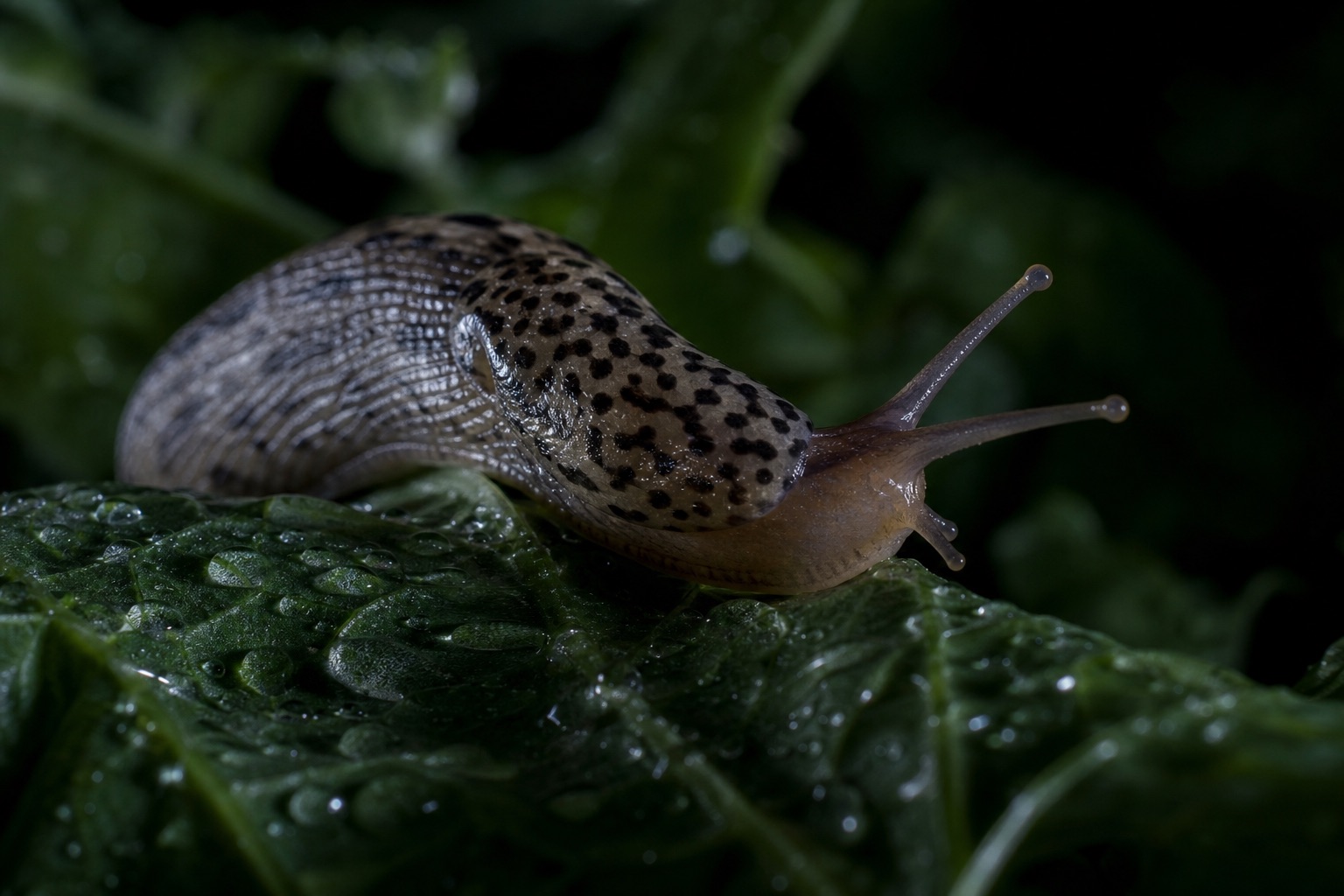
AI-generated educational wildlife portrait — World Animal Rescue Network · AI visualisation, not a photograph
In brief
Slugs are shell-reduced gastropod molluscs — relatives of snails that move on a muscular foot and rasp food with a radula; shell loss evolved independently in many lineages, and common garden slugs are among the invertebrates gardeners query most.
Also in Animals A to Z · Animals that start with S
By WARN Research & Conservation Team Last updated
Slugs are gastropod molluscs — the same phylum as snails and octopuses — that have reduced or internalised the external shell their relatives carry. Shell loss has evolved many times in separate lineages, which means 'slug' describes a body form, not a single branch of the tree of life. A slug moves on a muscular foot, secretes mucus for locomotion and moisture retention, and feeds with a radula of chitinous teeth rasping plant material, fungi or decay. Gardeners search for slugs because they eat seedlings and hostas; ecologists note them because they recycle dead matter and because invasive slug species have spread with horticultural trade. The biological story parallel to the pest story is the snail relationship: slugs are what happens when a lineage finds it cheaper to drop the shell than to maintain it. WARN's snail guide covers the shelled side of the same gastropod divide.
Many times
Shell loss evolved independently in separate gastropod lineages
1 foot
Muscular waves on mucus — same locomotion as snails
Hermaphrodite
Most slugs carry both male and female organs
Radula
Toothed ribbon — thousands of teeth, continuously replaced
Figures sourced from IUCN Red List, Natural History Museum — slugs and snails .
Slug: Quick Facts
| Length | Few cm in common species; up to 15 cm or more in leopard slug |
|---|---|
| Diet | Plants, fungi and detritus |
| Habitat | Damp gardens, woodland, compost |
| Shell | Absent externally or reduced to internal plate |
| Activity | Nocturnal and crepuscular in dry conditions |
| Reproduction | Mostly hermaphroditic |
Scientific Classification
| Kingdom | Animalia |
|---|---|
| Phylum | Mollusca |
| Class | Gastropoda |
| Subclass | Heterobranchia (most land slugs) |
| Order | Stylommatophora among pulmonate land slugs |
| Genera | Limax, Arion, Deroceras and others |
| Note | Shell loss evolved independently in multiple lineages |
Conservation Status
- IUCN Status
- Not Evaluated
- Population
- Not applicable at group level
- Trend
- Invasive slug species expanding; native slugs declining locally with habitat loss
- Assessed
- Most species unassessed
- CITES
- Not listed for common garden species
Slug conservation is rarely prioritised, but invasive species displace natives and metaldehyde poisoning affects vertebrate predators across whole gardens.
Did you know?
Leopard slugs mate while hanging from a mucus thread — two hermaphrodites entwined mid-air — which is one of the more improbable courtship displays in a garden most people assume is dull.
Key Facts: Slug
- Slugs are gastropods — the same phylum as snails; slugs are not a single evolutionary group.
- Shell reduction or internalisation evolved independently in multiple snail lineages.
- Most slugs are hermaphrodites; mating often involves elaborate courtship and sometimes apophallation in leopard slugs.
- They need moisture and are most active at night or in damp weather.
- Metaldehyde slug pellets poison predators such as hedgehogs and birds; barriers and hand collection are safer controls.
- See WARN's snail guide for the shelled gastropod side of the same confusion pair.
How a slug relates to a snail
A snail carries a coiled calcium-carbonate shell secreted by the mantle; a slug either lacks an external shell entirely or retains a small internal plate — a vestige visible only on dissection in some species. Both share the gastropod body plan: head with tentacles (eyes on the upper pair in land slugs), mantle cavity modified for air breathing in terrestrial forms, and a single muscular foot.
Because shell loss arose separately in pulmonate snails, sea-slug relatives and other groups, two slugs may be less closely related to each other than either is to a shelled snail nearby. 'Slug' is a lifestyle label. The snail guide on this site covers the shelled majority and the extinction crisis among island land snails; this page covers the shell-free forms people meet in gardens.
Mucus, movement and the moisture constraint
Land slugs die by desiccation. Mucus serves as lubricant for movement, glue for climbing, and a barrier against water loss. The cost is visibility — slime trails advertise presence to predators and gardeners alike. Slugs are crepuscular or nocturnal in dry climates, hiding under stones, logs and mulch by day.
Movement uses muscular waves passing along the foot, the same mechanism as snails. Some species can descend on a mucus thread. Speed is not impressive, but the ability to traverse razor edges and vertical glass with mucus adhesion is.
Garden pests, invasive species and control
The grey field slug and Spanish slug complex in Europe, the leopard slug in many temperate gardens, and introduced species worldwide damage soft plant tissue and seedlings. Invasive slugs displace natives and spread with potted plants and compost.
Control methods that avoid poisoning the wider food web work best: evening hand collection, copper or abrasive barriers, encouraging predators (ground beetles, hedgehogs, birds), and reducing daytime refuges. Metaldehyde pellets are being withdrawn or restricted in several countries because poisoned slugs kill the animals that eat them. Ferrous phosphate baits are lower risk to vertebrates.
Reproduction without shells
Most land slugs are simultaneous hermaphrodites. Mating can be elaborate — leopard slugs perform aerial copulation on mucus threads — and some species practice apophallation, chewing off a partner's penis after mating, which has driven counter-adaptations in anatomy. Eggs are laid in damp soil or crevices in clusters resembling small pearls.
Without a shell, slugs cannot seal themselves into drought dormancy the way snails do with an epiphragm. They rely on refuges and behaviour instead. That constraint shapes where they can live and how hard winter and dry summer hit populations.
What WARN Does
WARN publishes free mollusc education for the species people actually encounter in gardens. Slugs and snails share a phylum but divergent body plans; naming that relationship correctly stops gardeners treating them as unrelated nuisances and points control away from poison that kills hedgehogs.
If this guide helps you understand wildlife and the pressures it faces, a gift to WARN supports habitat protection and free public education in our partner countries.
Slug: Frequently Asked Questions
What do slugs eat?
Where do slugs live?
Are slugs dangerous to humans?
How long do slugs live?
How big do slugs get?
What is the difference between a slug and a snail?
Sources & References
Population figures, conservation status and biological facts on this page are drawn from authoritative scientific and intergovernmental sources.
Terms used on this page
Plain-English definitions, from our wildlife and conservation glossary.
Explore more animals
Discover more animals, their habitats and their conservation status in the WARN wildlife-guide library.
Enjoyed this Slug guide?
Receive appeal updates, animal-welfare news and published funding reports. Unsubscribe any time.
We only use your address for WARN updates. See our privacy policy.