Wildlife Guide · Every continent except Antarctica & Highest diversity in Australia and Southeast Asia
Skink
Family Scincidae (Gray, 1825) — over 1,700 species
The second-largest lizard family on Earth, and a live demonstration of how snakes got their shape.
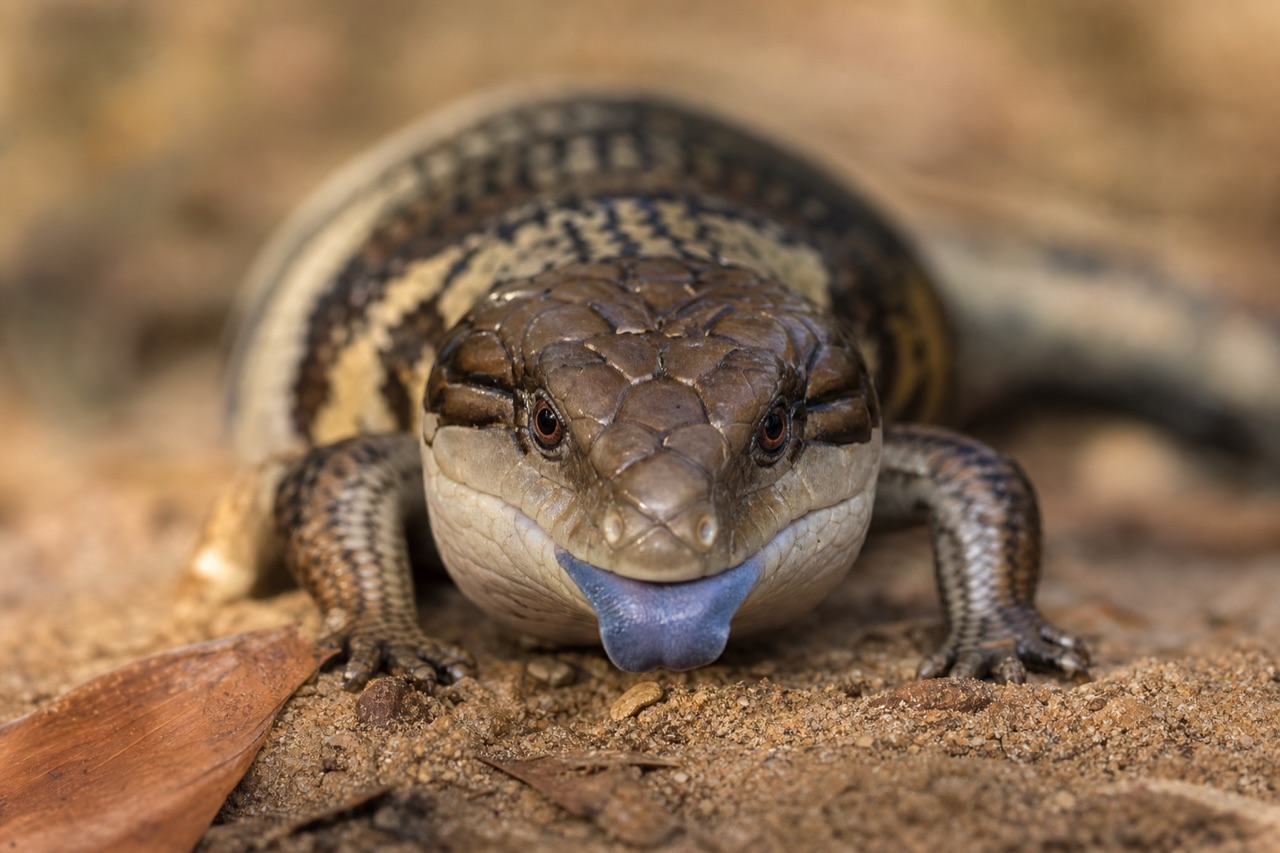
AI-generated educational wildlife portrait — World Animal Rescue Network · AI visualisation, not a photograph
In brief
Skinks are over 1,700 species of lizards in the family Scincidae, found on every continent except Antarctica; they are recognisable by smooth overlapping scales and reduced limbs, and limb loss has evolved independently many times within the family.
Also in Animals A to Z · Animals that start with S
By WARN Research & Conservation Team Last updated
Skinks are the lizards most people have seen without registering what they were looking at: smooth, glossy, fast-moving animals with small legs and long tails, sliding through leaf litter. The family Scincidae holds over 1,700 species, making it the second largest lizard family after geckos, and it is distributed across every continent except Antarctica. What makes skinks scientifically interesting is the range within the family. Some have four fully functional limbs. Some have tiny vestigial ones. Some have none at all and move exactly like snakes. Limb reduction has evolved independently many times within Scincidae, which makes the family a working demonstration of the transition that produced snakes — happening repeatedly, in front of us.
1,700+
Species — the second largest lizard family
Many times
Limb reduction has evolved independently within the family
~45%
Of skink species give birth to live young rather than laying eggs
Autotomy
Tail shedding — the tail keeps moving to distract a predator
Figures sourced from IUCN Red List — Scincidae assessments, The Reptile Database — Scincidae .
Skink: Quick Facts
| Species | Over 1,700 — the second largest lizard family |
|---|---|
| Length | 3 cm to 35 cm body length depending on species |
| Distribution | Every continent except Antarctica |
| Defence | Caudal autotomy — deliberate tail shedding |
| Reproduction | Around 45% of species give birth to live young |
| Main threats | Introduced predators on islands; habitat loss |
Scientific Classification
| Kingdom | Animalia |
|---|---|
| Phylum | Chordata |
| Class | Reptilia |
| Order | Squamata |
| Family | Scincidae |
| Genus | Tiliqua, Plestiodon, Lerista, Corucia and many others |
| Species | Over 1,700 described species |
Conservation Status
- IUCN Status
- Varies by species — most Least Concern, several island endemics Critically Endangered
- Population
- Varies enormously; many species unassessed
- Trend
- Stable for most; decreasing for island endemics
- Assessed
- Varies
- CITES
- A small number of species listed on Appendix II
Island skinks in New Zealand, Mauritius and the Caribbean are among the most threatened reptiles on Earth, almost entirely because of introduced rats, cats, stoats and mongooses.
Did you know?
Some skink genera contain closely related species with four legs, two legs and no legs at all — the transition that produced snakes, caught mid-process and repeated across the family.
Key Facts: Skink
- Scincidae contains over 1,700 species, second only to geckos among lizard families, and occurs on every continent except Antarctica.
- Skinks have smooth, overlapping scales underlaid by bony plates called osteoderms, which is what gives them their characteristic polished look.
- Limb reduction has evolved independently many times within the family, producing everything from four-legged to entirely legless species.
- Most skinks can shed their tail — caudal autotomy — and the detached tail continues thrashing to hold a predator's attention while the lizard escapes.
- Around 45% of skink species give birth to live young instead of laying eggs, and some provide a genuine placenta-like connection to developing embryos.
- The blue-tongued skink of Australia flashes a bright blue tongue as a startle defence, and is one of the largest members of the family.
- Most skinks are Least Concern, but island endemics — particularly in New Zealand, Mauritius and the Caribbean — include some of the most threatened reptiles on Earth.
How skinks became snake-shaped, repeatedly
Within Scincidae you can find the entire sequence from a normal four-limbed lizard to a functionally legless one. Some species have full limbs. Others have shortened limbs with reduced digit counts. Others have limbs reduced to small flaps. Several genera, including Australian Lerista, contain species at multiple points along that gradient — sometimes closely related species differing chiefly in how many toes they have.
The driver appears to be burrowing and moving through dense litter or loose sand, where limbs get in the way and lateral undulation is more efficient. Because this has happened independently in many skink lineages, the family gives evolutionary biologists something rare: repeated instances of the same major body-plan transition, at different stages, in living animals. Much of what is understood about how snakes lost their legs comes from studying skinks that are currently doing it.
The tail that fights on without them
Most skinks can detach their tail deliberately at a fracture plane built into the vertebrae. Muscles contract to break the tail off and simultaneously seal the blood vessels, so blood loss is minimal. The severed tail then thrashes vigorously for minutes, driven by stored energy in the muscle tissue.
The purpose is to give a predator something to commit to. A cat or bird that grabs the moving tail is holding the wrong part of the animal. Many juvenile skinks have brightly coloured — often blue — tails specifically to draw attacks toward the expendable end. The cost is real: the tail stores fat, and a regrown one is shorter, supported by cartilage rather than bone, and cannot be shed again at the same place. Skinks that have dropped a tail have measurably reduced survival and breeding success until it regrows.
Live birth, and something close to a placenta
Around 45% of skink species are viviparous — they give birth to live young rather than laying eggs. This has evolved independently many times within the family, generally in cooler climates and at higher altitudes, where retaining developing embryos inside the body allows a female to control their temperature by basking.
Some species have gone considerably further. In several skinks the eggshell is reduced to nothing and the female develops a placenta-like structure that transfers nutrients directly to embryos, an arrangement functionally similar to that of a mammal and evolved entirely separately. The Australian genus Pseudemoia includes some of the best-studied examples. For anyone interested in how reproductive strategies change, skinks offer the same advantage they offer for limb loss: the full range of intermediate stages, alive and available to study.
The skinks in trouble
As a family, skinks are doing reasonably well — most species are Least Concern, and many thrive in gardens and disturbed habitats. The exceptions follow a familiar pattern: island endemics with small ranges and introduced predators.
New Zealand's skinks have been reduced by rats, stoats and cats, with several species now confined to predator-free islands or fenced sanctuaries. Mauritius has lost skink species outright to introduced predators and retains others in single-island populations. Caribbean skinks have been hit hard by mongooses introduced to control rats — an intervention that failed at its purpose and devastated the native reptiles instead. The threats are the standard ones for island reptiles, and so are the solutions: predator eradication, translocation to safe islands, and fenced sanctuaries.
What WARN Does
WARN publishes free, sourced species education, including for the animal groups that receive least attention. Reptiles are consistently underfunded relative to their extinction risk, and island skinks — small, unglamorous and often confined to a single location — are among the least visible threatened animals anywhere.
If this guide helps you understand wildlife and the pressures it faces, a gift to WARN supports habitat protection and free public education in our partner countries.
Skink: Frequently Asked Questions
What is a skink?
Are skinks lizards or snakes?
Do skinks lose their tails?
Are skinks venomous or dangerous?
Do skinks lay eggs or give birth?
Where do skinks live?
How long do skinks live?
Sources & References
Population figures, conservation status and biological facts on this page are drawn from authoritative scientific and intergovernmental sources.
Terms used on this page
Plain-English definitions, from our wildlife and conservation glossary.
Explore more animals
Discover more animals, their habitats and their conservation status in the WARN wildlife-guide library.
Enjoyed this Skink guide?
Receive appeal updates, animal-welfare news and published funding reports. Unsubscribe any time.
We only use your address for WARN updates. See our privacy policy.