Wildlife Guide · World oceans & Shallow reefs and temperate coasts worldwide
Sea Slug
Clade Nudibranchia — over 3,000 described species in order Nudibranchia
A shell-less mollusc that can steal chloroplasts from algae — or weapons from jellyfish relatives.
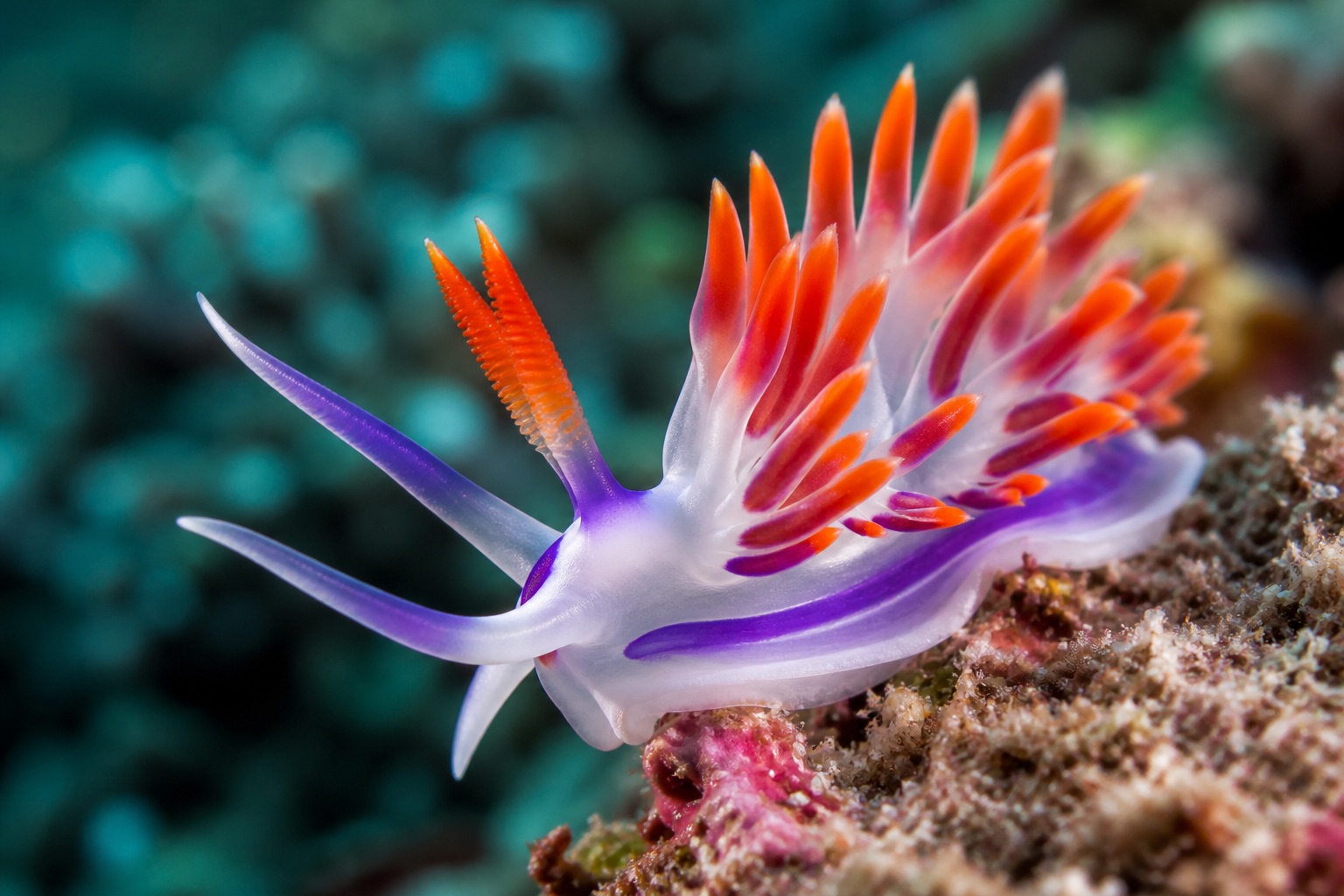
AI-generated educational wildlife portrait — World Animal Rescue Network · AI visualisation, not a photograph
In brief
Sea slugs, especially nudibranchs (order Nudibranchia), are shell-less marine molluscs with over 3,000 colourful species; some steal chloroplasts from algae for photosynthesis and others store stinging cells from jellyfish prey, and most are not individually assessed on the IUCN Red List.
Also in Animals A to Z · Animals that start with S
By WARN Research & Conservation Team Last updated
Sea slug is a loose name for shell-less marine gastropods; nudibranchs are the colourful group most divers photograph. More than 3,000 nudibranch species are described, from temperate rock pools to tropical reef. They shed the mollusc shell their ancestors carried and expose gills as feathery cerata on the back — 'nudibranch' means naked gill. Some species steal functional chloroplasts from algae they eat and photosynthesise for days — kleptoplasty. Others sequester nematocysts from cnidarian prey and deploy them in their own cerata. Both strategies are among the strangest resource thefts in the animal kingdom.
3,000+
Described nudibranch species
No shell
Adult nudibranchs are shell-less gastropods
Kleptoplasty
Chloroplast theft in species such as Elysia
Cerata
Dorsal gills and defensive structures
Figures sourced from Natural History Museum — Nudibranchs, MarineBio — Nudibranchs, Encyclopedia of Life — Nudibranchia .
Sea Slug: Quick Facts
| Phylum | Mollusca — gastropod molluscs |
|---|---|
| Shell | None in adult nudibranchs |
| Size | Mostly mm to about 10 cm |
| Kleptoplasty | Chloroplast theft in sacoglossans such as Elysia |
| Defence | Stolen nematocysts or prey toxins in cerata |
| Habitat | Shallow marine reefs and rock pools |
| IUCN status | Not Evaluated for most species |
Scientific Classification
| Kingdom | Animalia |
|---|---|
| Phylum | Mollusca |
| Class | Gastropoda |
| Order | Nudibranchia |
| Shell | Absent in adults — secondary loss |
| Described species | Over 3,000 nudibranchs |
| Not | Not fish, not insects — molluscs |
Conservation Status
- IUCN Status
- Not Evaluated
- Population
- Not applicable at clade level
- Trend
- Unknown; reef loss and warming affect prey-specific species
- Assessed
- Most species not assessed
- CITES
- Not listed
High discovery rate and low assessment priority mean most nudibranch diversity lacks formal status despite reef dependence.
Did you know?
Some sea slugs run on stolen solar power — chloroplasts hijacked from algae keep photosynthesising inside the slug for months after the meal ended.
Key Facts: Sea Slug
- Nudibranchs are shell-less marine gastropods — molluscs, not insects or fish — with exposed gills (cerata) on the back.
- Some sacoglossan sea slugs steal chloroplasts from algae and photosynthesise temporarily — kleptoplasty.
- Others sequester nematocysts from cnidarian prey and use them in their own cerata for defence.
- Bright colours often advertise toxicity or distastefulness — aposematism copied from prey chemistry.
- Most species are small — millimetres to a few centimetres — and specialised to specific prey and habitats.
- Climate change, reef degradation and collection affect local populations; most species lack IUCN assessments.
Molluscs without shells
Snails are gastropod molluscs; nudibranchs lost the external shell secondarily. Larvae may carry a brief shell that disappears at metamorphosis. The body is soft, often vividly coloured, with paired rhinophores (sensory tentacles) on the head and cerata on the dorsum serving respiration and sometimes defence.
They crawl on a muscular foot like any gastropod. 'Sea slug' also covers non-nudibranch groups — sea hares, sap-sucking slugs — but nudibranchs dominate popular recognition because of colour diversity on reefs.
Stealing chloroplasts
Sacoglossan slugs such as Elysia chlorotica feed on algae and incorporate chloroplasts into their own tissues. The plastids continue photosynthesising for days to months, supplementing the slug's energy budget. The slug must maintain the plastids with stolen algal genes — a partial symbiosis that blurs the line between feeding and farming.
Kleptoplasty is not universal among sea slugs; it is a specialised trick in a subset. It made Elysia a model organism in photosynthesis research and popular science writing.
Stealing stings
Aeolid nudibranchs feed on hydroids, anemones and corals and pass undischarged nematocysts through the digestive tract to cnidosacs at cerata tips. Predators biting cerata receive a sting the nudibranch did not evolve itself. Chemical defences from sponge prey provide another route to toxicity.
Aposematic colour patterns — orange, blue, purple contrasts — warn fish that the slug tastes bad or stings. Convergence is common: unrelated species mimic each other's warning colours.
Reef specialists and data gaps
Nudibranchs are often prey-specific — one species eats one sponge, one bryozoan. Reef loss and warming remove both slug and food. Most of 3,000+ species have no IUCN assessment; discovery rates on tropical reefs still add new species annually.
Divers and rock-pool searchers record range shifts as seas warm. Sea slugs are canaries for reef invertebrate diversity that never generates headline extinction listings.
What WARN Does
WARN publishes free marine education for overlooked invertebrate diversity. Nudibranchs are among the most photographed reef animals and among the least assessed — kleptoplasty and cnidocyte theft deserve accurate explanation beyond dive-blog shorthand.
If this guide helps you understand wildlife and the pressures it faces, a gift to WARN supports habitat protection and free public education in our partner countries.
Sea Slug: Frequently Asked Questions
What do sea slugs eat?
Where do sea slugs live?
Are sea slugs dangerous?
How long do sea slugs live?
How big are sea slugs?
Are sea slugs related to garden slugs?
Are sea slugs endangered?
Sources & References
Population figures, conservation status and biological facts on this page are drawn from authoritative scientific and intergovernmental sources.
Terms used on this page
Plain-English definitions, from our wildlife and conservation glossary.
Explore more animals
Discover more animals, their habitats and their conservation status in the WARN wildlife-guide library.
Enjoyed this Sea Slug guide?
Receive appeal updates, animal-welfare news and published funding reports. Unsubscribe any time.
We only use your address for WARN updates. See our privacy policy.