Wildlife Guide · Coastal temperate and cold waters of the Northern Hemisphere and South America & Shallow seas, estuaries and some rivers
Porpoise
Family Phocoenidae — seven species, including Phocoena phocoena
Not small dolphins — a separate family, with spade-shaped teeth and no beak.
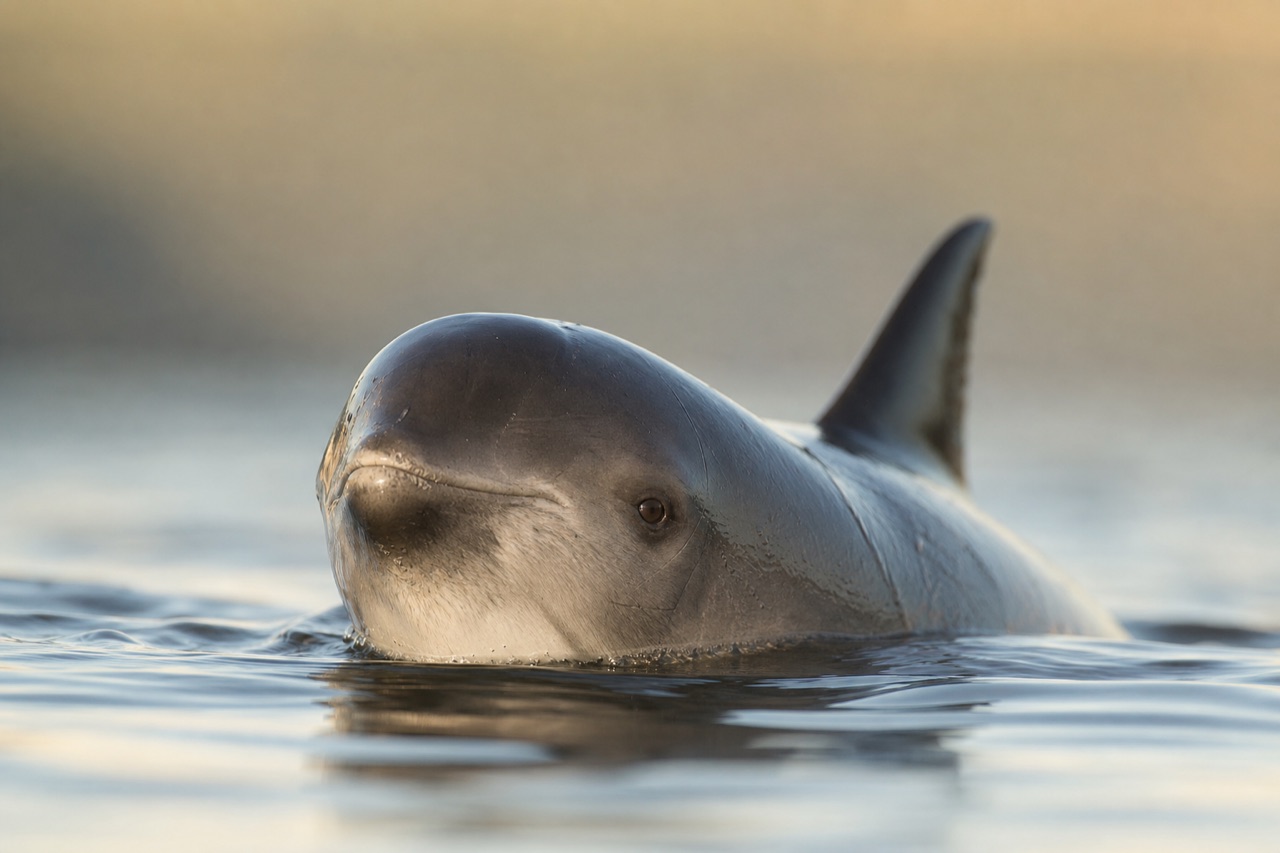
AI-generated educational wildlife portrait — World Animal Rescue Network · AI visualisation, not a photograph
In brief
Porpoises are a separate family from dolphins, with blunt beakless heads, triangular dorsal fins and spade-shaped teeth; the family includes the vaquita, the most endangered marine mammal in the world.
Also in Animals A to Z · Animals that start with P
By WARN Research & Conservation Team Last updated
Porpoises are frequently called dolphins, and they are not. They form their own family, Phocoenidae, distinguished by blunt heads with no beak, small triangular dorsal fins, and spade-shaped rather than conical teeth. They are also, as a group, in trouble. Porpoises live in shallow coastal water — exactly where gillnets are set — and the family includes the vaquita, the most endangered marine mammal on Earth, reduced to a handful of individuals in the Gulf of California.
7
Porpoise species
Spade-shaped
Teeth — dolphins have conical teeth
No beak
Blunt head, unlike most dolphins
~1.5 m
Length of the harbour porpoise, one of the smallest cetaceans
Figures sourced from IUCN Red List — Phocoena sinus (vaquita), IUCN Red List — Phocoena phocoena .
Porpoise: Quick Facts
| Species | 7 |
|---|---|
| Head | Blunt, no beak |
| Teeth | Spade-shaped, not conical |
| Echolocation | Narrow-band, very high frequency |
| Main threat | Gillnet bycatch |
| Most endangered | Vaquita — the world's rarest marine mammal |
Scientific Classification
| Kingdom | Animalia |
|---|---|
| Phylum | Chordata |
| Class | Mammalia |
| Order | Artiodactyla |
| Infraorder | Cetacea |
| Family | Phocoenidae |
| Genera | Phocoena, Phocoenoides, Neophocaena |
Conservation Status
- IUCN Status
- Varies by species — family page
- Population
- Not applicable at family level
- Trend
- Declining in most assessed populations
- Assessed
- Assessed species-by-species
- CITES
- Appendix I or II depending on species
Bycatch is the dominant cause of death across the family. The vaquita is Critically Endangered and reduced to a handful of animals.
Did you know?
Porpoises click above the frequencies killer whales hear well — they hunt on a channel their main predator cannot tune into.
Key Facts: Porpoise
- Porpoises are their own family, not small dolphins.
- They have no beak, a triangular dorsal fin and spade-shaped teeth.
- They are less acrobatic and less vocal at audible frequencies than dolphins.
- Coastal habitat overlaps heavily with gillnet fisheries.
- The vaquita, a porpoise, is the most endangered marine mammal on Earth.
How to tell a porpoise from a dolphin
Three reliable cues. Porpoises have blunt, rounded heads with no beak, while most dolphins have a distinct rostrum. Porpoise dorsal fins are small and triangular; dolphin fins are typically taller and curved back. And porpoise teeth are flattened and spade-shaped, where dolphin teeth are conical.
Behaviour differs too. Porpoises are generally less acrobatic, rarely bow-ride, and surface with a short quiet roll rather than the conspicuous leaping many dolphins show.
Narrow-band high-frequency echolocation
Porpoises echolocate at very high frequencies in a narrow band, well above the hearing range of killer whales. The prevailing explanation is predator avoidance: by clicking above the frequencies orcas hear well, a porpoise can hunt without advertising itself.
That specialisation has a practical consequence for conservation. Because their clicks are so distinctive, acoustic monitoring can detect porpoise presence reliably, which is how populations in turbid coastal water are surveyed.
Gillnets, and the vaquita
Porpoises live where people fish. Shallow coastal water and estuaries are prime gillnet grounds, and porpoises drown when entangled. Bycatch is the dominant cause of death across the family.
The vaquita is the extreme case. Confined to a small area of the northern Gulf of California, it has been driven to a handful of individuals by gillnets set illegally for totoaba, a fish whose swim bladder commands high prices in an illegal trade. The vaquita has never been targeted itself — it is dying entirely as bycatch of a different crime.
What reduces bycatch
Acoustic deterrents fitted to nets reduce porpoise entanglement in some fisheries, and gear modification, seasonal closures and net-type restrictions all have evidence behind them. None work without enforcement.
The harbour porpoise, the most familiar species, remains relatively numerous but suffers heavy bycatch in some regions along with pollutant accumulation and underwater noise disturbance. The family as a whole illustrates that a species does not need to be hunted to be driven to the edge.
What WARN Does
WARN publishes free, sourced species education for the animals lost as collateral. The vaquita is the starkest example in the ocean: a species that nobody has ever wanted to catch, being driven to extinction by nets set illegally for something else.
If this guide helps you understand wildlife and the pressures it faces, a gift to WARN supports habitat protection and free public education in our partner countries.
Porpoise: Frequently Asked Questions
What is the difference between a porpoise and a dolphin?
How many porpoise species are there?
Why do porpoises echolocate at such high frequencies?
What is the most endangered marine mammal?
Where do porpoises live?
Are porpoises dangerous?
How long do porpoises live?
Sources & References
Population figures, conservation status and biological facts on this page are drawn from authoritative scientific and intergovernmental sources.
Terms used on this page
Plain-English definitions, from our wildlife and conservation glossary.
Explore more animals
Discover more animals, their habitats and their conservation status in the WARN wildlife-guide library.
Enjoyed this Porpoise guide?
Receive appeal updates, animal-welfare news and published funding reports. Unsubscribe any time.
We only use your address for WARN updates. See our privacy policy.