Parrot Species · North-eastern Brazil, Guyana
Sun Conure
Brilliant orange-and-yellow conure — Endangered in the wild from trapping.
By WARN Research & Conservation TeamLast updated
In brief
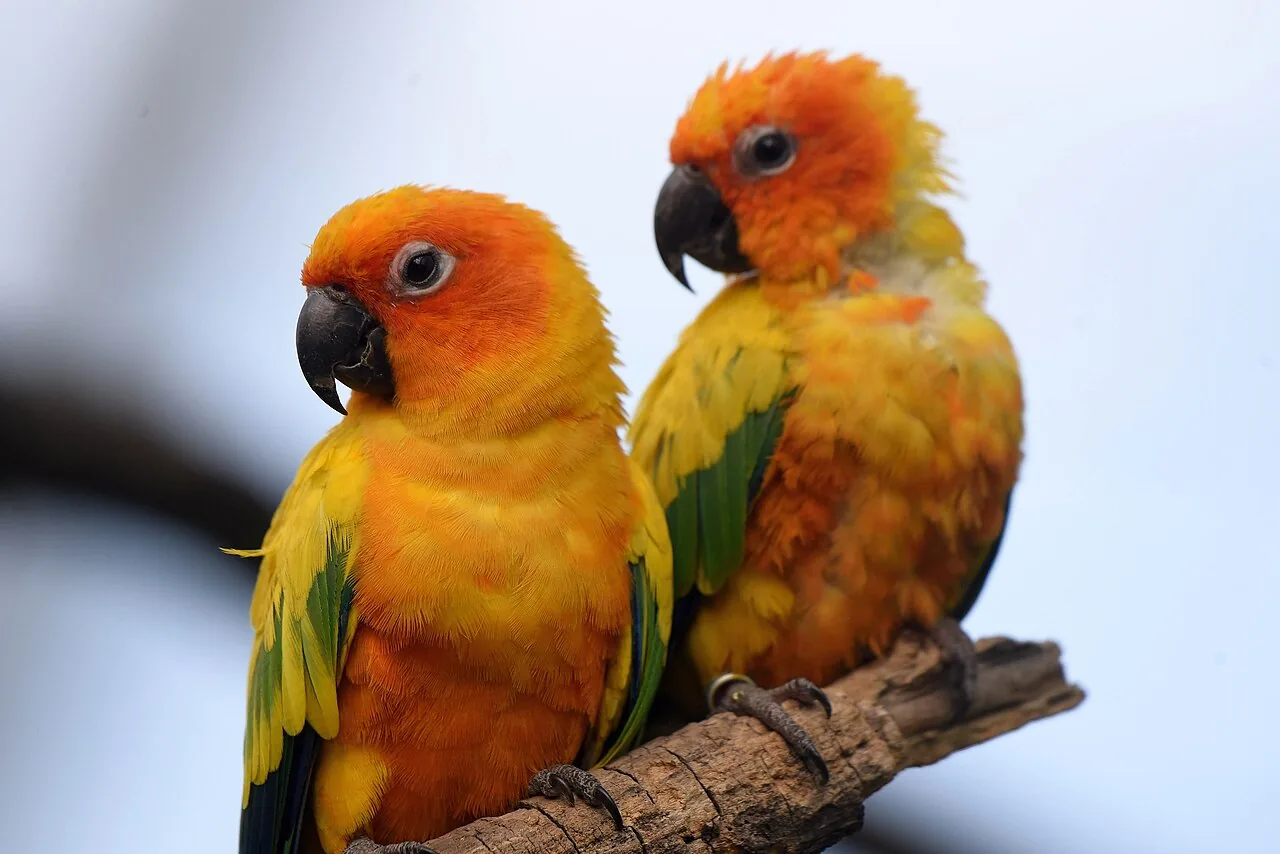
The Sun Conure is a brilliantly coloured medium parrot — golden-yellow body with orange face, green wing tips and blue tail feathers. Its defining trait is vivid plumage paired with loud, social flock behaviour; the IUCN lists the species as Endangered from trapping in north-eastern Brazil and Guyana. CITES Appendix II listing applies; legal captive breeding supplies ethical sources when documentation is verified.
What are the key facts about a Sun Conure?
The Sun Conure is a parrot species from North-eastern Brazil, Guyana: medium (120 g), colourful, noisy, social. Brilliant orange-and-yellow conure — Endangered in the wild from trapping.
| Origin | North-eastern Brazil, Guyana |
|---|---|
| Size | Medium (120 g) |
| Typical weight | 110–130 g (3.9–4.6 oz); compact conure build with short tail |
| Lifespan | 10–80 years depending on species |
| Plumage | Juveniles show green-dominated plumage; adult colour develops by two years with golden-yellow body, orange-red face and belly, green primary flights and blue tail tips. Feather quality depends on diet rich in carotenoids — sweet potato and papaya support colour naturally. Bathing opportunities maintain skin health. |
| Temperament | Colourful, noisy, social |
| Conservation note | Suits experienced conure keepers who tolerate loud contact calls and provide daily out-of-cage time. Sun conures bond intensely with handlers and do poorly when isolated. Pairs or compatible conure companions reduce screaming but require careful introduction. Wild populations in Brazil need habitat protection — support conservation rather than wild-trapped birds. |
Should you keep a Sun Conure?
Usually no. A Sun Conure is a parrot species from North-eastern Brazil, Guyana, not a starter pet. Most of the birds in this library are pressured by habitat loss and the pet trade; a legal captive bird still needs decades of specialist care.
Parrots are long-lived, loud and socially demanding. A Sun Conure from North-eastern Brazil, Guyana is not a weekend project. If you already share a home with one, this page is about honest husbandry and why wild populations still need habitat, not about encouraging a purchase.
Never buy a wild-caught bird. If you are choosing a companion parrot at all, work with a rescue or a documented captive-bred source, budget for an avian vet, and assume the animal will outlive several house moves.
What is a Sun Conure?
Brilliant orange-and-yellow conure — Endangered in the wild from trapping. Origin is North-eastern Brazil, Guyana; coat or markings are described as Juveniles show green-dominated plumage; adult colour develops by two years with golden-yellow body, orange-red face and belly, green primary flights and blue tail tips. Feather quality depends on diet rich in carotenoids — sweet potato and papaya support colour naturally. Bathing opportunities maintain skin health..
Treat “species” here as a library label for a wild species or distinct form, not as a kennel-club product.
Where does the Sun Conure come from?
Sun Conures come from North-eastern Brazil, Guyana. Sun conures inhabit savanna, forest edge and palm groves of north-eastern Brazil, Guyana and Suriname in small flocks of up to 30 birds.
Their vivid colouration made them prime targets of the cage-bird trade from the 1970s onward; wild populations declined sharply across the range. The IUCN assesses the species as Endangered, with remaining strongholds in protected areas of Brazil and Guyana. Legal captive breeding in aviculture supplies many pet sun conures, yet wild laundering persists in South American markets. CITES Appendix II listing requires valid permits for international trade. Sun conures nest in tree cavities and palm trunks, laying clutches of three to four eggs. Their loud contact calls evolved for flock cohesion across open savanna — a behaviour that challenges urban keepers unprepared for conure noise levels.
What does a Sun Conure actually need?
A wild Sun Conure needs the habitat and social system of North-eastern Brazil, Guyana, not a spare room. Size (Medium (120 g)) and a colourful, noisy, social life history are why private keeping fails.
In the wild that means connected habitat, a diet the species evolved with, and distance from the pet and selfie trades. Captive “care sheets” for wild parrots are how trafficking gets laundered as husbandry.
If you already work in accredited rescue, follow specialist protocols and licensing. Everyone else: do not acquire a Sun Conure. Support habitat and anti-trafficking work instead.
What surprises people about the Sun Conure?
A few details about the breed, alongside the practical care information in this guide.
- Sun conures are among the most colourful conures — juveniles are mostly green before adult plumage develops.
- Wild flocks roost communally in palms and ceiba trees at dusk.
- They can live 25 to 30 years with excellent care despite their small size.
- Sun conures bathe enthusiastically in shallow water dishes and rain puddles in the wild.
What health issues should you know about in a Sun Conure?
Health concerns to discuss with your vet, including changes to watch for and everyday care. This is general guidance, not veterinary advice — always speak to your vet.
Feather plucking
Self-inflicted feather loss from boredom, stress or nutritional gaps. Conures pluck chest and wing feathers when social needs are unmet.
Care: Increase enrichment and interaction time. Avian vet examination to rule out pain, mites and allergies before behavioural modification.
Nutritional deficiencies
Seed-only diets cause vitamin A deficiency, poor feather colour and susceptibility to infection in sun conures.
Care: Feed pelleted base with fresh vegetables daily. Limit sunflower seeds to occasional treats.
Proventricular dilatation disease (PDD)
Viral condition affecting digestive nerve supply, causing weight loss and regurgitation. Conures are among susceptible species.
Care: Avian vet diagnosis and supportive care. Maintain biosecurity when introducing new birds to existing flocks.
Who should skip a Sun Conure?
Skip a Sun Conure if you are anyone hoping to keep a Sun Conure as a pet or photo prop. This North-eastern Brazil, Guyana parrot is medium (120 g) and colourful, noisy, social — the mismatch is usually lifestyle, not a missing accessory.
This page is allowed to say no. Skip if you are anyone hoping to keep a Sun Conure as a pet or photo prop. Skip if you are anyone who will pay for a wild-caught or roadside animal. Skip if you are tourists looking for handling or selfies.
A different parrot species on this site may fit. Wanting “a Sun Conure” after a film or a colour photo is not a reason to ignore the skip list.
What are the hidden catches with a Sun Conure?
The hidden cost of a Sun Conure is usually not the purchase price. It is years of care, the health list on this page, and the mismatch between a colourful, noisy, social animal and a busy home.
The pet-trade catch
Cute infant Sun Conures in ads were usually taken from wild families. The adult you cannot house is then dumped, euthanised, or passed on. Do not create that demand.
The tourism catch
Paying to hold, ride, or selfie with a Sun Conure funds the next capture or a stressed ambassador animal. Distance and accredited viewing are the ethical default.
The feather plucking catch
Self-inflicted feather loss from boredom, stress or nutritional gaps. Conures pluck chest and wing feathers when social needs are unmet. Increase enrichment and interaction time. Avian vet examination to rule out pain, mites and allergies before behavioural modification.
The nutritional deficiencies catch
Seed-only diets cause vitamin A deficiency, poor feather colour and susceptibility to infection in sun conures. Feed pelleted base with fresh vegetables daily. Limit sunflower seeds to occasional treats.
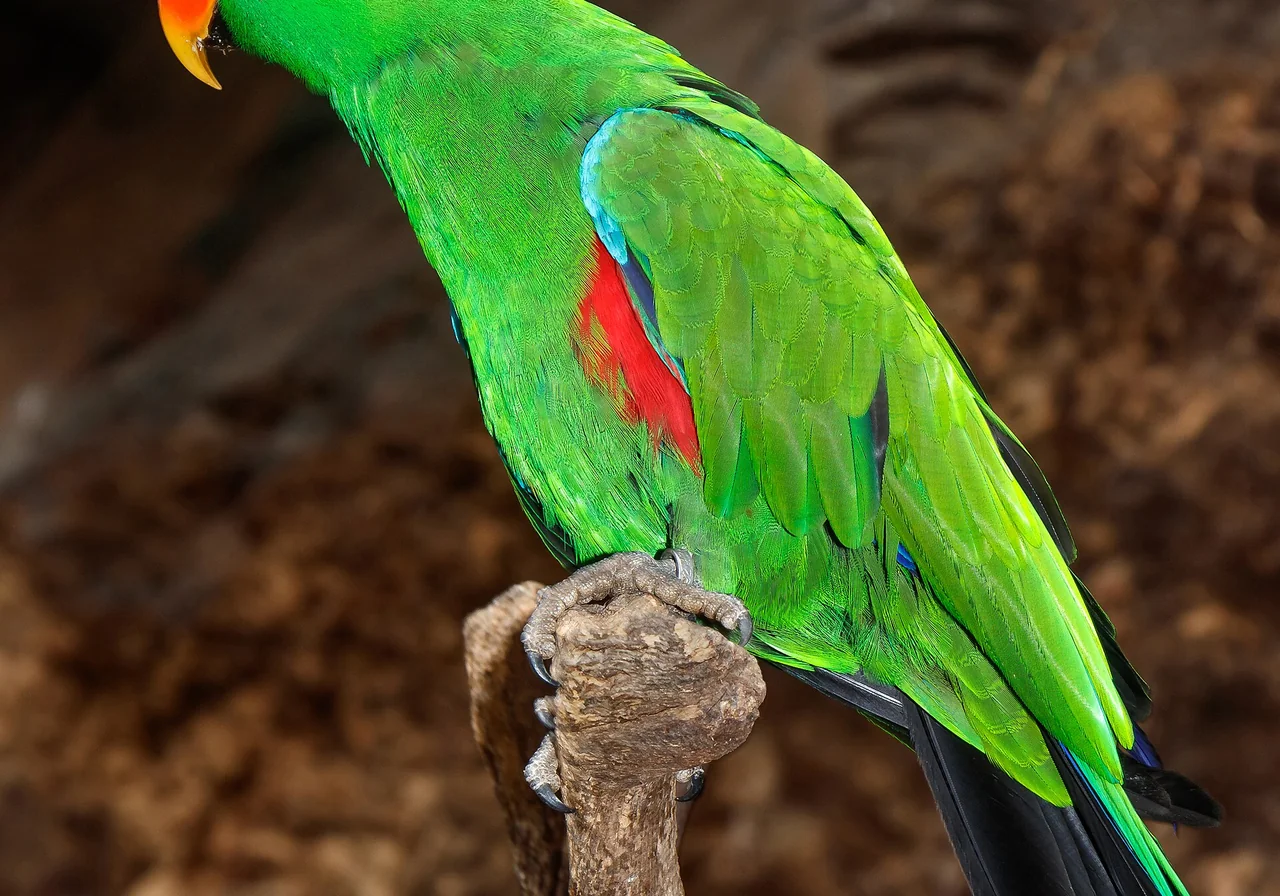
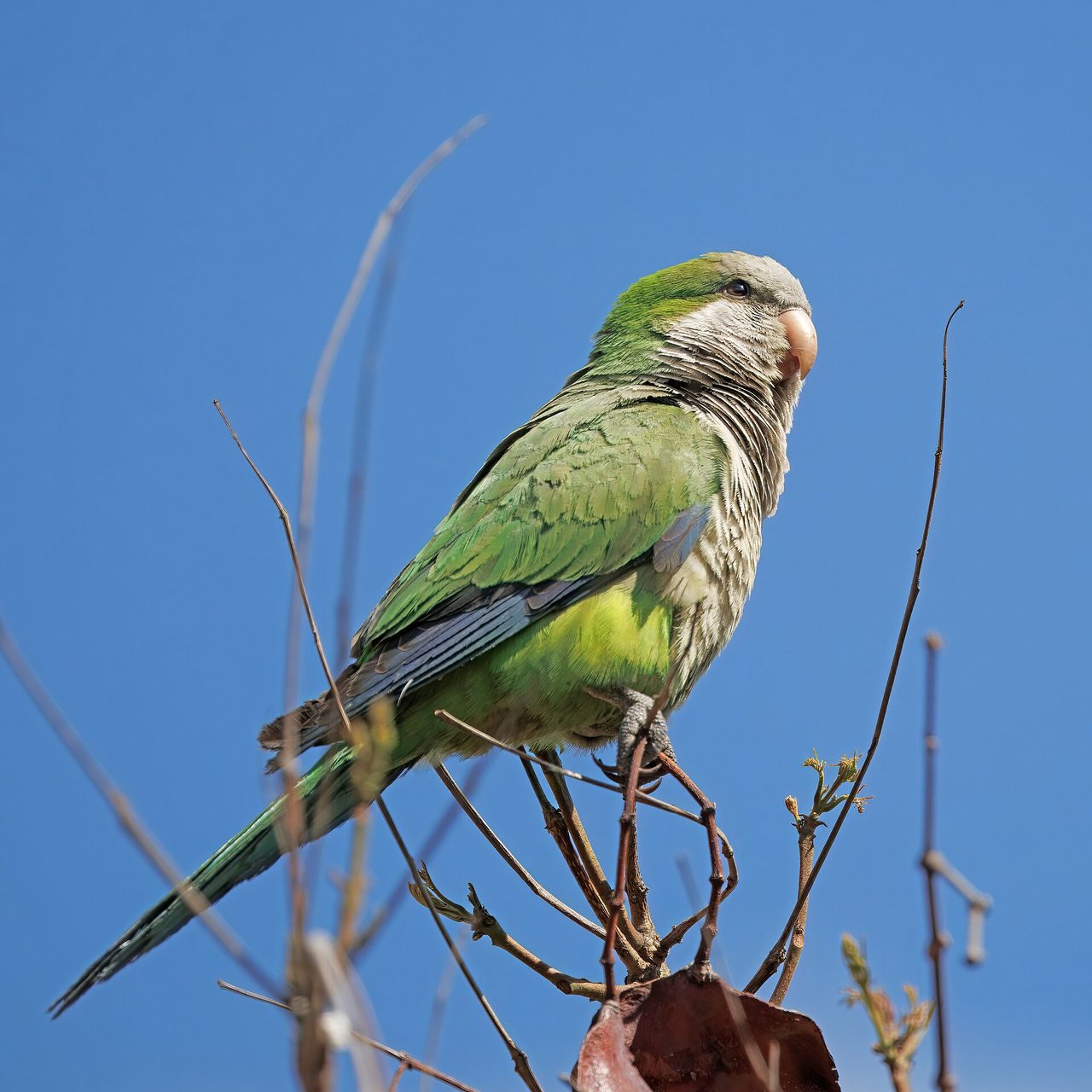
How does a Sun Conure compare with Eclectus Parrot and Quaker Parrot?
A Sun Conure is not interchangeable with Eclectus Parrot and Quaker Parrot. Compare origin, size, lifespan and temperament before you choose — those four lines prevent most regret.
| Parrot fact | Sun Conure | Eclectus Parrot | Quaker Parrot |
|---|---|---|---|
| Origin | North-eastern Brazil, Guyana | New Guinea, Solomon Islands, Australia | South America (Argentina, Brazil, Uruguay) |
| Size | Medium (120 g) | Medium (450 g) | Medium (100 g) |
| Lifespan | 10–80 years depending on species | 10–80 years depending on species | 10–80 years depending on species |
| Temperament | Colourful, noisy, social | Dimorphic, calm for a large parrot | Colony nester, bold, adaptable |
What is the verdict on the Sun Conure?
A Sun Conure is a wild parrot to understand and protect, not a pet to acquire. If you came here to buy one, the verdict is no. If you came here to learn, use the species guide next.
Help looks like habitat, enforcement and refusing the trade — not a cage in a spare room. WARN is a CIC, not a charity; donate only if you want to fund partner work in our network countries, and do not expect Gift Aid.
Parrots belong in the forest
Every parrot species in this guide is threatened by habitat loss or the illegal pet trade. A gift to WARN helps fund parrot rescue, anti-trafficking work and customs training in Brazil and Colombia.