Wildlife Guide · Temperate and tropical oceans worldwide & Open ocean, often near the surface
Ocean Sunfish
Mola mola (Linnaeus, 1758) — family Molidae
A fish that looks like a head with fins, grows 60 million times its birth weight, and basks on its side.
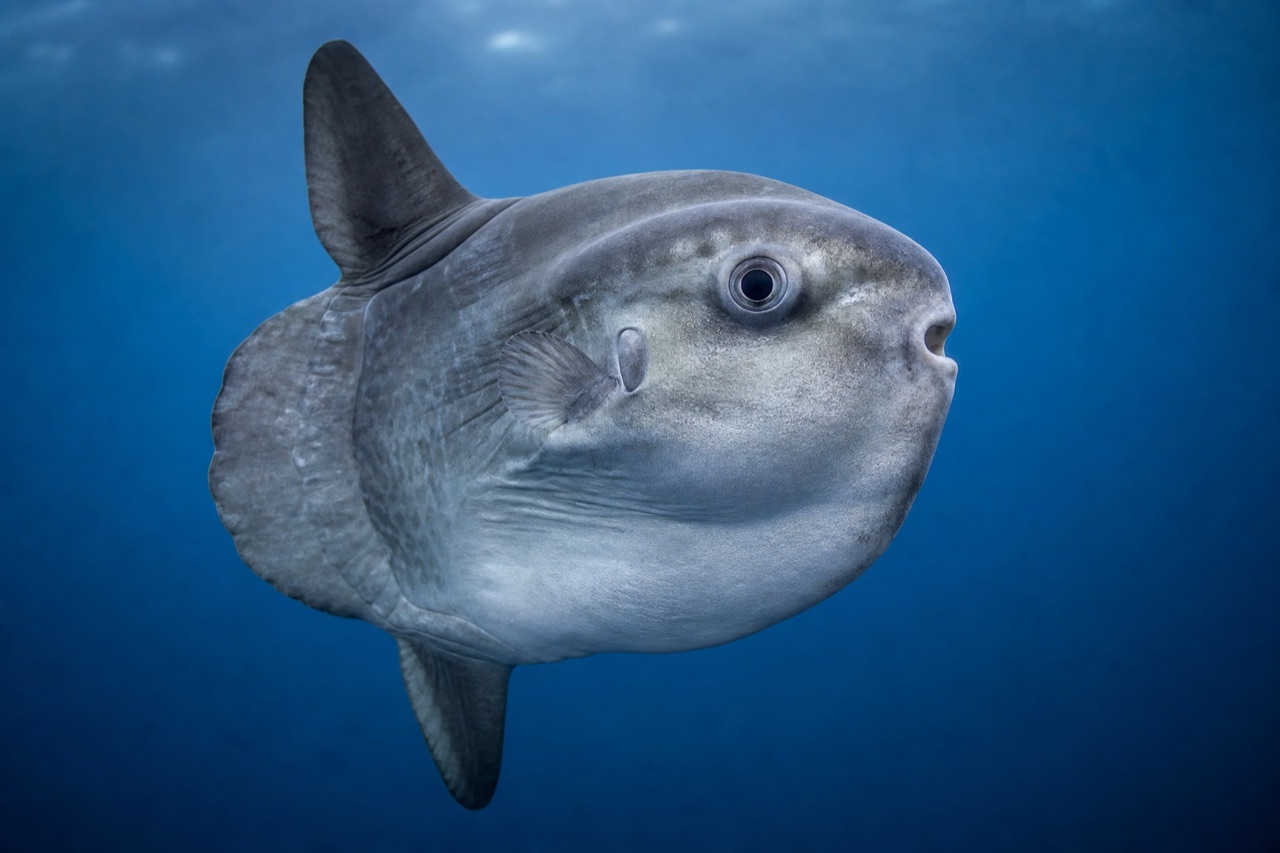
AI-generated educational wildlife portrait — World Animal Rescue Network · AI visualisation, not a photograph
In brief
The ocean sunfish (Mola mola) is the heaviest bony fish alive at over two tonnes, has no true tail fin, feeds largely on gelatinous plankton, and grows to around 60 million times its larval weight.
Also in Animals A to Z · Animals that start with O
How you can help
You can support the related appeal — read its purpose, recipient status and fund terms first — or give once to where it is needed most. Sharing accurate information helps too.
By WARN Research & Conservation Team Last updated
The ocean sunfish is the heaviest bony fish alive, reaching over two tonnes, and one of the strangest-looking animals in the sea. It appears to be all head — the body ends abruptly in a rudder-like structure called a clavus, formed where a normal tail fin would be, giving it a truncated, disc-shaped profile. It begins life as a larva a few millimetres long covered in spines, and can grow to roughly 60 million times that weight, one of the most extreme size changes of any vertebrate.
2,300 kg
Heaviest recorded — the heaviest bony fish
~60 million×
Weight gain from larva to adult
No tail fin
Steers with a clavus formed from fin rays
~600 m
Depths reached while foraging
Figures sourced from IUCN Red List — Mola mola, Smithsonian Ocean — Fish .
Ocean Sunfish: Quick Facts
| Maximum weight | ~2,300 kg |
|---|---|
| Relatives | Pufferfish and triggerfish (Tetraodontiformes) |
| Tail | None — steers with a clavus |
| Buoyancy | No swim bladder; cartilage and gelatinous tissue instead |
| Dive depth | Several hundred metres |
| Main threat | Bycatch in drift and gill nets |
Scientific Classification
| Kingdom | Animalia |
|---|---|
| Phylum | Chordata |
| Class | Actinopterygii |
| Order | Tetraodontiformes |
| Family | Molidae |
| Genus | Mola |
| Species | Mola mola |
Conservation Status
- IUCN Status
- Vulnerable
- Population
- Unknown
- Trend
- Decreasing
- Assessed
- 2015
- CITES
- Not listed
Sunfish are rarely targeted but form a very large share of the catch in some drift-net fisheries. Plastic ingestion is a documented cause of death.
Did you know?
An ocean sunfish larva is a few millimetres long and covered in spines; the adult can weigh 60 million times as much.
Key Facts: Ocean Sunfish
- Ocean sunfish are the heaviest bony fish alive, exceeding two tonnes.
- They have no true tail fin — a rudder-like clavus takes its place.
- Larvae are a few millimetres long and covered in spines.
- They dive to several hundred metres and bask at the surface to rewarm.
- Bycatch in drift and gill nets is the principal threat.
A body built by subtraction
Sunfish lose the tail fin during development. What remains is the clavus, a stiff rudder formed from modified fin rays, which the fish uses for steering while the tall dorsal and anal fins provide propulsion, sculled from side to side.
The skeleton is largely cartilage rather than heavy bone, and the body carries a thick layer of gelatinous tissue under the skin. That combination keeps a two-tonne animal buoyant without the swim bladder that most bony fish rely on.
Basking, and why
Sunfish are often seen lying on their side at the surface, which produced the common name. This is thermoregulation: after diving into cold water at several hundred metres to feed, the fish returns to the surface to rewarm in sunlight.
The posture may serve a second purpose. Surface-basking sunfish are visited by seabirds that pick parasites off the skin, and the fish also visit cleaner-fish stations on reefs — a large animal with a heavy parasite load using two different cleaning services.
Diet and the jellyfish problem
Sunfish were long described as feeding almost entirely on jellyfish. Better dietary studies show a broader diet including small fish, crustaceans, squid and salps, though gelatinous prey remains important.
That gelatinous preference creates a specific hazard: floating plastic bags closely resemble jellyfish, and sunfish ingest them. Plastic ingestion is a documented cause of death in the species.
Why they are Vulnerable
Sunfish are rarely targeted commercially, but they are caught in enormous numbers as bycatch. In some drift-net and gill-net fisheries sunfish have made up a very large share of the total catch, and they are also taken in longlines.
They are listed as Vulnerable. Plastic ingestion, vessel strikes at the surface and the sheer scale of incidental capture are the pressures; targeted fishing is not.
What WARN Does
WARN publishes free, sourced species education for animals that decline through incidental capture and marine litter rather than deliberate hunting. Sunfish illustrate both at once — a species almost nobody fishes for, dying in nets set for something else and eating plastic mistaken for jellyfish.
If this guide helps you understand wildlife and the pressures it faces, a gift to WARN supports habitat protection and free public education in our partner countries.
How can I help save the ocean sunfish?
Explore practical ways to support the ocean sunfish, from everyday choices and sharing reliable information to reviewing a related appeal before giving.
Explore ways to support
Read the related appeal’s purpose, recipient status and fund terms. Choose an affordable gift after checking what is proposed and what has been reported.
Ease the pressures
Avoid the wildlife trade and souvenirs, never buy wild animals as pets, and choose sustainable, habitat-friendly products — the threats behind the ocean sunfish's decline fall when demand does.
Spread the word
Share accurate, sourced information about the ocean sunfish. Wider awareness is what turns concern into lasting protection.
Ocean Sunfish: Frequently Asked Questions
How can I help save the ocean sunfish?
What is the heaviest bony fish?
Why do sunfish lie on their side at the surface?
Do sunfish only eat jellyfish?
Why don't sunfish have a tail?
What do ocean sunfish / molas eat?
Where do ocean sunfish / molas live?
Are ocean sunfish / molas dangerous?
How long do ocean sunfish / molas live?
How big is an ocean sunfish / mola?
Sources & References
Population figures, conservation status and biological facts on this page are drawn from authoritative scientific and intergovernmental sources.
Terms used on this page
Plain-English definitions, from our wildlife and conservation glossary.
Explore more animals
Discover more animals, their habitats and their conservation status in the WARN wildlife-guide library.
Enjoyed this Ocean Sunfish guide?
Receive appeal updates, animal-welfare news and published funding reports. Unsubscribe any time.
We only use your address for WARN updates. See our privacy policy.