Monkey Species · Equatorial Africa (savanna belt)
Olive Baboon
The olive baboon (Papio anubis) is a large, ground-dwelling Old World monkey of Africa's savanna belt, the most widespread baboon.
By WARN Research & Conservation TeamLast updated
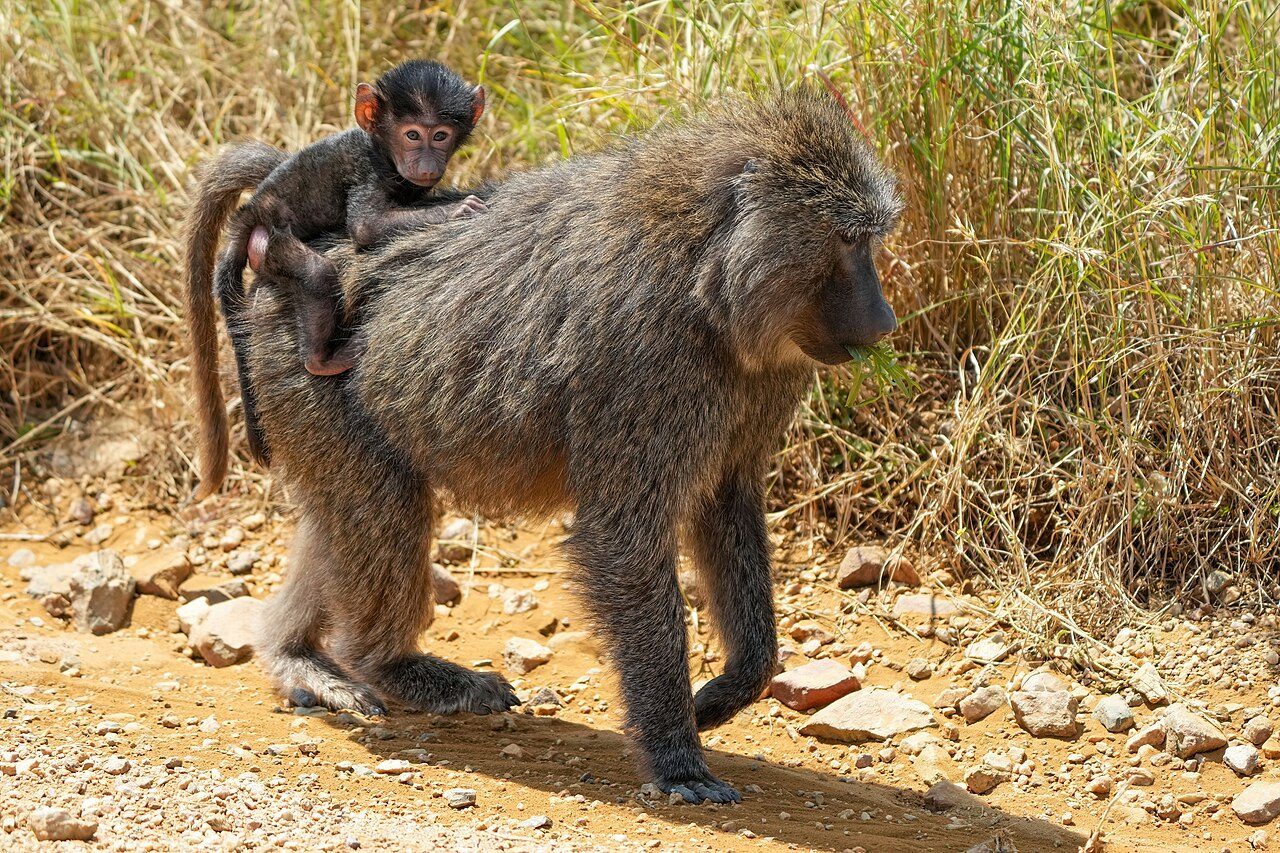
In brief
The Olive Baboon is one of Africa's most widespread and adaptable primates — a large, bold savanna monkey living in multi-level troops from Senegal to Ethiopia. Its defining trait is behavioural flexibility, which helps survival in harsh landscapes but also drives intense human-wildlife conflict when farmland replaces bush.
What are the key facts about a Olive Baboon?
The Olive Baboon is a monkey species from Equatorial Africa (savanna belt): large (males 24–30 kg; females ~14 kg), bold, terrestrial, highly social. The olive baboon (Papio anubis) is a large, ground-dwelling Old World monkey of Africa's savanna belt, the most widespread baboon.
| Origin | Equatorial Africa (savanna belt) |
|---|---|
| Size | Large (males 24–30 kg; females ~14 kg) |
| Typical weight | 15–37 kg (33–82 lb); males roughly twice female weight with long canine teeth |
| Lifespan | 20–30 years (wild); longer in protected settings |
| Coat & markings | Olive-green, brown or grey fur without a mane — colour varies with subspecies and habitat aridity. Bare dog-like muzzle, close-set eyes and ischial callosities (sitting pads) on the rump. Regular allogrooming maintains coat health and reinforces dominance relationships within troops. |
| Temperament | Bold, terrestrial, highly social |
| Conservation note | Olive baboons must not be kept as pets — they are powerful, CITES Appendix II listed primates requiring large social groups and expert care beyond any domestic setting. Wild troops need connected savanna and woodland with safe wildlife corridors away from crops and roads. Conservation support should focus on conflict mitigation, rubbish management near settlements and habitat protection across sub-Saharan range states. |
Should you keep a Olive Baboon as a pet?
No. A Olive Baboon is a wild monkey from Equatorial Africa (savanna belt), not a companion animal. Private keeping usually means an infant taken from a troop, a lifetime of unmet social needs, and often a legal offence.
People search this page because the Olive Baboon looks small, clever or “manageable” in photos. That is the trap. Wild primates need a troop, a range, and a diet that is not human leftovers. The Olive Baboon is from Equatorial Africa (savanna belt); its conservation note on this page is olive baboons must not be kept as pets — they are powerful, cites appendix ii listed primates requiring large social groups and expert care beyond any domestic setting. wild troops need connected savanna and woodland with safe wildlife corridors away from crops and roads. conservation support should focus on conflict mitigation, rubbish management near settlements and habitat protection across sub-saharan range states..
If you met a Olive Baboon in a selfie setting or a roadside stall, walk away and do not pay. Paying creates the next capture. Read this as a species briefing, then use the wildlife guide and the appeals linked at the bottom if you want to help the wild population.
What is a Olive Baboon?
The olive baboon (Papio anubis) is a large, ground-dwelling Old World monkey of Africa's savanna belt, the most widespread baboon. Origin is Equatorial Africa (savanna belt); coat or markings are described as Olive-green, brown or grey fur without a mane — colour varies with subspecies and habitat aridity. Bare dog-like muzzle, close-set eyes and ischial callosities (sitting pads) on the rump. Regular allogrooming maintains coat health and reinforces dominance relationships within troops..
Treat “species” here as a library label for a wild species or distinct form, not as a kennel-club product.
Where does the Olive Baboon come from?
Olive Baboons come from Equatorial Africa (savanna belt). Olive baboons — Papio anubis and related forms — have coexisted with humans across Africa for millennia, appearing in Egyptian art and modern crop-raiding headlines alike.
Flexible omnivory lets troops exploit fruit, roots, insects, small mammals and human refuse. Matrilineal rank structures stabilise groups of 20 to over 100 animals with complex female alliances. Colonial-era hunting and habitat conversion expanded conflict zones. Today baboons are Least Concern globally yet persecuted locally when they raid maize or enter villages. Long-term research at Gombe and Amboseli revealed primate politics that reshaped behavioural science.
What does a Olive Baboon actually need?
A wild Olive Baboon needs the habitat and social system of Equatorial Africa (savanna belt), not a spare room. Size (Large (males 24–30 kg; females ~14 kg)) and a bold, terrestrial, highly social life history are why private keeping fails.
In the wild that means connected habitat, a diet the species evolved with, and distance from the pet and selfie trades. Captive “care sheets” for wild monkeys are how trafficking gets laundered as husbandry.
If you already work in accredited rescue, follow specialist protocols and licensing. Everyone else: do not acquire a Olive Baboon. Support habitat and anti-trafficking work instead.
What surprises people about the Olive Baboon?
A few details about the breed, alongside the practical care information in this guide.
- Olive baboons range across roughly 25 African countries — one of the widest distributions of any monkey.
- Females stay in their natal troop for life while males migrate between groups in adolescence.
- Baboons have been observed cooperatively hunting small antelope and sharing meat within troops.
- Their dog-like muzzles house powerful jaws capable of cracking hard seeds and bones.
What health issues should you know about in a Olive Baboon?
Health concerns to discuss with your vet, including changes to watch for and everyday care. This is general guidance, not veterinary advice — always speak to your vet.
Human-wildlife conflict
Crop raiding and livestock predation lead to retaliatory shooting, snaring and poison bait that kills entire troops including dependent infants.
Care: Invest in community guard programmes, chilli-based repellents, early harvest protection and compensation schemes that reward coexistence.
Habitat loss
Savanna and woodland conversion for agriculture and settlement shrinks foraging range and forces troops along dangerous roadsides.
Care: Maintain wildlife corridors and buffer zones between protected areas and farmland across East and West Africa.
Road mortality
Baboons crossing roads for food suffer vehicle strikes — a rising cause of troop instability near highways.
Care: Install wildlife crossing signage, speed reduction and vegetated bridges in known conflict hotspots.
Who should skip a Olive Baboon?
Skip a Olive Baboon if you are anyone hoping to keep a Olive Baboon as a pet or photo prop. This Equatorial Africa (savanna belt) monkey is large (males 24–30 kg; females ~14 kg) and bold, terrestrial, highly social — the mismatch is usually lifestyle, not a missing accessory.
This page is allowed to say no. Skip if you are anyone hoping to keep a Olive Baboon as a pet or photo prop. Skip if you are anyone who will pay for a wild-caught or roadside animal. Skip if you are tourists looking for handling or selfies.
A different monkey species on this site may fit. Wanting “a Olive Baboon” after a film or a colour photo is not a reason to ignore the skip list.
What are the hidden catches with a Olive Baboon?
The hidden cost of a Olive Baboon is usually not the purchase price. It is years of care, the health list on this page, and the mismatch between a bold, terrestrial, highly social animal and a busy home.
The pet-trade catch
Cute infant Olive Baboons in ads were usually taken from wild families. The adult you cannot house is then dumped, euthanised, or passed on. Do not create that demand.
The tourism catch
Paying to hold, ride, or selfie with a Olive Baboon funds the next capture or a stressed ambassador animal. Distance and accredited viewing are the ethical default.
The human-wildlife conflict catch
Crop raiding and livestock predation lead to retaliatory shooting, snaring and poison bait that kills entire troops including dependent infants. Invest in community guard programmes, chilli-based repellents, early harvest protection and compensation schemes that reward coexistence.
The habitat loss catch
Savanna and woodland conversion for agriculture and settlement shrinks foraging range and forces troops along dangerous roadsides. Maintain wildlife corridors and buffer zones between protected areas and farmland across East and West Africa.
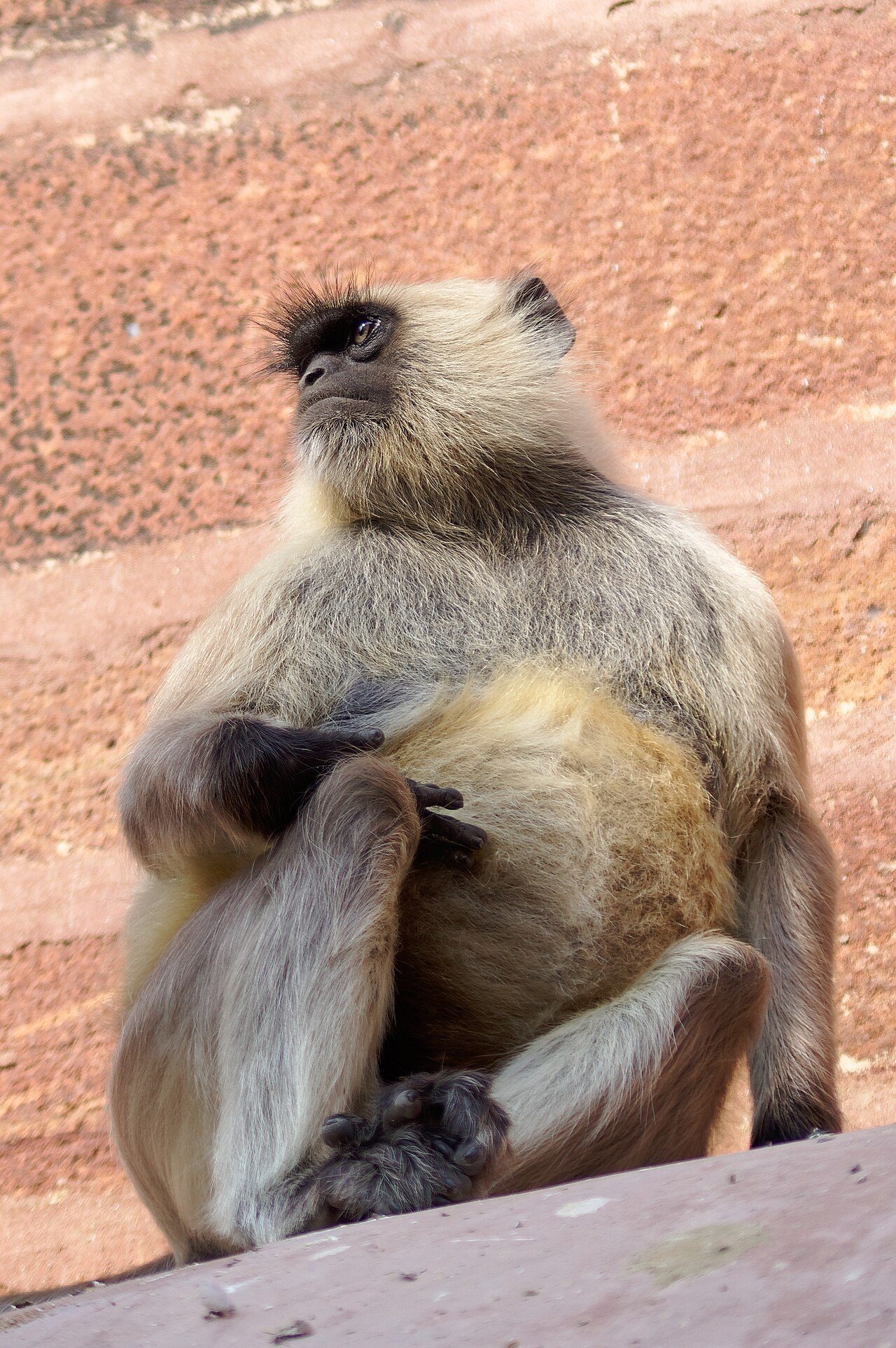
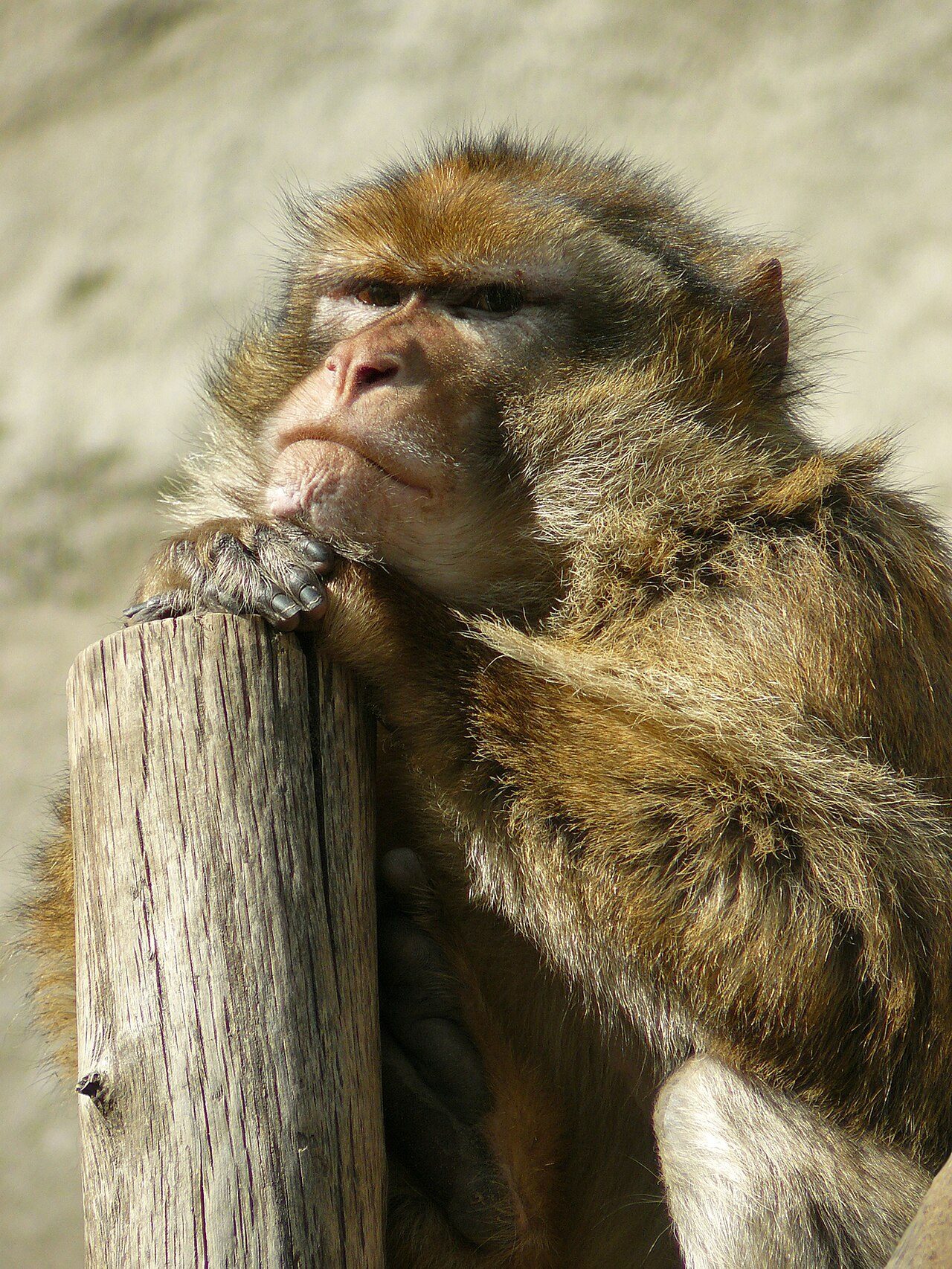
How does a Olive Baboon compare with Hanuman Langur and Barbary Macaque?
A Olive Baboon is not interchangeable with Hanuman Langur and Barbary Macaque. Compare origin, size, lifespan and temperament before you choose — those four lines prevent most regret.
| Monkey fact | Olive Baboon | Hanuman Langur | Barbary Macaque |
|---|---|---|---|
| Origin | Equatorial Africa (savanna belt) | Indian subcontinent | Morocco, Algeria & Gibraltar |
| Size | Large (males 24–30 kg; females ~14 kg) | Medium (11–18 kg) | Medium (10–16 kg) |
| Lifespan | 20–30 years (wild); longer in protected settings | 18–30 years (wild) | 20–25 years (wild) |
| Temperament | Bold, terrestrial, highly social | Agile, leaf-eating, semi-terrestrial | Social, hardy, cold-tolerant |
What is the verdict on the Olive Baboon?
A Olive Baboon is a wild monkey to understand and protect, not a pet to acquire. If you came here to buy one, the verdict is no. If you came here to learn, use the species guide next.
Help looks like habitat, enforcement and refusing the trade — not a cage in a spare room. WARN is a CIC, not a charity; donate only if you want to fund partner work in our network countries, and do not expect Gift Aid.
Monkeys belong in the wild
Monkeys are intelligent, social primates — not pets. The illegal pet trade and habitat loss threaten species from marmosets to macaques. WARN funds anti-trafficking and habitat work for primates in our partner countries.