Wildlife Guide · Sub-Saharan Africa & From Senegal and Eritrea south to Namibia and South Africa
Mamba
Genus Dendroaspis — four species of African elapid; black mamba D. polylepis is the largest venomous snake in Africa
Not black — fast, long and elapid; the mamba name covers four species, one legend.
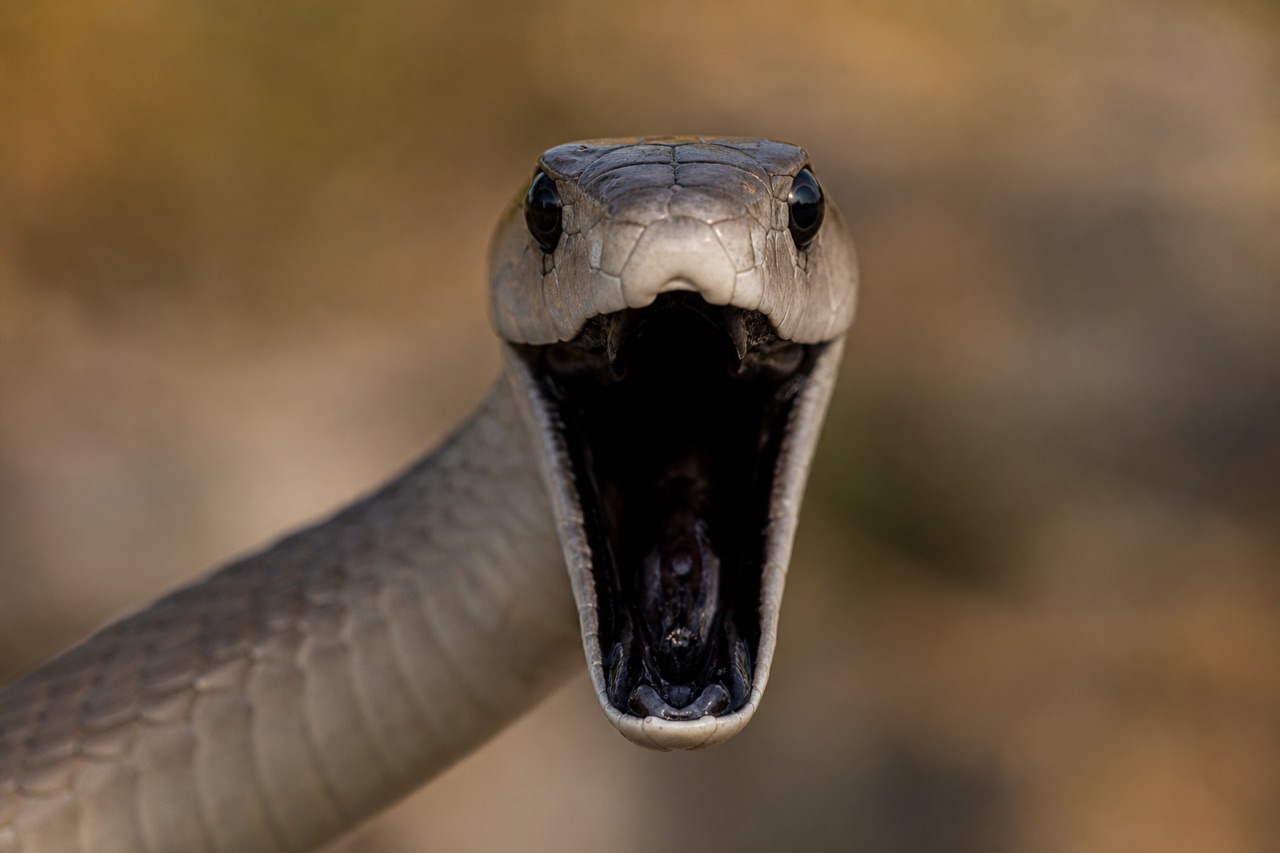
AI-generated educational wildlife portrait — World Animal Rescue Network · AI visualisation, not a photograph
In brief
Mambas (genus Dendroaspis) are four species of fast African elapid snake with potent neurotoxic venom; the black mamba is the largest venomous snake in Africa despite its name referring to mouth colour, not skin.
Also in Animals A to Z · Animals that start with M
By WARN Research & Conservation Team Last updated
Mambas are four species of African elapid snake in the genus Dendroaspis. They are not vipers — fixed front fangs, neurotoxic venom, and a more active hunting style distinguish them from the heavy-bodied ambush vipers of the same continents. The black mamba (Dendroaspis polylepis) is the longest venomous snake in Africa, reaching around 4.3 metres, yet its name refers to the dark interior of the mouth displayed in threat, not to skin colour, which is grey to olive. Green mambas — western, eastern and Jameson's — are arboreal forest and woodland specialists, vivid green and slender. Black mambas use ground and savanna woodland, retreating to termite mounds, rock crevices and occasionally roof spaces in rural buildings. All four species possess venom dominated by dendrotoxins and other neurotoxins that can cause rapid paralysis if untreated. Reputation exceeds reality in both directions. Black mambas are fast and defensive when cornered, but they do not chase humans aggressively as folklore claims. Bites are serious medical emergencies requiring antivenom and airway support; they are also rare relative to puff adder and cobra bites in many regions because mambas retreat when possible. Understanding mambas as a genus — tree specialists versus savanna generalist — clarifies which habitats carry which risk. Hospital systems in mamba range that stock polyvalent antivenom and train staff in airway management convert a historically fatal bite into a treatable emergency. The bottleneck is infrastructure, not antivenom chemistry alone. Snake-handlers for relocation prefer hook tools and zip bags over bare hands — techniques that protect both human and snake. Killing a mamba in a building does not stop the next snake entering if rodents remain; exclusion and rodent control are the durable fixes. Field guides for African travellers emphasise distance and stillness over panic — most mamba encounters end with the snake departing into cover if a path exists. Photography tourism that keeps respectful distance supports local economies without requiring snakes in bags.
4
Mamba species — one black, three green
~4.3 m
Maximum length — black mamba
Neurotoxic
Venom affecting nerves and breathing
Active
Hunt by pursuit more than ambush
Figures sourced from IUCN Red List — Dendroaspis polylepis, WHO — snakebite envenoming .
Mamba: Quick Facts
| Species | Four — one black, three green |
|---|---|
| Longest | Black mamba — up to ~4.3 m |
| Venom type | Neurotoxic — dendrotoxins |
| Habitat | Savanna and woodland (black); forest (green) |
| IUCN | Least Concern — all four species |
| Main threats | Persecution; forest loss for green mambas |
Scientific Classification
| Kingdom | Animalia |
|---|---|
| Phylum | Chordata |
| Class | Reptilia |
| Order | Squamata |
| Family | Elapidae |
| Genus | Dendroaspis — D. polylepis, D. angusticeps, D. viridis, D. jamesoni |
Conservation Status
- IUCN Status
- Least Concern
- Population
- Not quantified; widespread in suitable habitat
- Trend
- Stable overall; local declines from persecution
- Assessed
- 2019
- CITES
- Not listed
Medical seriousness of bites exceeds conservation urgency for the genus globally. Green mamba forest habitat is declining in parts of West and Central Africa.
Did you know?
The black mamba is named for the inky black inside of its mouth — the skin itself is grey-brown, not black.
Key Facts: Mamba
- Mambas are elapids — fixed front fangs and neurotoxic venom, unlike hinged-fang vipers.
- Black mamba skin is grey-brown; the name comes from the black mouth lining shown in threat.
- Green mambas are arboreal; black mambas use savanna, woodland and sometimes buildings.
- Bites require urgent antivenom and airway management; untreated neurotoxic envenomation can be fatal.
- Mambas prefer escape to attack; aggression is defensive, not predatory toward humans.
- All four species are Least Concern — widespread but persecuted locally.
Four species, two lifestyles
Western green mamba (Dendroaspis viridis), eastern green mamba (D. angusticeps) and Jameson's mamba (D. jamesoni) are slender, bright green snakes of forest and dense woodland. They hunt birds and small mammals in trees, using speed and venom rather than constriction. Encounters are uncommon where forest remains intact; bites often involve handlers or people reaching into foliage without sight.
Black mamba (D. polylepis) occupies savanna, rocky hills and open woodland across eastern and southern Africa. It is terrestrial and partly arboreal — capable of moving quickly across open ground and climbing when needed. Diet includes rodents, hyraxes and birds. Daytime activity means visual encounters are more frequent than with nocturnal vipers, though the snake still flees if a route exists.
All mambas lay eggs except where climate limits seasonality. Clutches are modest; parental care ends at laying. Hatchlings are venomous from the first day and receive no behavioural instruction — hunting is innate.
Neurotoxic venom and medical urgency
Mamba venom contains dendrotoxins that block potassium channels in nerves, accelerating paralysis. Other components affect breathing muscles and cardiovascular function. Envenomation can progress quickly; airway compromise is the immediate life threat before systemic collapse.
Polyvalent antivenoms covering mambas and other African elapids exist but supply varies by country. First aid is minimise movement of the bitten limb, transport to hospital urgently, and avoid harmful folklore remedies — cutting, sucking, tourniquets. Pressure immobilisation is debated for neurotoxic bites; local protocols should be followed.
Fatalities have fallen where antivenom is stocked and staff trained. Rural stockouts and delayed presentation remain the killers, not the snake's speed alone. Black mamba bite survivors describe the experience as medically terrifying but geographically rare compared with daily agricultural viper exposure.
Speed, myth and defensive behaviour
Black mambas can move quickly over short distances — estimates around 16–20 km/h appear in popular sources, though sustained pursuit of humans is not documented behaviour. When threatened, a mamba may raise the front third of the body, spread a narrow hood, and gape to show the black mouth. Strikes are fast and may repeat if the threat persists.
The folklore image of a mamba chasing a person for kilometres is unsupported by field observation. Snakes invest energy carefully; chasing an animal too large to eat wastes calories and risks injury. Bites happen when escape is blocked — stepped on in bush, cornered in a building, grabbed while trying to kill the snake.
Green mambas are less conspicuous in threat display but equally venomous. Tree workers, fruit pickers and bird trappers in forest zones are the occupational risk groups. Protective clothing and visual checking of branches before hand placement reduce bites without needing to clear forest of mambas.
Coexistence in mamba range
Mambas are Least Concern because they occupy large ranges and tolerate some habitat modification — black mambas use rodent-rich farmland edges. Local persecution continues: any long fast snake killed on sight regardless of species. Education distinguishing mambas from harmless racers and tree snakes reduces pointless killing.
Rodent control by mambas is real but rarely cited. A black mamba in a rural outbuilding may be there for rats; relocation by trained handlers beats bludgeoning. Sealing entry points and reducing rodent attractants address the underlying reason snakes enter structures.
Conservation for mambas is primarily human safety infrastructure — antivenom in hospitals, community education, and medical protocols — plus habitat retention for green mambas in West and Central African forests undergoing rapid clearance. The genus is not globally threatened; individual green mamba populations in shrinking forest blocks may be.
Green mambas and forest loss
Green mambas depend on forest canopy in ways black mambas do not. Western green mamba range in West Africa overlaps deforestation frontiers — cocoa expansion, logging, urban sprawl into coastal forest. Jameson's mamba in Central Africa faces similar pressure in Congo basin logging concessions.
Arboreal specialisation means habitat fragmentation severs corridors even when forest patches remain. A green mamba cannot cross kilometres of open farmland between forest blocks; black mambas traverse such gaps more readily. Forest protection therefore maps differently onto the two colour morphs of the genus.
Ecotourism and research stations that employ local guides for snake-aware forest walks create economic value for mambas alive — a thin but real counterweight to kill-on-sight reflexes where tourism infrastructure exists.
What WARN Does
WARN publishes free, sourced species education where fear distorts both risk and response. Mambas are medically serious and ecologically valuable; accurate genus-level guides support antivenom policy and reduce pointless killing.
If this guide helps you understand wildlife and the pressures it faces, a gift to WARN supports habitat protection and free public education in our partner countries.
Mamba: Frequently Asked Questions
Is the black mamba actually black?
How many mamba species exist?
Are mambas more dangerous than cobras?
Do black mambas chase people?
Where do green mambas live?
Are mambas endangered?
What do mambas eat?
How long do mambas live?
How big is a mamba?
Sources & References
Population figures, conservation status and biological facts on this page are drawn from authoritative scientific and intergovernmental sources.
Terms used on this page
Plain-English definitions, from our wildlife and conservation glossary.
Latest Mamba Stories
Quick, fact-checked reads on the mamba — amazing facts, key questions and the threats it faces.
Species
Tiger vs Lion: 7 Key Differences Between the Two Biggest Cats
Tigers are bigger, stripier and solitary; lions are social and live in prides. Here's how the two largest cats really differ in size, habitat and behaviour.
Read the storySpecies
12 Astonishing Facts About the Pangolin, the World's Only Scaly Mammal
From a tongue anchored near its pelvis to scales that weigh a fifth of its body, the pangolin is one of nature's strangest mammals. Here are 12 facts that explain why.
Read the storySpecies
How Big Is a Pangolin — and How Long Is Its Tongue?
Pangolins range from house-cat size to over 30 kg, and the largest have a tongue longer than their entire body. Here are the real numbers.
Read the storyExplore more animals
Discover more animals, their habitats and their conservation status in the WARN wildlife-guide library.
Enjoyed this Mamba guide?
Receive appeal updates, animal-welfare news and published funding reports. Unsubscribe any time.
We only use your address for WARN updates. See our privacy policy.