Wildlife Guide · Sulawesi, Indonesia & Banggai and Sula islands
Maleo
Macrocephalon maleo (Müller, 1840) — family Megapodiidae
The megapode that buries its eggs in volcanic sand and never sees its chicks.
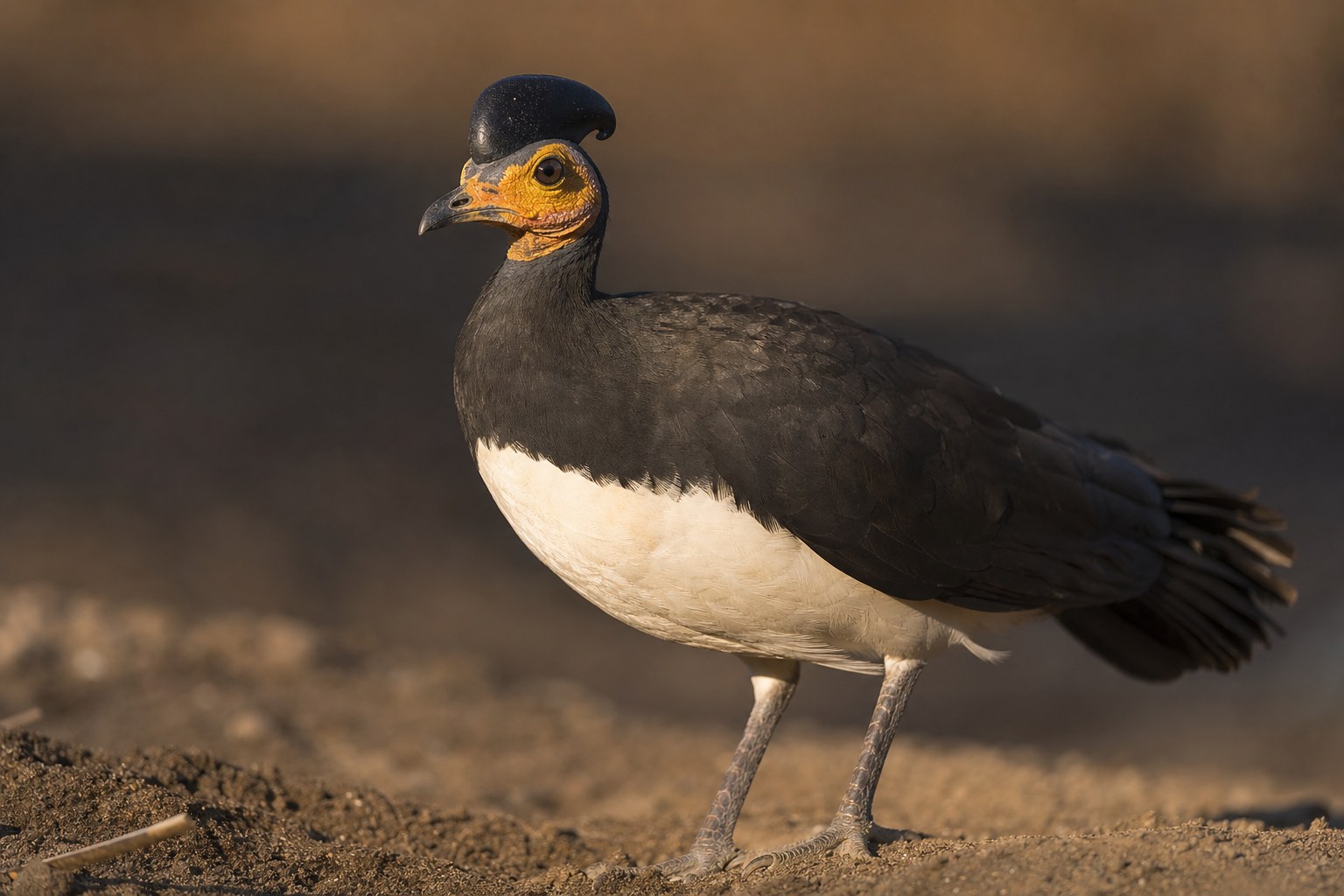
AI-generated educational wildlife portrait — World Animal Rescue Network · AI visualisation, not a photograph
In brief
The maleo (Macrocephalon maleo) is an Endangered megapode of Sulawesi that buries a single large egg in geothermal or sun-heated sand and abandons it; the chick hatches fully developed and flies the same day without any parental care.
Also in Animals A to Z · Animals that start with M
How you can help
You can support the related appeal — read its purpose, recipient status and fund terms first — or give once to where it is needed most. Sharing accurate information helps too.
By WARN Research & Conservation Team Last updated
The maleo is a stocky, turkey-sized bird endemic to Sulawesi in Indonesia, black above and rosy-pink below, with a distinctive bony casque on the head. It belongs to the megapode family — mound-builders that outsource incubation to environmental heat rather than brooding — but the maleo takes the strategy further than any relative. Pairs dig a deep hole in geothermal or sun-heated sand, lay a single enormous egg, cover it and leave. The egg is incubated by volcanic warmth or solar heat in the sand, and the chick hatches fully feathered, able to fly the same day and receive no parental care at all. The entire investment is in the egg and the nesting site. Lose the nesting ground — to a beach resort, a mine or egg collectors — and you lose the species from that area entirely.
1 egg
Laid per clutch, among the largest relative to body size of any bird
Same day
The chick can fly on hatching — no parental care at all
Geothermal
Sand heated by volcanic activity incubates the egg
Endemic
To Sulawesi and nearby Banggai and Sula islands
Figures sourced from IUCN Red List — Macrocephalon maleo, CITES Appendices, BirdLife International — Maleo factsheet .
Maleo: Quick Facts
| Length | About 55–60 cm |
|---|---|
| Incubation | Geothermal or solar-heated sand — no brooding |
| Clutch | A single large egg |
| Chick | Hatches fully feathered; flies the same day |
| Range | Sulawesi, Banggai and Sula islands, Indonesia |
| Main threats | Nesting ground loss; egg collecting; beach development |
Scientific Classification
| Kingdom | Animalia |
|---|---|
| Phylum | Chordata |
| Class | Aves |
| Order | Galliformes |
| Family | Megapodiidae |
| Genus | Macrocephalon |
| Species | Macrocephalon maleo |
Conservation Status
- IUCN Status
- Endangered
- Population
- No reliable estimate exists; declining at most monitored colonies
- Trend
- Decreasing
- Assessed
- 2018
- CITES
- Appendix I
Reproduction depends entirely on specific nesting beaches. Forest habitat may remain intact while a population disappears because its nesting ground is developed or eggs are collected.
Did you know?
A maleo chick digs itself out of sand heated by volcanic activity, emerges fully feathered, and flies into the forest on its first day — having never seen either parent.
Key Facts: Maleo
- The maleo buries a single large egg in geothermal or sun-heated sand and abandons it — incubation is entirely environmental.
- The chick hatches fully feathered and capable of flight on the same day, receiving no food, protection or instruction from either parent.
- Nesting depends on specific sand beaches and geothermal sites, which makes the species vulnerable to any development that disturbs those locations.
- Egg collecting for food has removed maleos from many nesting grounds across Sulawesi.
- The bony casque on the head is unique among megapodes and its function is not fully understood.
- Protection of known nesting beaches by local communities and site-based guarding has kept some colonies viable where egg collecting and development pressure continue elsewhere.
Eggs in sand, not a nest
Most birds incubate eggs with body heat. Megapodes — the mound-builders — use external heat instead: decaying vegetation, sun-warmed sand or geothermal warmth. The maleo specialises in the last two. Pairs visit communal nesting grounds on beaches and riverbanks where sand is heated either by volcanic activity or by direct sun, dig a hole around 40 centimetres deep with their feet, lay one egg, backfill and depart.
The egg is large — around five times the mass of a chicken egg relative to the female's body weight — and contains enough yolk to sustain the chick through hatching and first flight without any post-hatching feeding. Incubation takes two to three months. The chick uses its strong feet to dig its way to the surface, emerges fully feathered, and flies off into the forest. Neither parent is present.
A chick that needs no parents
Precocial chicks — those born ready to move and feed — are common in waterfowl and gamebirds. The maleo chick goes further: it is super-precocial, hatching with full feathers and the ability to fly on the first day. It receives no parental guidance on where to go, what to eat or how to avoid predators.
That works only because the chick hatches at a specific location — a nesting ground that adults have used for generations — and because the forest near that ground contains the fruit and invertebrates it needs. A maleo chick hatching on a disturbed beach with no forest edge nearby has poor prospects regardless of how well the egg was incubated. The strategy concentrates risk at the nesting site rather than spreading it across parental care.
Why nesting grounds are the bottleneck
A maleo population can persist in forest far from its nesting beach, but it cannot reproduce without access to that beach. Nesting grounds are communal and traditional — the same sites used across decades or longer — and they are also the places most attractive to people. Geothermal beaches draw tourism development. Sandy riverbanks are mined for gravel. And eggs are collected for food, a practice that removes every egg from a colony if unchecked.
The result is that maleo populations have disappeared from many nesting grounds across Sulawesi even where forest habitat remains intact. The IUCN lists the species as Endangered, and the trend is downward at most monitored colonies.
Community protection of nesting sites
The conservation approach that has worked best for the maleo is site-based and community-led. Known nesting beaches are guarded during the breeding season to prevent egg collecting, and some sites have been formally protected through agreements with local villages that depend on the beach for other reasons — fishing, tourism or customary access.
This is a Sulawesi problem requiring Sulawesi solutions. The nesting grounds are not held under the same customary tenure system as New Guinea forest, but local community agreement is still the binding constraint: a protected beach that the neighbouring village does not support will not stay protected. Egg guarding, seasonal access restrictions and income from ecotourism at stable colonies have kept some populations viable. Without site protection, forest conservation alone does not help a bird that concentrates its entire reproductive effort on a handful of sand beaches.
What WARN Does
WARN publishes free, sourced species education, including for species whose breeding strategy concentrates risk in a single place. The maleo outsources incubation to volcanic sand and produces a chick that needs no parents — but that chick still needs an intact nesting beach, and those beaches are what development and egg collecting remove.
If this guide helps you understand wildlife and the pressures it faces, a gift to WARN supports habitat protection and free public education in our partner countries.
How can I help save the maleo?
Explore practical ways to support the maleo, from everyday choices and sharing reliable information to reviewing a related appeal before giving.
Explore ways to support
Read the related appeal’s purpose, recipient status and fund terms. Choose an affordable gift after checking what is proposed and what has been reported.
Ease the pressures
Avoid the wildlife trade and souvenirs, never buy wild animals as pets, and choose sustainable, habitat-friendly products — the threats behind the maleo's decline fall when demand does.
Spread the word
Share accurate, sourced information about the maleo. Wider awareness is what turns concern into lasting protection.
Maleo: Frequently Asked Questions
How can I help save the maleo?
How does the maleo incubate its eggs?
Can maleo chicks fly on the first day?
Why is the maleo endangered?
Where does the maleo live?
What is a megapode?
What do maleos eat?
Are maleos dangerous?
How long do maleos live?
How big is a maleo?
Sources & References
Population figures, conservation status and biological facts on this page are drawn from authoritative scientific and intergovernmental sources.
Terms used on this page
Plain-English definitions, from our wildlife and conservation glossary.
Explore more animals
Discover more animals, their habitats and their conservation status in the WARN wildlife-guide library.
Enjoyed this Maleo guide?
Receive appeal updates, animal-welfare news and published funding reports. Unsubscribe any time.
We only use your address for WARN updates. See our privacy policy.