Wildlife Guide · Arctic and alpine tundra of Fennoscandia & Related species across the circumpolar north
Lemming
Lemmus lemmus (Linnaeus, 1758) and related Arctic genera — family Cricetidae
Lemmings do not commit mass suicide — that story was staged for a 1958 film.
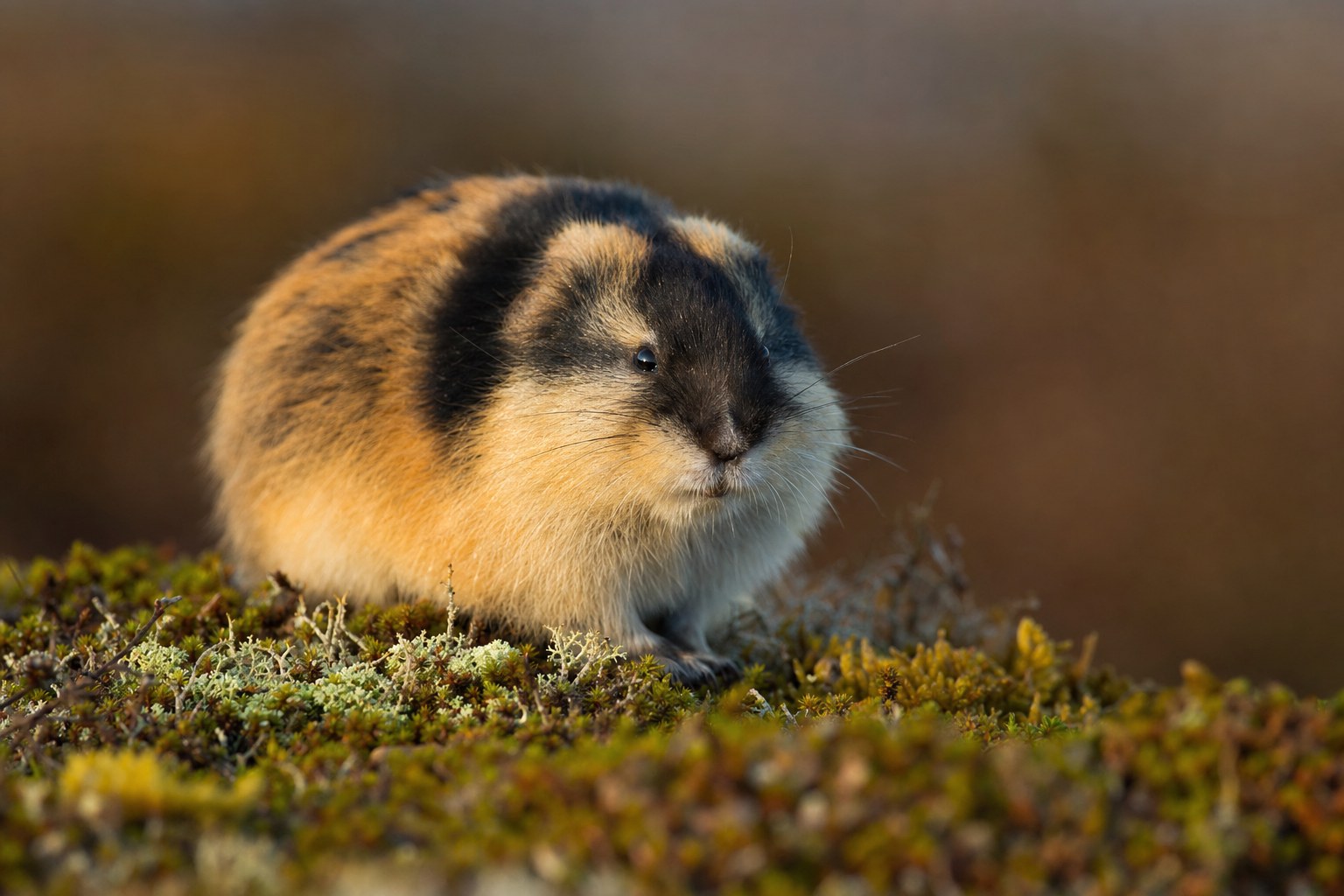
AI-generated educational wildlife portrait — World Animal Rescue Network · AI visualisation, not a photograph
In brief
Lemmings are small Arctic rodents in the family Cricetidae whose populations boom and crash on a roughly three-to-four-year cycle; they do not commit mass suicide — the famous cliff-dive footage was staged for Disney's 1958 film White Wilderness.
Also in Animals A to Z · Animals that start with L
By WARN Research & Conservation Team Last updated
Lemmings do not throw themselves off cliffs on purpose. The image of a mindless march into the sea is a film fabrication that entered popular culture and never left. Disney's 1958 True-Life Adventure White Wilderness staged the sequence in landlocked Alberta, herding a small number of purchased animals and filming them as they were driven into water. A later CBC investigation established that the footage was not a record of natural behaviour. What lemmings actually do is more interesting. Several Arctic species, of which the Norway lemming (Lemmus lemmus) is the best known in Europe, undergo dramatic multi-year population cycles. Numbers rise sharply under favourable conditions, then crash. When densities are high, young animals disperse in search of vacant territory. Some drown while crossing water. None of that is intentional self-destruction, and none of it matches the cartoon of a suicide march.
~3–4 yr
Typical Norway lemming population cycle length
Zero
Documented instinct for deliberate mass suicide
1958
Year White Wilderness staged the cliff sequence
Least Concern
IUCN status for Lemmus lemmus
Figures sourced from IUCN Red List — Lemmus lemmus, Alaska Department of Fish and Game — Lemming suicide myth, Animal Diversity Web — Lemmus lemmus .
Lemming: Quick Facts
| Best-known species | Norway lemming (Lemmus lemmus) |
|---|---|
| Habitat | Arctic and alpine tundra; winter nests under snow |
| Population pattern | Boom–bust cycles every few years |
| Suicide myth source | Staged sequence in White Wilderness (1958) |
| IUCN status | Least Concern (Norway lemming) |
| Role in food web | Key prey for arctic foxes, owls and mustelids |
| Population estimate | No reliable global figure — density swings enormously |
Scientific Classification
| Kingdom | Animalia |
|---|---|
| Phylum | Chordata |
| Class | Mammalia |
| Order | Rodentia |
| Family | Cricetidae |
| Genus | Lemmus (Norway lemming and relatives) |
| Species | Lemmus lemmus — plus related Arctic species |
Conservation Status
- IUCN Status
- Least Concern
- Population
- No reliable global estimate; local densities swing from sparse to very high between cycle phases
- Trend
- Stable for Norway lemming at the species level
- Assessed
- IUCN assessment current for Lemmus lemmus as Least Concern
- CITES
- Not listed on CITES Appendices
Species-level security does not mean Arctic predator guilds are insulated from climate-driven changes in snow and cycle regularity.
Did you know?
The word 'lemming' entered English as a metaphor for unthinking followers because of a fake documentary scene — a rare case where the metaphor is more famous than the animal's real ecology.
Key Facts: Lemming
- Lemmings do not commit mass suicide. The widely known cliff sequence was staged in Disney's 1958 film White Wilderness in Alberta, not in the Arctic.
- Norway lemmings and related species show boom–bust population cycles roughly every three to four years, driven by food, predation and weather.
- At high density, younger animals disperse looking for territory; some drown accidentally when crossing water — dispersal is not suicide.
- There is no overall population estimate for Norway lemmings; densities swing from sparse to hundreds per hectare between cycle lows and peaks.
- The IUCN lists Lemmus lemmus as Least Concern with a stable trend, though climate change may alter snow conditions that protect winter nests.
- The word 'lemming' covers several genera across the circumpolar north, not a single species that behaves identically everywhere.
- Repeating the suicide myth obscures real Arctic ecology: lemmings are a key food source for arctic foxes, snowy owls and other predators.
Where the suicide myth came from
Stories of lemmings rushing into the sea existed in European folklore long before cinema, usually as moral fables rather than field biology. What fixed the idea in global culture was White Wilderness (1958), a Disney True-Life Adventure that won an Academy Award for documentary and showed lemmings plunging from a cliff into water.
The sequence was not filmed in lemming habitat. Alberta is landlocked, and the animals used were obtained elsewhere and moved for the shoot. According to the Alaska Department of Fish and Game summary of the later investigation, filmmakers used turntables and tight camera angles to simulate a mass migration, then drove animals over a cliff. The narration framed the scene as a compulsion tied to overpopulation. Generations of viewers took a staged image as natural history. That is why the correction has to lead any honest account: the most famous 'fact' about lemmings is a production trick.
What population cycles actually look like
Norway lemmings breed rapidly when summers are long and winters allow stable snow cover for nests. Females can mature within weeks of birth and produce successive litters through a good season. Under those conditions a local population can multiply until food and space run short. Predators — arctic foxes, stoats, snowy owls, rough-legged buzzards — respond with delayed increases of their own, and the combination of depleted forage and rising predation helps drive the crash that follows a peak.
The cycle is not a calendar ritual with a fixed suicide date. Peak years are irregular, and the interval commonly cited is roughly three to four years. Between peaks, lemmings can be scarce enough that people who visit the same tundra in consecutive summers see either almost none or astonishing numbers. That swing is ecology, not theatre. It also means any single-year snapshot of 'how many lemmings there are' is almost useless without knowing where the cycle sits.
Dispersal is not a death march
When densities are high, stronger individuals hold space and younger or subordinate animals move. Movement is often channeled by lakes, rivers and fjords into corridors where many animals travel the same routes. From a distance that can look like a coordinated migration. It is not a planned march into the sea.
Lemmings can and do swim. Crossing a narrow stretch of water is ordinary dispersal behaviour. If the water is wider than the animal's stamina, some drown. Accidental mortality during movement is common across mammals that expand after a boom — moose, beaver and voles included. The difference between that and the film story is intent. Nobody has documented an instinct that causes lemmings to seek cliffs and jump. The animals are trying to find unoccupied ground; the water is an obstacle, not a destination.
Why the Norway lemming matters
In Fennoscandian tundra, lemmings are a pulse that feeds an entire predator guild. Snowy owl breeding success tracks lemming years. Arctic fox litter sizes rise and fall with the same rhythm. When cycles weaken or fail — something researchers have linked in places to changing snow conditions and warmer winters that collapse the subnivean space where lemmings nest — the effects ripple outward to species people notice more readily than a small rodent.
The IUCN assesses Lemmus lemmus as Least Concern because the species remains widespread across its range and shows no long-term decline that meets Red List thresholds. That status does not mean Arctic food webs are secure. It means this particular rodent is not currently a candidate for an Endangered listing. Climate-driven changes to snow quality are the pressure worth watching, not an invented death wish.
What WARN Does
WARN publishes free, sourced wildlife education that corrects high-traffic myths when the popular story is wrong. Lemming 'suicide' is one of the clearest cases: a staged film sequence still shapes what people think they know about Arctic ecology.
If this guide helps you understand wildlife and the pressures it faces, a gift to WARN supports habitat protection and free public education in our partner countries.
Lemming: Frequently Asked Questions
Do lemmings commit suicide?
Why do people think lemmings jump off cliffs?
What is a lemming year?
Are lemmings endangered?
What do lemming / norway lemmings eat?
Where do lemming / norway lemmings live?
Are lemming / norway lemmings dangerous?
How long do lemming / norway lemmings live?
How big is a lemming / norway lemming?
Sources & References
Population figures, conservation status and biological facts on this page are drawn from authoritative scientific and intergovernmental sources.
Terms used on this page
Plain-English definitions, from our wildlife and conservation glossary.
Explore more animals
Discover more animals, their habitats and their conservation status in the WARN wildlife-guide library.
Enjoyed this Lemming guide?
Receive appeal updates, animal-welfare news and published funding reports. Unsubscribe any time.
We only use your address for WARN updates. See our privacy policy.