Wildlife Guide · Madagascar & Eastern humid forest — several species with restricted ranges
Leaf-Tailed Gecko
Uroplatus phantasticus (Boulenger, 1888) — genus Uroplatus, around 20 species
The gecko shaped like a dead leaf — with a fringe that eliminates its shadow.
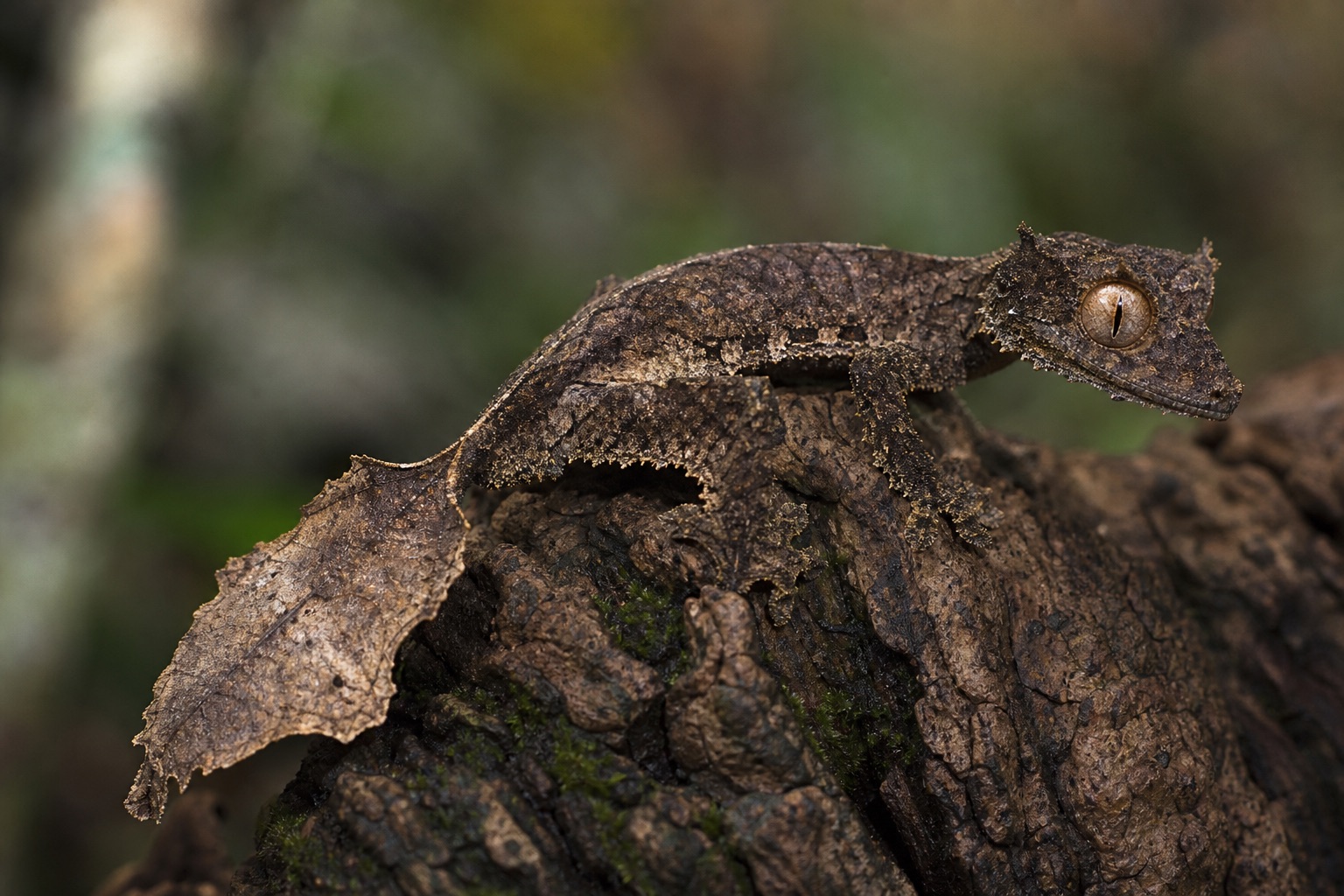
AI-generated educational wildlife portrait — World Animal Rescue Network · AI visualisation, not a photograph
In brief
Leaf-tailed geckos (genus Uroplatus) are around 20 species of gecko endemic to Madagascar, camouflaged as dead leaves with a skin fringe that eliminates shadow; several are Critically Endangered, and the pet trade adds pressure as an estimated 80–90% of the island's original forest has been lost.
Also in Animals A to Z · Animals that start with L
How you can help
You can support the related appeal — read its purpose, recipient status and fund terms first — or give once to where it is needed most. Sharing accurate information helps too.
By WARN Research & Conservation Team Last updated
Leaf-tailed geckos of the genus Uroplatus are among the most extreme camouflage specialists in the animal kingdom. Their flattened bodies, tail shaped like a withered leaf, mottled skin and — critically — a fringe of skin along the jaw, body and limbs break up the outline that would otherwise cast a shadow on the bark they rest against. Around 20 species occur only in Madagascar, part of the island's roughly 90% vertebrate endemism. Several are Critically Endangered, including Uroplatus phantasticus — the satanic leaf-tailed gecko — named for the horn-like projections above its eyes. An estimated 80–90% of Madagascar's original forest has been lost, and the pet trade targets Uroplatus heavily: their appearance makes them valuable to collectors worldwide. Tavy slash-and-burn and charcoal production remove the humid forest they require — pressures driven by rural poverty and the lack of affordable alternatives, not by subsistence farming in isolation.
~20
Uroplatus species — all endemic to Madagascar
~90%
Share of Madagascar's vertebrates found nowhere else
Fringe
Skin flaps that break up the shadow outline on bark
Several CR
Uroplatus species listed Critically Endangered
Figures sourced from IUCN Red List — Uroplatus phantasticus, CITES Appendices .
Leaf-Tailed Gecko: Quick Facts
| Species | Around 20 in genus Uroplatus |
|---|---|
| Camouflage | Leaf-shaped tail; dermal fringe eliminates shadow |
| Activity | Nocturnal |
| Endemism | Madagascar only — part of ~90% vertebrate endemism |
| CITES | Appendix II — all Uroplatus species |
| Main threats | Pet trade; forest loss from tavy and charcoal |
Scientific Classification
| Kingdom | Animalia |
|---|---|
| Phylum | Chordata |
| Class | Reptilia |
| Order | Squamata |
| Family | Gekkonidae |
| Genus | Uroplatus |
| Species | Uroplatus phantasticus (satanic leaf-tailed gecko) |
Conservation Status
- IUCN Status
- Critically Endangered (U. phantasticus; varies by species)
- Population
- Unknown; declining
- Trend
- Decreasing
- Assessed
- 2014
- CITES
- Appendix II — all Uroplatus species
Pet trade collection and forest loss combine on an island where an estimated 80–90% of original forest is gone. Tavy is driven by rural poverty.
Did you know?
A leaf-tailed gecko pressed against bark is not just the right colour — the fringe of skin along its edges breaks up its shadow, the giveaway that most camouflaged animals cannot hide.
Key Facts: Leaf-Tailed Gecko
- Leaf-tailed geckos (Uroplatus) are around 20 species, all endemic to Madagascar.
- A fringe of skin along the jaw, body and limbs breaks up the shadow that would reveal the animal on bark.
- The tail is flattened and shaped like a dead or decaying leaf; the whole body mimics leaf litter.
- Several species are Critically Endangered; all Uroplatus are CITES Appendix II listed.
- The pet trade is a major pressure — wild-collected geckos are exported for the exotic pet market.
- An estimated 80–90% of Madagascar's original forest has been lost to tavy, charcoal production and logging — driven by rural poverty.
How the fringe eliminates shadow
Camouflage is not only about colour. A gecko that matches bark perfectly still casts a shadow — a dark outline that predators detect. Uroplatus species carry lateral fringes of skin, called dermal flaps, along the head, body, limbs and tail. These flaps blur the edge between animal and substrate, scattering the shadow that would otherwise give the gecko away.
At rest the gecko presses its body flat against the trunk, closes its eyes — which have no eyelids but are covered by a transparent spectacle — and parted its fringed jaw so the outline dissolves into bark texture. The effect is not perfect invisibility but enough to defeat a predator scanning for edges. On an island where roughly 90% of vertebrates occur nowhere else, Uroplatus represents camouflage pushed to its mechanical limit.
The satanic leaf-tailed gecko
Uroplatus phantasticus is the smallest and most ornate of the genus, with pointed horn-like projections above the eyes that earned it the common name. It is nocturnal, feeds on insects, and is known from humid forest in eastern Madagascar.
It is listed Critically Endangered. Its range is small, its forest is shrinking, and it is collected for the pet trade. The combination — habitat loss plus commercial collection — is the pattern for several Uroplatus species. A Critically Endangered listing means the species faces an extremely high risk of extinction in the wild; for phantasticus that risk is immediate rather than theoretical.
The pet trade problem
Uroplatus geckos are among the most sought-after reptiles in the exotic pet trade. Their appearance commands high prices abroad, and wild collection continues despite CITES Appendix II regulation requiring export permits. Enforcement in Madagascar is limited, and illegal export is documented.
Captive breeding exists but does not meet demand, so wild collection persists. Every gecko removed is one fewer breeding adult in a population already confined to forest fragments. The pet trade is not the only pressure — forest loss is the baseline — but it removes individuals from populations that cannot spare them, on an island where an estimated 80–90% of original cover is already gone.
Forest loss and the poverty context
Uroplatus needs humid forest with large trees and intact bark surfaces. Tavy clears understorey and removes the humidity microclimate. Charcoal production fells living trees. Logging opens canopy. All three are widespread across eastern Madagascar, driven by rural poverty — families clearing land because they have no other income, producing charcoal because it is the only affordable cooking fuel available.
Blaming subsistence farmers without that context misstates the problem. Conservation that works protects remaining forest blocks, regulates collection, supports captive breeding as an alternative to wild take, and addresses the poverty behind tavy through cookstove programmes and community forestry income.
What WARN Does
WARN publishes free, sourced species education for Madagascar's herps, including species heavily targeted by the pet trade. Leaf-tailed geckos are CITES Appendix II listed; buying wild-caught animals supports collection from Critically Endangered wild populations on an island where roughly 90% of vertebrates occur nowhere else.
If this guide helps you understand wildlife and the pressures it faces, a gift to WARN supports habitat protection and free public education in our partner countries.
How can I help save the leaf-tailed gecko?
Explore practical ways to support the leaf-tailed gecko, from everyday choices and sharing reliable information to reviewing a related appeal before giving.
Explore ways to support
Read the related appeal’s purpose, recipient status and fund terms. Choose an affordable gift after checking what is proposed and what has been reported.
Ease the pressures
Avoid the wildlife trade and souvenirs, never buy wild animals as pets, and choose sustainable, habitat-friendly products — the threats behind the leaf-tailed gecko's decline fall when demand does.
Spread the word
Share accurate, sourced information about the leaf-tailed gecko. Wider awareness is what turns concern into lasting protection.
Leaf-Tailed Gecko: Frequently Asked Questions
How can I help save the leaf-tailed gecko?
What is a leaf-tailed gecko?
How does the fringe work?
Are leaf-tailed geckos endangered?
Can you keep a leaf-tailed gecko as a pet?
Where do satanic leaf-tailed geckos live?
Are satanic leaf-tailed geckos dangerous?
How long do satanic leaf-tailed geckos live?
How big is a satanic leaf-tailed gecko?
What do satanic leaf-tailed geckos eat?
Sources & References
Population figures, conservation status and biological facts on this page are drawn from authoritative scientific and intergovernmental sources.
Terms used on this page
Plain-English definitions, from our wildlife and conservation glossary.
Latest Leaf-Tailed Gecko Stories
Quick, fact-checked reads on the leaf-tailed gecko — amazing facts, key questions and the threats it faces.
Explore more animals
Discover more animals, their habitats and their conservation status in the WARN wildlife-guide library.
Enjoyed this Leaf-Tailed Gecko guide?
Receive appeal updates, animal-welfare news and published funding reports. Unsubscribe any time.
We only use your address for WARN updates. See our privacy policy.