Wildlife Guide · Worldwide except polar regions & Gardens, farmland, hedgerows, woodland and grassland
Ladybird
Family Coccinellidae — roughly 6,000 described species
Small, spotted, and one of the most effective aphid predators a garden can have.
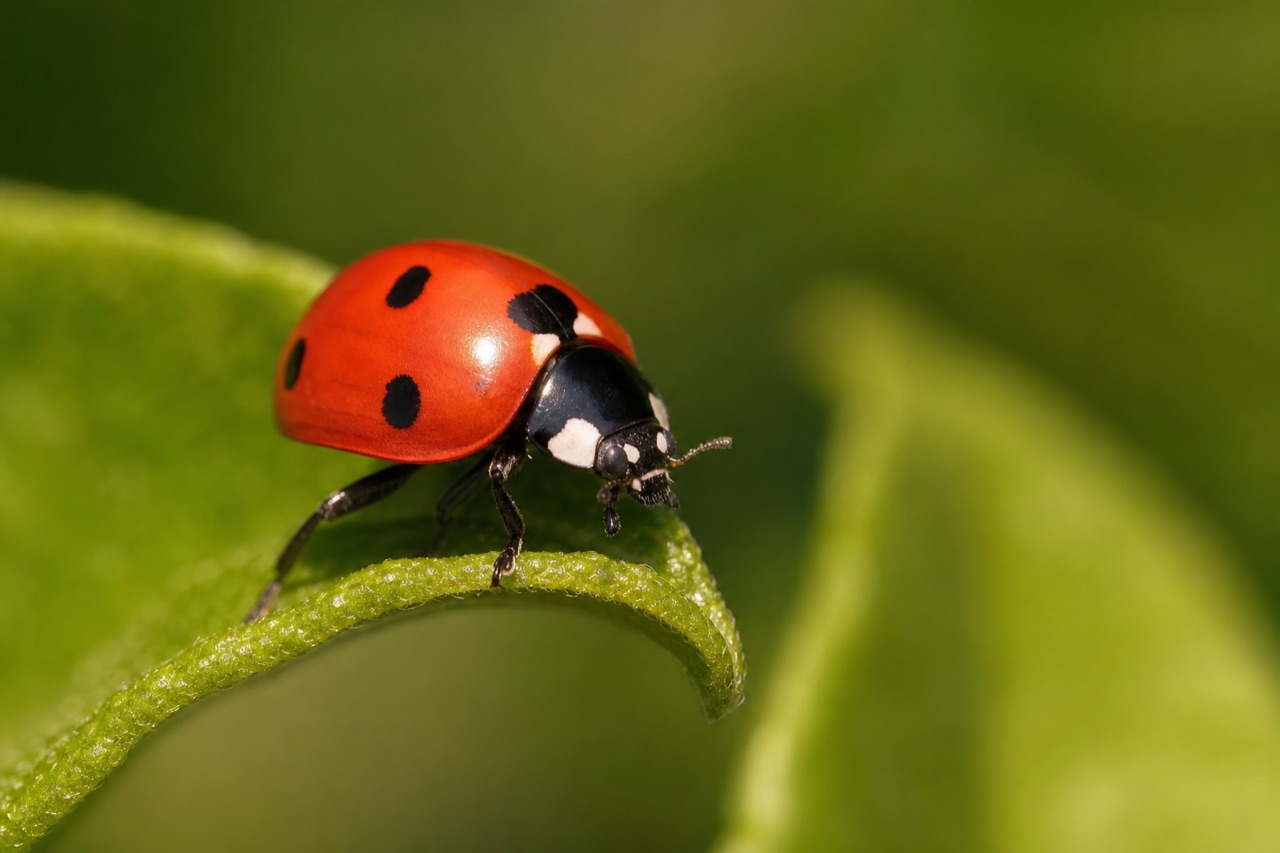
AI-generated educational wildlife portrait — World Animal Rescue Network · AI visualisation, not a photograph
In brief
Ladybirds (family Coccinellidae) are beetles — around 6,000 species — whose adults and larvae are mostly predators of aphids and scale insects; spot number indicates species, not age, and the invasive harlequin ladybird is displacing natives in Europe and North America.
Also in Animals A to Z · Animals that start with L
By WARN Research & Conservation Team Last updated
Ladybirds — ladybugs in North America — are beetles of the family Coccinellidae, with around 6,000 species worldwide. The familiar domed, spotted adults are only part of the story: the larvae, which look nothing like the adults, are elongated, spiky and often more voracious than their parents. Most ladybirds are predators of aphids, scale insects and mites, which makes them one of the few insects with an unambiguously positive public reputation. That reputation has driven a great deal of deliberate introduction for pest control — and some of those introductions, notably the harlequin ladybird, have gone on to displace native species across whole continents.
~6,000
Described ladybird species worldwide
~5,000
Aphids eaten by one ladybird over its life
4 stages
Egg, larva, pupa, adult
1 year
Typical adult lifespan, including overwintering
Figures sourced from IUCN Red List, GBIF — Coccinellidae .
Ladybird: Quick Facts
| Described species | ~6,000 |
|---|---|
| Adult size | 1–10 mm depending on species |
| Diet | Mostly aphids and scale insects; a few herbivores |
| Defence | Reflex bleeding of bitter haemolymph; warning colours |
| Overwintering | Communal, in crevices, leaf litter and buildings |
| Key invasive | Harlequin ladybird, Harmonia axyridis |
Scientific Classification
| Kingdom | Animalia |
|---|---|
| Phylum | Arthropoda |
| Class | Insecta |
| Order | Coleoptera |
| Family | Coccinellidae |
| Notable genera | Coccinella, Adalia, Harmonia, Epilachna |
Conservation Status
- IUCN Status
- Varies by species — family page
- Population
- Not applicable at family level
- Trend
- Several native species declining where the harlequin ladybird has established
- Assessed
- Assessed species-by-species; most species unassessed
- CITES
- Not listed
Native ladybird declines are documented most clearly in Europe and North America, where long-running volunteer recording schemes exist.
Did you know?
A threatened ladybird squeezes bitter yellow fluid from its knee joints — reflex bleeding — which is why a bird that tries one rarely tries a second.
Key Facts: Ladybird
- Ladybirds are beetles (Coleoptera), not bugs in the entomological sense.
- The number of spots identifies the species — it does not indicate the ladybird's age.
- Larvae look completely different from adults and often eat more aphids than the adults do.
- Threatened ladybirds bleed foul-tasting haemolymph from their leg joints — reflex bleeding.
- A few species are plant-eaters and are agricultural pests; most are beneficial predators.
- The introduced harlequin ladybird is displacing native ladybirds across Europe and North America.
What ladybirds actually are
Coccinellidae are beetles: the bright domed shell is a pair of hardened forewings (elytra) covering the membranous flight wings beneath. Colour and spot patterns are aposematic — a warning that the beetle tastes unpleasant — and vary enormously, from the familiar red-with-black to yellow, orange, black-with-red, chequered and plain.
A persistent myth holds that spots count the ladybird's age. They do not. Spot number and arrangement are species characters, fixed when the adult emerges, though they can vary within a species and fade with wear.
Larvae: the unrecognised stage
Ladybird larvae are long, segmented, often blue-grey or black with orange markings, and bristly. People routinely kill them as pests because they look nothing like the adult. Through four instars over a few weeks, a single larva can eat several hundred aphids before pupating, usually glued to a leaf.
Eggs are laid in small upright clusters, typically near an aphid colony so the hatching larvae have food immediately. Some species lay infertile eggs alongside fertile ones as a food buffer for the first-hatched larvae.
Predators, and a few pests
The majority of ladybirds eat aphids, scale insects, mealybugs, mites and other soft-bodied invertebrates, which is why they are valued in orchards, allotments and glasshouses. Several species are reared commercially as biological control agents.
A minority break the pattern. The subfamily Epilachninae are herbivores — the Mexican bean beetle and the 24-spot ladybird among them — and can damage crops. Others feed on mildew. 'Ladybird' is therefore a description of a family, not a guarantee of what any given species eats.
The harlequin problem
Harmonia axyridis, the harlequin or Asian ladybird, was introduced widely for aphid control from the late twentieth century. It is large, highly variable in colour, breeds fast and eats not only aphids but also the eggs and larvae of other ladybirds. It has since spread across Europe and North America and is implicated in sharp declines of native species, including the two-spot ladybird.
It also carries microsporidian parasites to which it is resistant and native ladybirds are not. The episode is a standard cautionary example of biological control introduced without adequate assessment of non-target effects.
What WARN Does
WARN publishes free, sourced species education across the whole of animal life. Ladybirds are a useful way into two ideas that matter well beyond insects: that a life stage people do not recognise often gets destroyed, and that species moved around the world for a good reason can still cause serious harm.
If this guide helps you understand wildlife and the pressures it faces, a gift to WARN supports habitat protection and free public education in our partner countries.
Ladybird: Frequently Asked Questions
Do a ladybird's spots show its age?
Are ladybirds beetles or bugs?
What do ladybirds eat?
What do ladybird larvae look like?
Why do ladybirds gather in houses in autumn?
Where do ladybird / ladybugs live?
Are ladybird / ladybugs dangerous?
How long do ladybird / ladybugs live?
How big is a ladybird / ladybug?
Sources & References
Population figures, conservation status and biological facts on this page are drawn from authoritative scientific and intergovernmental sources.
Explore more animals
Discover more animals, their habitats and their conservation status in the WARN wildlife-guide library.
Enjoyed this Ladybird guide?
Receive appeal updates, animal-welfare news and published funding reports. Unsubscribe any time.
We only use your address for WARN updates. See our privacy policy.