Wildlife Guide · New Zealand — South Island alpine and subalpine zones
Kea
Nestor notabilis (Gould, 1856) — family Strigopidae
The world's only alpine parrot, and one of the few birds that solves problems it has never seen before.
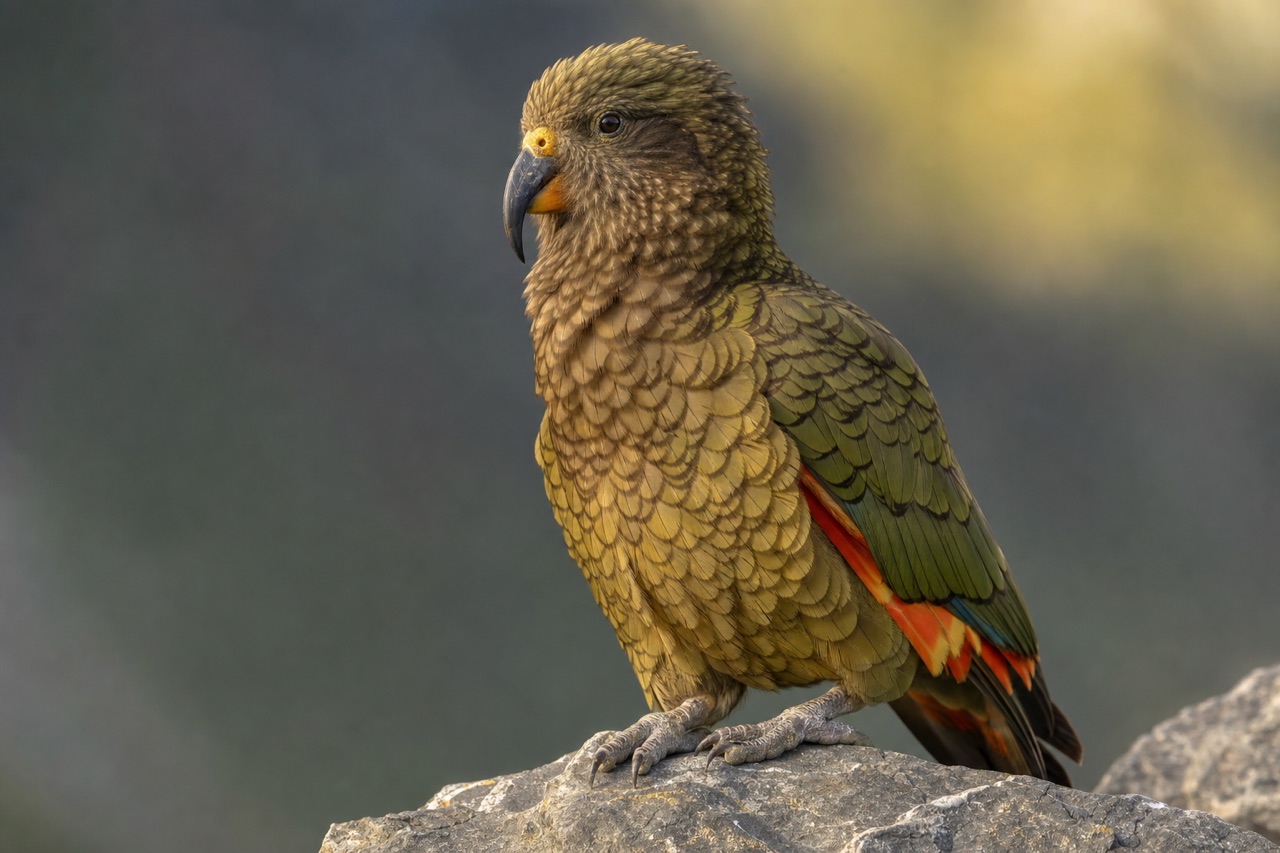
AI-generated educational wildlife portrait — World Animal Rescue Network · AI visualisation, not a photograph
In brief
The kea (Nestor notabilis) is the world's only alpine parrot, native to New Zealand's South Island mountains; it is highly intelligent and inventive, and is listed as Endangered largely because of introduced predators, lead poisoning and human conflict.
Also in Animals A to Z · Animals that start with K
How you can help
You can support the related appeal — read its purpose, recipient status and fund terms first — or give once to where it is needed most. Sharing accurate information helps too.
By WARN Research & Conservation Team Last updated
The kea is the only parrot in the world adapted to alpine conditions, living in the mountains of New Zealand's South Island. Olive-green at rest, it flashes brilliant orange under the wings in flight. It is also, by most measures used on animals, among the most intelligent birds studied — inventive, persistent and famously destructive of anything left unattended. That curiosity is a survival trait in a harsh, food-poor environment, and it is also what puts kea in constant conflict with people. Birds strip rubber from car windscreens, open backpacks and dismantle equipment, which makes them beloved by tourists and unpopular with some residents. The species is Endangered, and much of the mortality is human-caused.
Only one
The world's sole alpine parrot
~1,500 m
Typical alpine and subalpine elevation range
Lead
A major, entirely human-caused source of poisoning
Play call
A vocalisation that triggers play in other kea
Figures sourced from IUCN Red List — Nestor notabilis, CITES Appendices .
Kea: Quick Facts
| Length | ~48 cm |
|---|---|
| Weight | 800–1,000 g |
| Habitat | Alpine and subalpine, South Island New Zealand |
| Diet | Omnivorous — roots, berries, insects, carrion |
| Nest | Ground-level cavities, vulnerable to introduced predators |
| Key threats | Stoats and possums, lead poisoning, vehicle strikes |
Scientific Classification
| Kingdom | Animalia |
|---|---|
| Phylum | Chordata |
| Class | Aves |
| Order | Psittaciformes |
| Family | Strigopidae |
| Genus | Nestor |
| Species | Nestor notabilis |
Conservation Status
- IUCN Status
- Endangered
- Population
- Low thousands
- Trend
- Decreasing
- Assessed
- 2017
- CITES
- Appendix II
Lead poisoning from flashing and nails on old alpine buildings is a significant and entirely preventable cause of death.
Did you know?
Kea have a specific warbling play call — birds that hear a recording of it spontaneously start playing, one of the few documented contagious emotional calls outside mammals.
Key Facts: Kea
- Kea are the only parrots adapted to alpine environments.
- They solve novel problems, use tools in captivity and cooperate on multi-step tasks.
- Kea have a 'play call' — hearing it prompts other birds to start playing.
- Lead flashing and nails on old buildings poison kea, which chew soft metal.
- Introduced stoats and possums take eggs and chicks from ground-level nests.
- Feeding kea is harmful: it draws them to roads and buildings where most human-caused deaths occur.
Problem solvers
Kea have been shown to work through multi-step puzzles, use objects as tools in captivity, cooperate with a partner on tasks needing simultaneous action, and adjust their behaviour based on statistical information — a capacity previously demonstrated mainly in great apes.
The likely driver is their environment. Alpine New Zealand offers scattered, seasonal, unpredictable food, and an animal that can work out how to open something novel does better than one that cannot. In practice this means kea investigate everything by taking it apart, which is intelligence and destruction being the same behaviour.
Play, and a call that spreads it
Kea play extensively as adults — tumbling, wrestling, tossing objects and inventing games with whatever they find. Research identified a distinct warbling call that functions as a play vocalisation: birds hearing a recording of it spontaneously begin playing, which makes it one of very few documented emotionally contagious calls outside mammals.
Play in adult animals is generally associated with cognitively complex, long-lived, social species, and the kea fits all three.
Why they are Endangered
Introduced stoats and possums are the largest natural-history problem: kea nest in cavities at ground level, so eggs, chicks and brooding females are easy targets.
The rest is human. Lead is a major documented poison — kea chew lead flashing, nails and head-bolts on old alpine buildings, and blood-lead levels in wild kea are high enough to cause illness and death. Vehicle strikes kill birds drawn to roadside car parks. Historically, kea were shot under a government bounty over sheep predation, and illegal killing still occurs.
Why feeding a kea harms it
Kea are engaging and will approach people readily, which makes feeding them almost irresistible. It is also one of the worst things a visitor can do. Fed birds concentrate at car parks, roadsides and buildings — precisely the places where vehicle strikes, lead exposure and conflict with residents occur.
Human food is also nutritionally wrong for them, and habituated birds become bolder, which escalates property damage and the hostility that follows. The consistent conservation advice is simple: watch them, do not feed them, and secure anything you would rather keep intact.
What WARN Does
WARN publishes free, sourced species education including the cases where the most important conservation action is something a visitor chooses not to do. Kea are harmed most reliably by well-meant feeding, and that is a message education can actually shift.
If this guide helps you understand wildlife and the pressures it faces, a gift to WARN supports habitat protection and free public education in our partner countries.
How can I help save the kea?
Explore practical ways to support the kea, from everyday choices and sharing reliable information to reviewing a related appeal before giving.
Explore ways to support
Read the related appeal’s purpose, recipient status and fund terms. Choose an affordable gift after checking what is proposed and what has been reported.
Ease the pressures
Avoid the wildlife trade and souvenirs, never buy wild animals as pets, and choose sustainable, habitat-friendly products — the threats behind the kea's decline fall when demand does.
Spread the word
Share accurate, sourced information about the kea. Wider awareness is what turns concern into lasting protection.
Kea: Frequently Asked Questions
How can I help save the kea?
How intelligent are kea?
Why do kea destroy things?
Are kea endangered?
Why shouldn't you feed kea?
Where do kea live?
What do keas eat?
Are keas dangerous?
How long do keas live?
How big is a kea?
Sources & References
Population figures, conservation status and biological facts on this page are drawn from authoritative scientific and intergovernmental sources.
Terms used on this page
Plain-English definitions, from our wildlife and conservation glossary.
Explore more animals
Discover more animals, their habitats and their conservation status in the WARN wildlife-guide library.
Enjoyed this Kea guide?
Receive appeal updates, animal-welfare news and published funding reports. Unsubscribe any time.
We only use your address for WARN updates. See our privacy policy.