Wildlife Guide · North America & South America
Howler Monkey
Alouatta spp.
The loudest land animal in the Americas
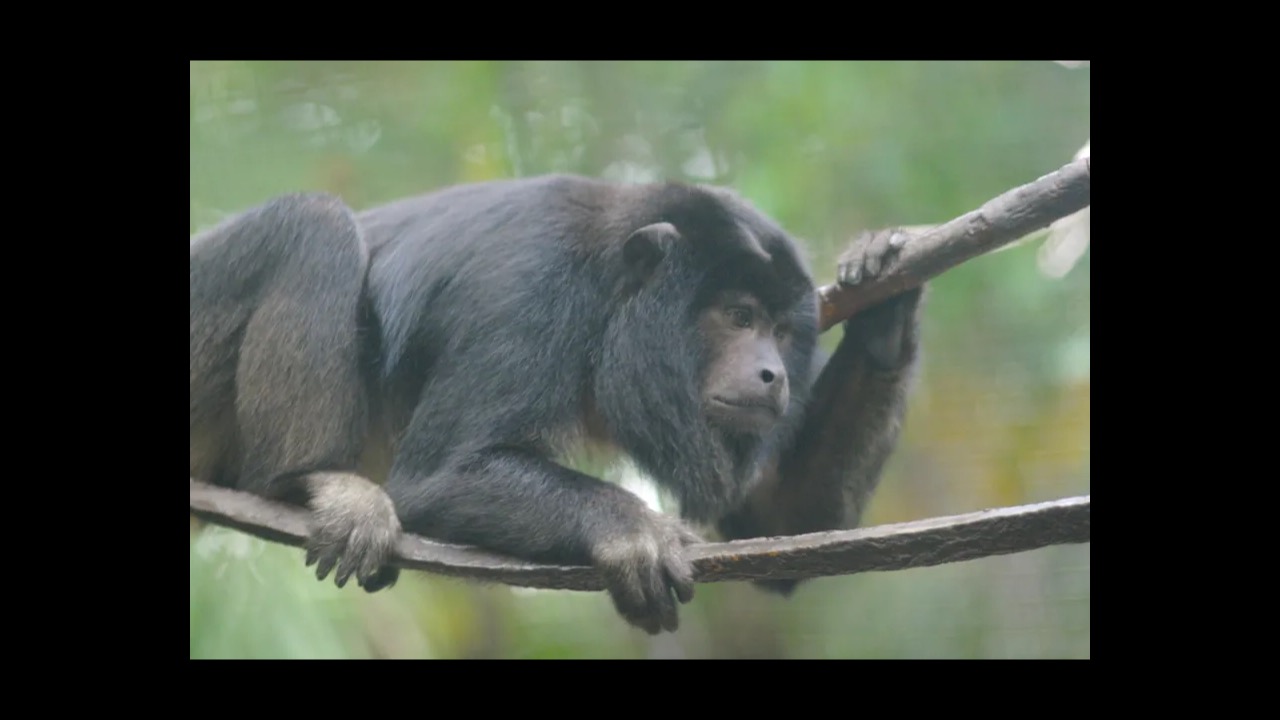
Photo: Ryan E. Poplin / Wikimedia Commons (CC BY-SA 2.0)
In brief
The howler monkey is a large, leaf-eating New World primate famous for having one of the loudest calls of any land animal in the Americas. Living in the tropical forests of Central and South America, it weighs around 5 to 10 kg and spends almost its whole life high in the canopy.
Also in Animals A to Z · Animals that start with H
By WARN Research & Conservation Team Last updated
The howler monkey is a large, leaf-eating New World primate famous for having one of the loudest calls of any land animal in the Americas. Living in the tropical forests of Central and South America, it weighs around 5 to 10 kg and spends almost its whole life high in the canopy. Its booming dawn chorus, produced with the help of a specialised throat bone, can carry for several kilometres. Howlers live 15 to 20 years in the wild and are listed as Least Concern.
0.9 m
Typical length
8 kg
Typical weight
16 km/h
Top speed
20 yrs
Lifespan
Figures sourced from Wikipedia — Howler Monkey, Wikidata — Howler Monkey .
Howler Monkey: Quick Facts
| Scientific name | Alouatta spp. |
|---|---|
| Diet | Folivore — leaves, fruit, flowers, and buds |
| Habitat | Tropical forests of Central and South America |
| Lifespan | 15–20 years in the wild |
| Weight | 5–10 kg (11–22 lb); males larger |
| Top speed | Up to 16 km/h (10 mph); mostly slow arboreal movement |
| Conservation status | Least Concern (IUCN) |
Scientific Classification
| Kingdom | Animalia |
|---|---|
| Phylum | Chordata |
| Class | Mammalia |
| Order | Primates |
| Family | Atelidae |
| Genus | Alouatta |
Conservation Status
- IUCN Status
- Least Concern (IUCN Red List category)
- Population
- Global population not compiled for this guide
- Trend
- See the IUCN Red List assessment
- Assessed
- See the IUCN Red List assessment
- CITES
- See CITES appendices
Conservation figures are drawn from the IUCN Red List and CITES; this guide links to the authoritative sources rather than restating population counts.
Key Facts: Howler Monkey
- Howler monkeys are named for the deep, roaring calls that make them one of the loudest land animals in the Americas.
- Howler monkeys, of the genus Alouatta, live throughout the tropical forests of Central and South America, from southern Mexico to northern Argentina.
- Howlers are folivores, feeding mainly on leaves along with fruit, flowers, and buds.
The famous howl
Howler monkeys are named for the deep, roaring calls that make them one of the loudest land animals in the Americas. Males produce these booming howls using an enlarged hyoid bone in the throat that acts as a resonating chamber. The calls carry for several kilometres through dense forest and are used to space out rival troops without the need to fight. Choruses are most striking at dawn and dusk, when neighbouring groups answer one another across the canopy.
Range and habitat
Howler monkeys, of the genus Alouatta, live throughout the tropical forests of Central and South America, from southern Mexico to northern Argentina. They inhabit a range of woodland, including rainforest, dry forest, and mangrove, wherever there are enough tall trees. Almost their entire life is spent in the canopy, where they find food, sleep, and travel. They are among the most widespread of the New World monkeys.
Diet and slow metabolism
Howlers are folivores, feeding mainly on leaves along with fruit, flowers, and buds. Leaves are low in energy and slow to digest, so the monkeys have an enlarged gut where bacteria ferment the tough plant material. To cope with this low-energy diet they rest for much of the day, sometimes for 15 hours or more. When fruit and young leaves are plentiful they take advantage of the richer food.
Movement through the canopy
Howler monkeys move slowly and deliberately through the trees, rarely leaping and instead climbing carefully from branch to branch. Their strong, fully prehensile tail acts as a fifth limb, gripping branches and even supporting the animal's full weight while it reaches for food. Top speeds of around 16 km/h are reached only in short bursts, as their leaf-based diet leaves little energy to spare. They almost never come down to the ground, staying safe among the high branches.
Reproduction and lifespan
Females give birth to a single infant after a gestation of around six months, and the newborn clings to its mother as she moves through the trees. Young howlers are weaned gradually and learn which leaves and fruit are safe to eat by watching the adults. In the wild, howler monkeys live around 15 to 20 years. Their slow, energy-conserving lifestyle is reflected in their unhurried pace of breeding and growth.
What WARN Does
WARN does not run a dedicated howler monkey programme — this guide is part of the World Animal Rescue Network's free educational library. The howler monkey is currently widespread and not globally threatened, and this guide helps readers understand the pressures that can change that. Building public understanding of species like the howler monkey supports the broader conservation awareness that underpins WARN's partner-led rescue work across its network.
If clear, science-based wildlife guides like this help you understand and value animals, please consider supporting the World Animal Rescue Network's educational and rescue work so we can keep producing them.
Howler Monkey: Frequently Asked Questions
Why are howler monkeys so loud?
What do howler monkeys eat?
Where do howler monkeys live?
How loud is a howler monkey's call?
How long do howler monkeys live?
Are howler monkeys endangered?
Are howler monkeys dangerous?
How big is a howler monkey?
Sources & References
Population figures, conservation status and biological facts on this page are drawn from authoritative scientific and intergovernmental sources.
Terms used on this page
Plain-English definitions, from our wildlife and conservation glossary.
Latest Howler Monkey Stories
Quick, fact-checked reads on the howler monkey — amazing facts, key questions and the threats it faces.
Species
12 Amazing Facts About the Jaguar, the Americas' Biggest Cat
From a skull-piercing bite to a love of swimming, here are 12 fascinating, fact-checked things that make the jaguar the most powerful cat in the Americas.
Read the storySpecies
11 Amazing Facts About the Pink River Dolphin (the Amazon's Blushing Boto)
From a head that swivels 90 degrees to a blush built from battle scars, here are 11 true facts about the Amazon's pink river dolphin, the largest freshwater dolphin on Earth.
Read the storySpecies
Pink River Dolphin vs Tucuxi: How to Tell the Two Amazon Dolphins Apart
Both swim the same Amazon waters, but the pink boto and the grey tucuxi are only distant cousins. Here is how to tell them apart at a glance.
Read the storyExplore more animals
Discover more animals, their habitats and their conservation status in the WARN wildlife-guide library.
Enjoyed this Howler Monkey guide?
Receive appeal updates, animal-welfare news and published funding reports. Unsubscribe any time.
We only use your address for WARN updates. See our privacy policy.
Social structure
Howlers live in troops of around 6 to 15 individuals, usually including several adults of both sexes along with juveniles and infants. Rather than fighting over territory, neighbouring groups rely on their loud calls to keep their distance. Within the troop, grooming and vocal exchanges help maintain social bonds. Males are larger than females and take the lead in the roaring contests that define howler society.