Horse Breed · Netherlands
Friesian
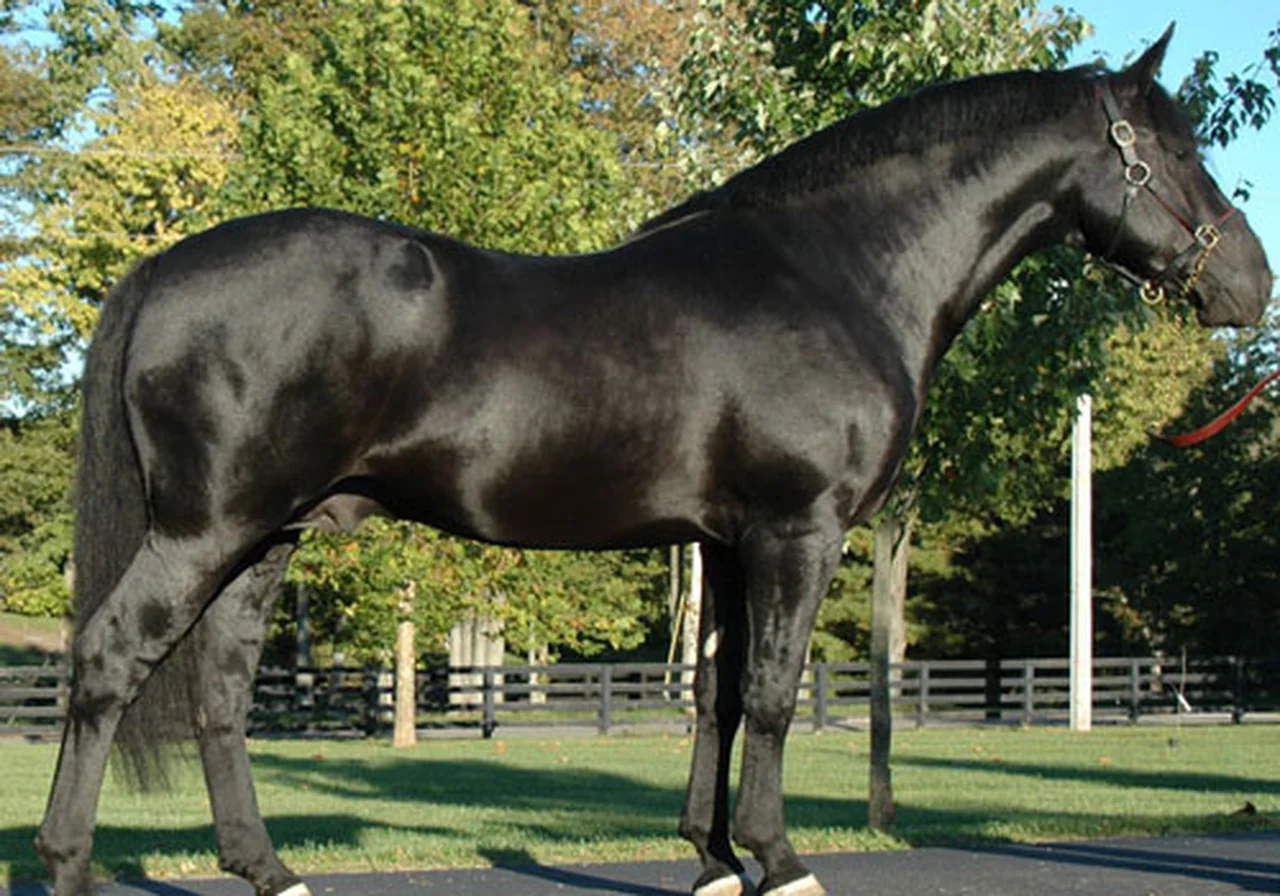
Jet-black baroque horse with flowing mane and high-stepping movement.
By WARN Research & Conservation TeamLast updated
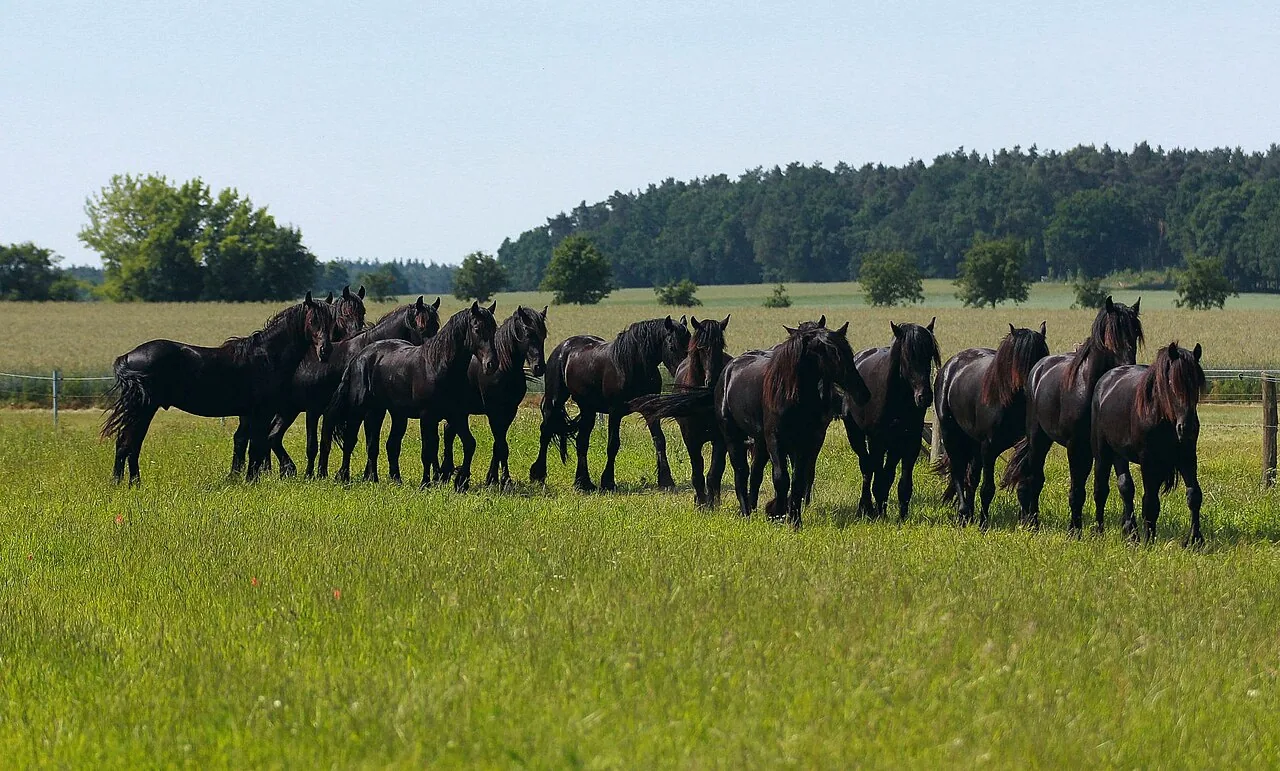
Photo: Wikimedia Commons — File:Friesian horse.jpg
In brief
The Friesian is a baroque black horse from the Netherlands, instantly recognisable by its flowing mane, feathered legs and high-stepping trot. Its defining trait is dramatic presence combined with a willing, people-focused temperament suited to dressage and driving.
What are the key facts about a Friesian?
The Friesian is a horse breed from Netherlands: light (15–17 hands), noble, willing, dramatic. Jet-black baroque horse with flowing mane and high-stepping movement.
| Origin | Netherlands |
|---|---|
| Size | Light (15–17 hands) |
| Typical weight | 540–650 kg (1,190–1,430 lb); typically 15–17 hands |
| Lifespan | 25–30 years |
| Coat & colours | Long, thick mane and tail with abundant feathering on the lower legs; coat colour is exclusively black — no white markings permitted beyond a small star in some registries. The luxuriant hair demands daily detangling and regular washing of feathered legs to prevent skin irritation. Mane and tail conditioning keeps the breed's signature appearance without excessive product build-up. |
| Temperament | Noble, willing, dramatic |
| Best suited to | Suits experienced owners who appreciate a sensitive, expressive horse for dressage, carriage driving or ceremonial work. Friesians bond deeply with consistent handlers and respond poorly to harsh training. They need regular exercise, mental stimulation and careful weight management because baroque conformation can stress joints if fitness lapses. Most thrive in programmes with daily interaction rather than sporadic riding. |
Is a Friesian a good horse for you?
A Friesian can be a good horse for the right rider — noble, willing, dramatic, light (15–17 hands), from Netherlands — but it is not a lawn ornament. You need land, a farrier, a vet, and a budget that survives winter.
Match the horse to the job. The Friesian was shaped in Netherlands as a Light (15–17 hands) type. Friesians descend from medieval war horses of Friesland in the northern Netherlands, where they served knights and later pulled carriages in elegant city parades. That history still shows in daily handling: this is a large, long-lived animal (25–30 years), not a seasonal hobby.
First-time owners should not buy from a photo. Try the horse with an instructor, get a pre-purchase vet exam, and be honest about whether you can keep a Friesian in work rather than bored in a paddock.
What is a Friesian?
Jet-black baroque horse with flowing mane and high-stepping movement. Origin is Netherlands; coat or markings are described as Long, thick mane and tail with abundant feathering on the lower legs; coat colour is exclusively black — no white markings permitted beyond a small star in some registries. The luxuriant hair demands daily detangling and regular washing of feathered legs to prevent skin irritation. Mane and tail conditioning keeps the breed's signature appearance without excessive product build-up..
Kennel and registry labels describe a type. Individual Friesians still vary, and rescue animals may be mixes.
Where does the Friesian come from?
Friesians come from Netherlands. Friesians descend from medieval war horses of Friesland in the northern Netherlands, where they served knights and later pulled carriages in elegant city parades.
Near extinction in the early 20th century as mechanisation replaced draft work, dedicated Dutch breeders rebuilt the population emphasising black colour and animated movement. The Koninklijke Vereniging 'Het Friesch Paarden-Stamboek' (KFPS) governs the studbook. Modern Friesians star in dressage, combined driving and film work while maintaining strict breed purity rules.
That origin still shows. A Friesian is light (15–17 hands) and noble, willing, dramatic, typically living 25–30 years. Use the history as context for care and conservation, not as folklore to repeat without sources.
How much care does a Friesian need?
A Friesian needs daily forage, hoof care, dental checks and a job. This Netherlands horse is light (15–17 hands) (540–650 kg (1,190–1,430 lb); typically 15–17 hands) and typically lives 25–30 years.
Budget for farrier, vet, feed, fencing and winter. A noble, willing, dramatic Friesian still colics, still founds, and still suffers in a small, muddy paddock with no shelter.
Grooming and coat (Long, thick mane and tail with abundant feathering on the lower legs; coat colour is exclusively black — no white markings permitted beyond a small star in some registries. The luxuriant hair demands daily detangling and regular washing of feathered legs to prevent skin irritation. Mane and tail conditioning keeps the breed's signature appearance without excessive product build-up.) are the easy part. The hard part is consistent work so a large horse does not become dangerous from boredom.
What surprises people about the Friesian?
A few details about the breed, alongside the practical care information in this guide.
- Friesians must be black for KFPS registration — chestnut foals are not accepted as breeding stock.
- The breed's high knee action was historically valued for carrying knights in armour with minimal jarring.
- Friesians appear frequently in historical films because of their dramatic black appearance.
- Only one white star is permitted on the forehead under strict registry rules.
What health issues should you know about in a Friesian?
Health concerns to discuss with your vet, including changes to watch for and everyday care. This is general guidance, not veterinary advice — always speak to your vet.
Aortic rupture
A rare but often fatal condition where the aorta tears, causing sudden collapse or death, particularly in young Friesian mares. Research suggests a breed predisposition.
Care: Breeders should follow KFPS guidance and veterinary research updates. Any acute collapse requires emergency veterinary assessment.
Megaesophagus
Enlarged oesophagus with reduced motility leads to choke, weight loss and aspiration pneumonia. Friesians show higher incidence than many breeds.
Care: Feed from raised buckets, use soaked feeds and work with your vet on swallowing management. Regular monitoring prevents aspiration complications.
Navicular syndrome
Chronic heel pain limits performance in heavy baroque horses doing collected work. Gradual onset forelimb lameness is typical.
Care: Therapeutic shoeing, controlled exercise and veterinary pain management preserve function. Maintain healthy weight to reduce foot load.
Who should skip a Friesian?
Skip a Friesian if you are anyone without land, zoning permission, and a vet. This Netherlands horse is light (15–17 hands) and noble, willing, dramatic — the mismatch is usually lifestyle, not a missing accessory.
This page is allowed to say no. Skip if you are anyone without land, zoning permission, and a vet.
A different horse breed on this site may fit. Wanting “a Friesian” after a film or a colour photo is not a reason to ignore the skip list.
What are the hidden catches with a Friesian?
The hidden cost of a Friesian is usually not the purchase price. It is years of care, the health list on this page, and the mismatch between a noble, willing, dramatic animal and a busy home.
The impulse-buy catch
A Friesian from Netherlands is often sold on looks. Coat, colour and size are not a temperament test. Meet the adult animal, ask about health screening, and walk away from pressure sales.
The aortic rupture catch
A rare but often fatal condition where the aorta tears, causing sudden collapse or death, particularly in young Friesian mares. Research suggests a breed predisposition. Breeders should follow KFPS guidance and veterinary research updates. Any acute collapse requires emergency veterinary assessment.
The megaesophagus catch
Enlarged oesophagus with reduced motility leads to choke, weight loss and aspiration pneumonia. Friesians show higher incidence than many breeds. Feed from raised buckets, use soaked feeds and work with your vet on swallowing management. Regular monitoring prevents aspiration complications.
How does a Friesian compare with Andalusian and Hanoverian?
A Friesian is not interchangeable with Andalusian and Hanoverian. Compare origin, size, lifespan and temperament before you choose — those four lines prevent most regret.
| Horse fact | Friesian | Andalusian | Hanoverian |
|---|---|---|---|
| Origin | Netherlands | Spain | Germany |
| Size | Light (15–17 hands) | Light (15.1–16.2 hands) | Warmblood (15.3–17 hands) |
| Lifespan | 25–30 years | 25–30 years | 25–30 years |
| Temperament | Noble, willing, dramatic | Proud, agile, trainable | Athletic, balanced, rideable |
What is the verdict on the Friesian?
Choose a Friesian only if the care, skip-if and health sections still look like your life after a week of thinking. Otherwise pick a different horse or wait. Rescue is usually the better first door than a waiting-list puppy or kitten.
If the match is real, budget for 25–30 years of vet care and do not skip health screening. If it is not, walking away is the kind choice — for you and for the animal.
Working horses need better welfare
Millions of horses worldwide still haul loads, plough fields and carry families to work. WARN publishes these guides to raise awareness of working-equine welfare — and we encourage supporters who want to help horses directly to give where evidence-based equine programmes operate.