Wildlife Guide · Oceans
Hermit Crab
Paguroidea
The crustacean that wears borrowed shells
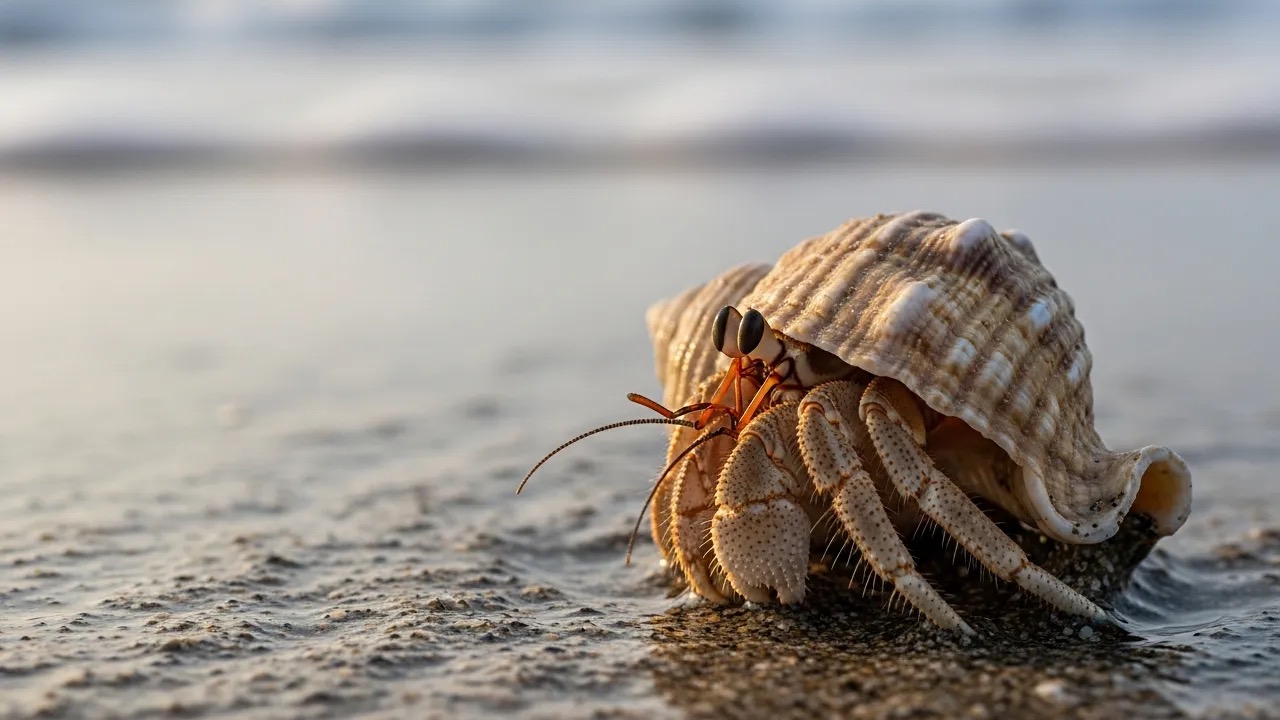
Photo: H. Zell / Wikimedia Commons (CC BY-SA 3.0)
In brief
Hermit crabs are crustaceans that protect their soft, spiraled abdomens by living inside empty snail shells. As they grow, they leave their old shell and move into a larger one, sometimes lining up to swap shells in sequence.
Also in Animals A to Z · Animals that start with H
By WARN Research & Conservation Team Last updated
Hermit crabs are crustaceans that protect their soft, spiraled abdomens by living inside empty snail shells. As they grow, they leave their old shell and move into a larger one, sometimes lining up to swap shells in sequence. Found on shorelines and seabeds worldwide, many species live 10 to 30 years, and they are popular, low-cost pets.
0.1 m
Typical length
100 g
Typical weight
0.5 km/h
Top speed
30 yrs
Lifespan
Figures sourced from Wikipedia — Hermit Crab, Wikidata — Hermit Crab .
Hermit Crab: Quick Facts
| Scientific name | Paguroidea (superfamily) |
|---|---|
| Diet | Omnivore (algae, plankton, scraps, carrion) |
| Habitat | Shorelines, tide pools, and seabeds worldwide |
| Lifespan | 10–30 years (varies by species) |
| Size | From a few millimeters to 30 cm (coconut crab) |
| Top speed | Slow walkers; faster when alarmed |
| Conservation status | Least Concern (IUCN, most species) |
Scientific Classification
| Kingdom | Animalia |
|---|---|
| Phylum | Arthropoda |
| Class | Malacostraca |
| Order | Decapoda |
| Family | Paguridae |
Conservation Status
- IUCN Status
- Least Concern (IUCN Red List category)
- Population
- Global population not compiled for this guide
- Trend
- See the IUCN Red List assessment
- Assessed
- See the IUCN Red List assessment
- CITES
- See CITES appendices
Conservation figures are drawn from the IUCN Red List and CITES; this guide links to the authoritative sources rather than restating population counts.
Key Facts: Hermit Crab
- Unlike true crabs, most hermit crabs have a soft, curled abdomen with no hard shell of its own.
- As a hermit crab grows it outgrows its shell and must find a larger one.
- Hermit crabs are omnivorous scavengers that feed on algae, plankton, food scraps, and dead animals, helping clean the shoreline.
Borrowed homes
Unlike true crabs, most hermit crabs have a soft, curled abdomen with no hard shell of its own. To protect it, the crab backs into an empty snail shell and carries it everywhere, gripping the inside with specially shaped rear legs. The shell shields the crab from predators and from drying out.
Shell swapping
As a hermit crab grows it outgrows its shell and must find a larger one. When a good empty shell appears, crabs sometimes gather and form a line by size, each moving into the next-biggest shell in a chain swap. Competition for shells can be intense where suitable shells are scarce.
Diet and behavior
Hermit crabs are omnivorous scavengers that feed on algae, plankton, food scraps, and dead animals, helping clean the shoreline. They are mostly active at night and use their antennae and claws to find and handle food. Many species are social and gather in groups, especially around food or fresh shells.
As a pet
Land hermit crabs are common, inexpensive pets that need humid, warm enclosures, a choice of empty shells to grow into, and both fresh and salt water. With good care they can live well over a decade, far longer than many owners expect. They are wild-caught in some regions, so responsible sourcing matters.
What WARN Does
WARN does not run a dedicated hermit crab programme — this guide is part of the World Animal Rescue Network's free educational library. The hermit crab is currently widespread and not globally threatened, and this guide helps readers understand the pressures that can change that. Building public understanding of species like the hermit crab supports the broader conservation awareness that underpins WARN's partner-led rescue work across its network.
If clear, science-based wildlife guides like this help you understand and value animals, please consider supporting the World Animal Rescue Network's educational and rescue work so we can keep producing them.
Hermit Crab: Frequently Asked Questions
Why do hermit crabs live in shells?
Do hermit crabs change shells?
What do hermit crabs eat?
Are hermit crabs good pets?
Are hermit crabs actually crabs?
Where do hermit crabs live?
Are hermit crabs dangerous?
How long do hermit crabs live?
How big is a hermit crab?
Sources & References
Population figures, conservation status and biological facts on this page are drawn from authoritative scientific and intergovernmental sources.
Terms used on this page
Plain-English definitions, from our wildlife and conservation glossary.
Latest Hermit Crab Stories
Quick, fact-checked reads on the hermit crab — amazing facts, key questions and the threats it faces.
Species
Why Are Sea Turtles Endangered? The Threats — and How to Help
Sea turtles have survived for more than 100 million years, yet within a few human generations most species have been pushed toward extinction. Here is what is driving the decline — bycatch, plastic, poaching and lost nesting beaches — and what actually helps.
Read the storySpecies
12 Amazing Facts About the Humpback Whale, the Ocean's Great Singer
From hours-long songs that only males sing to flippers longer than any other whale, here are 12 genuinely surprising facts about the humpback whale.
Read the storySpecies
How Big Is a Humpback Whale? Size, Weight and Strength Explained
Humpback whales reach 14 to 16 metres and weigh up to 30 tonnes, with the longest flippers of any whale. Here's how their size, weight and power really compare.
Read the storyExplore more animals
Discover more animals, their habitats and their conservation status in the WARN wildlife-guide library.
Enjoyed this Hermit Crab guide?
Receive appeal updates, animal-welfare news and published funding reports. Unsubscribe any time.
We only use your address for WARN updates. See our privacy policy.