Wildlife Guide · Oceans
Hammerhead Shark
Sphyrnidae
The shark with a head like a hammer
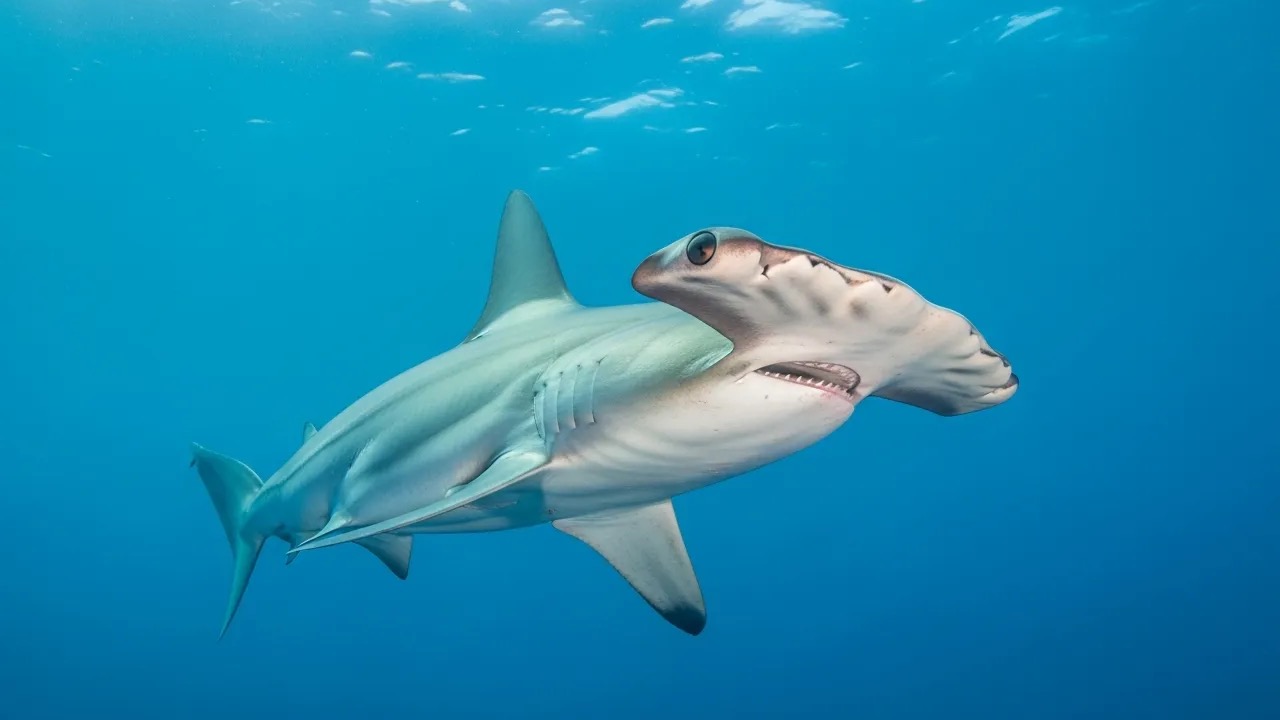
Photo: Kris Mikael Krister / Wikimedia Commons (CC BY 3.0)
In brief
Hammerhead sharks are a family of coastal and open-ocean sharks (Sphyrnidae) instantly recognised by the flattened, hammer-shaped head, or cephalofoil, that spreads their eyes and sensory organs wide apart. Species range from under a metre to more than 6 m long, with large individuals weighing around 230 kg.
Also in Animals A to Z · Animals that start with H
By WARN Research & Conservation Team Last updated
Hammerhead sharks are a family of coastal and open-ocean sharks (Sphyrnidae) instantly recognised by the flattened, hammer-shaped head, or cephalofoil, that spreads their eyes and sensory organs wide apart. Species range from under a metre to more than 6 m long, with large individuals weighing around 230 kg. They swim through warm seas worldwide, hunting fish, squid and rays, and can live 20 to 30 years or more. The great hammerhead is listed as Critically Endangered.
4 m
Typical length
230 kg
Typical weight
40 km/h
Top speed
30 yrs
Lifespan
Figures sourced from Wikipedia — Hammerhead Shark, Wikidata — Hammerhead Shark .
Hammerhead Shark: Quick Facts
| Scientific name | Sphyrnidae (family) |
|---|---|
| Diet | Carnivore |
| Habitat | Warm coastal and open oceans worldwide |
| Lifespan | 20–30 years or more |
| Length | 0.9 m to over 6 m by species |
| Top speed | Around 40 km/h (25 mph) in bursts |
| Conservation status | Critically Endangered (great hammerhead) |
Scientific Classification
| Kingdom | Animalia |
|---|---|
| Phylum | Chordata |
| Class | Chondrichthyes |
| Order | Carcharhiniformes |
| Family | Sphyrnidae |
| Genus | Sphyrna |
Conservation Status
- IUCN Status
- Critically Endangered (IUCN Red List category)
- Population
- Global population not compiled for this guide
- Trend
- See the IUCN Red List assessment
- Assessed
- See the IUCN Red List assessment
- CITES
- See CITES appendices
Conservation figures are drawn from the IUCN Red List and CITES; this guide links to the authoritative sources rather than restating population counts.
Key Facts: Hammerhead Shark
- The wide, flattened head that gives these sharks their name is called a cephalofoil, and it is more than an odd silhouette.
- Hammerheads are carnivores that feed on bony fish, squid, octopus, crustaceans and other sharks, but they are best known for hunting stingrays.
- The family Sphyrnidae contains around nine species, and they vary enormously in size.
The hammer-shaped head
The wide, flattened head that gives these sharks their name is called a cephalofoil, and it is more than an odd silhouette. Spacing the eyes far apart gives the shark a broader field of vision, while the underside is packed with electroreceptors called ampullae of Lorenzini that detect the faint electrical signals of buried prey. Sweeping the head from side to side lets a hammerhead scan the seabed like a metal detector. The shape also acts as a hydrofoil, helping the shark bank and turn sharply as it swims.
Hunting and diet
Hammerheads are carnivores that feed on bony fish, squid, octopus, crustaceans and other sharks, but they are best known for hunting stingrays. A hammerhead will pin a ray to the seabed with the edge of its head, then pivot to take bites from the disc. Many individuals seem largely unbothered by the venomous barbs of their prey, and rays recovered from their stomachs are sometimes studded with spines. Larger species hunt alone, cruising close to the bottom where their electrical sense works best.
Size and species
The family Sphyrnidae contains around nine species, and they vary enormously in size. The small bonnethead reaches under a metre, while the great hammerhead can exceed 6 m and weigh in the region of 230 kg, making it one of the largest predatory sharks. The scalloped and smooth hammerheads fall between these extremes. Despite their formidable appearance, hammerheads pose little danger to people, and unprovoked bites are very rare.
Where they live
Hammerheads swim through warm temperate and tropical waters around the world, along coastlines, over continental shelves and out into the open ocean. They are found from shallow lagoons and coral reefs to depths of several hundred metres. Some species, notably the scalloped hammerhead, gather in large schools around seamounts and offshore islands, particularly by day. These aggregations can number in the hundreds and are a famous sight for divers.
Reproduction
Hammerheads give birth to live young rather than laying eggs, nourishing the developing pups through a placenta-like connection inside the mother. Litters range from around a dozen to more than 40 pups depending on the species. The newborns are miniature versions of the adults, with heads that are more rounded at birth and flatten as they grow. Coastal nursery areas in shallow water shelter the young from larger predators during their vulnerable first months.
Why the great hammerhead is Critically Endangered
The great hammerhead is listed as Critically Endangered by the IUCN, and several other hammerhead species are also threatened. Their large fins are highly valued in the shark-fin trade, and the sharks are frequently caught both deliberately and as bycatch in commercial fisheries. Hammerheads are especially vulnerable because they are slow to mature and produce relatively few young. They also suffer very high stress levels when hooked, so many die even when released.
What WARN Does
WARN does not run a dedicated hammerhead shark programme — this guide is part of the World Animal Rescue Network's free educational library. The hammerhead shark faces documented conservation pressure in the wild, which is why clear, sourced public information about it matters. Building public understanding of species like the hammerhead shark supports the broader conservation awareness that underpins WARN's partner-led rescue work across its network.
If clear, science-based wildlife guides like this help you understand and value animals, please consider supporting the World Animal Rescue Network's educational and rescue work so we can keep producing them.
Hammerhead Shark: Frequently Asked Questions
Why do hammerhead sharks have such strange heads?
Are hammerhead sharks dangerous to humans?
How big do hammerhead sharks get?
What do hammerhead sharks eat?
How long do hammerhead sharks live?
Why are hammerhead sharks endangered?
Where do hammerhead sharks live?
Sources & References
Population figures, conservation status and biological facts on this page are drawn from authoritative scientific and intergovernmental sources.
Terms used on this page
Plain-English definitions, from our wildlife and conservation glossary.
Latest Hammerhead Shark Stories
Quick, fact-checked reads on the hammerhead shark — amazing facts, key questions and the threats it faces.
Species
Why Are Sea Turtles Endangered? The Threats — and How to Help
Sea turtles have survived for more than 100 million years, yet within a few human generations most species have been pushed toward extinction. Here is what is driving the decline — bycatch, plastic, poaching and lost nesting beaches — and what actually helps.
Read the storySpecies
12 Amazing Facts About the Humpback Whale, the Ocean's Great Singer
From hours-long songs that only males sing to flippers longer than any other whale, here are 12 genuinely surprising facts about the humpback whale.
Read the storySpecies
How Big Is a Humpback Whale? Size, Weight and Strength Explained
Humpback whales reach 14 to 16 metres and weigh up to 30 tonnes, with the longest flippers of any whale. Here's how their size, weight and power really compare.
Read the storyExplore more animals
Discover more animals, their habitats and their conservation status in the WARN wildlife-guide library.
Enjoyed this Hammerhead Shark guide?
Receive appeal updates, animal-welfare news and published funding reports. Unsubscribe any time.
We only use your address for WARN updates. See our privacy policy.