Guinea Pig Breed · Domestic (colour-point mutation)
Himalayan
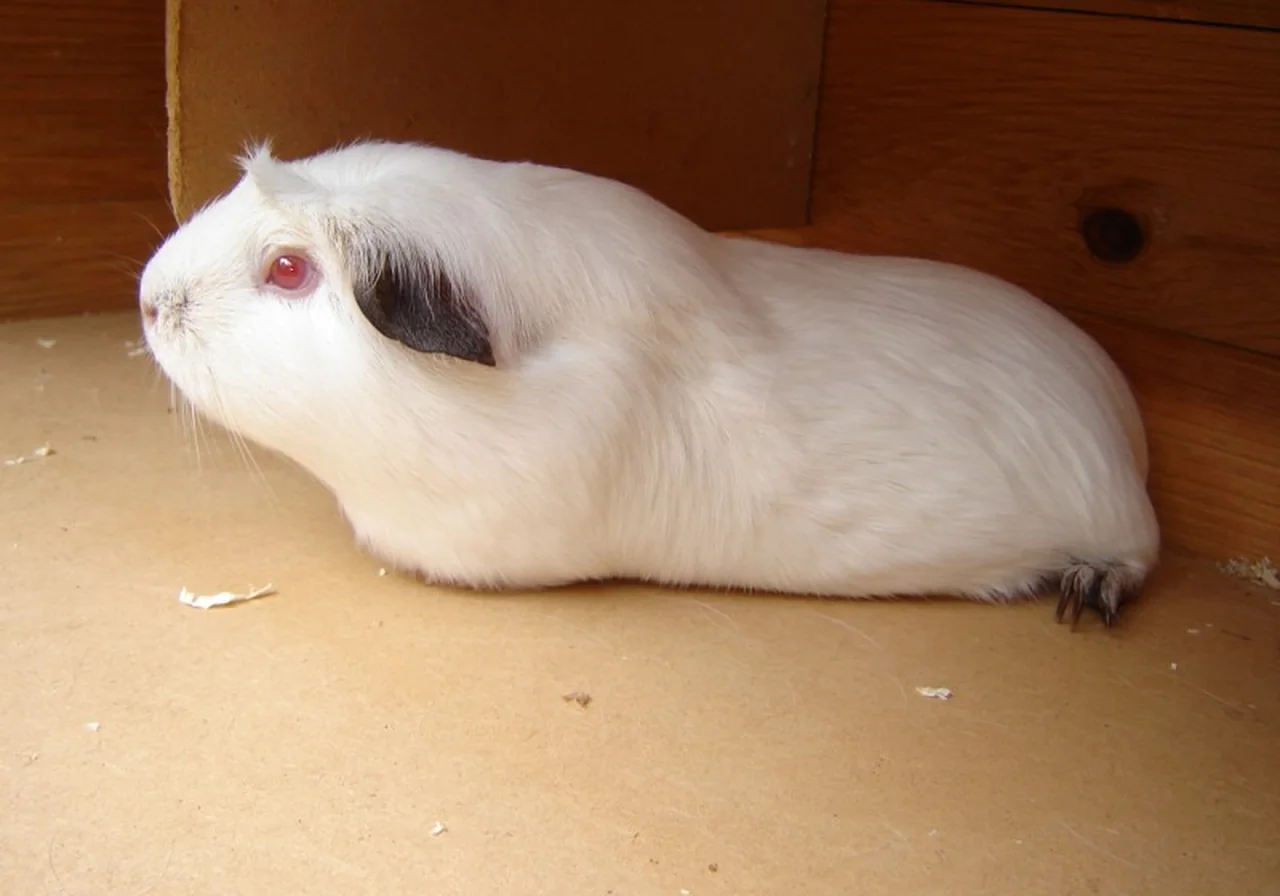
White body with dark nose, ears and feet — points darken in cooler conditions.
By WARN Research & Conservation TeamLast updated
In brief
The Himalayan guinea pig resembles a colour-point cat — white body with dark nose, ears and feet whose depth responds to ambient temperature through tyrosinase-sensitive pigment. Its defining trait is striking points on a smooth-coated cavy that still needs companions, hay and indoor housing like any other breed.
What are the key facts about a Himalayan?
The Himalayan is a guinea pig breed from Domestic (colour-point mutation): medium (0.9–1.2 kg), calm, friendly, colour-sensitive. White body with dark nose, ears and feet — points darken in cooler conditions.
| Origin | Domestic (colour-point mutation) |
|---|---|
| Size | Medium (0.9–1.2 kg) |
| Adult weight | 900–1,200 g (2–2.6 lb); cobby body with contrasting dark points on ears and muzzle |
| Lifespan | 5–7 years |
| Coat type | Short, smooth white or pale coat with dark seal or chocolate points on nose, ears and feet. Points fade in warm rooms and deepen in cooler environments — avoid drafts without overheating. Some lines show ruby or red eyes. |
| Temperament | Calm, friendly, colour-sensitive |
| Best suited to | Indoor keepers maintaining stable temperatures between roughly 18–22 °C, paired companions and daily vitamin C — not unheated sheds where point colour and welfare both suffer. |
Is a Himalayan a good guinea pig for you?
A Himalayan is a good guinea pig when your home matches indoor keepers maintaining stable temperatures between roughly 18–22 °c, paired companions and daily vitamin c — not unheated sheds where point colour and welfare both suffer.. It is a calm, friendly, colour-sensitive medium (0.9–1.2 kg) breed from Domestic (colour-point mutation).
White body with dark nose, ears and feet — points darken in cooler conditions. That one-line pitch is not a care plan. Factor grooming (Short, smooth white or pale coat with dark seal or chocolate points on nose, ears and feet. Points fade in warm rooms and deepen in cooler environments — avoid drafts without overheating. Some lines show ruby or red eyes.), typical adult size (900–1,200 g (2–2.6 lb); cobby body with contrasting dark points on ears and muzzle), and the health issues listed below before you pay a deposit.
Meet adults of the breed, not only puppies or kittens, and prefer rescue or health-screened homes. A Himalayan that looks right in a photo can still be the wrong animal for a small flat, a full-time office job, or a household that wanted a low-energy companion.
What is a Himalayan?
White body with dark nose, ears and feet — points darken in cooler conditions. Origin is Domestic (colour-point mutation); coat or markings are described as Short, smooth white or pale coat with dark seal or chocolate points on nose, ears and feet. Points fade in warm rooms and deepen in cooler environments — avoid drafts without overheating. Some lines show ruby or red eyes..
Kennel and registry labels describe a type. Individual Himalayans still vary, and rescue animals may be mixes.
Where does the Himalayan come from?
Himalayans come from Domestic (colour-point mutation). Himalayan colouration arose from temperature-sensitive tyrosinase mutations in domestic cavies, paralleling Himalayan rabbits and colour-point cats.
British and North American cavy clubs formalised point clarity and body colour in breed standards during the mid-twentieth century. Pet Himalayans attract buyers seeking unusual colour, but point intensity is not a health indicator — weight, teeth and companionship matter more. Cold stress to deepen points is unethical; provide consistent comfortable housing instead. Red-eyed Himalayans need shade from bright lights but otherwise match standard cavy welfare codes.
How much care does a Himalayan need?
Plan 5–7 years of food, vet care, grooming and time. A Himalayan is medium (0.9–1.2 kg) (900–1,200 g (2–2.6 lb); cobby body with contrasting dark points on ears and muzzle) from Domestic (colour-point mutation), with coat care described as short, smooth white or pale coat with dark seal or chocolate points on nose, ears and feet. points fade in warm rooms and deepen in cooler environments — avoid drafts without overheating. some lines show ruby or red eyes..
Match daily exercise to the calm, friendly, colour-sensitive temperament rather than to Instagram.
Grooming follows the coat, not a generic clip: Short, smooth white or pale coat with dark seal or chocolate points on nose, ears and feet. Points fade in warm rooms and deepen in cooler environments — avoid drafts without overheating. Some lines show ruby or red eyes.. Keep the animal lean; extra weight is a joint and heart tax, especially in a medium guinea pig.
Budget for unexpected vet bills. The health section below is why “cheap to buy” is not the same as cheap to keep.
What surprises people about the Himalayan?
A few details about the breed, alongside the practical care information in this guide.
- Point colour darkens in cooler environments and fades in warm rooms — a tyrosinase response, not seasonal moulting.
- Himalayans are judged on point symmetry and contrast against a pale body.
- Ruby eyes occur in some lines — not linked to coat points genetically in all pedigrees.
- Never chill a Himalayan deliberately to 'improve' show points — welfare comes first.
What health issues should you know about in a Himalayan?
Health concerns to discuss with your vet, including changes to watch for and everyday care. This is general guidance, not veterinary advice — always speak to your vet.
Eye conditions
Red-eyed Himalayans may show light sensitivity; discharge can also signal respiratory infection.
Care: Provide shade, keep bedding dust-free and consult an exotics vet for persistent weeping or squinting.
Dental malocclusion
Smooth coats hide little — drooling and weight loss remain key dental warning signs.
Care: Unlimited hay, weekly weighing and prompt dental treatment under sedation.
Respiratory infections
Drafty outdoor hutches worsen pneumonia risk in colour-point cavies kept for point deepening.
Care: House indoors with good ventilation and seek antibiotics promptly when sneezing starts.
Who should skip a Himalayan?
Skip a Himalayan if you are homes that cannot match a calm, friendly, colour-sensitive medium (0.9–1.2 kg) guinea pig from Domestic (colour-point mutation). This Domestic (colour-point mutation) guinea pig is medium (0.9–1.2 kg) and calm, friendly, colour-sensitive — the mismatch is usually lifestyle, not a missing accessory.
This page is allowed to say no. Skip if you are homes that cannot match a calm, friendly, colour-sensitive medium (0.9–1.2 kg) guinea pig from Domestic (colour-point mutation).
A different guinea pig breed on this site may fit. Wanting “a Himalayan” after a film or a colour photo is not a reason to ignore the skip list.
What are the hidden catches with a Himalayan?
The hidden cost of a Himalayan is usually not the purchase price. It is years of care, the health list on this page, and the mismatch between a calm, friendly, colour-sensitive animal and a busy home.
The impulse-buy catch
A Himalayan from Domestic (colour-point mutation) is often sold on looks. Coat, colour and size are not a temperament test. Meet the adult animal, ask about health screening, and walk away from pressure sales.
The eye conditions catch
Red-eyed Himalayans may show light sensitivity; discharge can also signal respiratory infection. Provide shade, keep bedding dust-free and consult an exotics vet for persistent weeping or squinting.
The dental malocclusion catch
Smooth coats hide little — drooling and weight loss remain key dental warning signs. Unlimited hay, weekly weighing and prompt dental treatment under sedation.
How does a Himalayan compare with Texel and Coronet?
A Himalayan is not interchangeable with Texel and Coronet. Compare origin, size, lifespan and temperament before you choose — those four lines prevent most regret.
| Guinea Pig fact | Himalayan | Texel | Coronet |
|---|---|---|---|
| Origin | Domestic (colour-point mutation) | England (domestic cross) | Domestic (Silkie × Crested cross) |
| Size | Medium (0.9–1.2 kg) | Medium (0.8–1.1 kg) | Medium (0.9–1.2 kg) |
| Lifespan | 5–7 years | 5–7 years | 5–7 years |
| Temperament | Calm, friendly, colour-sensitive | Gentle, needs patient grooming | Sweet, sociable, grooming-intensive |
What is the verdict on the Himalayan?
Choose a Himalayan only if the care, skip-if and health sections still look like your life after a week of thinking. Otherwise pick a different guinea pig or wait. Rescue is usually the better first door than a waiting-list puppy or kitten.
If the match is real, budget for 5–7 years of vet care and do not skip health screening. If it is not, walking away is the kind choice — for you and for the animal.
Guinea pigs deserve proper care
Guinea pigs are social, gentle companions that need pairs, spacious enclosures and vitamin C every day. WARN publishes these guides so fewer end up in rescues after impulse purchases.