Wildlife Guide · Europe
Giant House Spider
Eratigena atrica
Britain's large but harmless funnel-weaving house spider
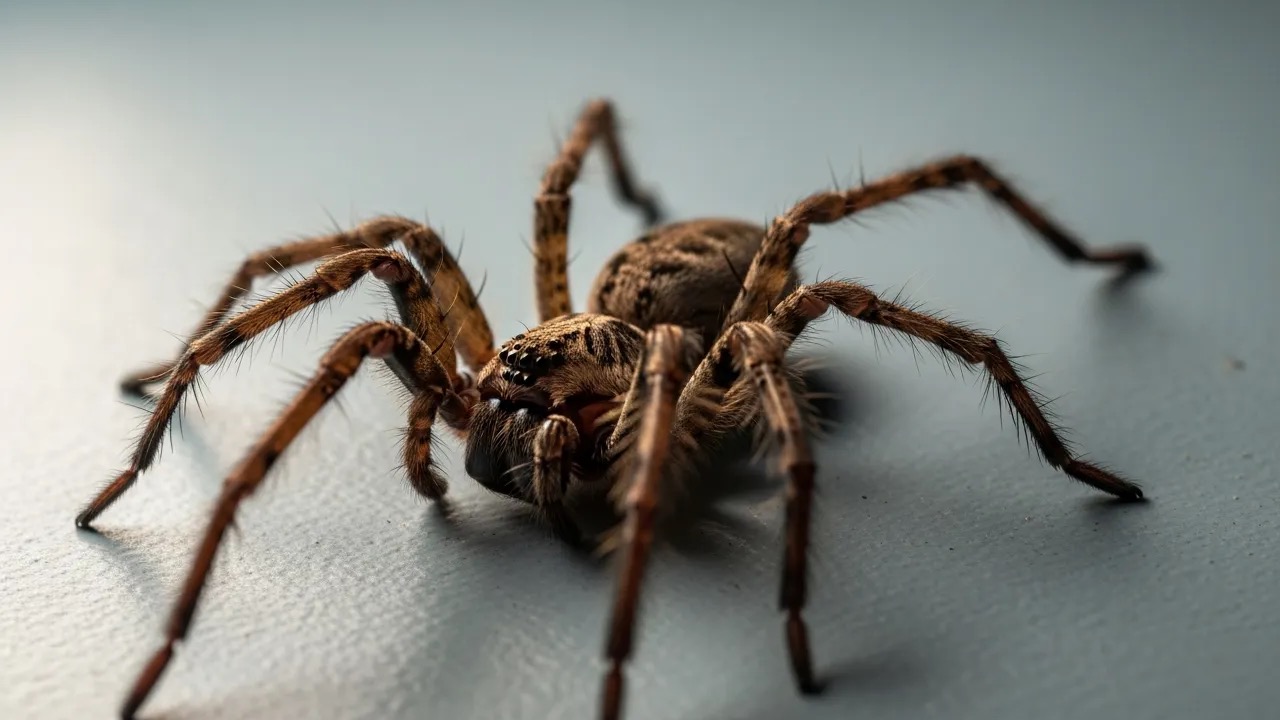
Photo: Arthur Rackham / Wikimedia Commons (Public domain)
In brief
The giant house spider (Eratigena atrica) is one of Britain's largest spiders, a fast-moving but harmless funnel-weaver often seen indoors in autumn. Females reach a body length of up to about 7.5 cm across the legs, with a leg span reaching around 12 cm, and adults live for around three years.
Also in Animals A to Z · Animals that start with G
By WARN Research & Conservation Team Last updated
The giant house spider (Eratigena atrica) is one of Britain's largest spiders, a fast-moving but harmless funnel-weaver often seen indoors in autumn. Females reach a body length of up to about 7.5 cm across the legs, with a leg span reaching around 12 cm, and adults live for around three years. It builds sheet-like webs in sheds, garages and quiet corners and preys on flies and other invertebrates. It is common and of Least Concern.
0.09 m
Typical length
1 g
Typical weight
1.9 km/h
Top speed
3 yrs
Lifespan
Figures sourced from Wikipedia — Giant House Spider, Wikidata — Giant House Spider .
Giant House Spider: Quick Facts
| Scientific name | Eratigena atrica (and closely related species) |
|---|---|
| Diet | Carnivore (flies, moths, and other invertebrates) |
| Habitat | Houses, sheds, garages, log piles, gardens |
| Leg span | Up to about 12 cm (females up to 7.5 cm body length) |
| Active season | Adults wander indoors mainly September–October |
| Venom | Harmless to humans |
| Conservation status | Least Concern |
Scientific Classification
| Kingdom | Animalia |
|---|---|
| Phylum | Arthropoda |
| Class | Arachnida |
| Order | Araneae |
| Family | Agelenidae |
| Genus | Eratigena |
Conservation Status
- IUCN Status
- Least Concern (IUCN Red List category)
- Population
- Global population not compiled for this guide
- Trend
- See the IUCN Red List assessment
- Assessed
- See the IUCN Red List assessment
- CITES
- See CITES appendices
Conservation figures are drawn from the IUCN Red List and CITES; this guide links to the authoritative sources rather than restating population counts.
Key Facts: Giant House Spider
- The giant house spider is a large, brown, long-legged spider with a leg span that can reach around 12 cm, making it one of the biggest spiders regularly encountered in Britain and northern Europe.
- Rather than spinning a sticky orb web, this spider weaves a flat sheet of silk that ends in a funnel-shaped retreat, where it waits out of sight.
- The spiders most people notice indoors are mature males, which leave their webs in early autumn to wander in search of females.
Appearance and size
The giant house spider is a large, brown, long-legged spider with a leg span that can reach around 12 cm, making it one of the biggest spiders regularly encountered in Britain and northern Europe. Its body is mottled brown with darker markings, and the legs are covered in fine hairs. Females are bulkier than males, with body lengths of up to about 7.5 cm across the legs, while males have longer, spindlier legs relative to their bodies. Their size and speed make them look alarming, but the impression is misleading.
Webs and how it catches prey
Rather than spinning a sticky orb web, this spider weaves a flat sheet of silk that ends in a funnel-shaped retreat, where it waits out of sight. When a fly, moth or other invertebrate blunders onto the sheet, the vibrations alert the spider, which rushes out from its tunnel to seize the prey before retreating to feed. The web is not sticky; it relies on the spider's speed to reach victims before they escape. These funnels are often tucked behind furniture, in the corners of sheds, or among log piles and garden debris.
Why you see them in autumn
The spiders most people notice indoors are mature males, which leave their webs in early autumn to wander in search of females. This is why giant house spiders seem to appear suddenly in September and October, scuttling across floors or trapped in baths where they have fallen and cannot climb the smooth sides. They are not invading in greater numbers; they are simply more visible during the mating season. Once a male finds a female's web, he may stay with her for some time before mating.
Are they dangerous?
Despite their size and the fright they can cause, giant house spiders are harmless to people. Their venom is used to subdue small invertebrate prey and has no significant effect on humans, and they are reluctant to bite, preferring to flee. On the rare occasion a bite does occur, it is comparable to a minor sting at most. They are, in fact, useful housemates that help keep down numbers of flies and other insects.
Habitat and life cycle
Giant house spiders live in and around human buildings, including houses, sheds, garages and outbuildings, as well as in natural sites such as log piles, cavities and gardens. Females stay close to their webs for life, laying eggs in silken sacs and living for up to around three years, longer than many spiders. Males have shorter lives and usually die within weeks of maturing and mating. The species is common and widespread and is classed as Least Concern.
What WARN Does
WARN does not run a dedicated giant house spider programme — this guide is part of the World Animal Rescue Network's free educational library. The giant house spider is currently widespread and not globally threatened, and this guide helps readers understand the pressures that can change that. Building public understanding of species like the giant house spider supports the broader conservation awareness that underpins WARN's partner-led rescue work across its network.
If clear, science-based wildlife guides like this help you understand and value animals, please consider supporting the World Animal Rescue Network's educational and rescue work so we can keep producing them.
Giant House Spider: Frequently Asked Questions
Are giant house spiders dangerous?
Why do giant house spiders come indoors in autumn?
How big do giant house spiders get?
What do giant house spiders eat?
How long do giant house spiders live?
Do giant house spiders make webs?
Where do giant house spiders live?
Sources & References
Population figures, conservation status and biological facts on this page are drawn from authoritative scientific and intergovernmental sources.
Terms used on this page
Plain-English definitions, from our wildlife and conservation glossary.
Latest Giant House Spider Stories
Quick, fact-checked reads on the giant house spider — amazing facts, key questions and the threats it faces.
Species
12 Amazing Facts About Grey Wolves (And Why Alpha Wolves Aren't Real)
A howl that carries 16 km, a pack that is really a family, and the debunked study behind the 'alpha wolf' myth. Twelve verified facts.
Read the storySpecies
12 Amazing Facts About Flamingos (They Are Born Grey and Eat Upside Down)
Pink from diet, a bill that filters upside down, and milk produced by both parents. Twelve verified flamingo facts.
Read the storySpecies
12 Amazing Facts About Beavers (Iron in Their Teeth, and They Rebuild Rivers)
Orange iron-hardened incisors, transparent eyelids, and a keystone role that reduces flooding and drought. Twelve facts.
Read the storyExplore more animals
Discover more animals, their habitats and their conservation status in the WARN wildlife-guide library.
Enjoyed this Giant House Spider guide?
Receive appeal updates, animal-welfare news and published funding reports. Unsubscribe any time.
We only use your address for WARN updates. See our privacy policy.